Loading subject page…

- Physics
- Dynamics of Rotational Motions
- Equation of Rotational Dynamics
Micro-course: Dynamics of Rotational Motions
115,700 views
Learn key concepts and earn your certificate.



Equation of Rotational Dynamics

00:00
01:08
Video Summary: What Is Equation of Rotational Dynamics
Ever wonder why figure skaters spin faster when they pull their arms in? The equation of rotational dynamics explains this phenomenon by relating torque, moment of inertia, and angular acceleration-just like Newton's second law but for rotating objects. When NASA engineers design spacecraft attitude control systems, they rely on this fundamental principle to calculate how much torque is needed to rotate satellites precisely in space. Watch the full video on JoVE Coach to master this concept with expert-led visuals and step-by-step explanations.
- Understand the equation of rotational dynamics as the rotational analog of Newton's second law of motion
- Identify how torque relates to angular acceleration through the moment of inertia in rotating systems
- Analyze the relationship between linear and rotational motion variables in circular motion problems
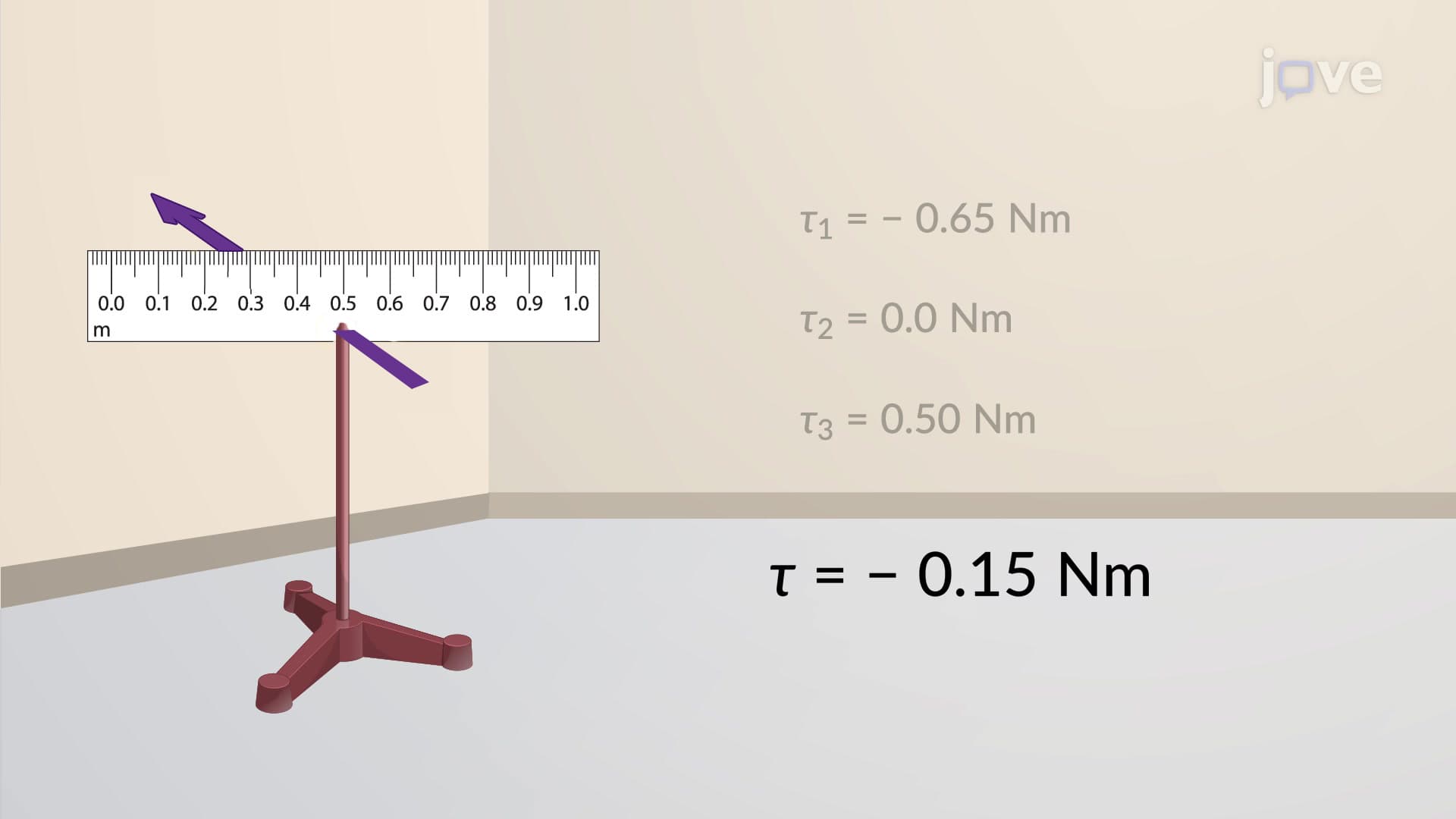
- Apply the net torque equation when multiple forces act on a rigid body rotating about a fixed axis
- Recognize why internal forces cancel out in rotational dynamics due to Newton's third law
- Evaluate real-world scenarios involving rotating objects using rotational dynamics principles
- Compare linear acceleration concepts with their angular counterparts in physics problem-solving
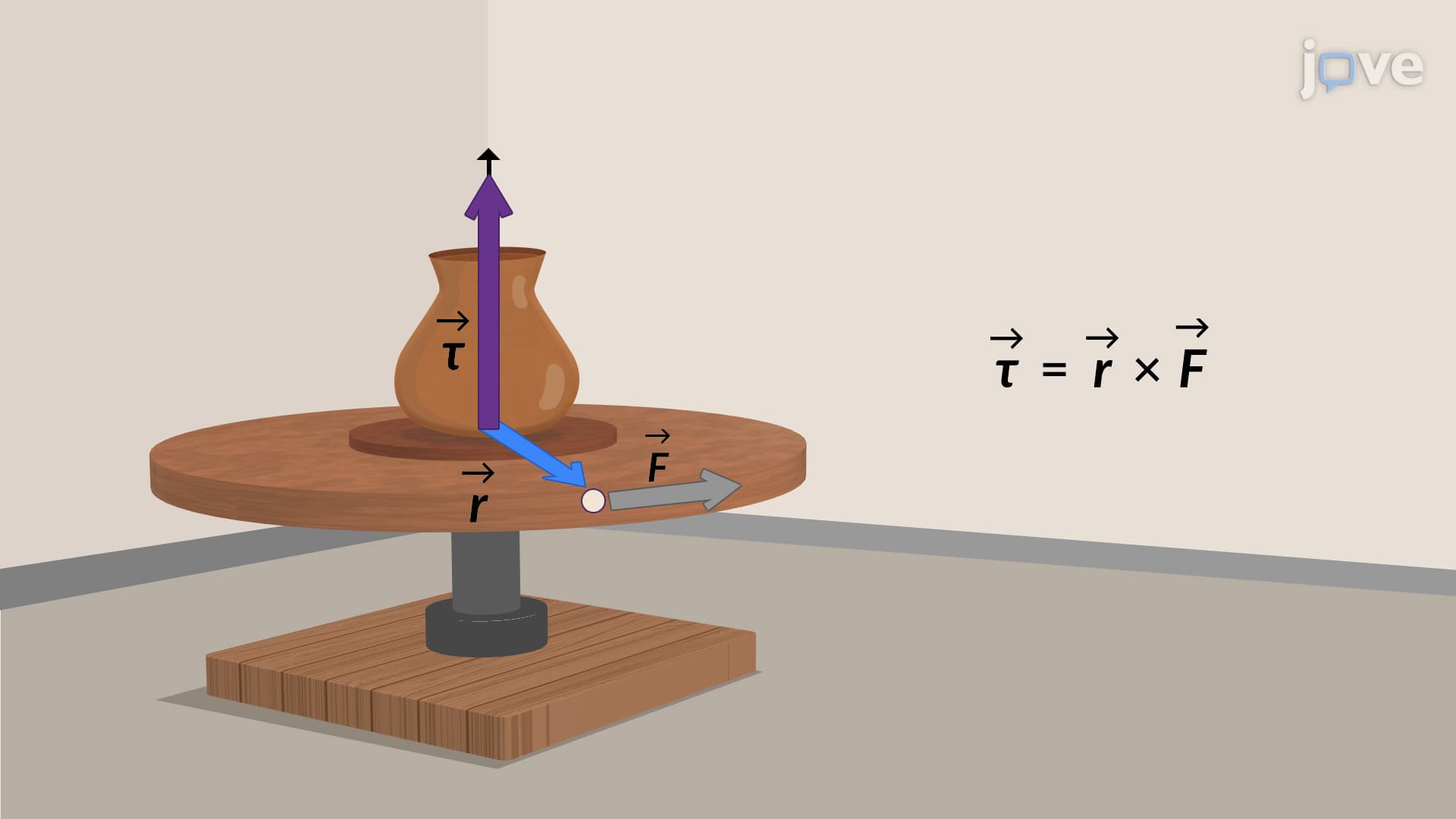
- Explore vector representations of torque and angular acceleration in three-dimensional space
Understanding the Equation of Rotational Dynamics
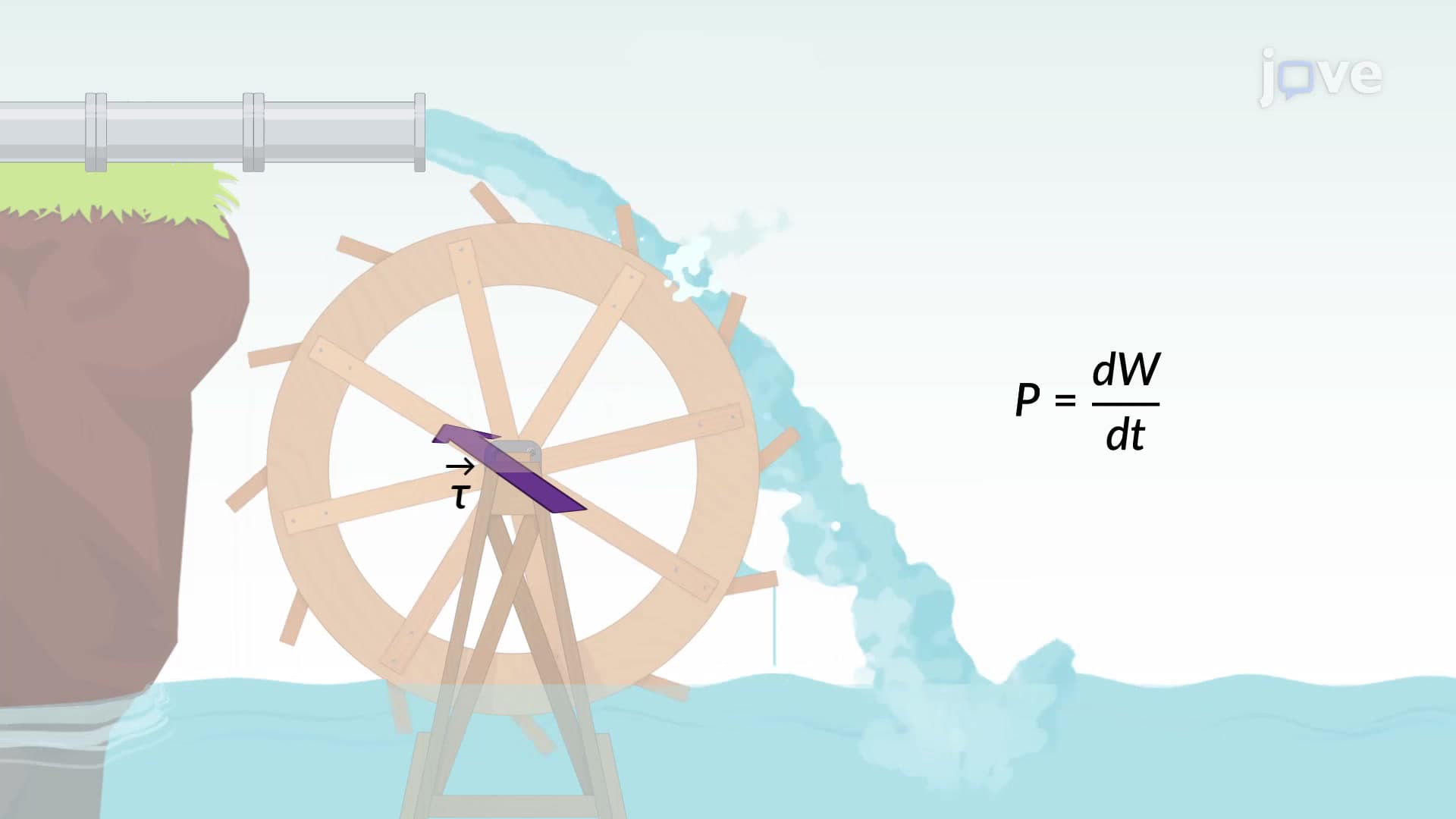
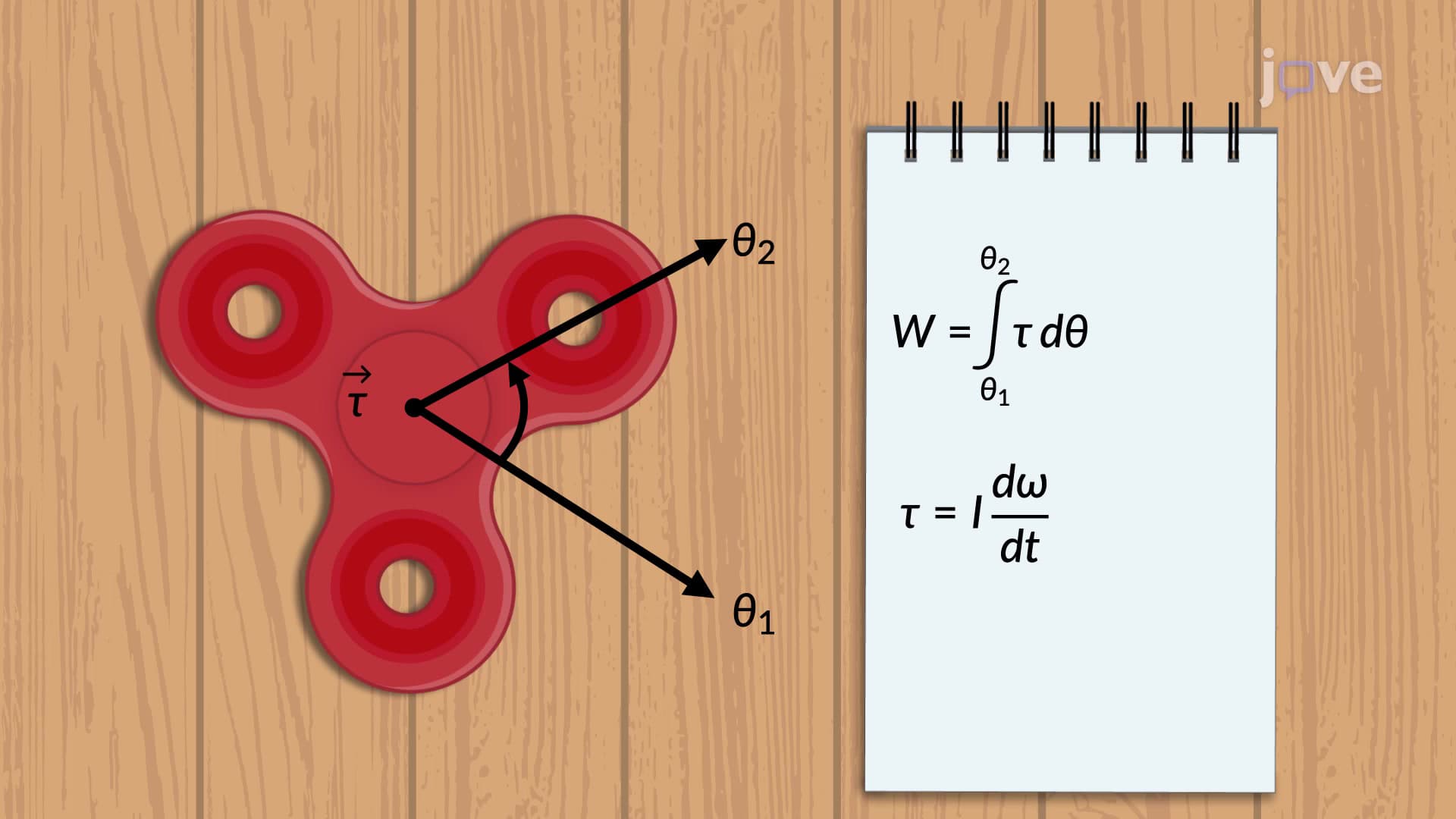
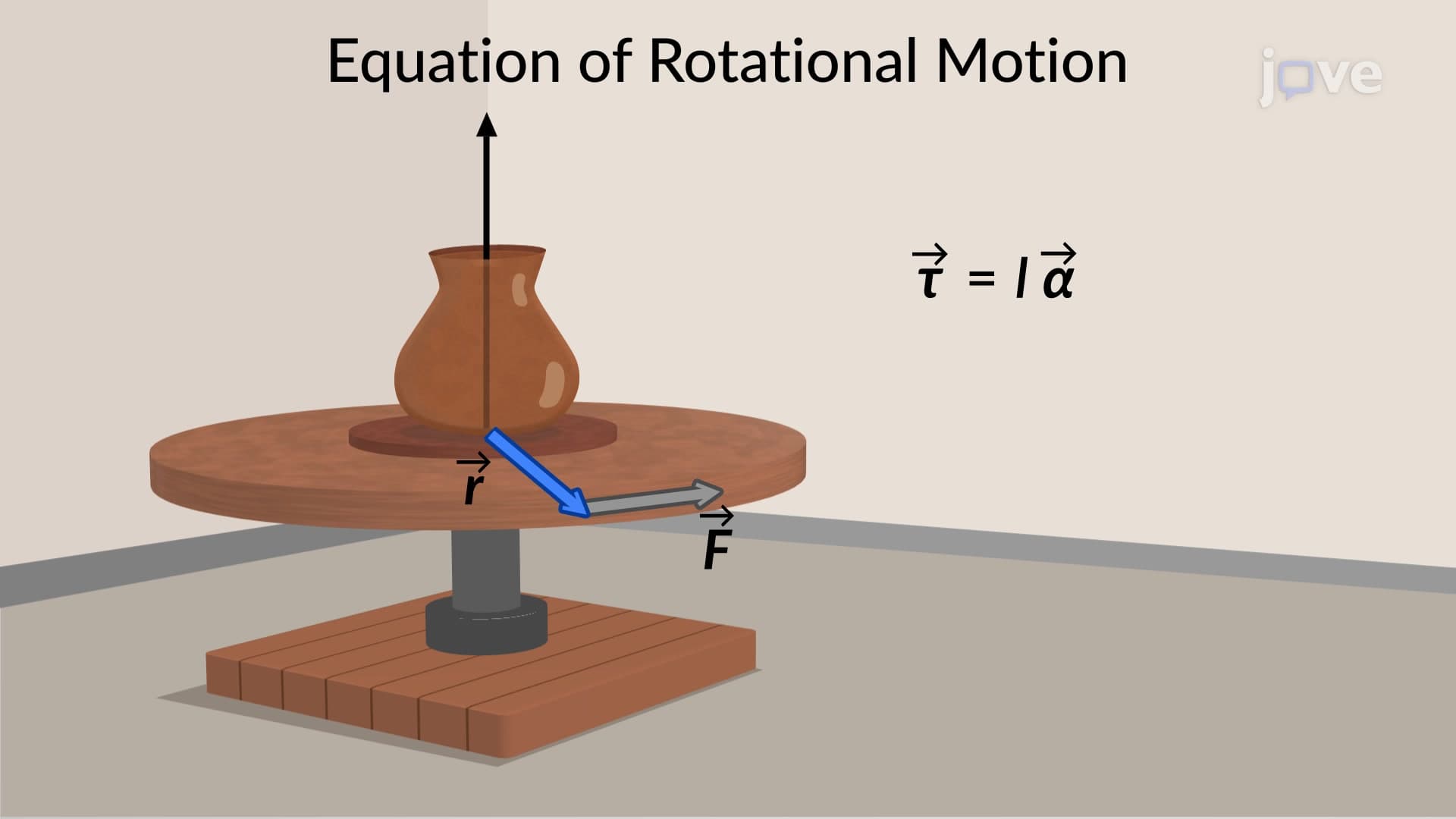
The equation of rotational dynamics serves as the cornerstone for analyzing any rotating system, from spinning wheels to planetary motion. This fundamental relationship, expressed as τ = Iα (tau equals I times alpha), represents the rotational equivalent of Newton's famous F = ma equation. Here, τ (tau) represents net torque, I represents moment of inertia, and α (alpha) represents angular acceleration.
Deriving the Rotational Dynamics Equation
Starting with Newton's second law for a point mass in circular motion, we can derive this powerful equation. When a force acts on a point mass moving in a circle, the linear acceleration relates directly to angular acceleration through a = αr, where r is the radius. Multiplying both sides of F = ma by the radius gives us Fr = mar, which simplifies to τ = Iα when we substitute the definition of moment of inertia (I = mr² for a point mass). This derivation appears frequently on AP Physics exams and forms the foundation for college-level mechanics courses.
Applications in Rigid Body Systems
For complex systems like rotating machinery or automotive components, the equation extends to rigid bodies rotating about fixed axes. Consider a car's crankshaft: multiple forces from combustion chambers create various torques, but only the net external torque affects the rotational motion. Internal forces between crankshaft components cancel out due to Newton's third law, simplifying our analysis significantly. This principle proves essential for mechanical engineering students studying at institutions like MIT or Caltech.
Vector Form and Three-Dimensional Motion
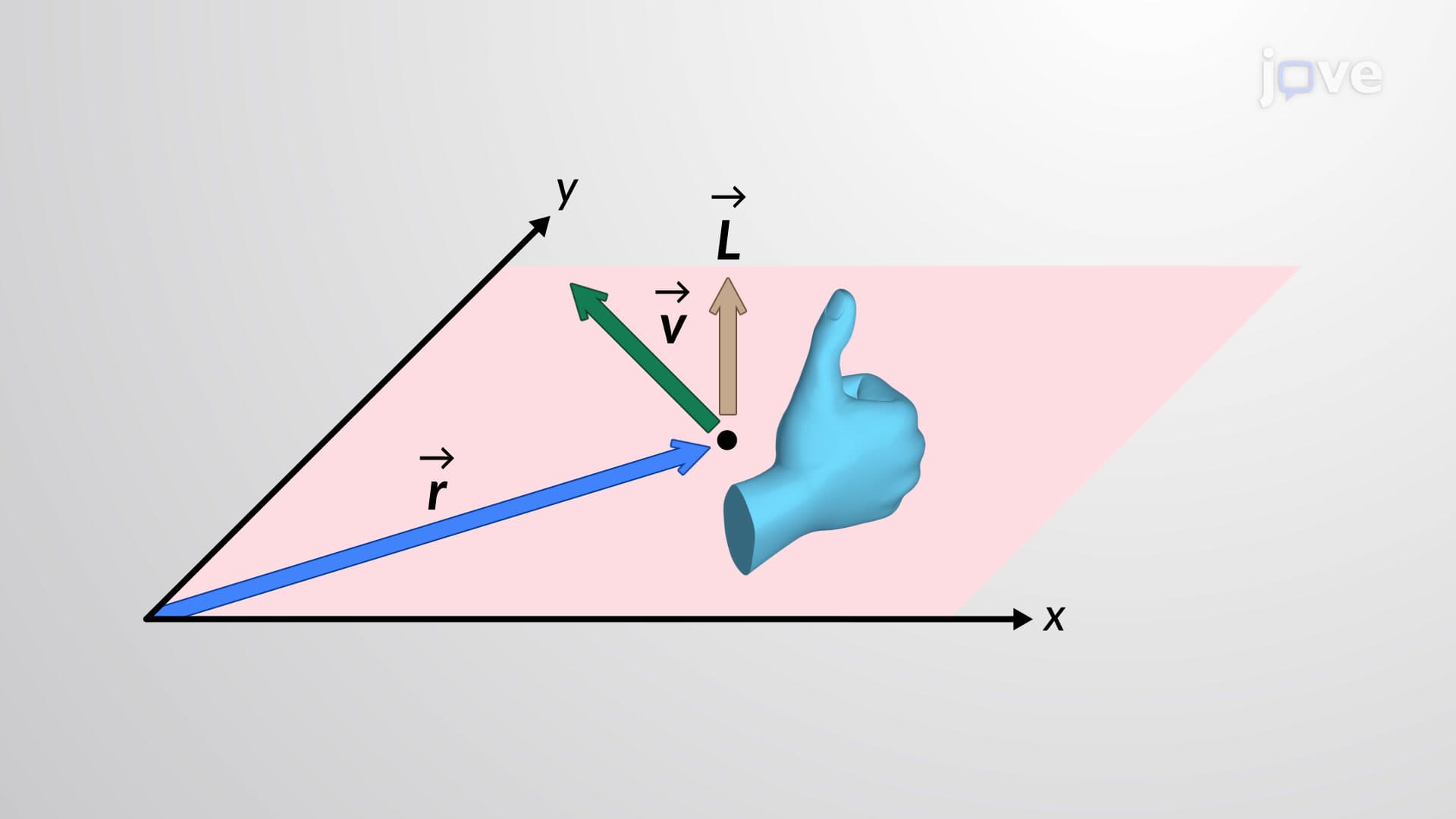
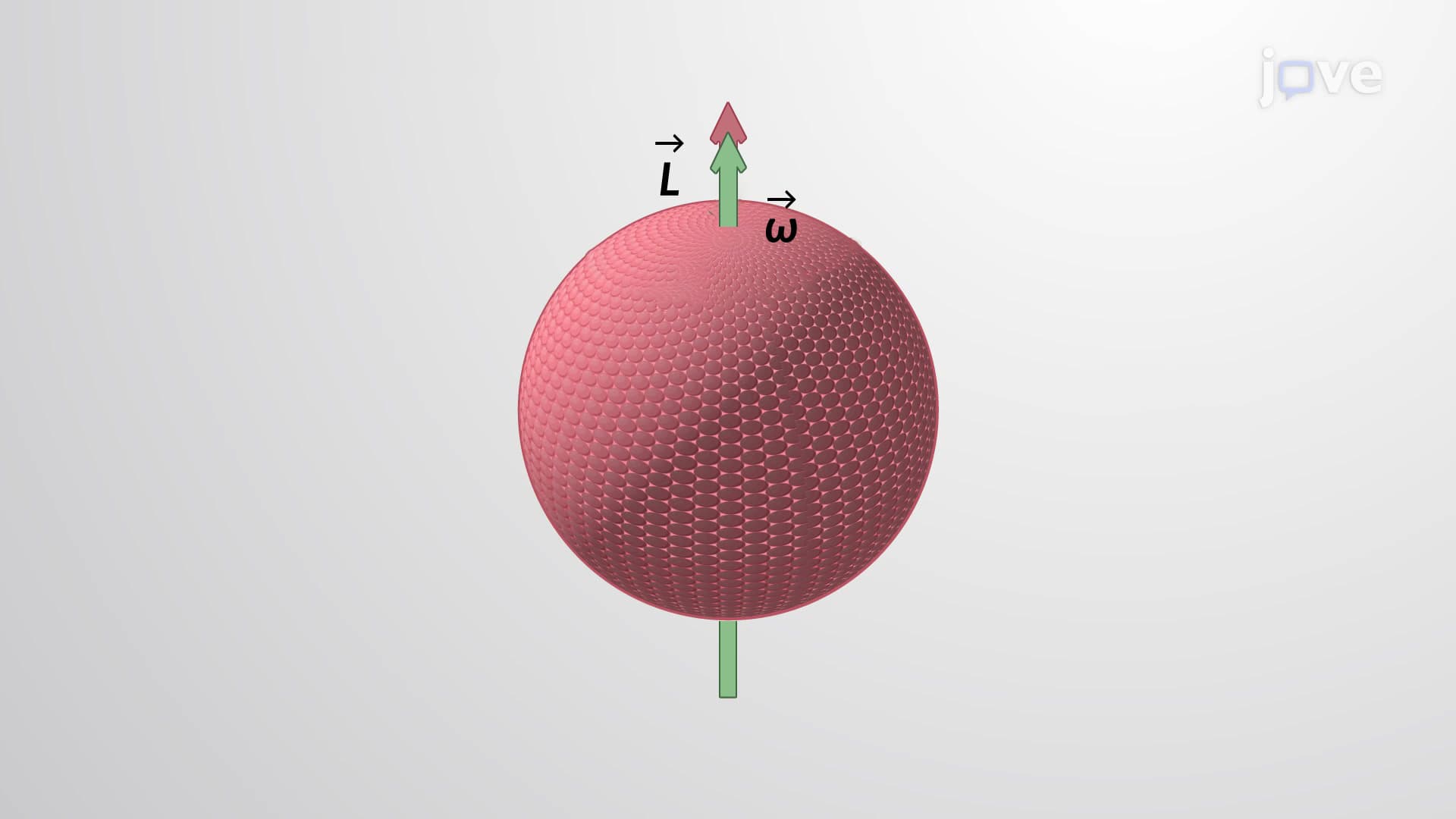
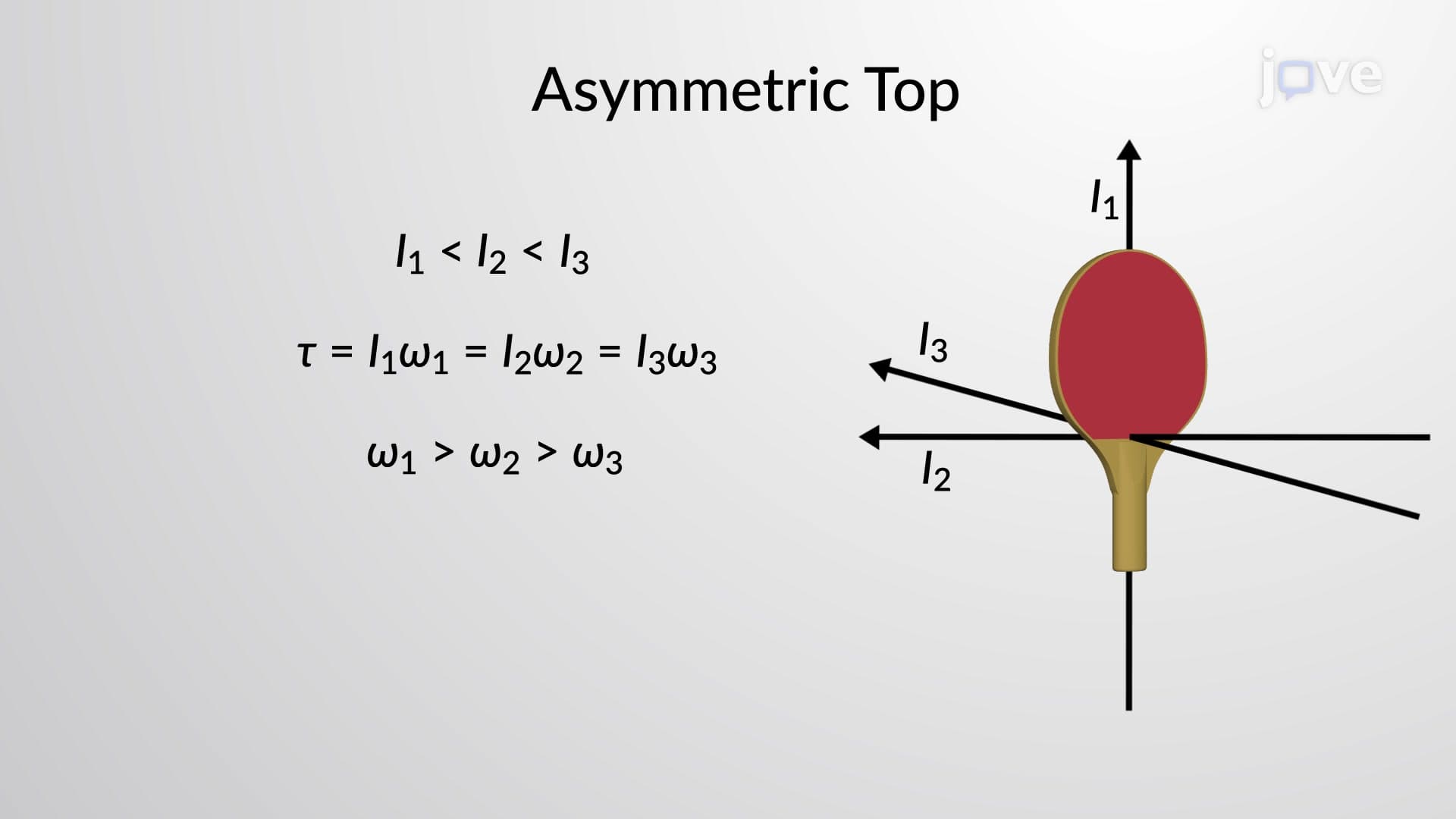
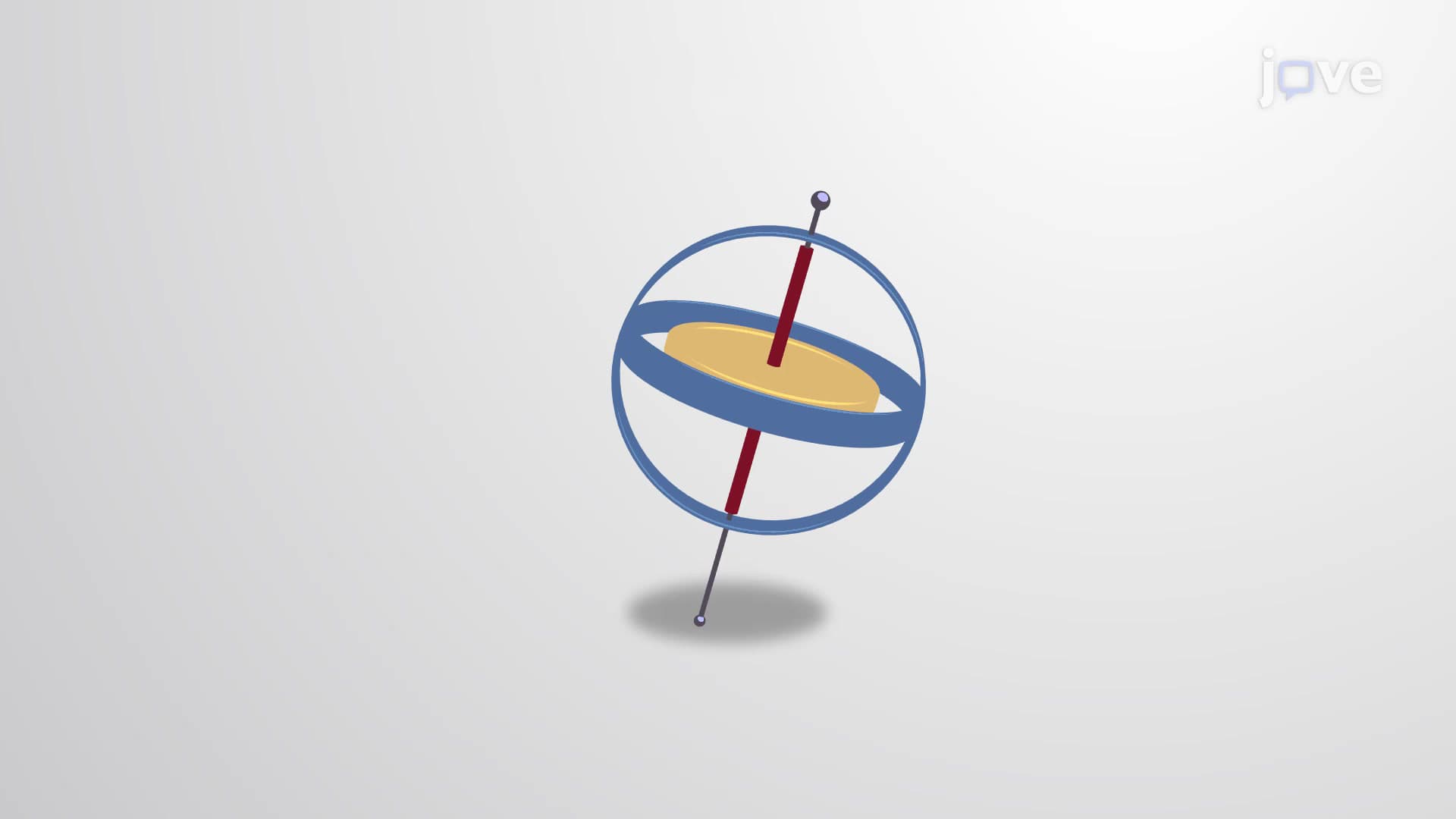
In advanced applications, the equation takes vector form: τ = Iα, where both torque and angular acceleration become vectors pointing along the axis of rotation. This vector relationship becomes crucial when analyzing gyroscopes, spinning tops, or satellite orientation systems. NASA engineers routinely use this vector form when calculating spacecraft attitude adjustments, making it a practical skill for aerospace engineering students preparing for industry careers.
The equation of rotational dynamics appears in standardized tests from high school AP Physics through graduate-level qualifying exams, making mastery essential for academic success in STEM fields.
Frequently Asked Questions
The equation of rotational dynamics, τ = Iα, describes how torque creates angular acceleration in rotating objects. It's the rotational version of Newton's second law, where torque (τ) equals moment of inertia (I) times angular acceleration (α). This equation predicts how fast objects will spin when forces are applied.
The equation of rotational dynamics defines the mathematical relationship between the twisting force (torque) applied to an object and how quickly it starts spinning. Just as F = ma describes linear motion, τ = Iα describes rotational motion. It's fundamental to understanding everything from car engines to planetary motion.
AP Physics 1 and C: Mechanics frequently test this equation through problems involving wheels, pulleys, and rotating rods. Students must identify given torques, calculate moments of inertia, and solve for angular accelerations. Practice with College Board's released exams helps familiarize you with typical question formats and scoring rubrics.
Physics 101/102 sequences at most US universities dedicate significant time to rotational dynamics, typically in the mechanics semester. Engineering programs at schools like Stanford and UC Berkeley also emphasize these concepts in dynamics courses. Advanced topics appear in graduate-level classical mechanics and aerospace engineering programs.
NASA applies rotational dynamics equations when designing reaction wheels and control moment gyroscopes for satellites and space stations. These systems generate precise torques to orient spacecraft without using fuel, relying on the τ = Iα relationship to calculate required motor specifications and response times for attitude adjustments.
Basic algebra and trigonometry suffice for most rotational dynamics problems in high school and introductory college physics. Vector calculus becomes important for advanced applications, but the core concept remains accessible to students with solid algebra skills and understanding of Newton's laws.
Create analogy charts connecting linear motion (F = ma, v = at) with rotational motion (τ = Iα, ω = αt) to see patterns. Practice derivations rather than rote memorization, and work through problems involving familiar objects like bicycle wheels or spinning ice skaters to build intuitive understanding.
Rotational dynamics leads naturally to angular momentum conservation, gyroscopic motion, and rigid body dynamics in three dimensions. Graduate students encounter these concepts in classical mechanics courses covering Lagrangian and Hamiltonian formulations, essential for theoretical physics and advanced engineering applications.
Related Micro-courses