Loading video…


 14 Concepts
 115.7K views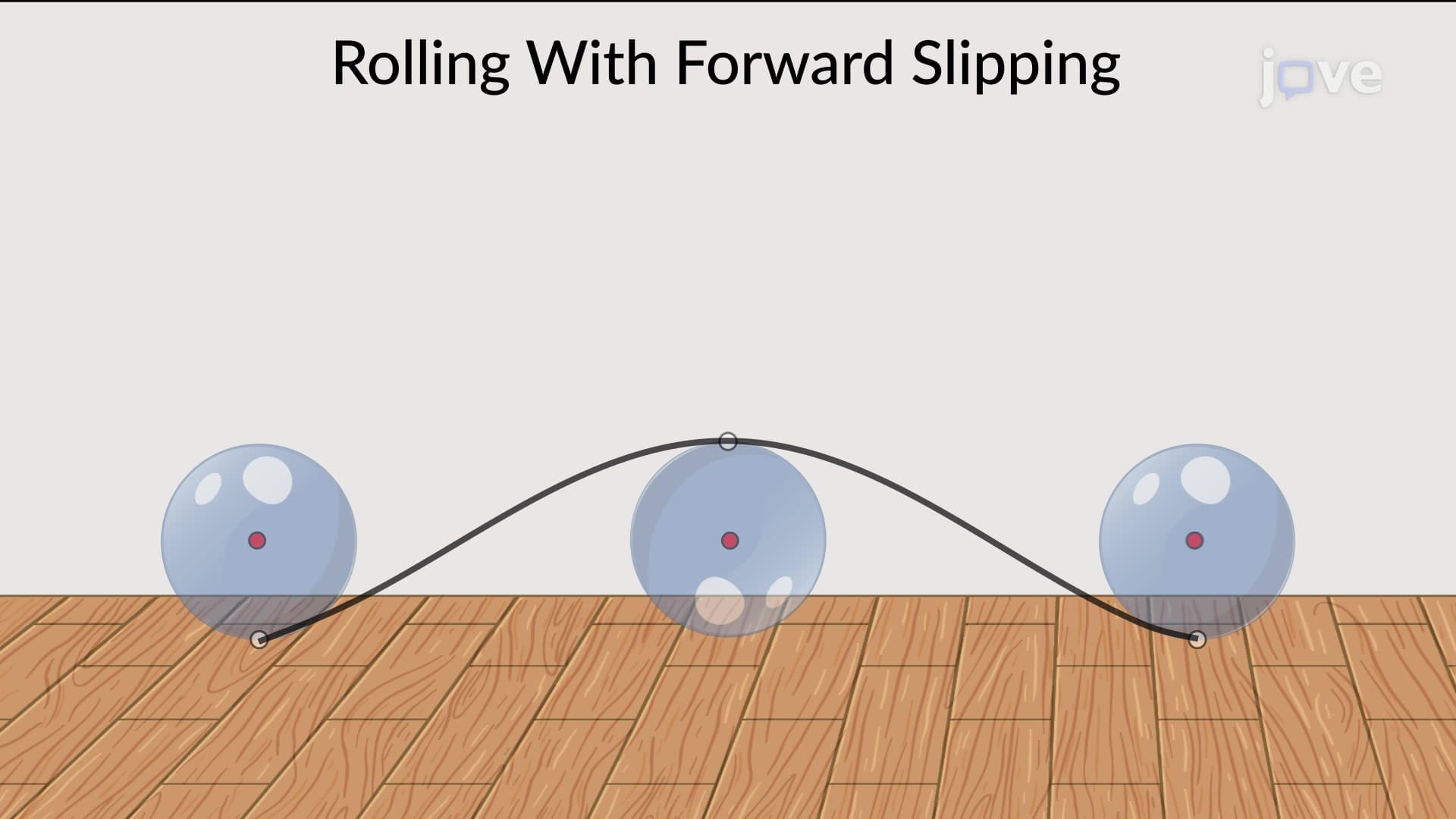

Video Summary: What Is Rolling with Slipping
Ever wondered why a car's tires screech during a burnout or why ice skating involves such smooth gliding? Rolling with slipping occurs when objects don't maintain perfect grip with surfaces, creating fascinating physics scenarios. Unlike rolling without slipping where wheels perfectly grip the road, slipping introduces kinetic friction that either accelerates or decelerates rotational motion. Picture a motorcycle doing a wheelie on asphalt in California-the rear tire experiences forward slipping as it spins faster than ideal rolling conditions. Watch the full video on JoVE Coach to master this concept with expert-led visuals and step-by-step explanations.
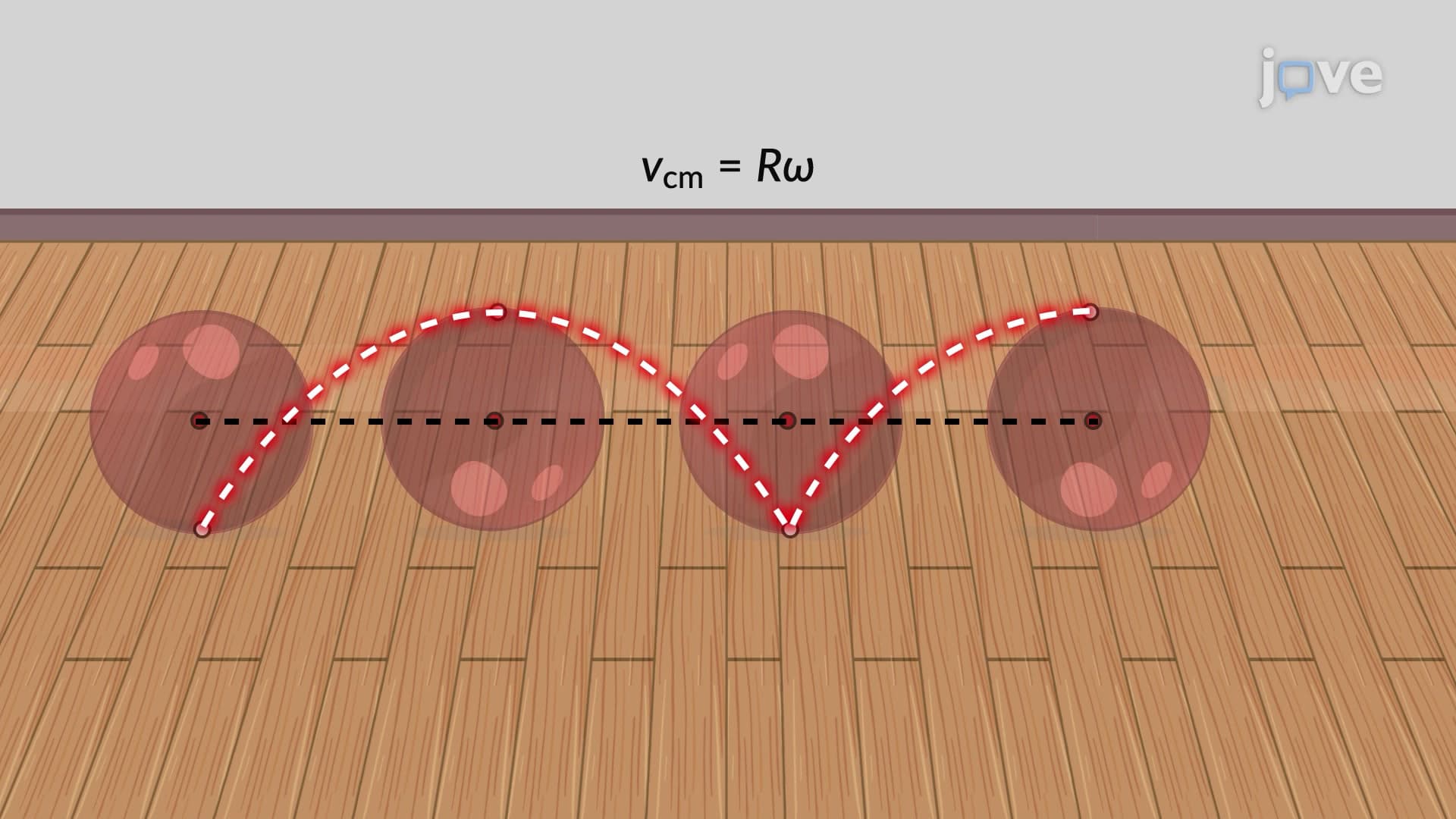
Rolling with slipping represents a complex motion where objects maintain contact with surfaces while experiencing relative motion at the contact point. Unlike ideal rolling without slipping, this phenomenon introduces kinetic friction forces that significantly alter object behavior.
In perfect rolling conditions, the relationship v = rω (linear velocity equals radius times angular velocity) holds true. However, when slipping occurs, this fundamental relationship breaks down, creating fascinating physics scenarios that appear throughout engineering applications and standardized exams like the AP Physics C: Mechanics exam.
Backward slipping occurs when objects rotate faster than ideal rolling conditions permit. Picture a drag racing car at Pomona Raceway-when the driver floors the accelerator, the rear wheels spin faster than the car moves forward. The contact point actually moves backward relative to the ground.
During backward slipping, kinetic friction acts forward (opposite to the slipping direction), attempting to increase linear velocity while decreasing angular velocity. The center of mass travels a shorter distance compared to non-slipping conditions because excessive rotation doesn't efficiently translate to forward motion. This concept frequently appears in college physics courses and MCAT physics sections, particularly in problems involving energy efficiency and mechanical systems.
Forward slipping presents the opposite scenario-objects move forward faster than their rotation would suggest. Imagine a hockey puck sliding across ice at Madison Square Garden; it maintains forward motion while barely rotating. The contact point moves forward relative to the surface.
Here, kinetic friction acts backward (opposing forward motion), working to increase angular velocity while decreasing linear velocity. The center of mass covers more distance than in pure rolling because the object slides along the surface. Understanding this mechanism proves crucial for engineering students studying mechanical systems and appears regularly in university-level dynamics courses.
The most extreme forward slipping case occurs when angular velocity reaches zero, resulting in pure translational motion-essentially sliding without any rotation. This scenario helps students understand the spectrum between pure rolling and pure sliding.
These concepts prove essential for automotive engineering, robotics, and sports science applications across American industries, from Detroit's automotive sector to Silicon Valley's robotics innovations.
Related Micro-courses