Loading video…


 14 Concepts
 115.7K views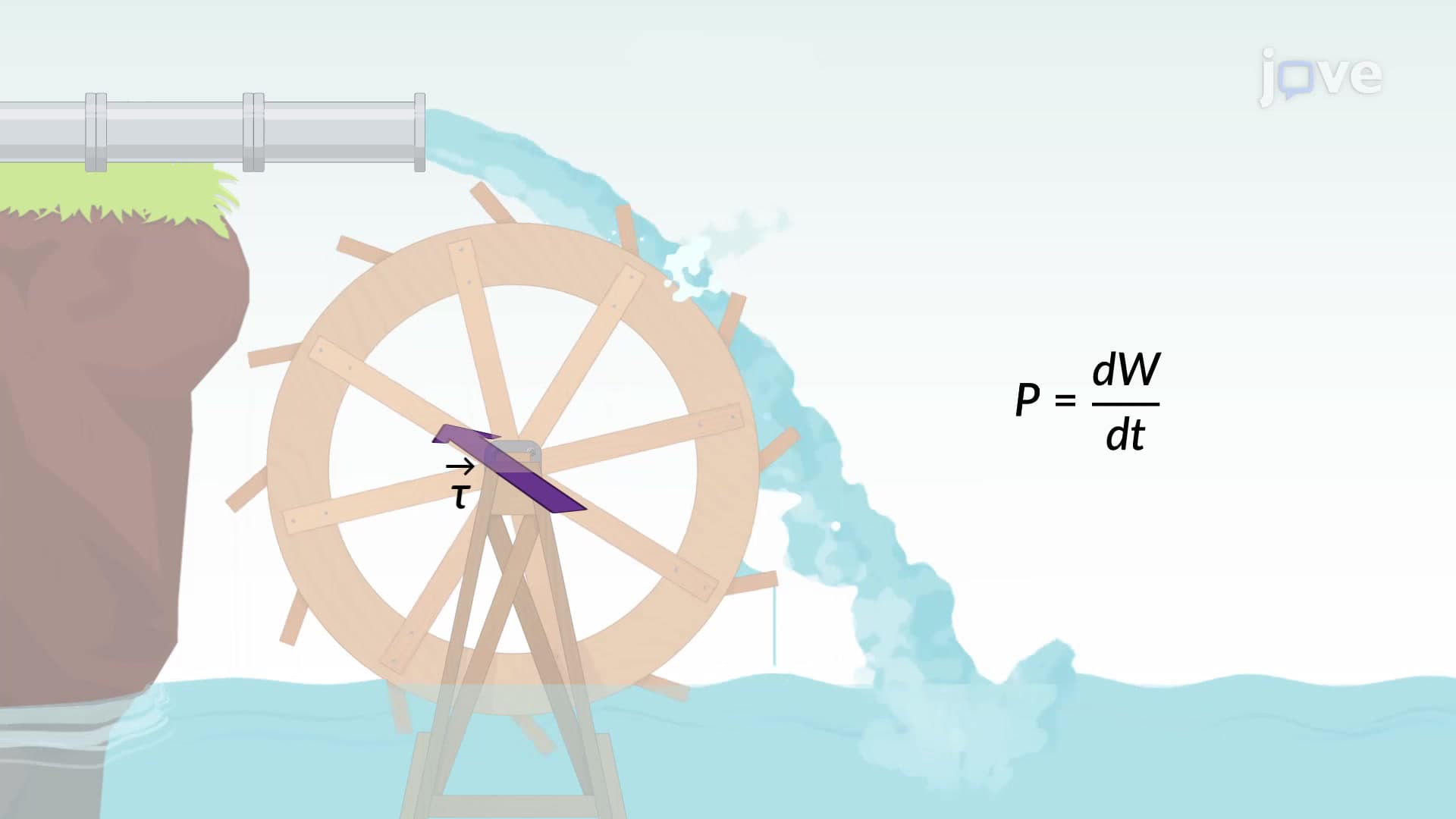

Video Summary: Work and Power for Rotational Motion Explained
Ever wonder how hydroelectric dams at Niagara Falls convert rushing water into electricity? Work and power for rotational motion governs this energy transformation through spinning turbines. When forces act on rotating objects like waterwheels or turbine blades, they perform rotational work that depends on torque and angular displacement. Power plants across the US harness this principle to generate electricity efficiently. Work and power for rotational motion explained demonstrates how torque multiplied by angular velocity determines the power output of rotating systems. Watch the full video on JoVE Coach to master this concept with expert-led visuals and step-by-explanations.
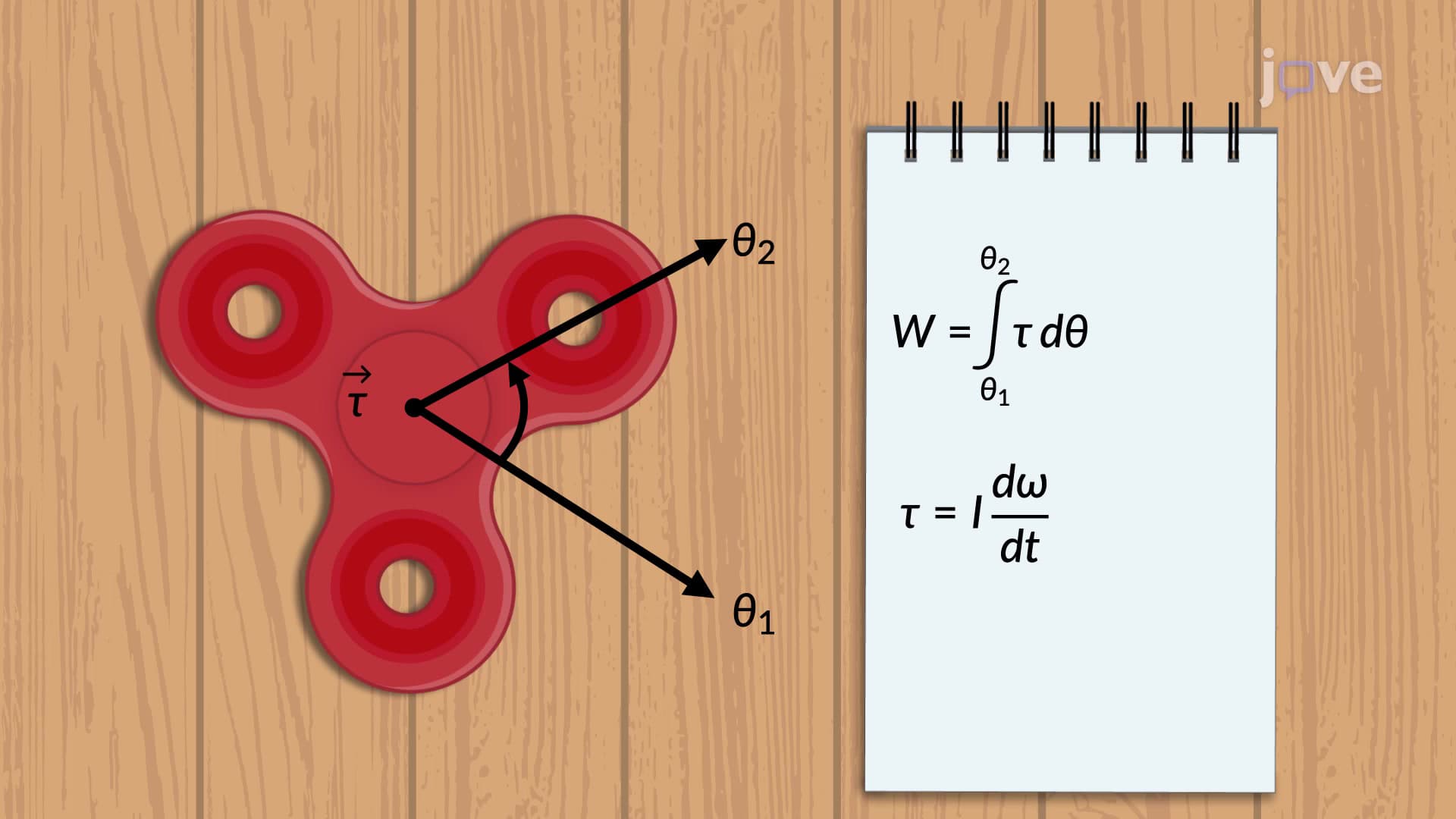
Work and power for rotational motion extends familiar linear mechanics concepts to spinning objects. When forces act on rotating bodies, they create torque that causes angular displacement. The rotational work done equals the product of net torque and angular displacement: W = τθ. This relationship mirrors linear work (W = Fd) but uses rotational quantities instead.
Consider a wind turbine in Kansas generating electricity. The wind exerts forces on the turbine blades, creating torque about the central axis. As the turbine rotates through an angle θ, the work done by wind forces equals the torque multiplied by this angular displacement. This fundamental relationship governs energy conversion in countless American industries.
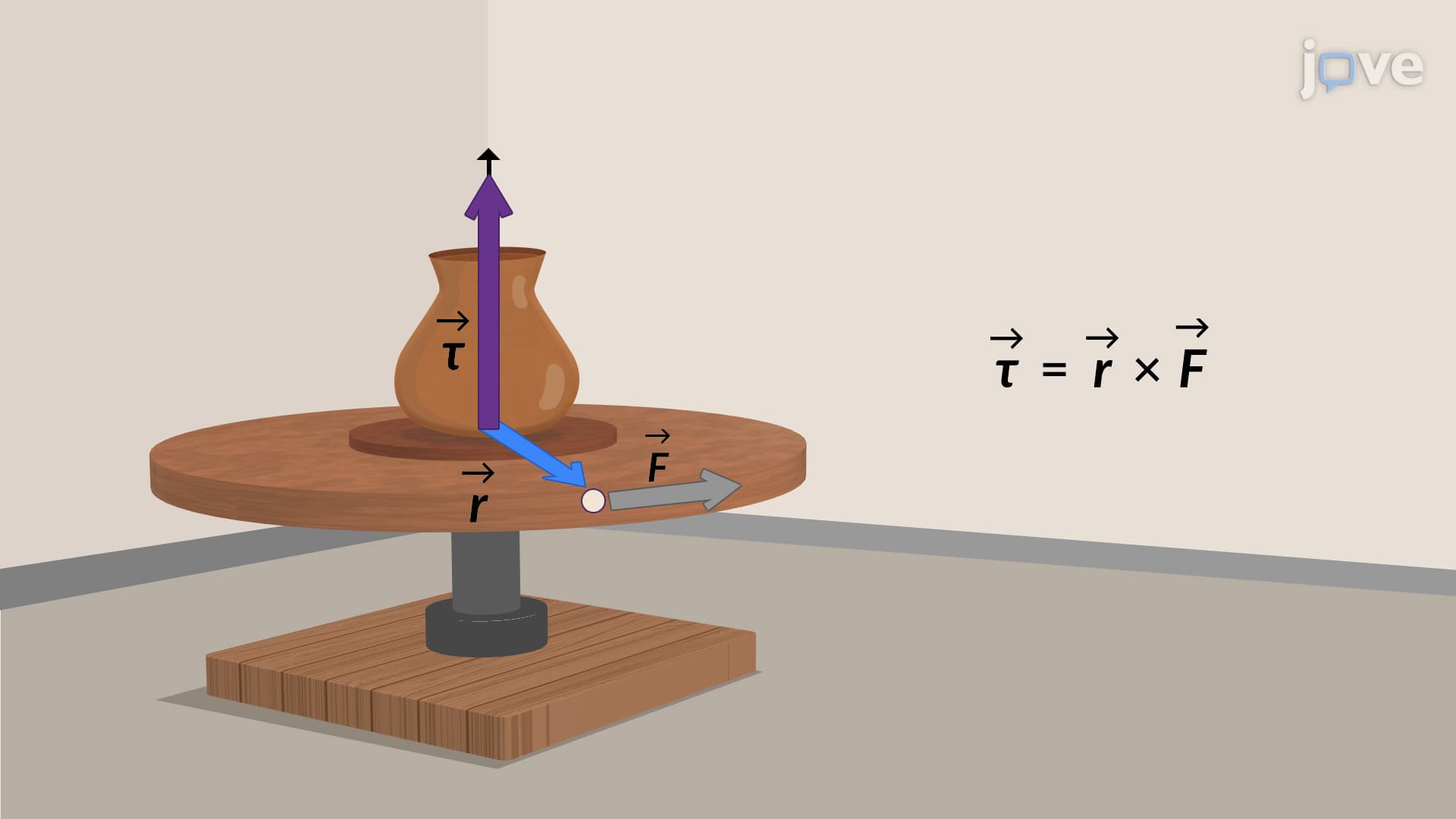
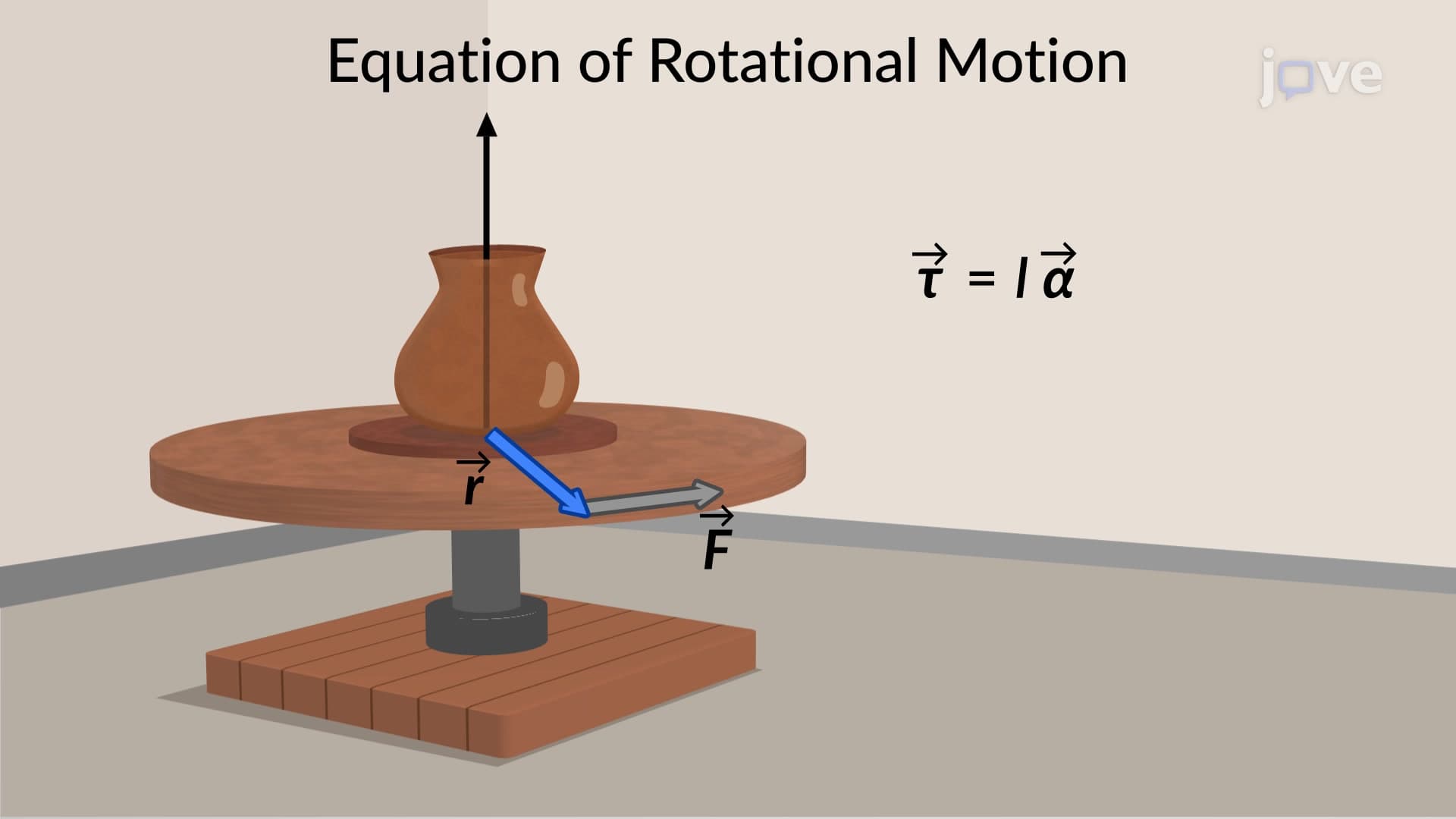
The mathematical foundation begins with a point force acting on a rotating object at radius r from the rotation axis. When this force F acts perpendicular to the radius vector, it creates torque τ = rF. As the object rotates through small angle dθ, the point moves through arc length ds = rdθ. The work done by this force equals F·ds = F·rdθ = τdθ.
For non-perpendicular forces, only the tangential component contributes to rotation. If force F makes angle φ with the tangent direction, then τ = rF sin φ, and the same work relationship W = τθ applies. This derivation appears regularly in AP Physics C mechanics problems and college engineering courses.
Rotational power represents the rate of doing rotational work. Since power equals work divided by time, we get P = W/t = τθ/t. The angular velocity ω equals θ/t, so rotational power becomes P = τω. This elegant relationship shows that power depends on both the applied torque and how fast the object rotates.
Electric generators throughout the US demonstrate this principle. At the Hoover Dam, water flow creates torque on turbine blades. The resulting angular velocity, combined with this torque, determines the electrical power output. Engineers optimize both torque and rotational speed to maximize power generation efficiency.
These concepts appear extensively in standardized tests and college curricula. AP Physics C students encounter rotational work problems involving flywheels, pulleys, and rotating machinery. College engineering programs use these principles in courses covering mechanical design, power systems, and energy conversion.
Understanding rotational work and power proves essential for careers in aerospace, automotive, and renewable energy industries. From jet engine turbines to automobile transmissions, American technology relies heavily on optimizing rotational power transfer and energy efficiency through these fundamental physics principles.
Related Micro-courses