Loading video…


 14 Concepts
 115.7K views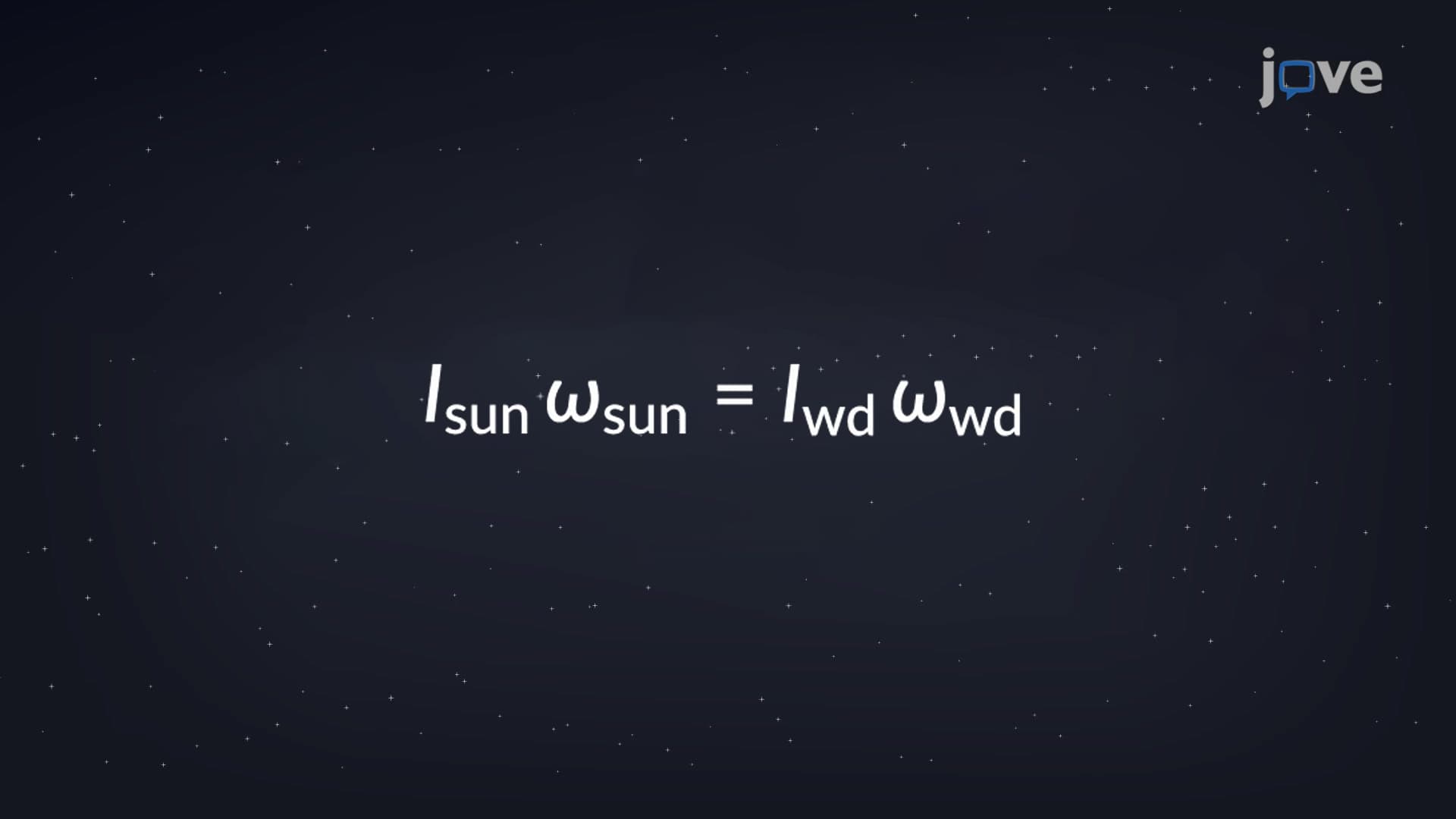

Video Summary: Conservation of Angular Momentum Application Explained
Ever wondered why figure skaters spin faster when they pull their arms in? This phenomenon demonstrates conservation of angular momentum application in action. When the Sun eventually collapses into a white dwarf star, its rotation speed increases dramatically as its radius shrinks-the same physics principle behind NASA's satellite spin stabilization techniques. Conservation of Angular Momentum Application Explained reveals how this fundamental law governs rotating systems from stellar evolution to everyday spinning objects. Watch the full video on JoVE Coach to master this concept with expert-led visuals and step-by-step explanations.
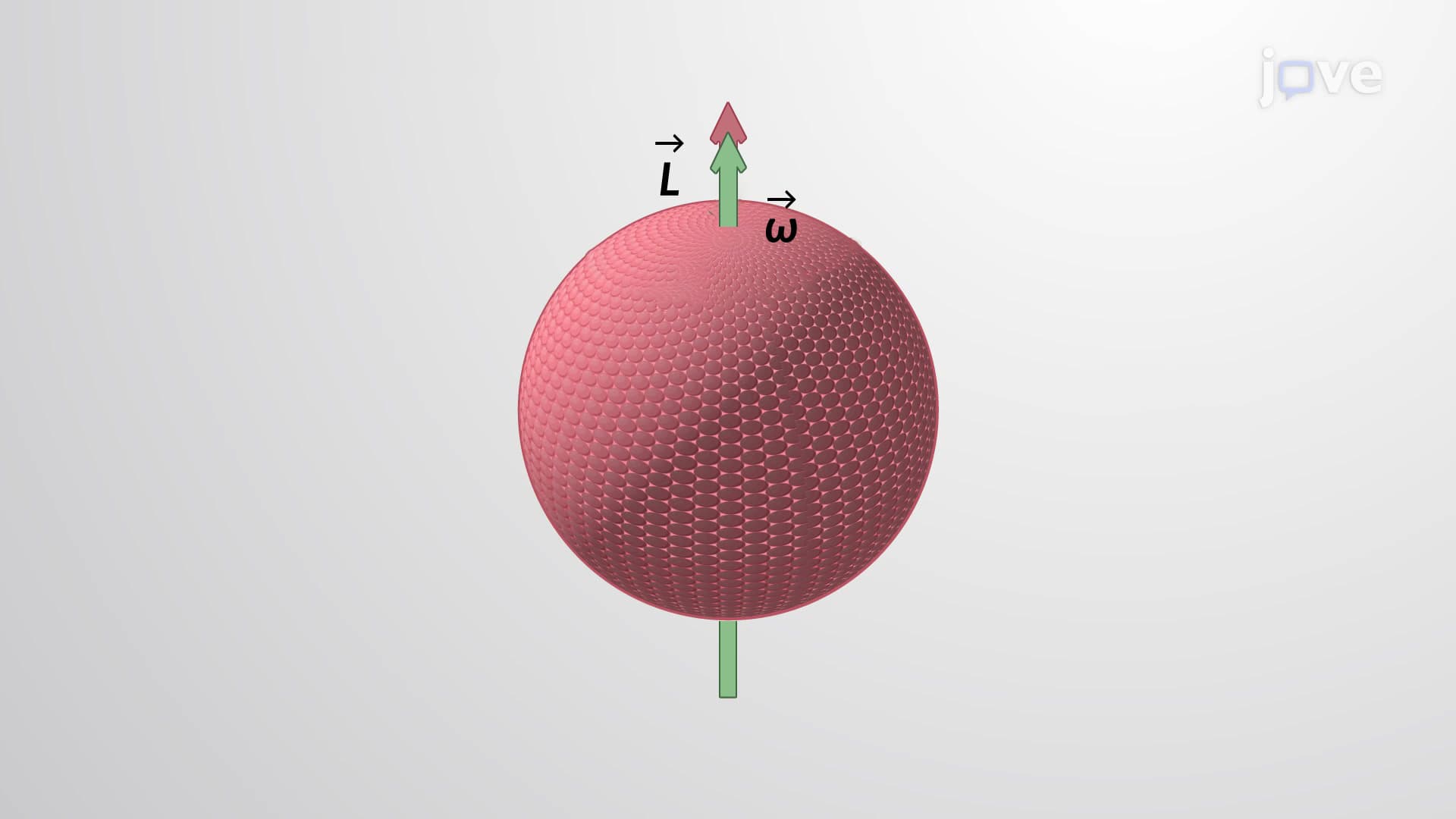
Conservation of angular momentum application represents one of physics' most elegant and powerful principles. When no external torque acts on a rotating system, the total angular momentum remains constant: L = Iω = constant. This fundamental law explains phenomena ranging from pirouetting dancers to collapsing stars, making it essential for students preparing for AP Physics exams and college-level mechanics courses.
The mathematical foundation relies on the relationship L = Iω, where L represents angular momentum, I denotes moment of inertia, and ω indicates angular velocity. For uniform spherical objects like stars, I = (2/5)MR², creating a direct connection between mass distribution and rotational properties.
When massive stars collapse into white dwarfs, they provide spectacular demonstrations of angular momentum conservation. Consider our Sun, rotating at 2.6 × 10⁻⁶ radians per second. If it collapsed to white dwarf size-reducing its radius by a factor of 500-conservation principles demand that angular velocity increases dramatically to compensate for the decreased moment of inertia.
This stellar transformation follows the conservation equation: I(initial) × ω(initial) = I(final) × ω(final). Since I = (2/5)MR² for spherical objects, the radius reduction creates a massive angular velocity increase. Students studying for MCAT physics sections frequently encounter similar problems involving conservation principles in rotating systems.
The rotational kinetic energy equation KE(rot) = (1/2)Iω² reveals how energy transforms during conservation processes. While angular momentum stays constant, kinetic energy often increases significantly during collapse scenarios. This energy increase comes from gravitational potential energy conversion-a concept crucial for understanding stellar physics and frequently tested on AP Physics C exams.
Angular momentum conservation governs numerous terrestrial applications. Figure skaters utilize this principle by extending or retracting limbs to control spin rates. NASA engineers apply conservation laws when designing satellite attitude control systems. Even playground merry-go-rounds demonstrate conservation when children move closer to or farther from the rotation axis. Understanding these applications helps students connect abstract physics principles to observable phenomena, enhancing comprehension for standardized exams and practical problem-solving skills.
Related Micro-courses