Loading video…


 14 Concepts
 115.7K views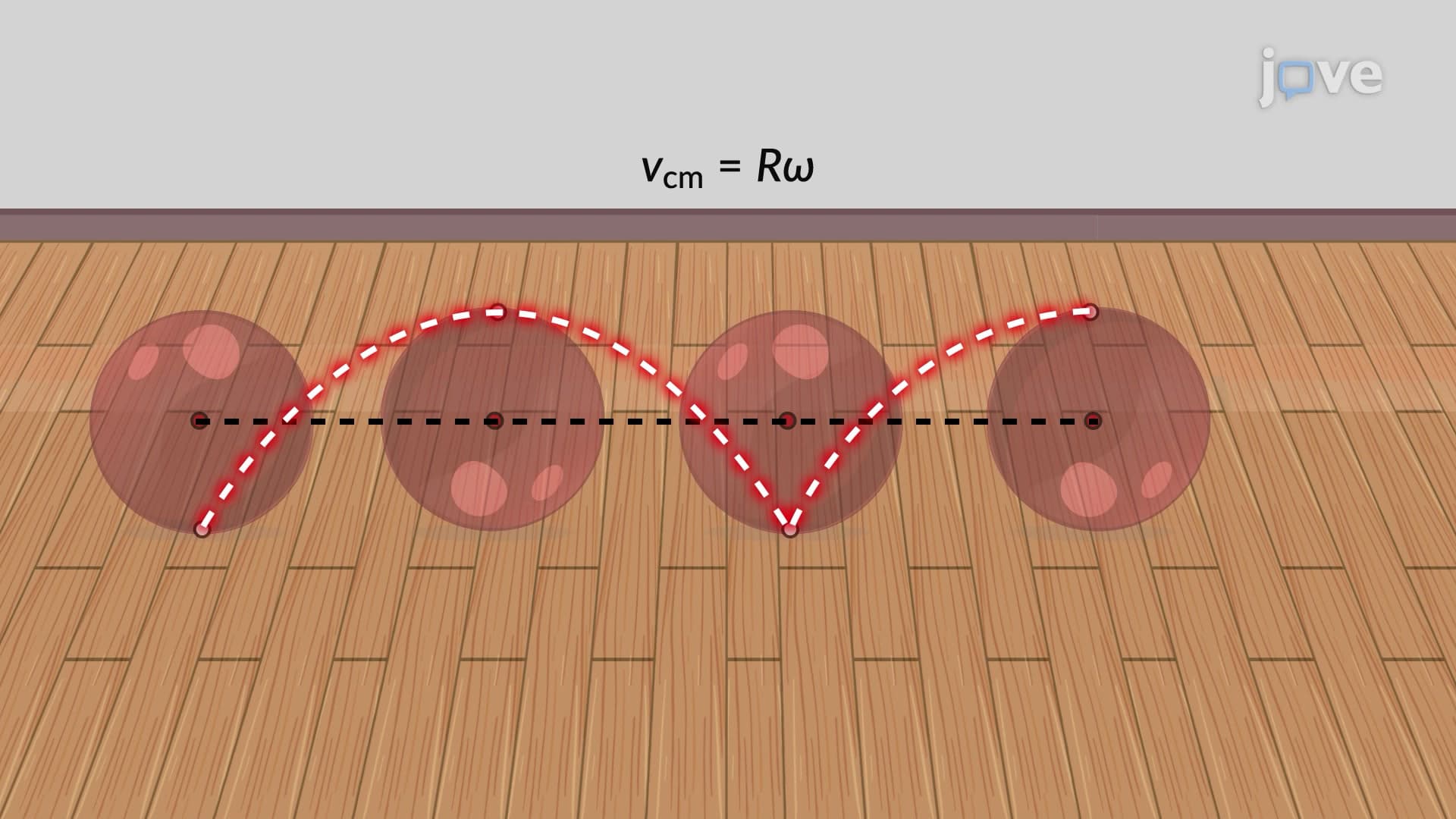

Video Summary: What Is Rolling Without Slipping
Ever wonder why a bowling ball gracefully curves down the lane while a hockey puck slides straight across ice? The secret lies in rolling without slipping, a fundamental physics concept where rotational and translational motion perfectly synchronize. When a basketball rolls across a gymnasium floor, its bottom point momentarily has zero velocity relative to the ground, creating this elegant motion. What is Rolling Without Slipping demonstrates how friction transforms simple sliding into complex rotational dynamics. Watch the full video on JoVE Coach to master this concept with expert-led visuals and step-by-step explanations.
Rolling without slipping represents one of physics' most elegant demonstrations of how rotational and translational motion can work in perfect harmony. This phenomenon occurs when an object moves along a surface such that its rotational speed exactly matches its forward motion, creating zero relative velocity between the contact point and the surface.
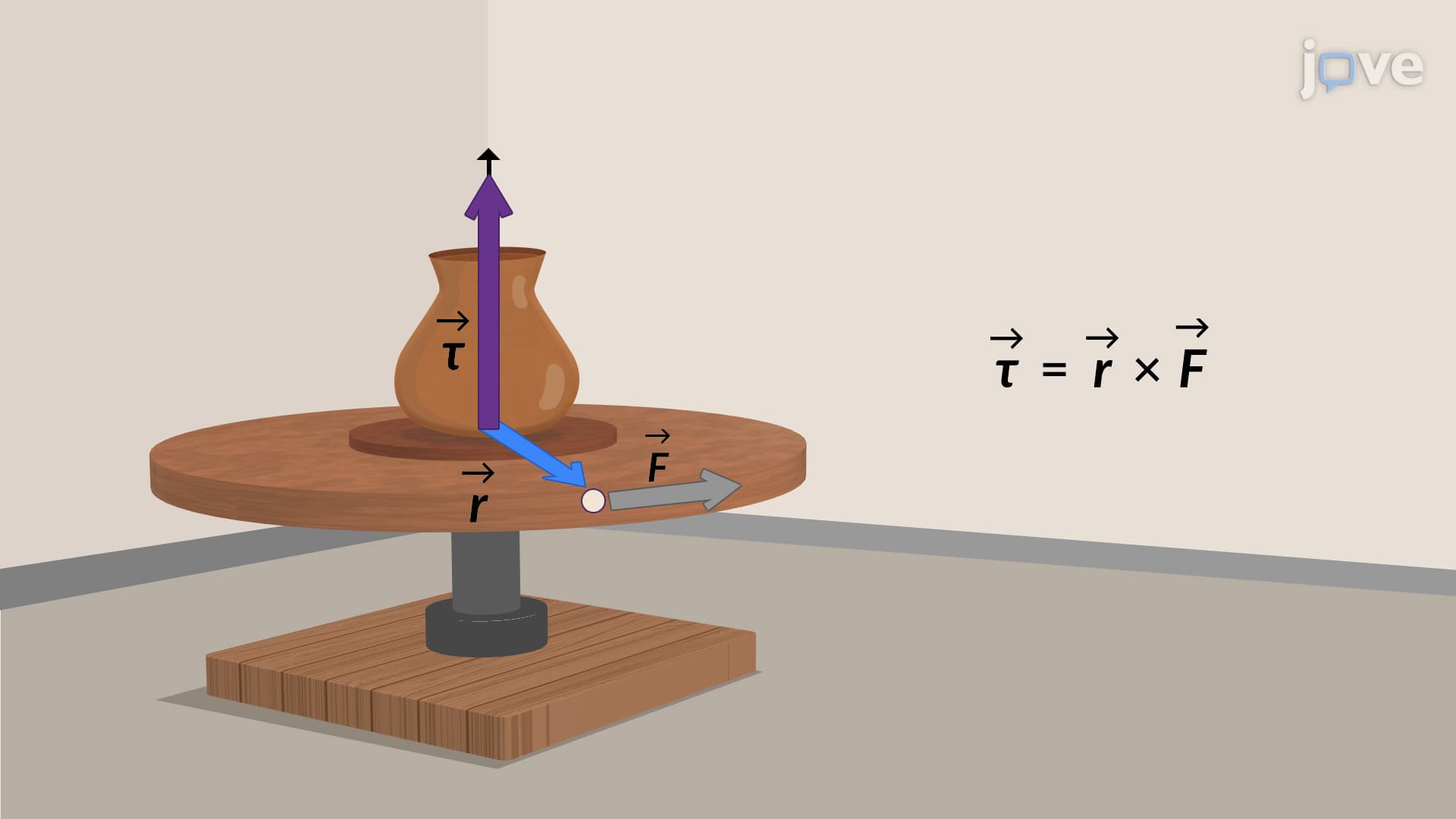
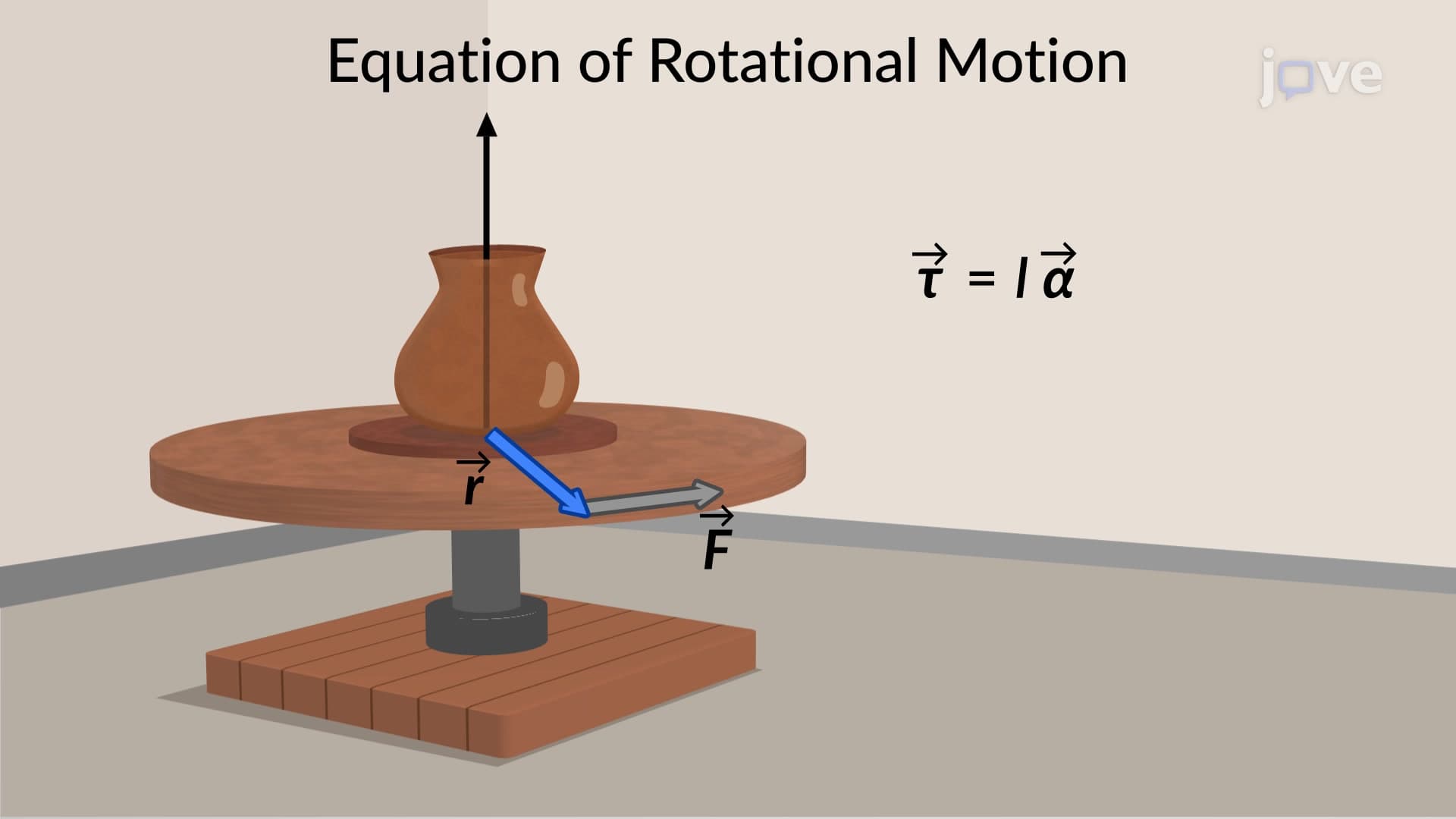
The transition from sliding to rolling involves a fascinating interplay of forces. When a sphere or cylinder moves on a frictionless surface, it experiences pure translation-sliding without rotation. However, introduce friction, and the dynamics change dramatically. The frictional force, acting opposite to the direction of motion, creates a torque about the object's center of mass. This torque generates angular acceleration, causing the object to begin spinning.
As the spinning speed increases, something remarkable happens. The tangential velocity of the bottom point (due to rotation) begins to oppose the translational velocity of the center of mass. When these velocities become equal in magnitude but opposite in direction, they cancel out, resulting in zero velocity at the contact point-the hallmark of rolling without slipping.
The fundamental equation governing this motion is v = ωr, where v represents the linear velocity of the center of mass, ω is the angular velocity, and r is the radius. This relationship appears frequently on AP Physics exams and college mechanics courses.
Consider a bicycle wheel rolling down a San Francisco hill. The wheel's center moves forward at velocity v, while the wheel rotates with angular velocity ω. At any instant, the topmost point of the wheel moves at 2v relative to the ground, while the bottom point remains stationary. This explains why bicycle spokes appear blurred at the top and clearest at the bottom when photographed.
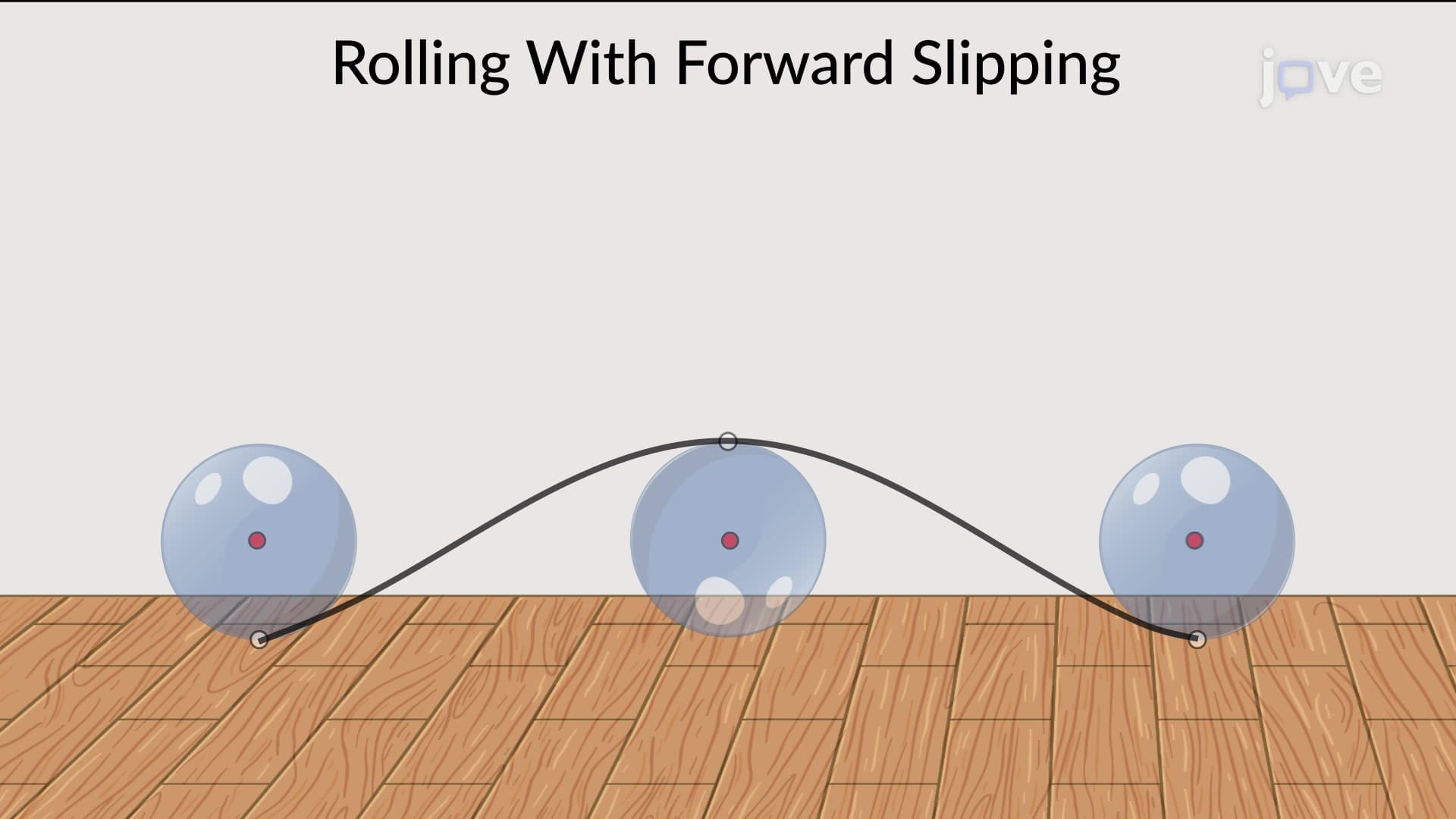
While the center of mass follows a straight path, any point on the rim traces a curve called a cycloid. This concept challenges students taking calculus-based physics courses at universities like MIT or Stanford. The cycloid represents the path traced by a point on a circle as it rolls along a straight line-a beautiful example of parametric motion that combines linear and circular components.
Understanding rolling without slipping proves essential for engineering applications, from designing efficient car transmissions to analyzing the motion of industrial conveyor systems in US manufacturing plants.
Related Micro-courses