Loading subject page…

- Physics
- Dynamics of Rotational Motions
- Rolling With Slipping
Micro-course: Dynamics of Rotational Motions
115,700 views
Learn key concepts and earn your certificate.


Rolling With Slipping

00:00
01:14
Video Summary: What Is Rolling with Slipping
Ever wondered why a car's tires screech during a burnout or why ice skating involves such smooth gliding? Rolling with slipping occurs when objects don't maintain perfect grip with surfaces, creating fascinating physics scenarios. Unlike rolling without slipping where wheels perfectly grip the road, slipping introduces kinetic friction that either accelerates or decelerates rotational motion. Picture a motorcycle doing a wheelie on asphalt in California—the rear tire experiences forward slipping as it spins faster than ideal rolling conditions. Watch the full video on JoVE Coach to master this concept with expert-led visuals and step-by-step explanations.
- Understand what is rolling with slipping and how it differs from pure rolling motion
- Identify the two types of slipping: backward slipping (over-rotation) and forward slipping (under-rotation)
- Analyze how kinetic friction responds differently in backward versus forward slipping scenarios
- Compare the distance traveled by an object's center of mass during slipping versus non-slipping conditions
- Evaluate the relationship between angular velocity, linear velocity, and friction forces during slipping motion
- Apply rolling with slipping principles to solve physics problems involving wheels, cylinders, and spheres
- Recognize real-world examples where slipping occurs, from vehicle dynamics to sports equipment
- Explore the extreme case where forward slipping leads to pure translational motion with zero angular velocity
Understanding Rolling With Slipping Fundamentals
Rolling with slipping represents a complex motion where objects maintain contact with surfaces while experiencing relative motion at the contact point. Unlike ideal rolling without slipping, this phenomenon introduces kinetic friction forces that significantly alter object behavior.
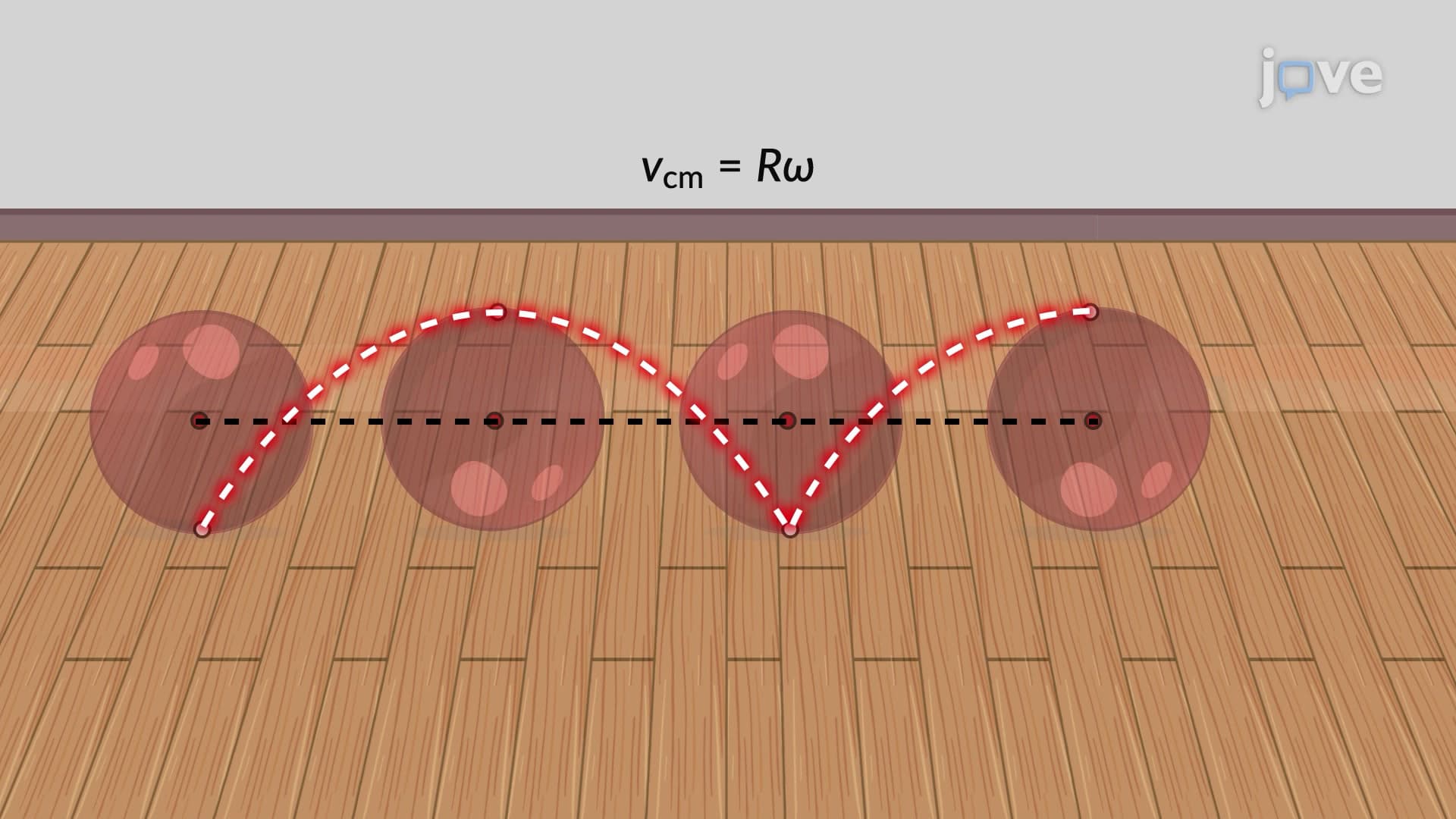
In perfect rolling conditions, the relationship v = rω (linear velocity equals radius times angular velocity) holds true. However, when slipping occurs, this fundamental relationship breaks down, creating fascinating physics scenarios that appear throughout engineering applications and standardized exams like the AP Physics C: Mechanics exam.
Backward Slipping: When Rotation Dominates
Backward slipping occurs when objects rotate faster than ideal rolling conditions permit. Picture a drag racing car at Pomona Raceway—when the driver floors the accelerator, the rear wheels spin faster than the car moves forward. The contact point actually moves backward relative to the ground.
During backward slipping, kinetic friction acts forward (opposite to the slipping direction), attempting to increase linear velocity while decreasing angular velocity. The center of mass travels a shorter distance compared to non-slipping conditions because excessive rotation doesn't efficiently translate to forward motion. This concept frequently appears in college physics courses and MCAT physics sections, particularly in problems involving energy efficiency and mechanical systems.
Forward Slipping: When Translation Dominates
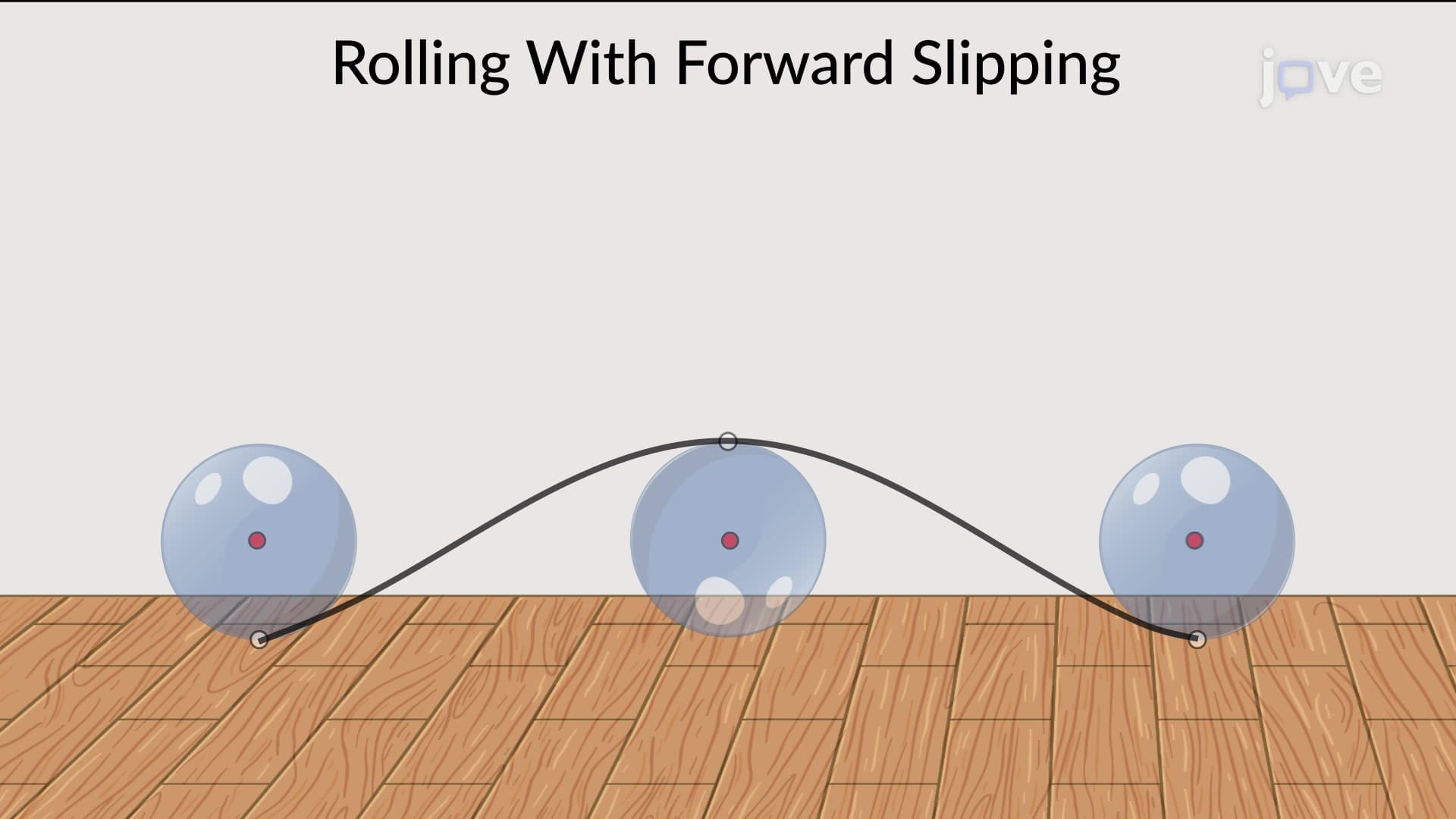
Forward slipping presents the opposite scenario—objects move forward faster than their rotation would suggest. Imagine a hockey puck sliding across ice at Madison Square Garden; it maintains forward motion while barely rotating. The contact point moves forward relative to the surface.
Here, kinetic friction acts backward (opposing forward motion), working to increase angular velocity while decreasing linear velocity. The center of mass covers more distance than in pure rolling because the object slides along the surface. Understanding this mechanism proves crucial for engineering students studying mechanical systems and appears regularly in university-level dynamics courses.
Extreme Cases and Practical Applications
The most extreme forward slipping case occurs when angular velocity reaches zero, resulting in pure translational motion—essentially sliding without any rotation. This scenario helps students understand the spectrum between pure rolling and pure sliding.
These concepts prove essential for automotive engineering, robotics, and sports science applications across American industries, from Detroit's automotive sector to Silicon Valley's robotics innovations.
Frequently Asked Questions
Rolling with slipping occurs when an object maintains contact with a surface while experiencing relative motion at the contact point, violating the ideal rolling condition v = rω. This creates two scenarios: backward slipping (excessive rotation) and forward slipping (excessive translation), both involving kinetic friction forces that work to restore ideal rolling conditions.
AP Physics C: Mechanics frequently tests rolling with slipping through energy conservation problems and rotational dynamics scenarios. Students must analyze friction forces, calculate work done by friction, and determine whether objects experience backward or forward slipping based on given conditions. These problems often involve cylinders rolling down inclined planes with varying friction coefficients.
The MCAT emphasizes understanding energy relationships and friction forces in both scenarios. Rolling without slipping conserves mechanical energy (no kinetic friction work), while rolling with slipping involves energy dissipation through kinetic friction. Students must recognize when to apply v = rω versus when slipping invalidates this relationship.
Baseball pitching demonstrates rolling with slipping perfectly—when a pitcher throws a curveball at Yankee Stadium, the ball initially slips against the air and ground upon landing, experiencing forward slipping as it moves faster than pure rolling would allow. The ball's rotation gradually matches its translational motion through friction forces.
Rolling with slipping builds naturally on basic rotational motion concepts taught in high school physics. Students who understand torque, angular velocity, and friction forces can master this topic through step-by-step analysis. The key is visualizing the contact point motion and friction direction in each scenario.
Practice identifying slipping direction first, then determine friction force direction (always opposing slipping). Master the relationship between friction work and changes in kinetic energy. Create diagrams showing force directions and use energy conservation principles to solve complex problems involving multiple rolling objects.
Rolling with slipping connects to advanced mechanics topics including impulse-momentum applications, gyroscopic motion, and mechanical vibrations. Students can explore applications in robotics, vehicle dynamics, and precision manufacturing processes where controlling slipping becomes crucial for optimal performance.
Yes, engineering programs at schools like MIT, Stanford, and UC Berkeley integrate rolling with slipping into mechanical systems design, robotics courses, and automotive engineering curricula. Understanding slipping mechanics proves essential for designing efficient transmissions, robotic wheels, and manufacturing equipment across American industries.
Related Micro-courses