Loading subject page…

- Statistics
- Analysis of Variance
- Two-Way ANOVA
Micro-course: Analysis of Variance
38,403 views
Learn key concepts and earn your certificate.



Two-Way ANOVA
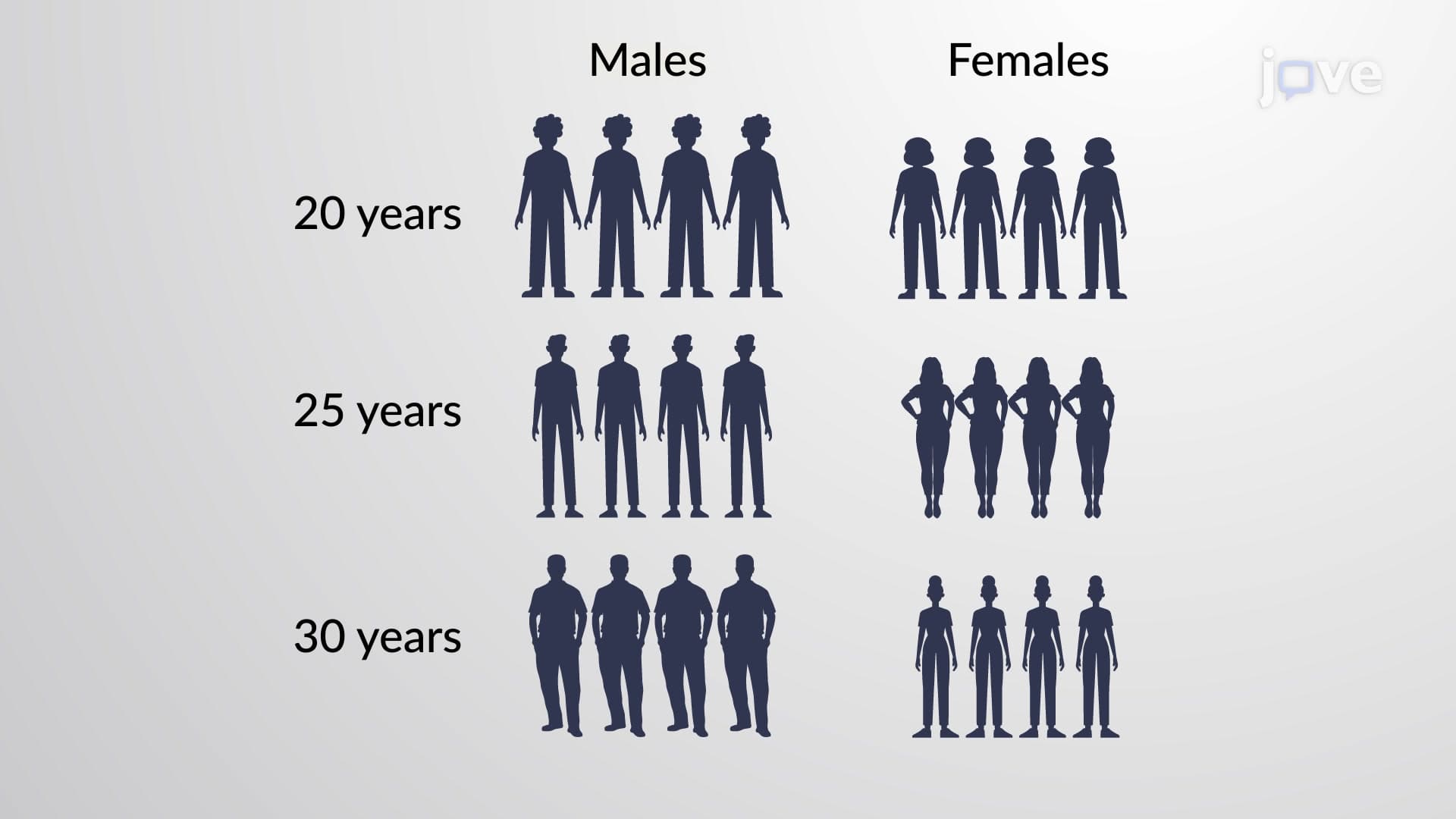

00:00
01:17
Video Summary: What Is Two Way Anova
Did you know that pharmaceutical companies use statistical tests to determine whether both age and gender affect drug effectiveness simultaneously? Two way ANOVA is a powerful statistical method that compares means across groups when two different factors might influence the outcome. For instance, researchers at Johns Hopkins might analyze whether both teaching method and class size impact student test scores in Maryland high schools. This analysis helps identify interaction effects between variables that could be missed with simpler tests. Watch the full video on JoVE Coach to master this concept with expert-led visuals and step-by-step explanations.
- Understand what is two way ANOVA and how it differs from one-way ANOVA by analyzing two independent variables simultaneously
- Identify the three types of hypotheses tested: main effect of factor A, main effect of factor B, and interaction effect between factors
- Analyze interaction plots to determine whether two factors work independently or influence each other's effect on the dependent variable
- Compare F-statistics and p-values across multiple hypotheses to make informed statistical decisions
- Evaluate when parallel lines in interaction plots indicate no interaction versus non-parallel lines showing significant interaction
- Apply two-way ANOVA to real-world scenarios like comparing treatment effectiveness across different age groups and genders
- Recognize the assumptions required for valid two-way ANOVA results including normality, independence, and equal variances
- Explore post-hoc testing procedures when significant main effects are detected in the analysis
Understanding What is Two Way ANOVA
Two way ANOVA (Analysis of Variance) represents a statistical technique that simultaneously examines how two independent categorical variables, called factors, affect a continuous dependent variable. Unlike one-way ANOVA which tests only one factor, this method reveals whether factors work independently or interact to influence outcomes. Students encounter this concept in AP Statistics, college statistics courses, and research methodology classes across universities like UCLA, University of Texas, and Florida State University.
The Three Hypotheses in Two Way ANOVA Analysis
Every two way ANOVA tests three distinct null hypotheses. First, the main effect of factor A assumes this factor alone doesn't significantly affect the dependent variable. Second, the main effect of factor B similarly assumes no significant impact from the second factor. Third, the interaction effect hypothesis states that the two factors don't work together to influence the outcome beyond their individual effects. For example, when studying blood pressure medication effectiveness, researchers test whether age alone affects results, whether gender alone matters, and whether age and gender combined create unique effects not explained by either factor individually.
Interpreting Interaction Effects and F-Statistics
Interaction effects appear visually through interaction plots where roughly parallel lines indicate no interaction, while intersecting or diverging lines suggest significant interaction. The F-statistic for each hypothesis follows an F-distribution, and corresponding p-values determine statistical significance. When p-values fall below 0.05, researchers typically reject the null hypothesis. At institutions like Stanford Medical School, researchers analyzing clinical trial data might find that while age significantly affects treatment response (reject null), gender shows no main effect (fail to reject null), but age and gender together create no additional interaction effect.
Real-World Applications in US Healthcare and Education
Two way ANOVA appears frequently in medical research published in journals like the New England Journal of Medicine, where researchers examine how patient demographics affect treatment outcomes. Educational researchers use this method to analyze standardized test performance across different teaching methods and socioeconomic backgrounds. The technique proves essential for MCAT preparation, particularly in behavioral sciences sections, and appears regularly in undergraduate psychology and biology research methods courses. Students planning graduate school should master this concept as it forms the foundation for more advanced statistical techniques like MANOVA and repeated measures ANOVA.
Frequently Asked Questions
Two way ANOVA is a statistical test that examines how two independent factors simultaneously affect a dependent variable. It tests three hypotheses: whether factor A has a main effect, whether factor B has a main effect, and whether the factors interact. The test calculates F-statistics for each hypothesis and uses p-values to determine statistical significance.
One-way ANOVA tests only one independent variable's effect on a dependent variable, while two-way ANOVA examines two independent variables simultaneously. Two-way ANOVA provides additional insight by testing whether the factors interact, which one-way ANOVA cannot detect. This makes two-way ANOVA more comprehensive for complex research questions.
AP Statistics questions typically focus on identifying appropriate scenarios for two-way ANOVA, interpreting interaction plots, and understanding null hypotheses. Students must recognize when two categorical factors and one quantitative response variable are present. The exam emphasizes conceptual understanding rather than complex calculations.
Most introductory statistics courses at US colleges include two-way ANOVA in their curriculum, especially in the second half of the semester. Expect questions about hypothesis interpretation, interaction effects, and real-world applications. Many professors use examples from psychology, business, or medical research to test understanding.
Yes, two-way ANOVA concepts appear in MCAT Behavioral Sciences sections, particularly in research methodology questions. Understanding interaction effects and statistical significance helps with experimental design passages. The AAMC emphasizes statistical literacy for future medical professionals analyzing clinical research.
Hospitals use two-way ANOVA to analyze patient outcomes across different treatments and demographic groups simultaneously. For example, emergency departments might examine whether both triage protocol and patient age affect wait times. This helps administrators identify optimal procedures for different patient populations.
With proper foundation in basic statistics, high school students can grasp two-way ANOVA concepts. Start with understanding one-way ANOVA, then progress to recognizing interaction effects through visual plots. Focus on interpretation rather than manual calculations, as most analysis uses statistical software.
Practice identifying scenarios requiring two-way ANOVA versus other tests, work through interaction plot interpretations, and understand the three hypothesis types. Use real examples from your field of interest, whether psychology, biology, or business. Create flashcards for key terms like "main effect" and "interaction effect."
Progress to MANOVA (multivariate ANOVA) for multiple dependent variables, repeated measures ANOVA for within-subjects designs, and ANCOVA for including covariates. These techniques build directly on two-way ANOVA principles and appear frequently in graduate-level research methods courses.
Related Micro-courses
10 Concepts

10 Concepts

22 Concepts