Loading video…


 7 Concepts
 670.6K views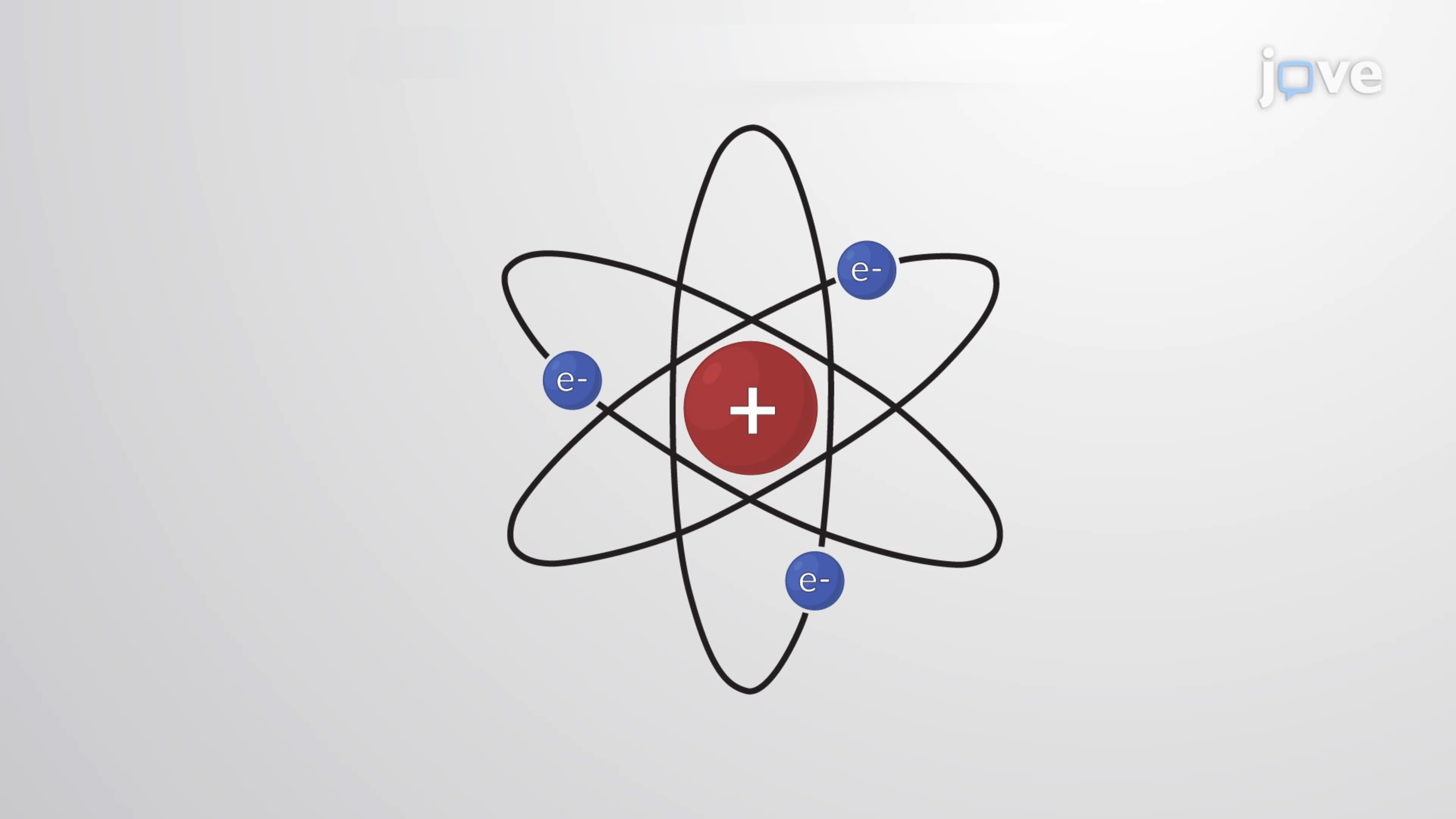

Video Summary: What are Subatomic Particles
Did you know that every atom in your smartphone contains over a trillion invisible particles smaller than anything you can imagine? Subatomic particles are the fundamental building blocks that make up all atoms-electrons, protons, and neutrons-discovered through groundbreaking experiments by scientists like J.J. Thomson and Ernest Rutherford. From the lithium batteries powering medical devices in US hospitals to the silicon chips in NASA's Mars rovers, understanding what are subatomic particles reveals how matter itself is constructed at the most basic level. Watch the full video on JoVE Coach to master this concept with expert-led visuals and step-by-step explanations.
Subatomic particles represent one of chemistry's most fundamental concepts-the discovery that atoms, once thought indivisible, actually contain even smaller components. These microscopic building blocks include electrons, protons, and neutrons, each playing a crucial role in determining an element's properties and behavior. For students preparing for the AP Chemistry exam or college-level general chemistry courses, mastering subatomic particle concepts provides the foundation for understanding atomic structure, chemical bonding, and periodic trends.
The three primary types of subatomic particles each have distinct properties and locations within atoms. Electrons, discovered by J.J. Thomson through cathode ray tube experiments, carry a negative charge and occupy the space surrounding the nucleus. Thomson's work at the Cavendish Laboratory demonstrated that these particles could be deflected by electric and magnetic fields, proving their charged nature. Protons, identified by Ernest Rutherford, possess a positive charge equal in magnitude to the electron's negative charge but reside in the atom's dense central nucleus. James Chadwick later discovered neutrons, electrically neutral particles that also occupy the nucleus alongside protons.
Understanding the quantitative properties of subatomic particles proves essential for solving problems on standardized tests like the SAT Subject Test in Chemistry and MCAT Physical Sciences section. Electrons carry a charge of -1.6 × 10^-19 coulombs, while protons have an equal but opposite charge of +1.6 × 10^-19 coulombs. In terms of mass, protons (1.673 × 10^-27 kg) and neutrons (1.675 × 10^-27 kg) are nearly identical, each approximately 1 atomic mass unit (amu). Electrons, with a mass of only 9.1 × 10^-31 kg or 5.5 × 10^-4 amu, contribute negligibly to an atom's total mass-a crucial concept for calculating atomic mass and understanding isotopic variations.
The subatomic particles concept extends far beyond textbook theory into cutting-edge American technology and research. At Fermilab in Illinois, scientists use particle accelerators to study subatomic behavior, advancing our understanding of fundamental physics. The semiconductor industry, centered in Silicon Valley, relies on precise control of electron behavior in silicon crystals to manufacture computer chips. Medical imaging techniques like PET scans, widely used in US hospitals, depend on subatomic particle interactions to create detailed images of internal organs. Understanding these particle interactions also proves crucial for nuclear medicine applications and radiation therapy treatments.
Related Micro-courses