Loading video…


 7 Concepts
 670.6K views

Video Summary: What Is Atomic Mass
Ever wondered why a gold ring feels heavier than an aluminum can of the same size? The answer lies in atomic mass, the fundamental property that determines how much individual atoms weigh. Unlike everyday objects measured in pounds or kilograms, atoms are so incredibly tiny that scientists use special units called atomic mass units (amu) or Daltons to measure them. For example, carbon atoms used in everything from pencil lead to diamond jewelry have an atomic mass of about 12 amu. Watch the full video on JoVE Coach to master this concept with expert-led visuals and step-by-step explanations.
Atomic mass represents the mass of an individual atom, typically expressed in atomic mass units (amu) or Daltons (Da). Since atoms are extraordinarily small, a single carbon atom weighs approximately 1.99 × 10⁻²³ grams, using conventional mass units becomes impractical. Instead, scientists established the atomic mass unit, defined as 1/12 the mass of a carbon-12 atom, making atomic mass calculations more manageable.
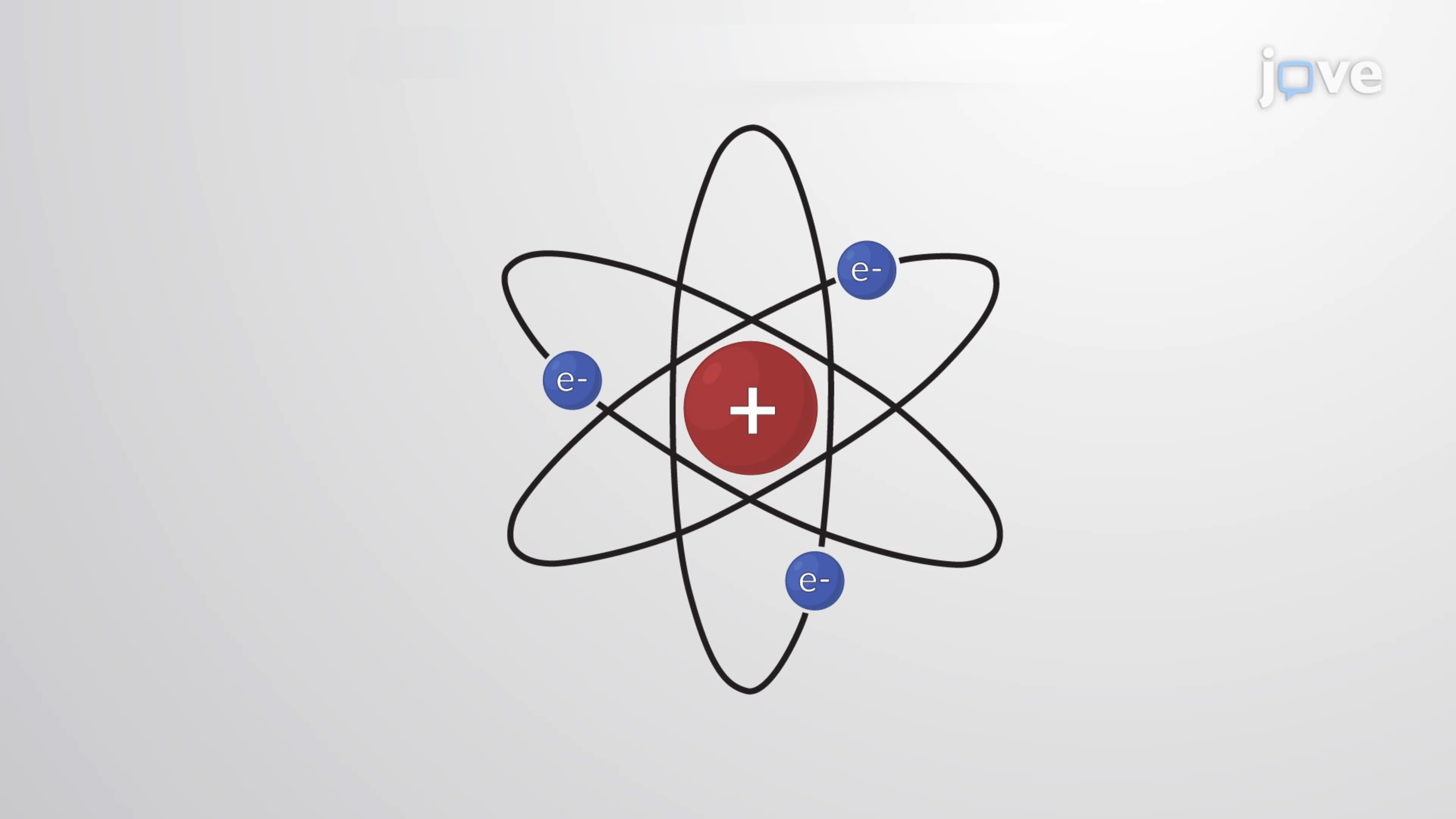
The atomic mass of any atom primarily depends on its protons and neutrons, collectively called nucleons. Electrons contribute negligibly to atomic mass due to their extremely small mass (about 1/1836 that of a proton). For most practical purposes, an atom's mass number, the sum of protons and neutrons, closely approximates its atomic mass. However, this approximation becomes more complex when considering isotopes and their natural abundance.
Most elements exist as multiple isotopes, atoms with identical proton numbers but different neutron counts. For instance, chlorine has two stable isotopes: chlorine-35 (75.8% abundance) and chlorine-37 (24.2% abundance). The atomic mass listed on the periodic table represents a weighted average of all naturally occurring isotopes. Students frequently encounter these calculations on AP Chemistry exams and college general chemistry courses, where they must multiply each isotope's mass by its fractional abundance and sum the results.
Mass spectrometry serves as the primary experimental technique for determining isotopic masses and abundances. This instrument separates atoms based on their mass-to-charge ratios, producing mass spectra that reveal both the number of isotopes and their relative abundances. Major pharmaceutical companies like Pfizer and research institutions such as the National Institute of Standards and Technology (NIST) routinely use mass spectrometry for quality control and research applications. Understanding mass spectra interpretation proves essential for students pursuing careers in chemistry, biochemistry, or materials science.
Related Micro-courses