Loading subject page…


561,000 views

Video Summary: What Is Determining Order of Reaction
Ever wondered why hydrogen peroxide bubbles faster when you pour it on a wound? Determining order of reaction explains how changing reactant concentrations affects reaction speeds in everything from wound disinfection to pharmaceutical manufacturing. This fundamental kinetics concept uses experimental data to reveal whether doubling a reactant concentration doubles, quadruples, or doesn't change the reaction rate. Watch the full video on JoVE Coach to master this concept with expert-led visuals and step-by-step explanations.
Determining order of reaction is the experimental process that reveals how sensitive a chemical reaction is to changes in reactant concentration. Think of it as discovering the "concentration sensitivity fingerprint" of a reaction. When pharmaceutical companies develop time-release medications, they rely on this concept to predict how drug concentration affects release rates in your body.
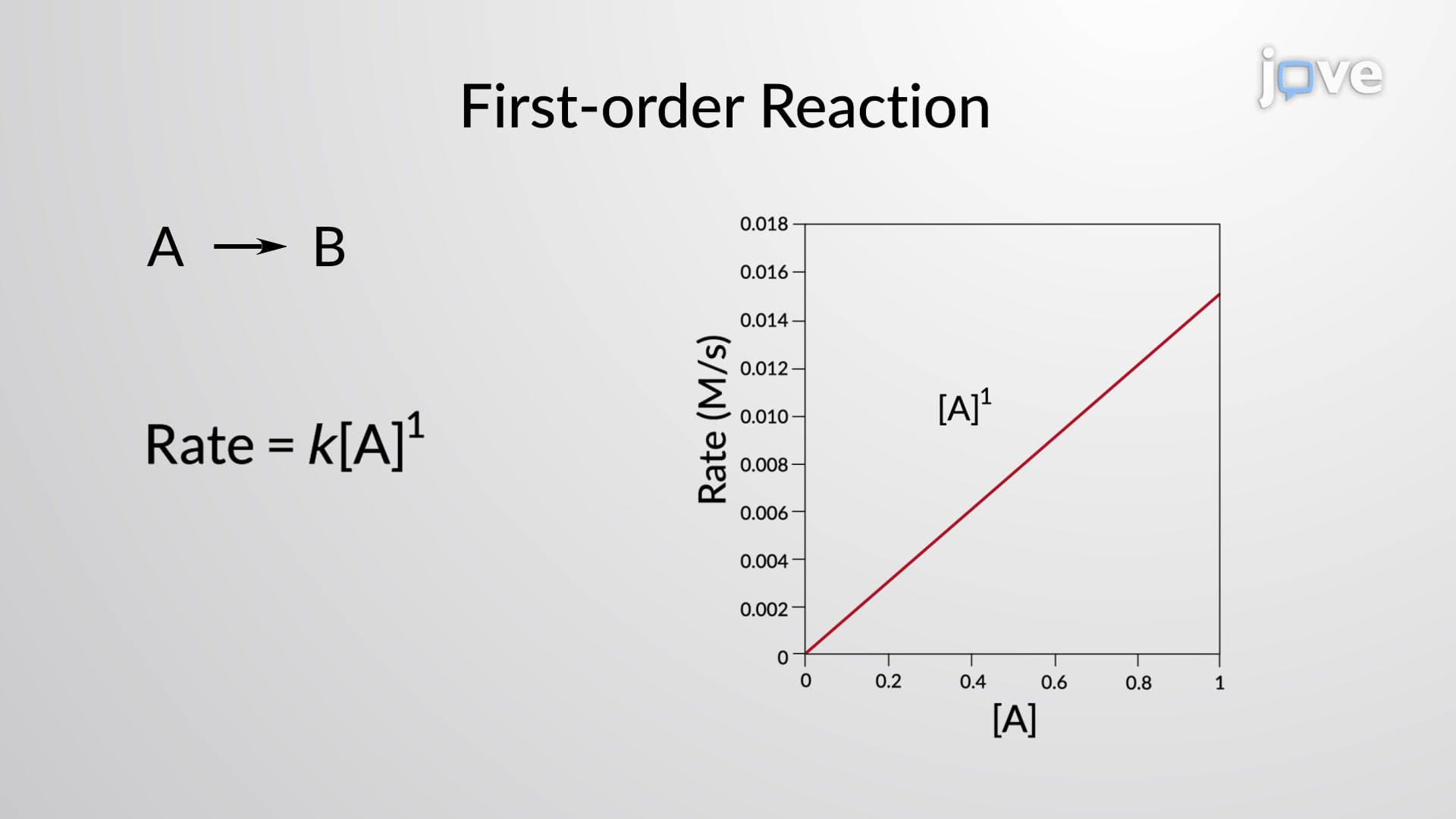
The reaction order tells us the mathematical relationship between concentration and rate. In a first-order reaction, doubling concentration doubles the rate-like how radioactive decay of medical isotopes used in cancer treatment follows predictable first-order kinetics. Second-order reactions show more dramatic sensitivity: doubling concentration quadruples the rate, as seen in some polymerization reactions used to manufacture medical devices.
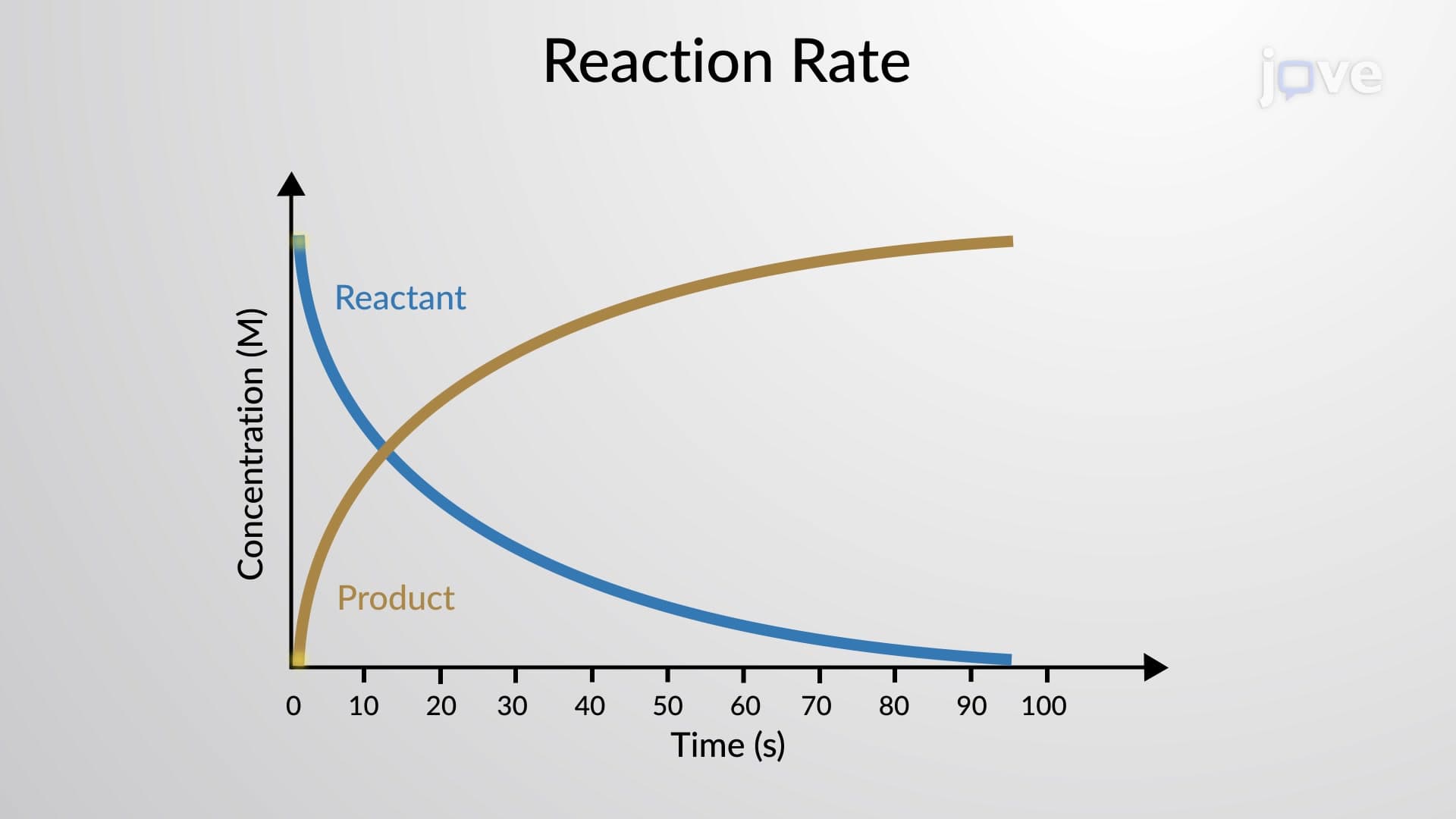
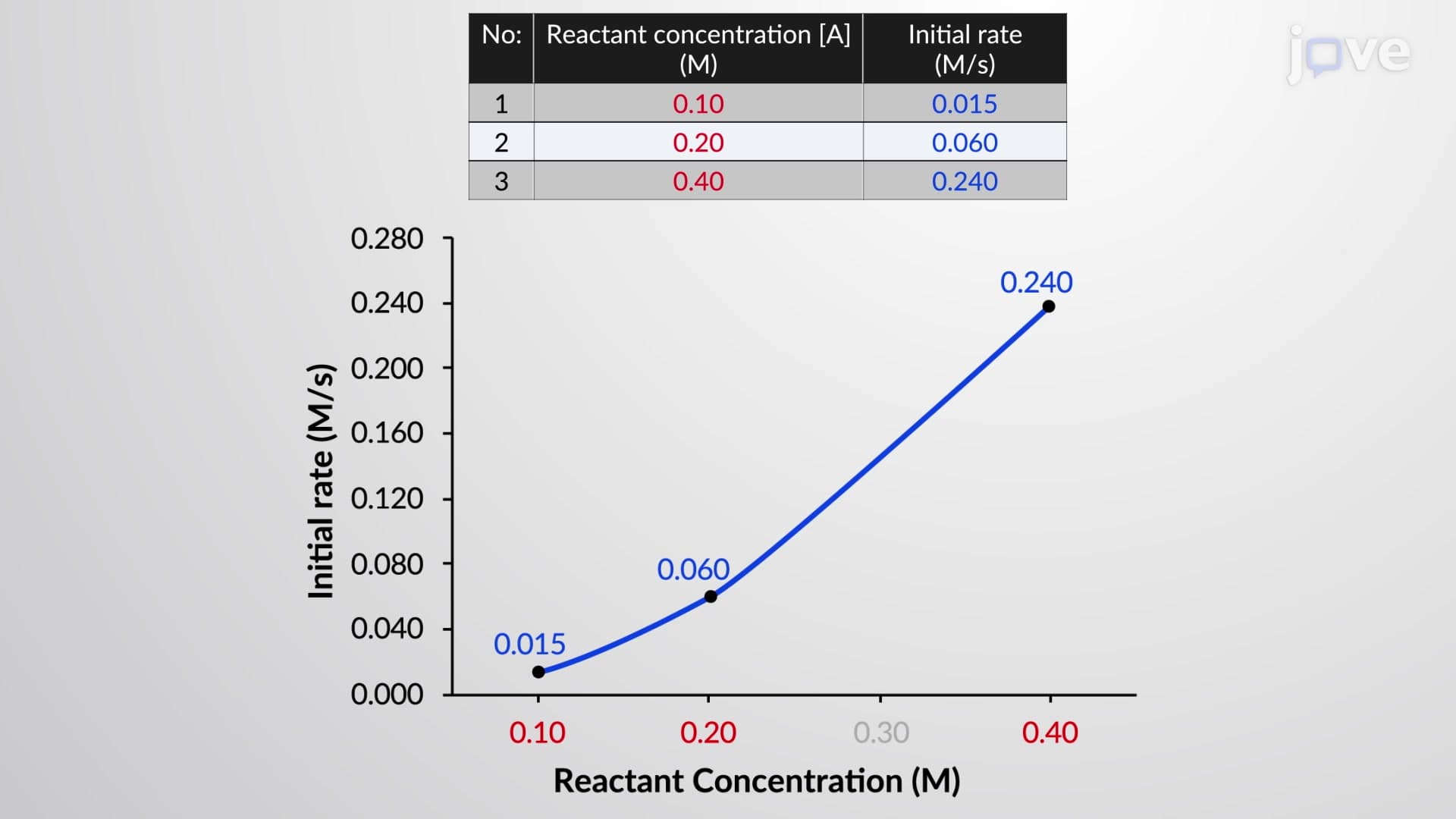
The method of initial rates is the gold standard for determining reaction order. Imagine you're a forensic chemist analyzing how quickly a toxic substance breaks down. You'd run the same reaction multiple times, systematically changing one reactant concentration while keeping others constant, then measure how fast the reaction starts.
This approach works because initial rates eliminate complications from product formation or side reactions. For AP Chemistry students, this method frequently appears on exam problems where you'll analyze data tables showing concentration changes and corresponding rate changes. The key is recognizing patterns: if concentration triples and rate triples, you've found first-order behavior.
Sometimes experimental data doesn't show clear doubling or tripling patterns. That's where the ratio method becomes essential. You select any two data points and set up a mathematical ratio: (rate2/rate1) = (concentration2/concentration1)^n, where n is the reaction order you're solving for.
This mathematical approach is particularly valuable on the MCAT, where time pressure demands efficient problem-solving strategies. Medical students encounter this when studying pharmacokinetics-understanding how drug concentrations in blood plasma affect therapeutic response rates.
Real-world reactions rarely involve just one reactant. Consider the production of aspirin, where multiple reactants participate. You determine each reactant's individual order using the initial rates method, then add these individual orders to find the overall reaction order. If reactant A shows first-order behavior and reactant B shows second-order behavior, the overall reaction is third-order.
This concept bridges into advanced topics like enzyme kinetics, where substrate concentration effects become crucial for understanding drug metabolism in clinical settings. Understanding these principles prepares students for upper-level biochemistry courses and professional healthcare applications.
Related Micro-courses