Loading subject page…


2,689 views

Video Summary: What Is Wood
Did you know that a single oak tree used to build the USS Constitution contained enough wood to frame an entire modern home? Wood represents one of nature's most sophisticated composite materials, engineered through millions of years of evolution. From the redwood forests of California to the pine plantations of Georgia, American construction relies heavily on this renewable resource for everything from skyscrapers to suburban homes. Watch the full video on JoVE Coach to master this concept with expert-led visuals and step-by-step explanations.
Wood represents the secondary xylem tissue that forms the structural backbone of trees and woody plants. This remarkable biomaterial develops through the activity of the vascular cambium, a thin layer of actively dividing cells that adds new tissue annually. In American forestry, understanding wood formation proves essential for sustainable timber management across regions from Pacific Northwest Douglas fir forests to Southeastern pine plantations.
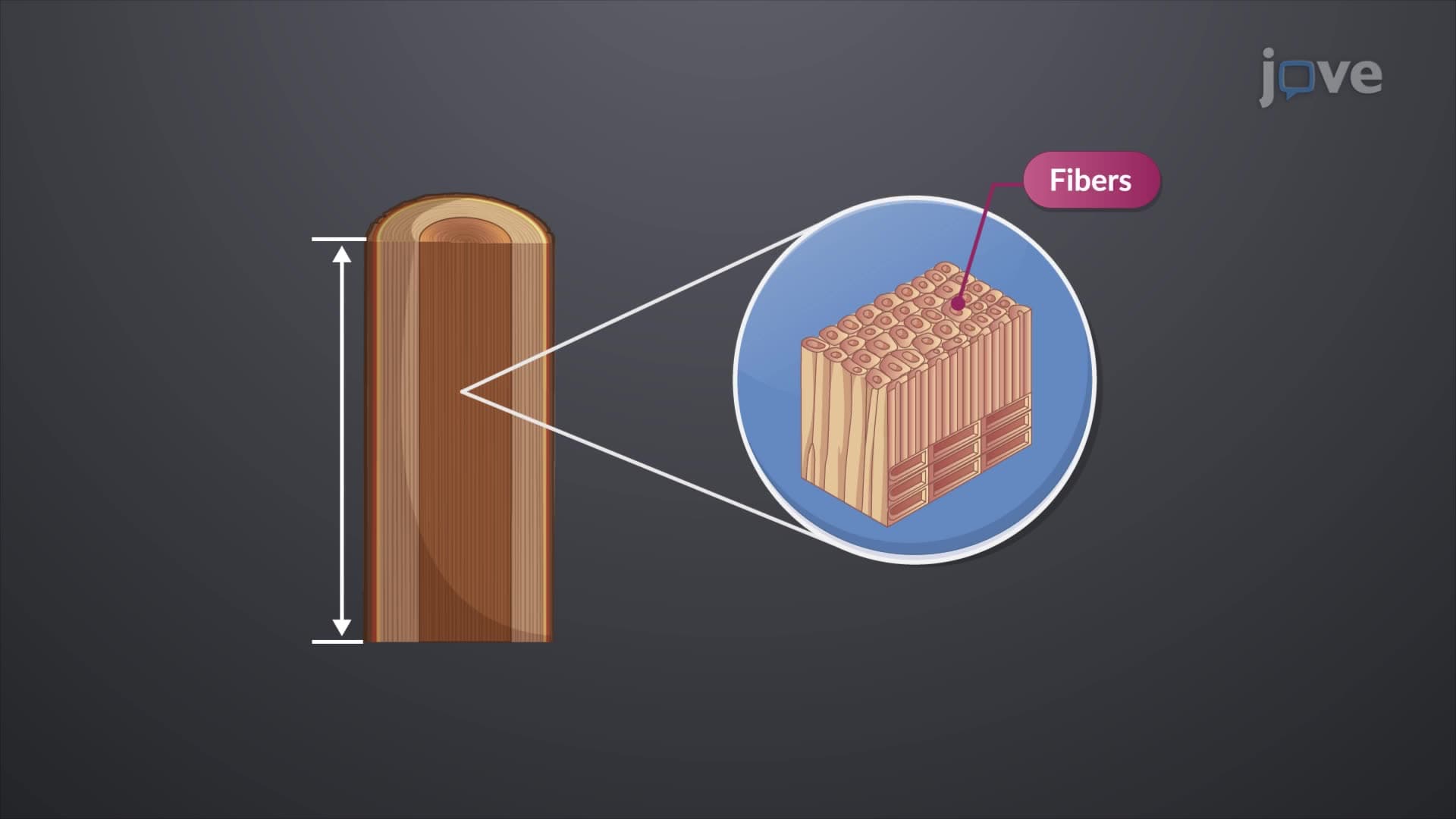
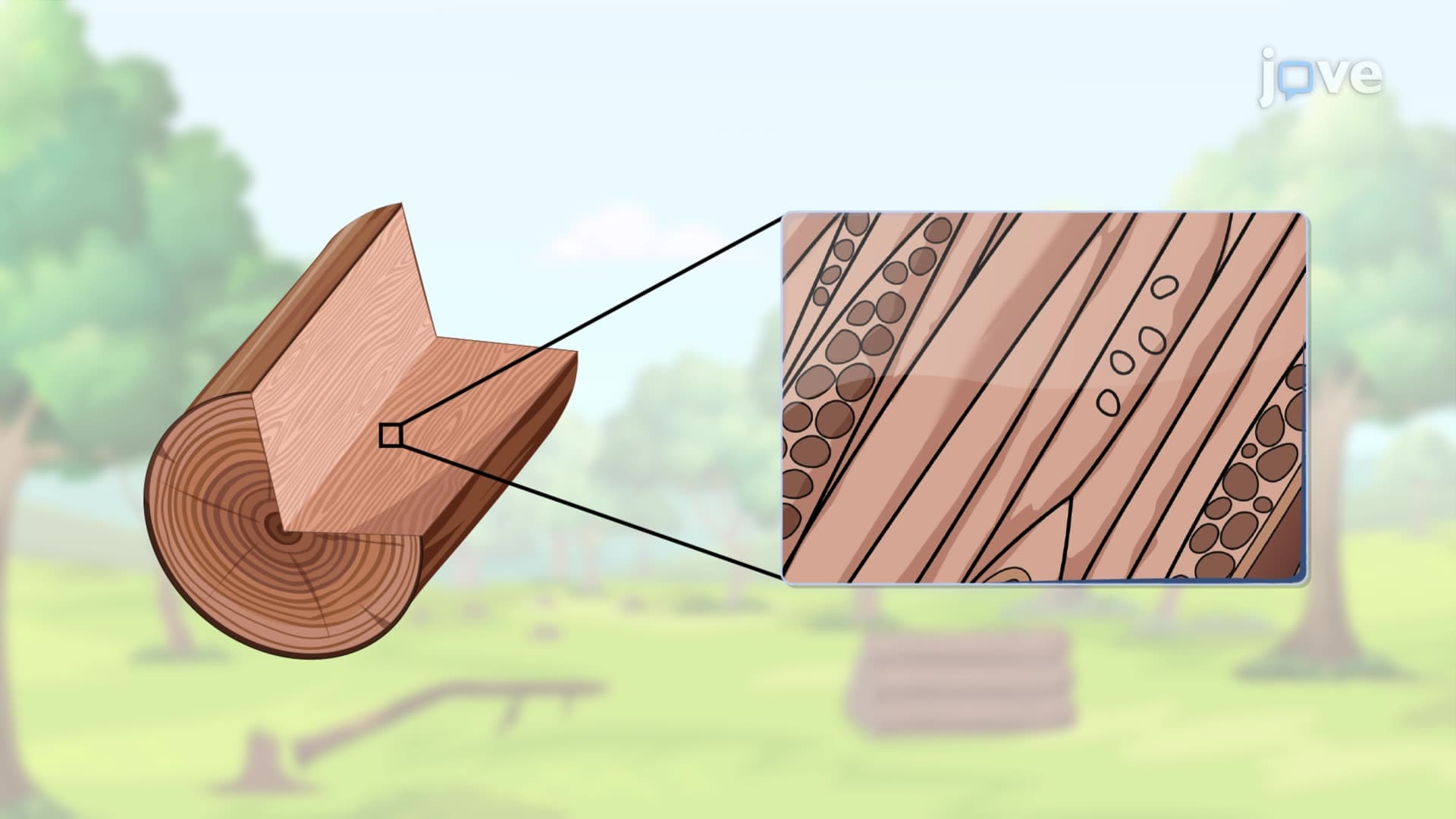
The wood definition encompasses both the biological tissue and the processed material used in construction. Anatomically, wood consists of elongated cells called tracheids and vessel elements that transport water and nutrients while providing mechanical support. These tubular cells align parallel to the trunk's main axis, creating the characteristic grain pattern that defines wood's directional strength properties.
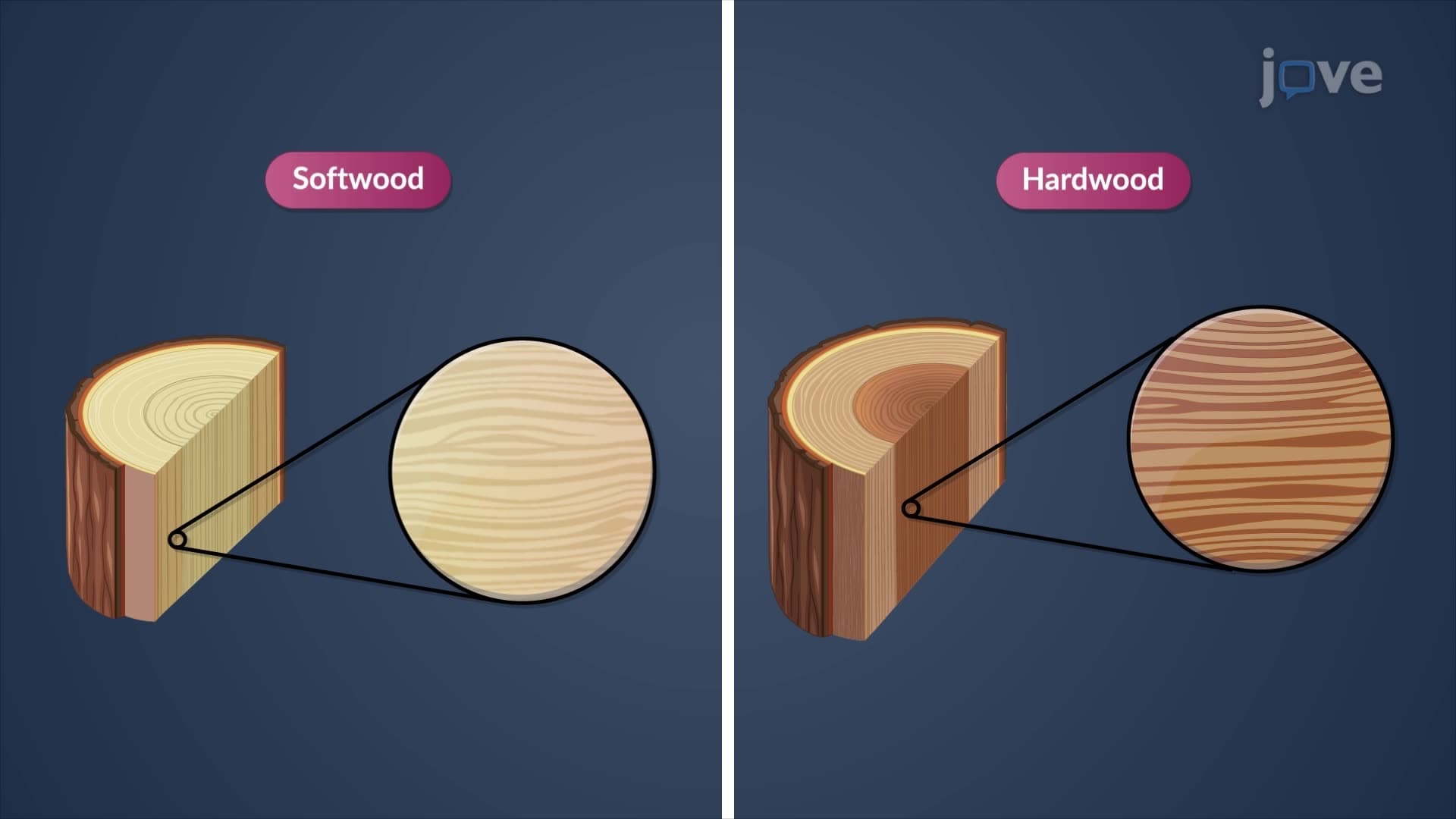
What is wood in detail requires examining its complex internal structure. Moving inward from the exterior, trees contain protective outer bark (dead tissue), living inner bark (phloem), the cambium layer, sapwood, heartwood, and central pith. The sapwood actively transports water and nutrients, while heartwood provides structural support as older sapwood cells become filled with extractives and cease active transport.
Growth rings represent annual increments of wood formation, clearly visible in temperate species like American oak and maple. These rings form because cambial activity varies seasonally-rapid spring growth creates large, thin-walled cells (earlywood), while slower summer growth produces smaller, thick-walled cells (latewood). This pattern allows dendrochronologists to date wooden artifacts and study historical climate patterns across American forests.
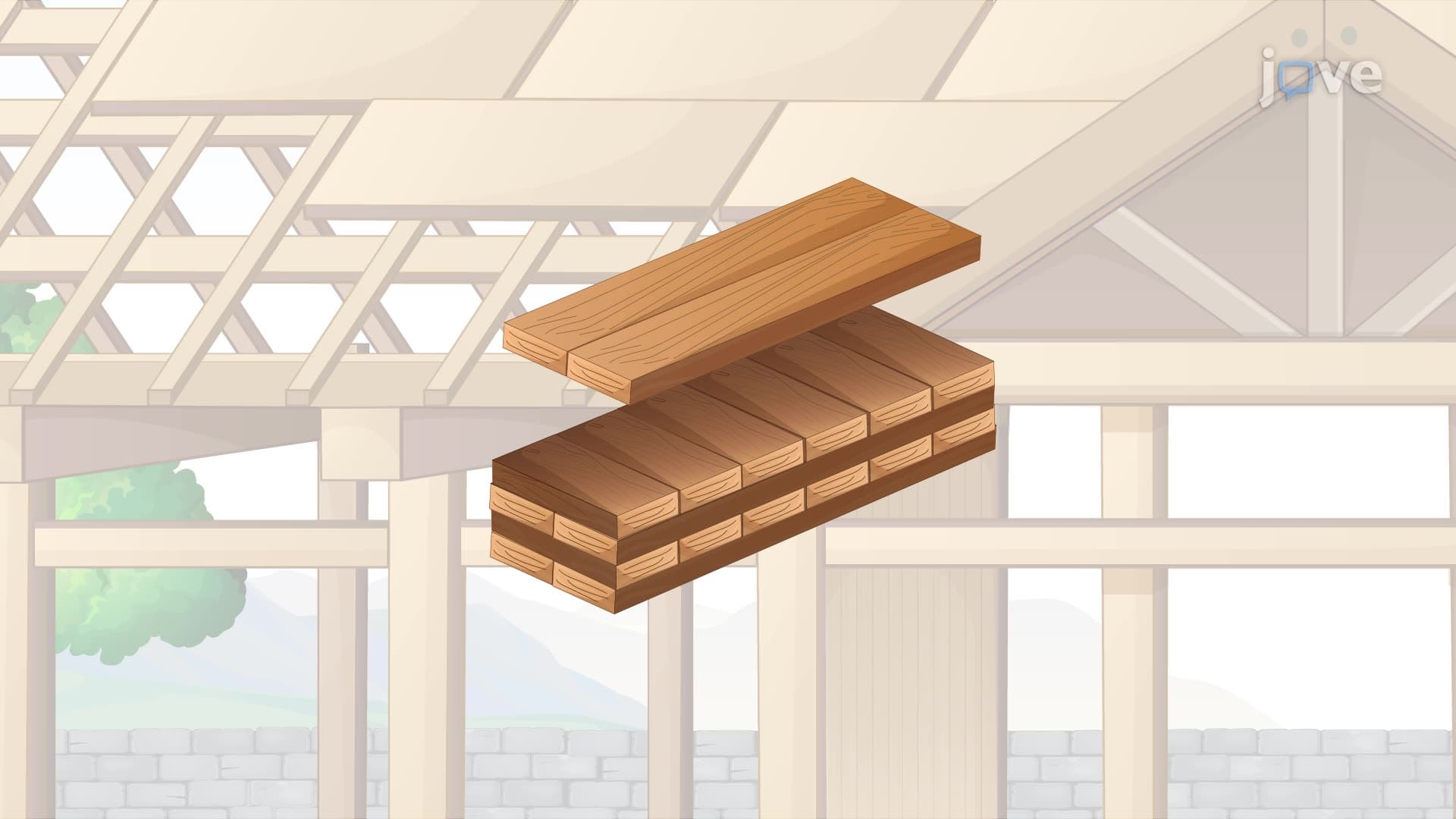
Wood's unique grain structure creates dramatically different mechanical properties depending on loading direction. Parallel to grain, wood exhibits exceptional strength-to-weight ratios, explaining why Douglas fir and Southern yellow pine dominate American structural lumber markets. Perpendicular to grain, wood shows significantly reduced strength, requiring careful engineering consideration in building design.
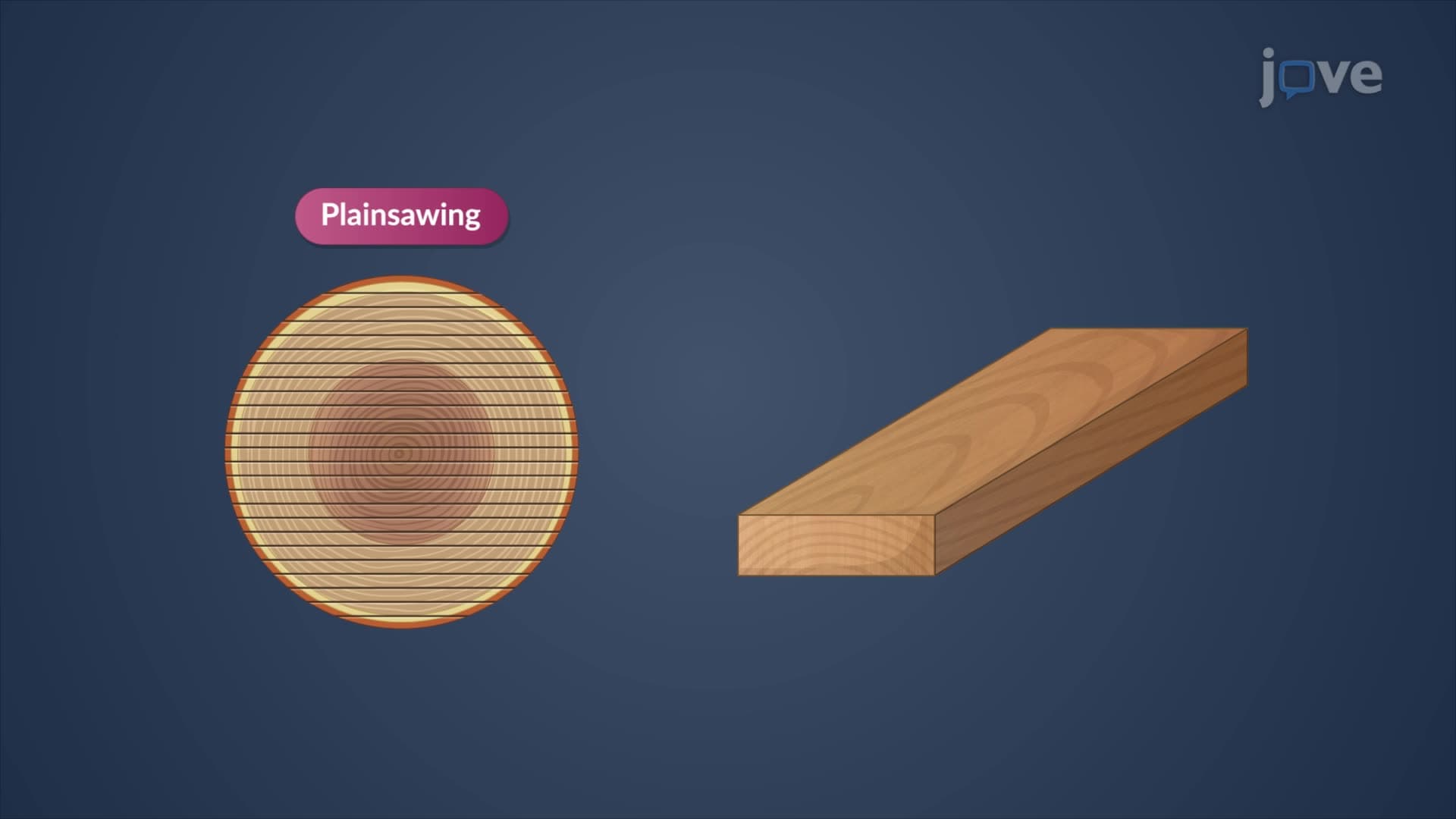
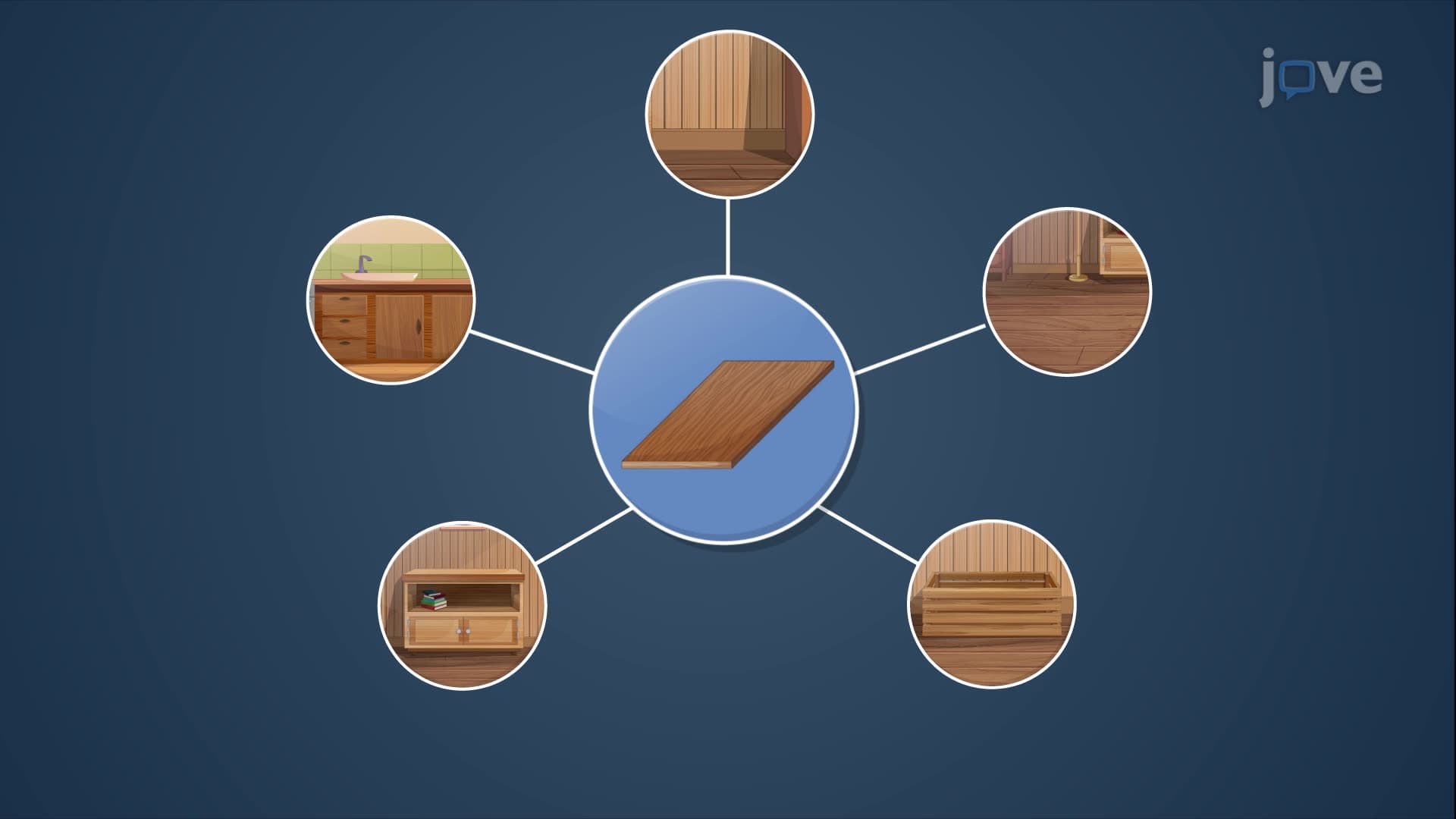
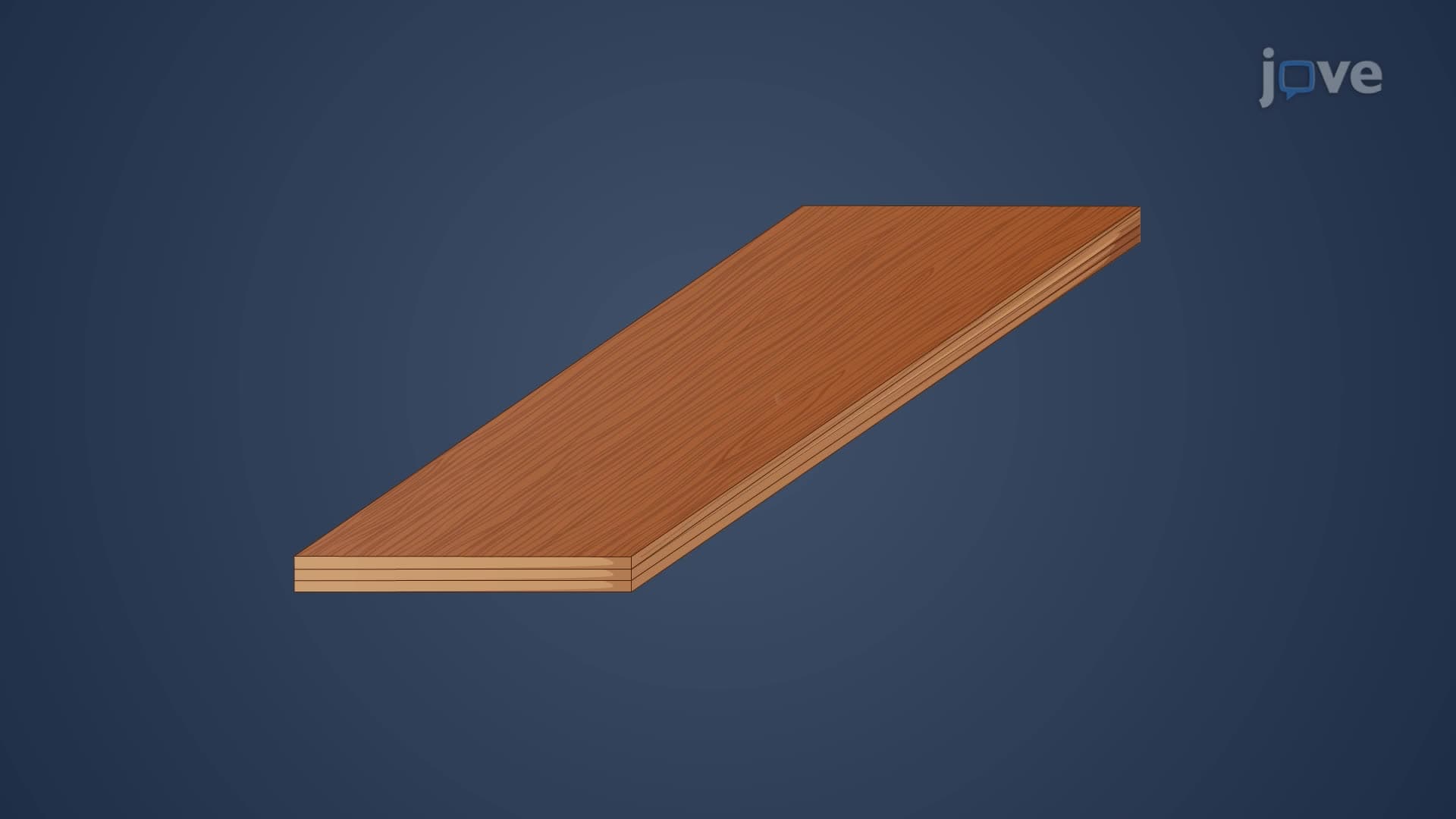
Modern construction extensively utilizes wood's versatility through engineered products. Plywood manufacture involves rotating wood grain directions between layers, creating panels with balanced strength properties. Particleboard and hardboard represent composite materials using wood fibers and adhesives to create uniform, cost-effective building materials essential for American residential construction.
This foundational understanding of wood proves crucial for students preparing for AP Environmental Science, forestry programs at universities like Auburn or Oregon State, and professional examinations in construction management and civil engineering fields.
Related Micro-courses