Loading video…


 5 Concepts
 1.5K views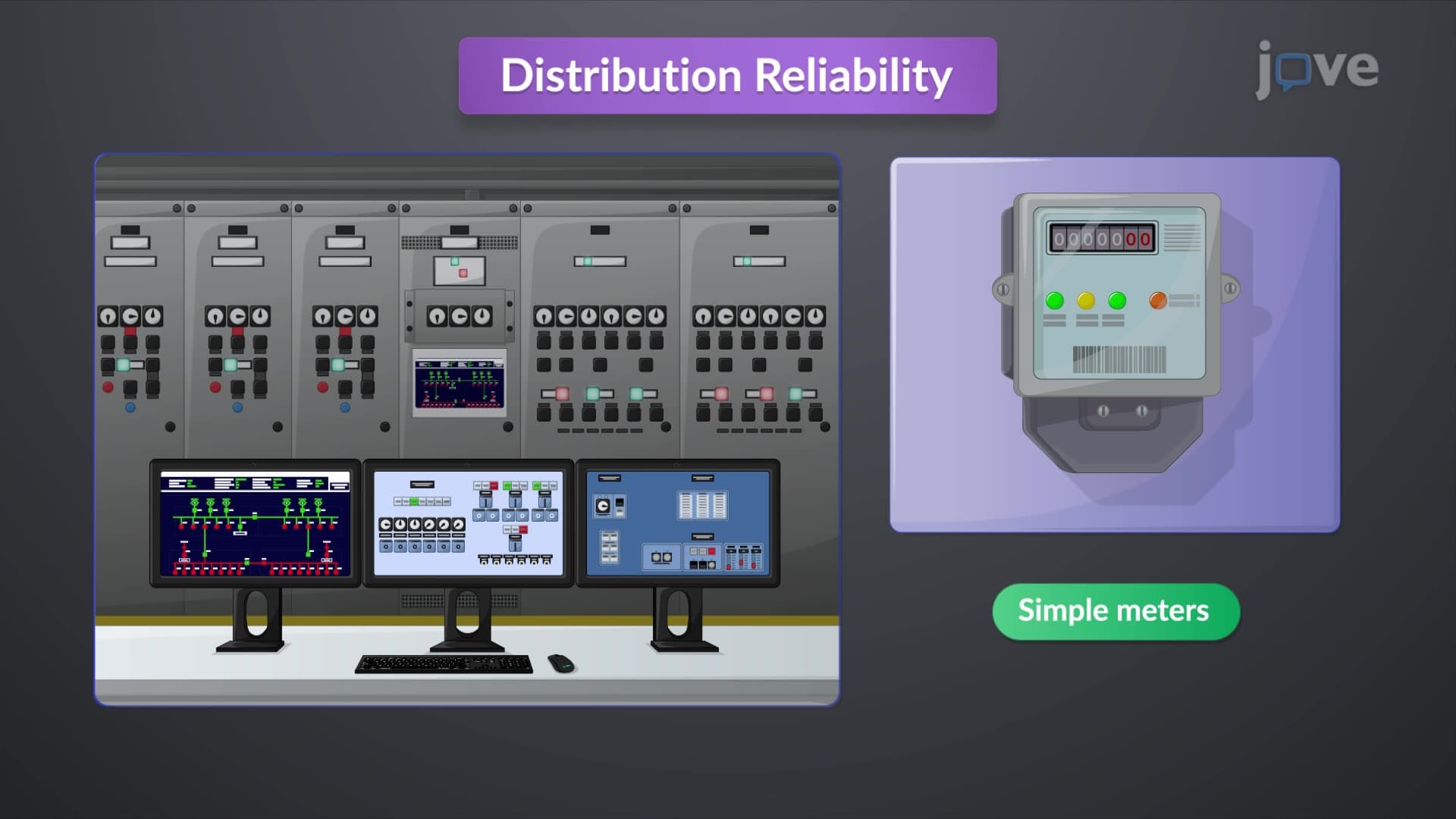

Video Summary: What Is Distribution Reliability and Automation
Ever wonder why your lights stay on 99.98% of the time while your neighbor's Wi-Fi crashes daily? Defining psychology: scope and branches becomes crucial when understanding how human factors influence electrical grid reliability and automation systems. When Hurricane Sandy knocked out power to 8.5 million customers across the Northeast, utilities relied on sophisticated distribution automation systems to prioritize restoration efforts. What is Distribution Reliability And Automation reveals how engineers combine psychology principles with cutting-edge technology to predict system failures and automate responses. Watch the full video on JoVE Coach to master this concept with expert-led visuals and step-by-step explanations.
Distribution reliability and automation represents the convergence of electrical engineering and human factors psychology in modern power systems. This field examines how human cognitive processes influence system design, operation, and maintenance decisions. The psychological aspects become particularly relevant when operators must make split-second decisions during power outages affecting thousands of customers.
The power industry uses specific metrics to quantify system performance, but these numbers also reflect human behavioral patterns. The System Average Interruption Frequency Index (SAIFI) measures how often customers experience outages annually. For AP Physics students, this connects to probability distributions and statistical analysis. The System Average Interruption Duration Index (SAIDI) quantifies total outage time per customer per year, while the Customer Average Interruption Duration Index (CAIDI) represents average restoration time per interruption.
These metrics matter psychologically because customer satisfaction drops exponentially with outage duration. Research from Stanford University shows that customers perceive a 4-hour outage as significantly worse than four 1-hour outages, even though total downtime remains identical. This psychological insight drives utility companies to prioritize rapid restoration over outage prevention.
Distribution automation systems must account for human cognitive limitations and decision-making biases. When designing control room interfaces, engineers apply principles from cognitive psychology to reduce operator workload. The famous Three Mile Island incident demonstrated how poor interface design can lead to catastrophic human errors during high-stress situations.
Modern SCADA systems incorporate color psychology, spatial reasoning principles, and attention theory. For example, Pacific Gas & Electric's control centers use red-amber-green color schemes that align with universal human color associations for danger, caution, and safety.
Major US utilities like ConEd in New York and Southern California Edison have invested billions in smart grid technologies that automate fault detection and isolation. These systems use machine learning algorithms trained on human operator decision patterns to predict optimal switching sequences during emergencies. Students preparing for the MCAT will recognize connections to neurological decision-making processes and reaction time studies.
Related Micro-courses