Loading concepts…


10 Concepts
26 Concepts
24 Concepts
22 Concepts
16 Concepts
20 Concepts
17 Concepts
 20 Concepts
 5.1K Views
 Popular topics











The money supply, the total stock of money circulating in the U.S. economy, sits at the heart of macroeconomics. This micro-course traces money from its basic functions and types through M1 and M2 measurements, fractional-reserve banking, and the money multiplier. It then examines how the Federal Reserve controls the money supply using reserve requirements, the discount rate, and open market operations. JoVE Coach guides students through each mechanism with clear U.S. examples.
1. The Three Functions of Money Money serves three distinct roles that make modern commerce possible. As a medium of exchange, it eliminates the inefficiency of barter, instead of needing two parties to simultaneously want what the other has, anyone can sell goods for dollars and spend those dollars anywhere. As a store of value, money transfers purchasing power across time, though inflation can erode that value, as seen when rising U.S. grocery prices reduce what a saved $50 actually buys. As a unit of account, the dollar gives Americans a single standard for comparing prices across every product in the economy.
2. Commodity Money vs. Fiat Money Commodity money, such as gold historically used in the U.S., carries intrinsic value because the commodity itself is useful independently of its role as currency. Fiat money, by contrast, has no intrinsic value; a U.S. dollar bill is worth essentially nothing as paper. Its value rests on government decree, every Federal Reserve Note states: *"This note is legal tender for all debts, public and private"*, and on public confidence that the Fed will manage the money supply responsibly. A key advantage of fiat money is that the Fed can expand or contract its supply in response to economic conditions, something impossible with a fixed commodity standard.
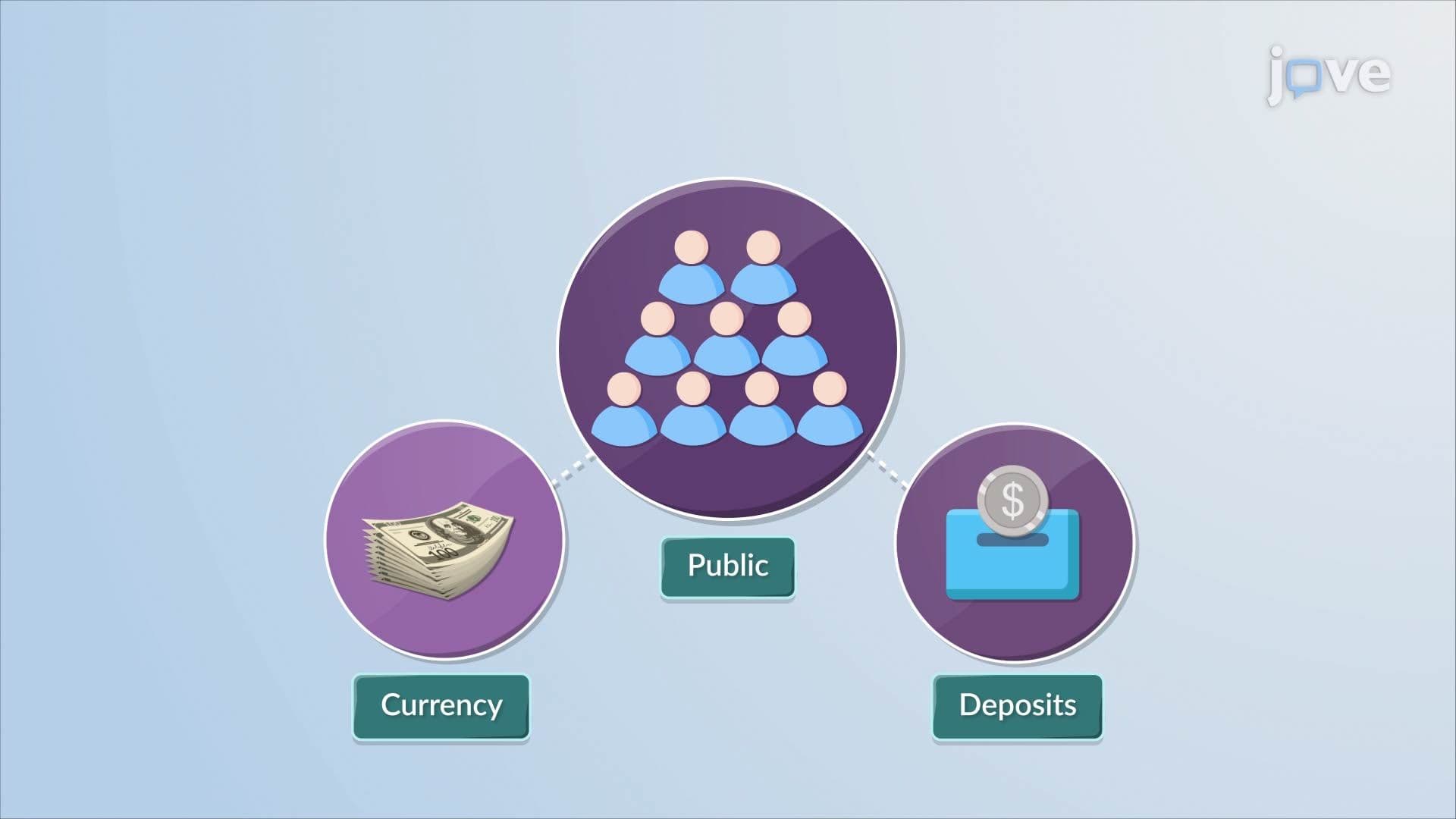
3. M1 and M2: Measuring the Money Supply The Federal Reserve tracks the U.S. money supply using two primary measures based on liquidity, how quickly an asset can be used to buy goods. M1 includes the most liquid assets: physical currency held by the public (excluding bank vaults), demand deposits (checking accounts), and other liquid deposits such as certain interest-bearing accounts accessible like checking. M2 adds less-liquid assets to M1: small-denomination time deposits (CDs under $100,000) and retail money market mutual fund shares available through firms like Vanguard. M2 is the broader measure and is widely watched by economists and the Fed when assessing overall monetary conditions.
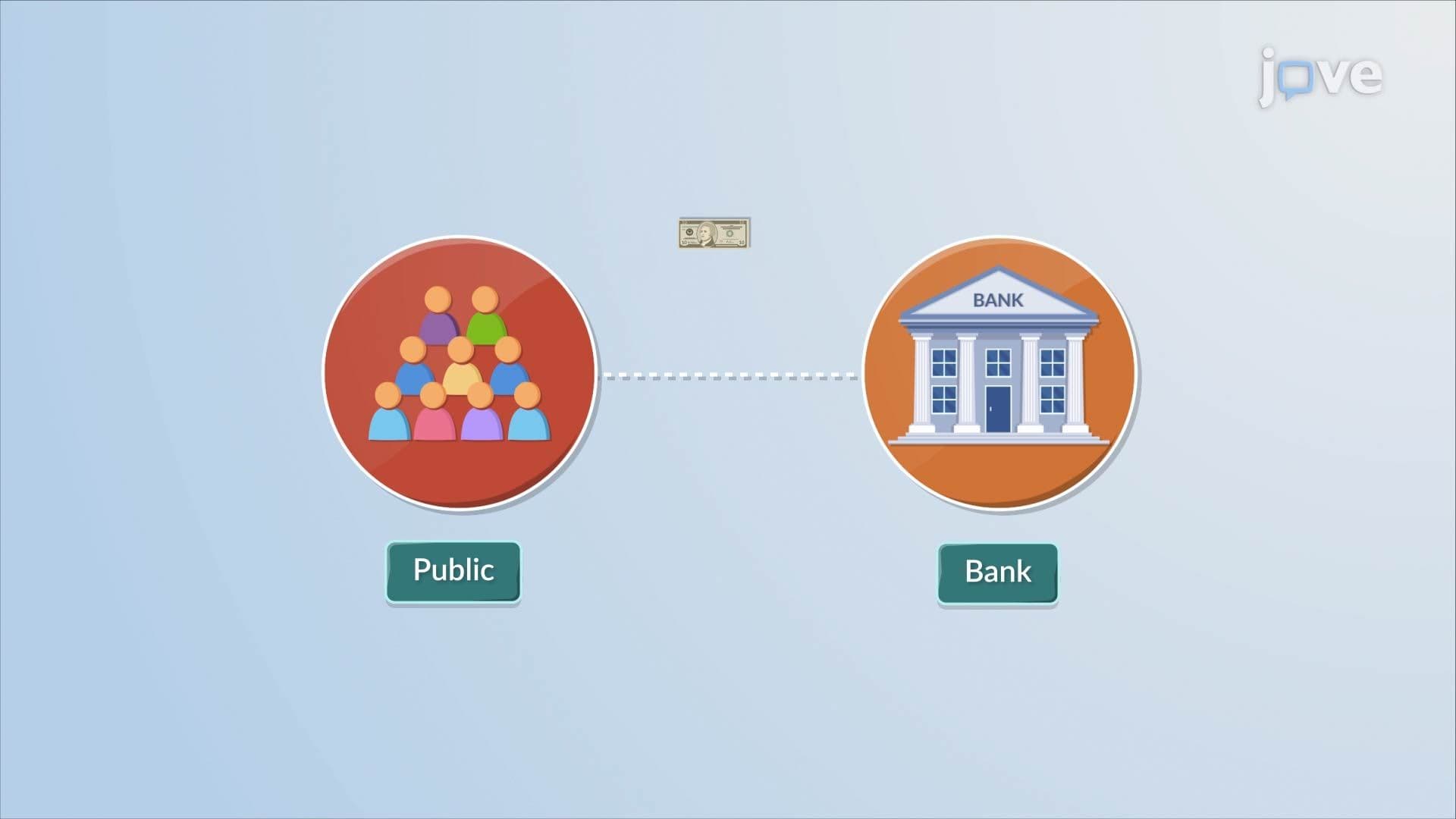
4. 100-Percent-Reserve vs. Fractional-Reserve Banking In a 100-percent-reserve system, banks hold every deposited dollar in reserve and make no loans. The money supply equals exactly the currency deposited, no new money is created. In the real-world fractional-reserve system, banks keep only a fraction of deposits as reserves and lend the remainder. If Bank A receives $100, keeps $10 (a 10% reserve ratio), and lends $90, that $90 gets deposited at Bank B, which then lends $81, and so on. This chain of lending and redepositing is how the banking system creates money far beyond the original deposit, a process central to understanding U.S. monetary dynamics.
5. The Money Multiplier The money multiplier quantifies how much total money supply can be generated from a given monetary base. The simplified formula is:
> Change in Money Supply = Initial Reserves × (1 ÷ Reserve-Deposit Ratio)
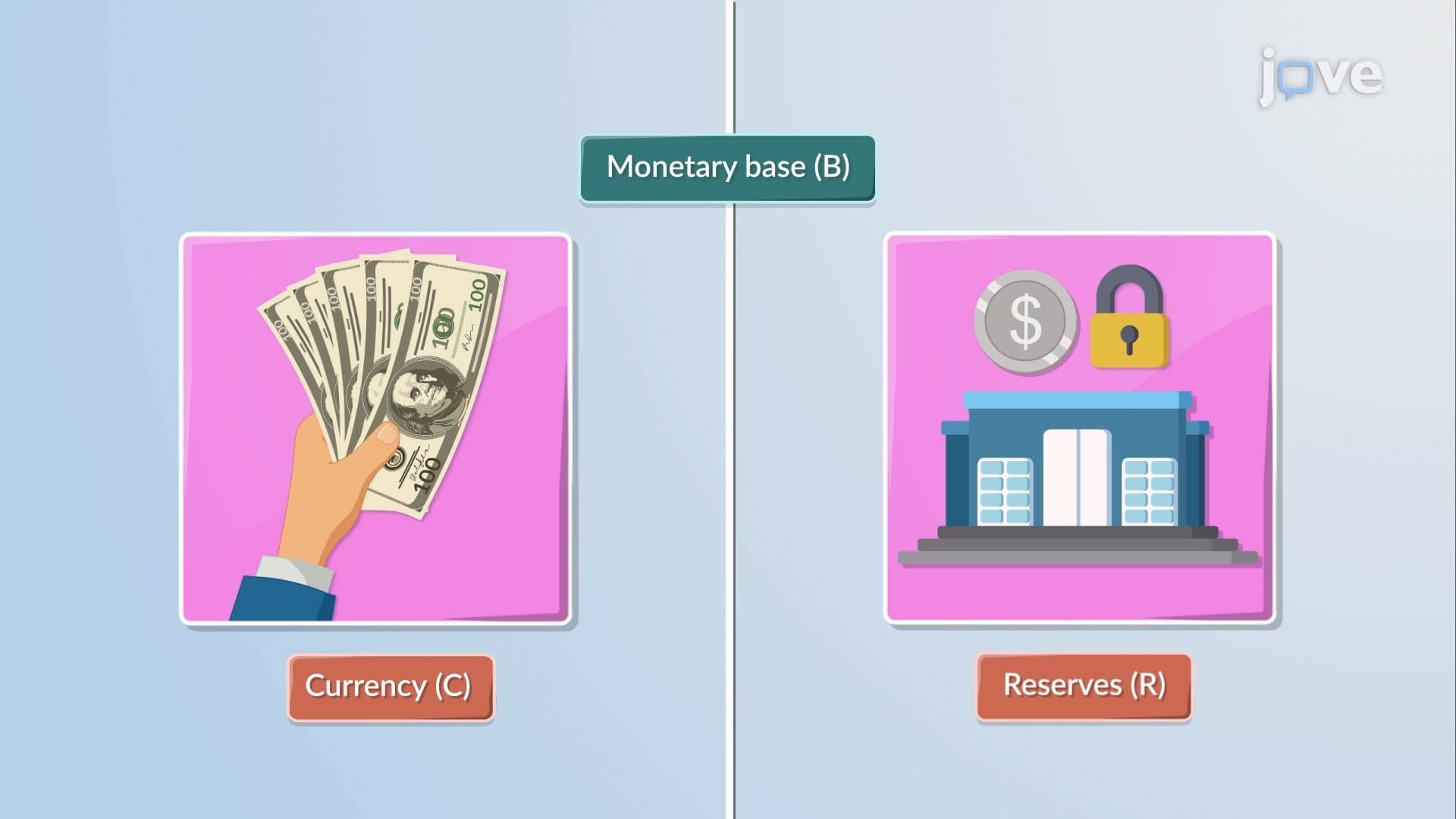
With $100 in new reserves and a 10% reserve ratio, the maximum potential expansion is $1,000. The fuller money multiplier model incorporates both the reserve-deposit ratio (*rr*) and the currency-deposit ratio (*cr*), how much cash people prefer to hold versus depositing in banks. The formula becomes:
> Money Multiplier = (cr + 1) ÷ (cr + rr)
The higher the public's preference for holding cash, or the more reserves banks hold, the smaller the actual multiplier and the less money is created from each base dollar.
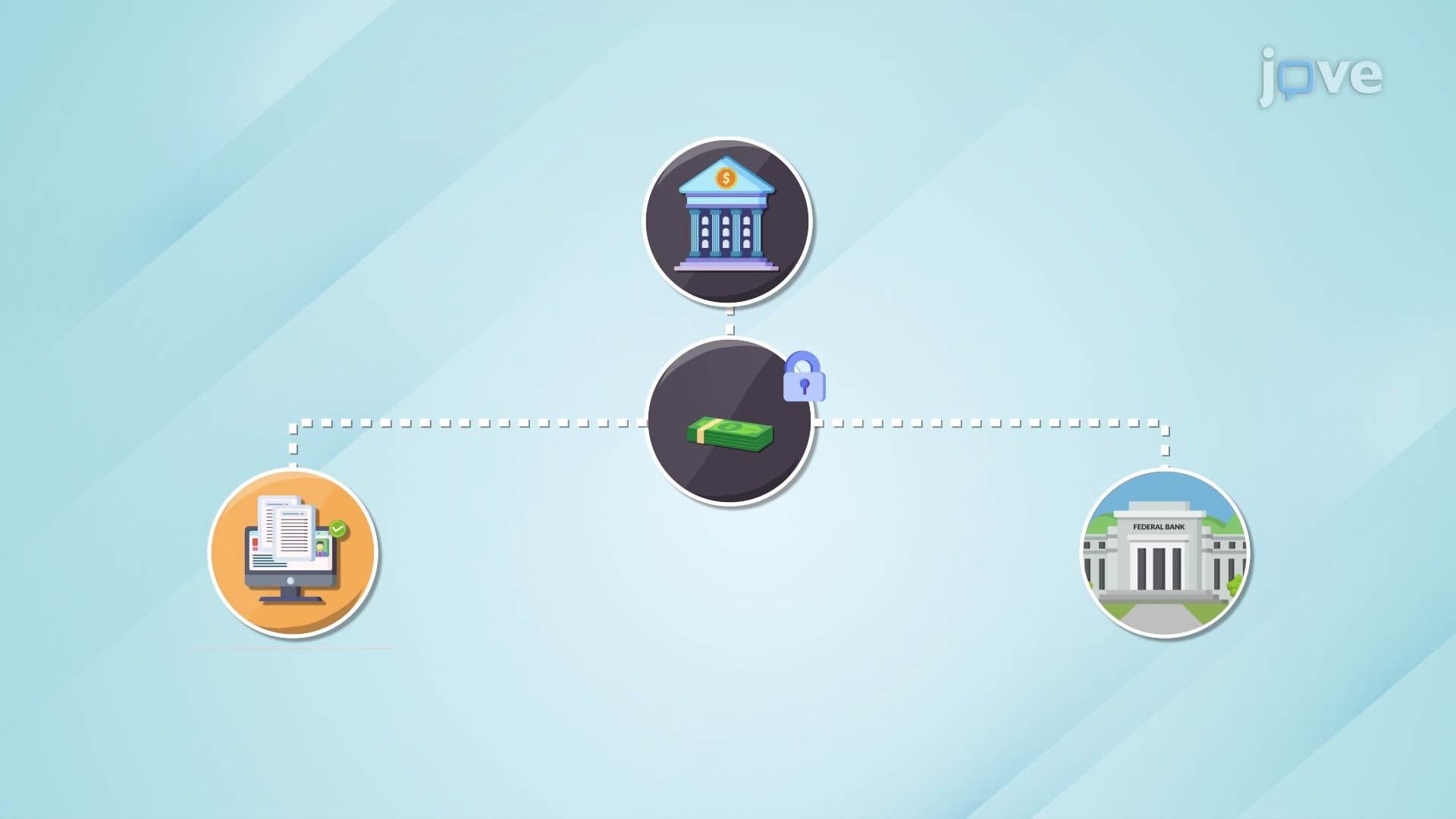
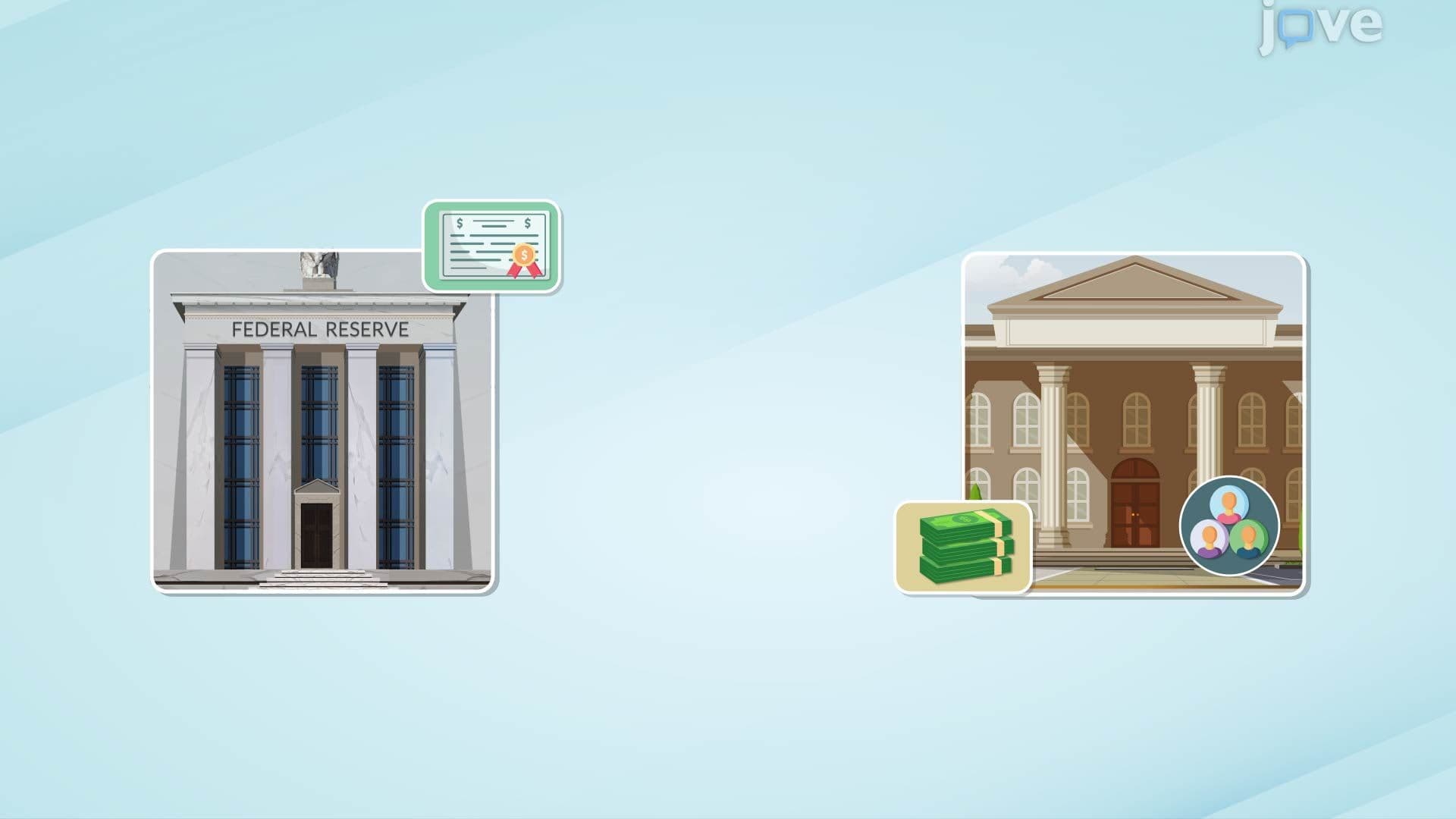
6. The Federal Reserve: Structure and Functions The Federal Reserve System, the U.S. central bank established in 1913, has three main components: the Board of Governors (seven members based in Washington, D.C.), twelve regional Federal Reserve Banks located across the country, and the Federal Open Market Committee (FOMC), which sets the target federal funds rate. Beyond monetary policy, the Fed clears interbank payments electronically, settling transactions between banks like Bank of America and Wells Fargo through master reserve accounts, and enforces consumer protection laws such as the Equal Credit Opportunity Act and the Community Reinvestment Act, which requires banks to serve low- and moderate-income communities.
7. How the Federal Reserve Controls the Money Supply The Fed uses three primary tools to expand or contract the U.S. money supply. The required reserve ratio sets the minimum fraction of deposits banks must hold; lowering it frees banks to lend more (in March 2020, the Fed cut this to zero to support pandemic-era lending). The discount rate (officially the primary credit rate) is the interest the Fed charges banks borrowing through the discount window; a lower rate encourages borrowing and lending, while a higher rate acts as a ceiling on short-term rates. Open market operations (OMOs), buying or selling U.S. Treasury securities with primary dealers, are the most frequently used and flexible tool; Fed purchases inject reserves and lower interest rates, while sales drain reserves and raise them.
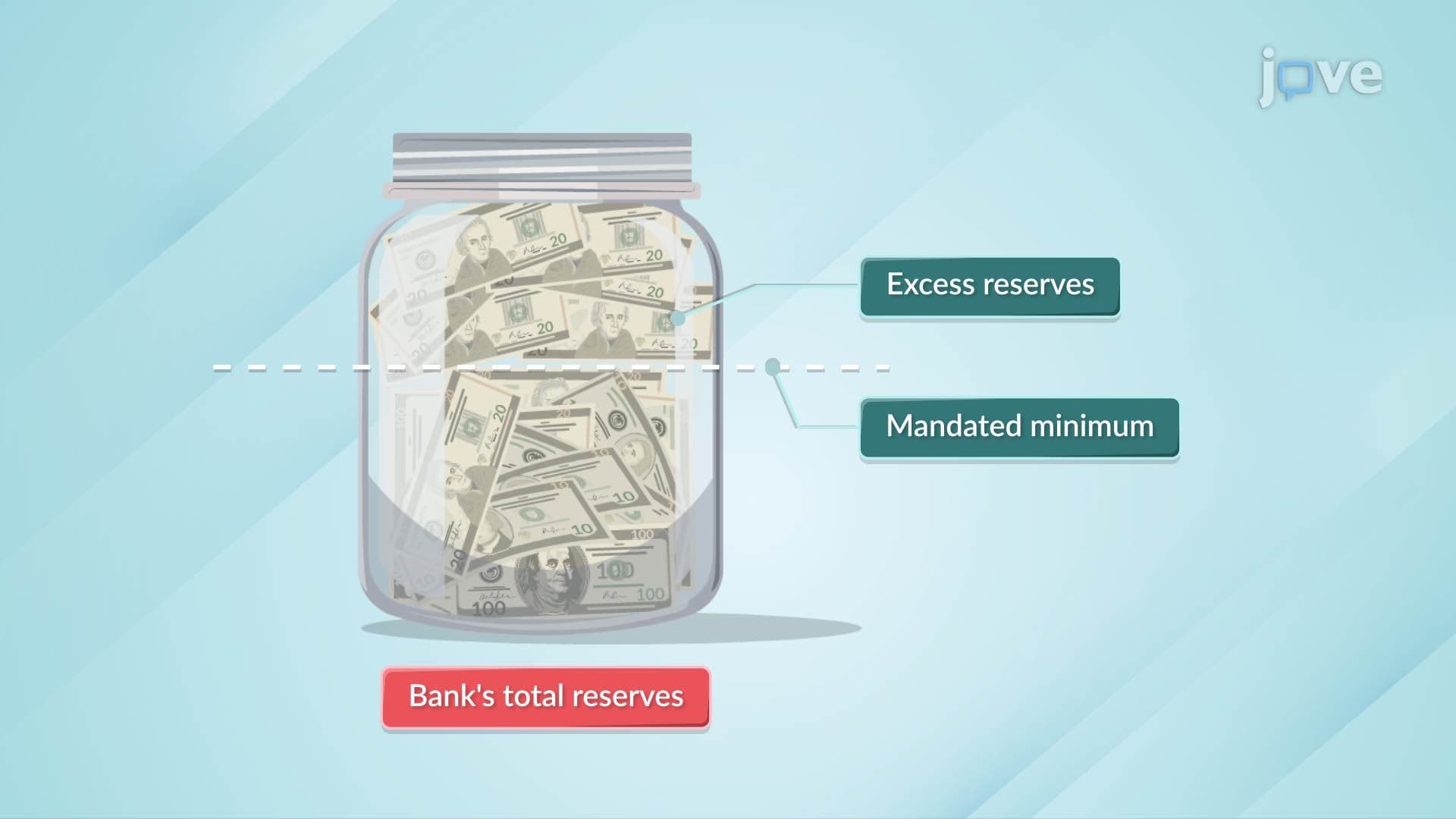
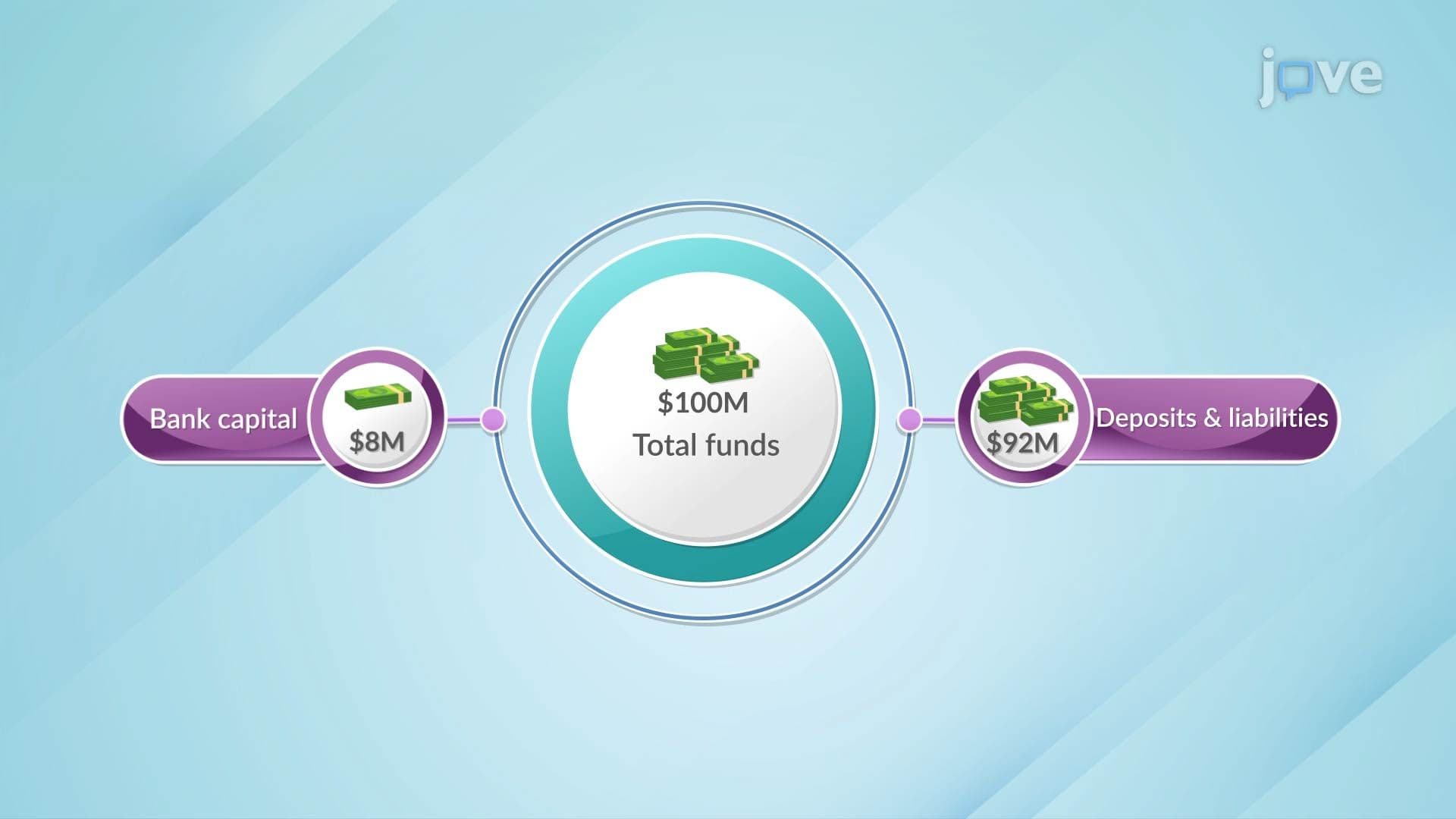
8. Excess Reserves, Bank Capital, Leverage, and Capital Requirements Excess reserves are funds banks hold beyond any minimum requirement. With the U.S. reserve requirement currently at zero, banks hold large excess reserves at the Fed, earning Interest on Reserve Balances (IORB); by adjusting the IORB rate, the Fed incentivizes banks to lend more or hold back. Bank capital (owners' equity) is the first buffer absorbing loan losses; if losses exceed capital, a bank becomes insolvent. Leverage, measured as total assets divided by capital, amplifies both profits and risk. Lehman Brothers' 30-to-1 leverage ratio before 2008 illustrates the danger. Capital requirements under the post-2008 Basel III framework mandate minimum Capital Adequacy Ratios (CAR), comparing capital to risk-weighted assets, to ensure banks can withstand financial stress without threatening the broader economy.