Loading video…

 8 Concepts
 399 views

Video Summary: What Is Symmetry
Did you know that NASA's Hubble Space Telescope uses perfectly symmetric mirrors to capture crystal-clear images of distant galaxies? Symmetry forms the foundation of countless natural phenomena and mathematical structures we encounter daily. From the elliptical orbits of planets to architectural marvels like the Lincoln Memorial in Washington D.C., symmetry creates balance and predictability in our world. What is Symmetry? encompasses three fundamental types: reflection across axes and rotational symmetry about points. Watch the full video on JoVE Coach to master this concept with expert-led visuals and step-by-step explanations.
What is Symmetry? At its core, symmetry represents a fundamental property where objects, shapes, or equations remain unchanged under specific transformations. In mathematics, we encounter symmetry most commonly in coordinate geometry, where functions and curves exhibit predictable patterns that simplify analysis and problem-solving.
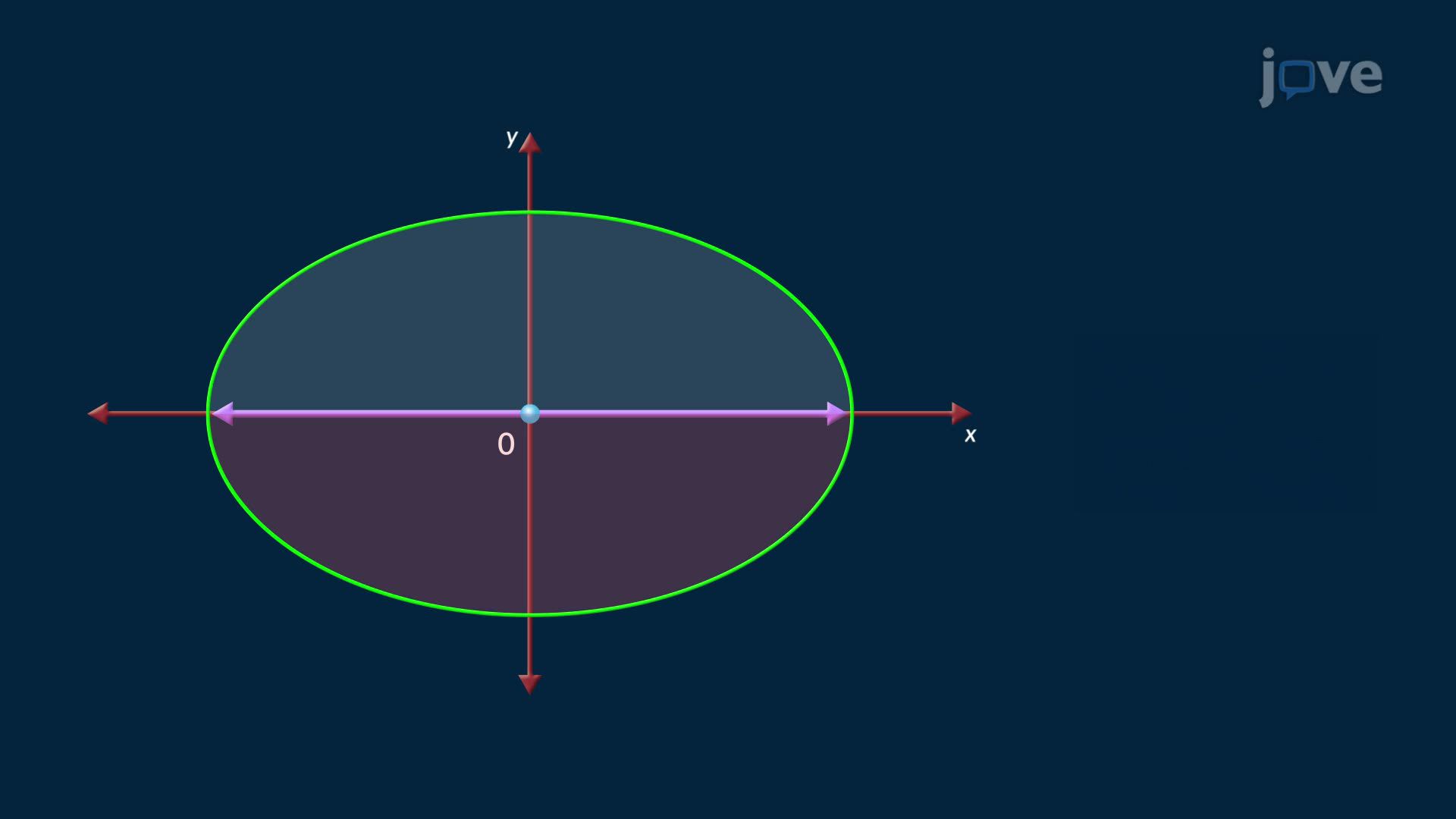
X-axis Symmetry (Horizontal Reflection) occurs when a graph looks identical above and below the horizontal axis. Mathematically, we test this by replacing y with -y in an equation. If the equation remains unchanged, x-axis symmetry exists. Consider the equation y² = 4x representing a parabola opening rightward. When we substitute -y for y, we get (-y)² = 4x, which simplifies to y² = 4x-the same equation, confirming x-axis symmetry.
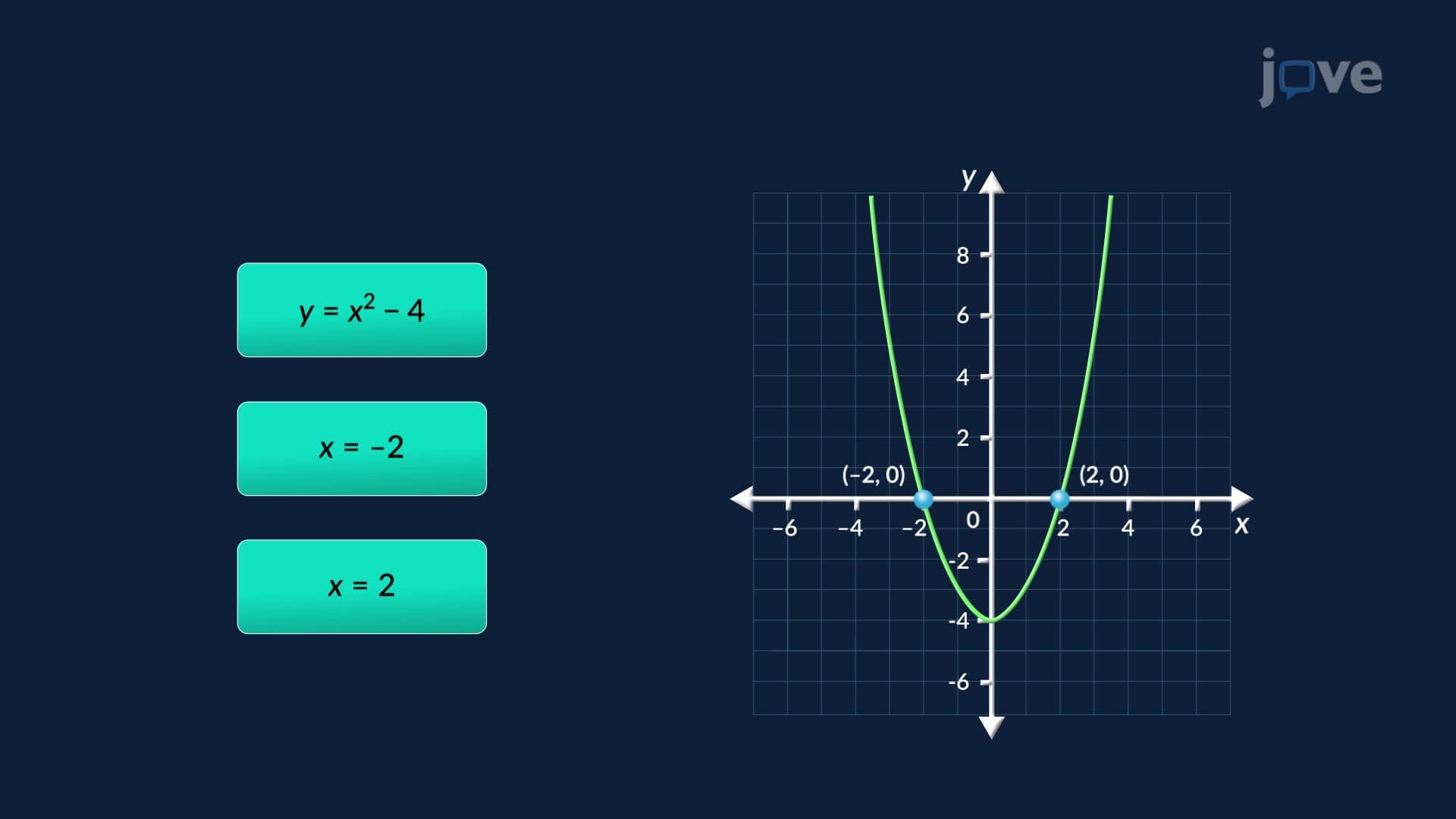
Y-axis Symmetry (Vertical Reflection) manifests when a graph mirrors perfectly across the vertical axis. We verify this by replacing x with -x. The function f(x) = x² demonstrates y-axis symmetry because f(-x) = (-x)² = x² = f(x). This property explains why parabolic satellite dishes used by companies like DirecTV maintain perfect signal reception-their symmetric shape focuses electromagnetic waves to a single point.
Origin Symmetry (Point Symmetry) exists when rotating a graph 180 degrees about the origin produces an identical appearance. We test this by replacing both x with -x and y with -y simultaneously. The function f(x) = x³ exhibits origin symmetry because f(-x) = (-x)³ = -x³ = -f(x).
Symmetry principles appear throughout American engineering and architecture. The Gateway Arch in St. Louis demonstrates perfect y-axis symmetry, while the Pentagon building in Arlington, Virginia, showcases rotational symmetry. In standardized testing, AP Calculus and SAT Math sections frequently test symmetry concepts through function analysis problems.
Students preparing for college placement exams encounter symmetry in coordinate geometry, trigonometric functions, and polynomial analysis. Understanding these patterns accelerates problem-solving and builds intuition for advanced calculus concepts including even and odd functions, Fourier series, and differential equations.
Related Micro-courses