Loading video…


 7 Concepts
 4.1K views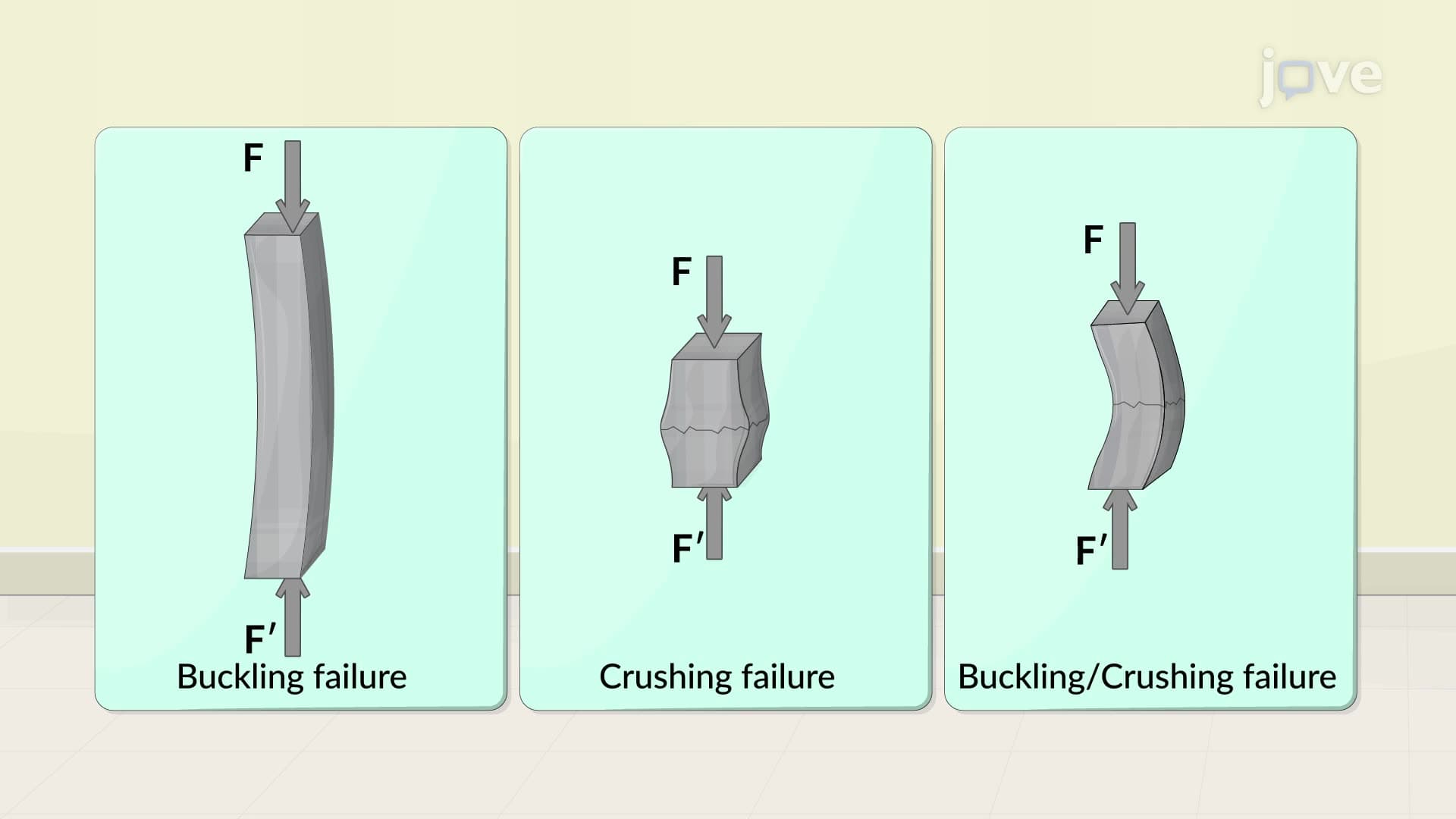

Video Summary: Design of Columns Under a Explained
When the Tacoma Narrows Bridge collapsed in 1940, structural engineers realized that understanding the design of columns under a critical load isn't just theoretical-it's life-saving. Real-world column failures, like those seen in the collapsed Interstate 35W bridge in Minneapolis, demonstrate why engineers must account for both material imperfections and loading conditions when designing structural supports. The Design of Columns Under A Explained concept bridges the gap between idealized formulas like Euler's critical load equation and practical engineering applications. Watch the full video on JoVE Coach to master this concept with expert-led visuals and step-by-step explanations.
The design of columns under a critical loading condition represents one of structural engineering's most important safety considerations. While theoretical formulas provide the foundation, real-world column design requires understanding why perfect mathematical models fall short of actual performance.
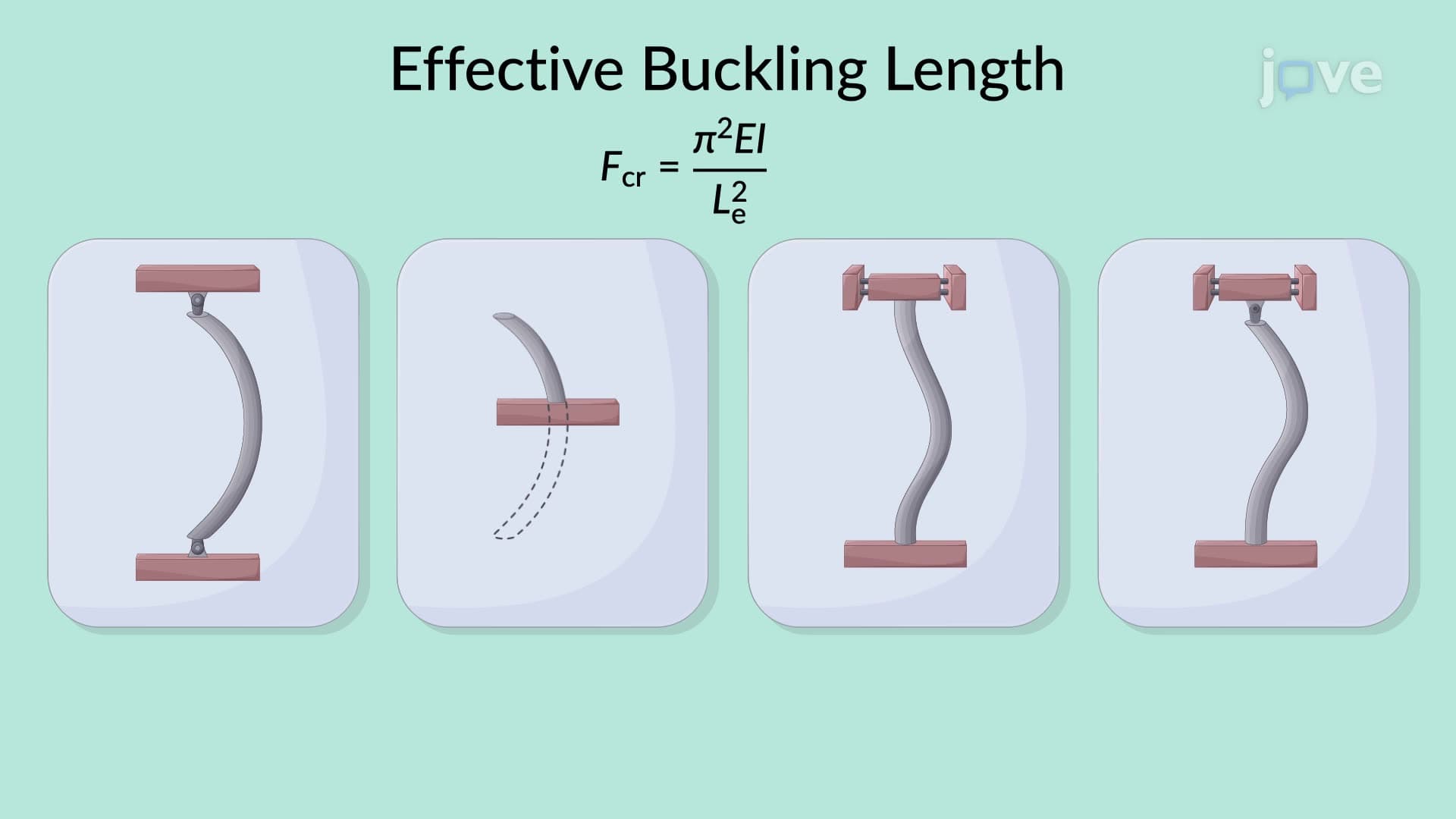
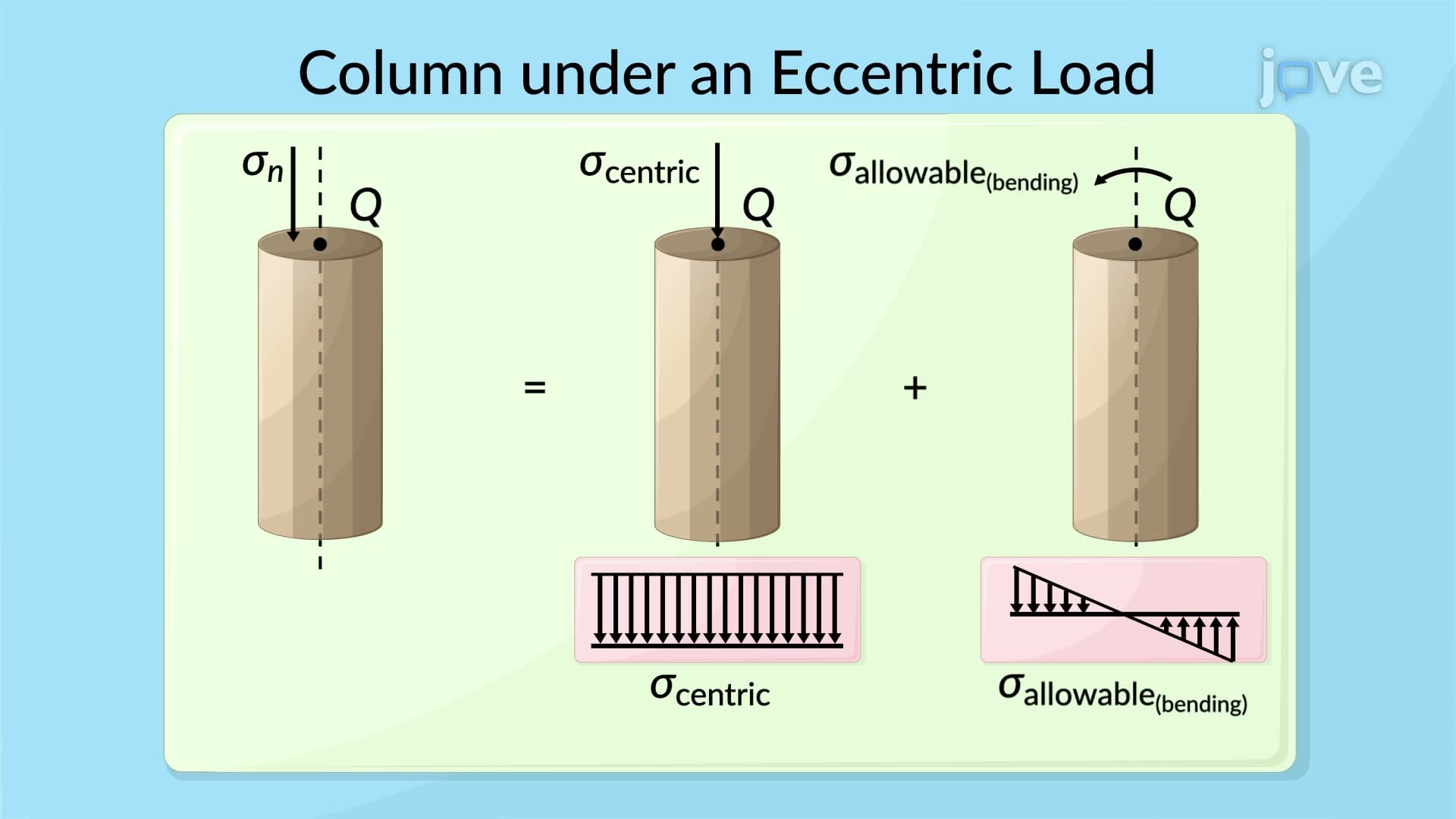
Euler's critical load formula (P = π²EI/L²) works beautifully for long, slender columns under ideal conditions. However, actual columns contain material imperfections, initial curvature, and loading eccentricities that significantly affect their behavior. The 1981 Hyatt Regency walkway collapse in Kansas City tragically demonstrated how theoretical calculations without proper safety factors and real-world considerations can lead to catastrophic failure.
For students preparing for AP Physics or introductory engineering courses, understanding this distinction is crucial. Exam problems often start with idealized scenarios using Euler's formula, then ask students to consider practical modifications needed for safe design.
Long columns fail primarily through elastic buckling, making Euler's formula reasonably accurate for predicting critical loads. Think of a thin wooden ruler-it bends dramatically before the material itself fails.
Short columns behave more like compression blocks, failing when the applied stress exceeds the material's yield strength. A concrete pier supporting a highway overpass typically falls into this category.
Intermediate-length columns present the most complex design challenges, as they can fail through either buckling or yielding depending on loading conditions. The columns supporting most building frameworks fall into this category, requiring sophisticated analysis methods taught in advanced structural engineering courses.
Professional engineering practice relies heavily on empirical formulas developed through extensive laboratory testing. The American Institute of Steel Construction (AISC) specifications, used throughout the United States, incorporate decades of experimental data to provide safe design guidelines. These formulas account for material variability, construction tolerances, and loading uncertainties that pure theoretical approaches cannot capture.
Students studying for engineering fundamentals exams or structural engineering licensure tests must understand both the theoretical foundations and practical applications of column design principles.
Related Micro-courses