Loading video…


 7 Concepts
 4.1K views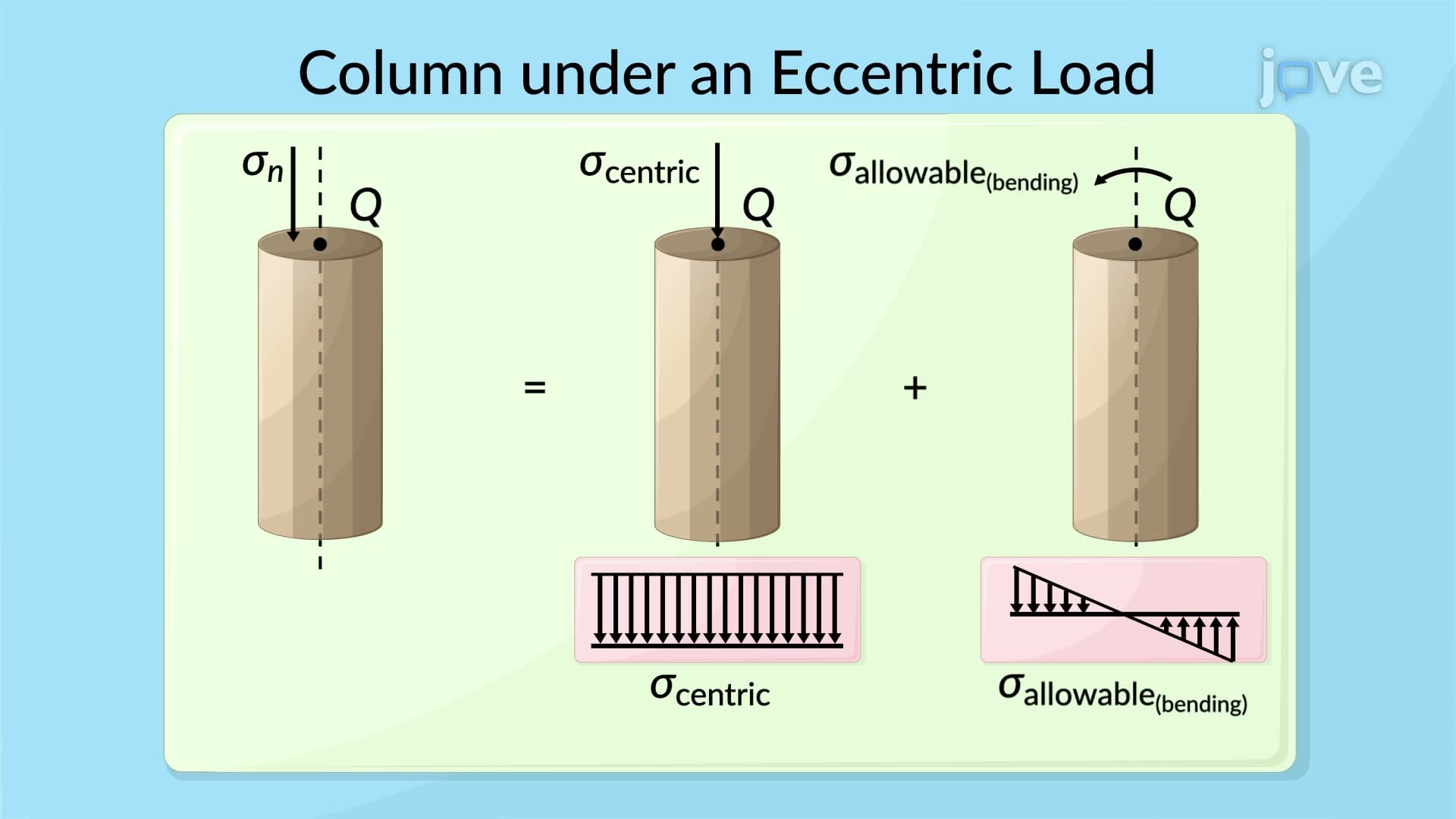

Video Summary: Design of Columns Under an Explained
Ever wondered why skyscrapers like Chicago's Willis Tower don't buckle under their own weight despite supporting massive loads applied off-center? The design of columns under an eccentric load requires engineers to account for both direct compression and bending effects that occur when forces don't act through the column's centerline. Watch the full video on JoVE Coach to master this concept with expert-led visuals and step-by-step explanations.
When structural engineers design columns for buildings like the Empire State Building or bridges like the Golden Gate, they must account for loads that don't always act perfectly through the column's center. The design of columns under an eccentric load becomes critical when forces are applied at a distance from the column's neutral axis, creating a combination of direct compression and bending stresses.
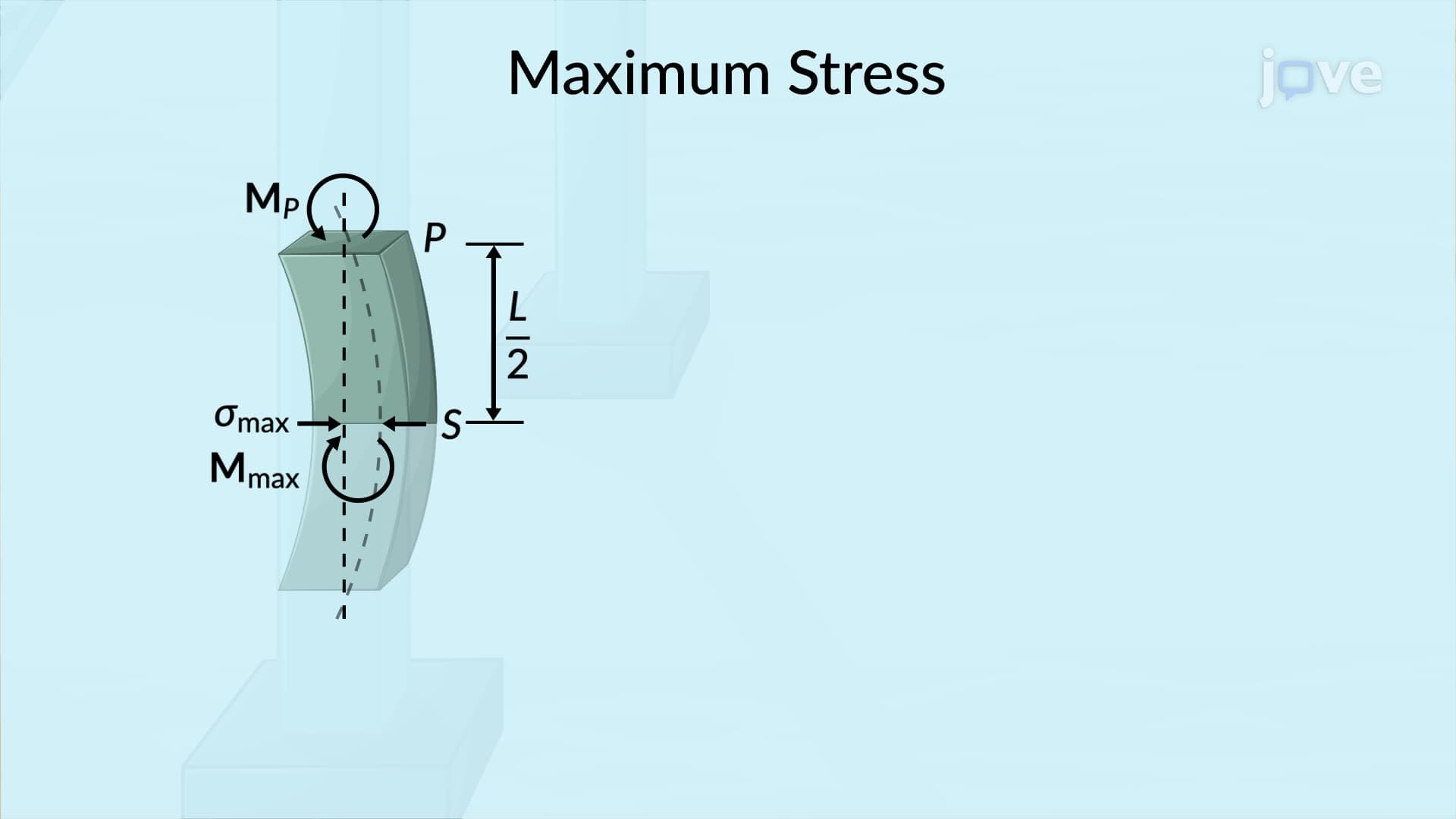
Unlike concentrically loaded columns where stress distributes uniformly across the cross-section, eccentric loading creates a non-uniform stress pattern. The total stress at any point equals the sum of axial stress (P/A) plus bending stress (My/I), where the eccentricity creates the moment M = P × e. This concept frequently appears on AP Physics C exams and college-level statics courses, where students must calculate maximum tensile and compressive stresses.
The allowable stress method represents a simplified approach where designers use the same allowable stress for eccentric loading as they would for centric loading. However, this method proves overly conservative because it doesn't account for the actual stress distribution. Engineering students at universities like MIT and Stanford learn that this approach, while safe, leads to unnecessarily heavy and expensive designs.
The interaction method provides a more sophisticated approach by separately considering allowable stresses for axial loading and bending. This method uses interaction equations that account for the combined effects, typically expressed as P/Pa + M/Ma ≤ 1, where Pa represents allowable axial load and Ma represents allowable bending moment. This approach appears frequently in structural engineering courses and professional engineering (PE) exam problems.
Consider the design of highway sign structures along Interstate highways, where wind loads create eccentric forces on support columns. Similarly, building columns supporting floors with uneven loading patterns experience eccentric conditions. The slenderness ratio (L/r) becomes particularly important in these scenarios, as longer, thinner columns exhibit greater sensitivity to eccentric loading effects. Students studying for the Fundamentals of Engineering (FE) exam must master these calculations for various column configurations commonly found in American construction practices.
Related Micro-courses