Loading video…


 7 Concepts
 4.1K views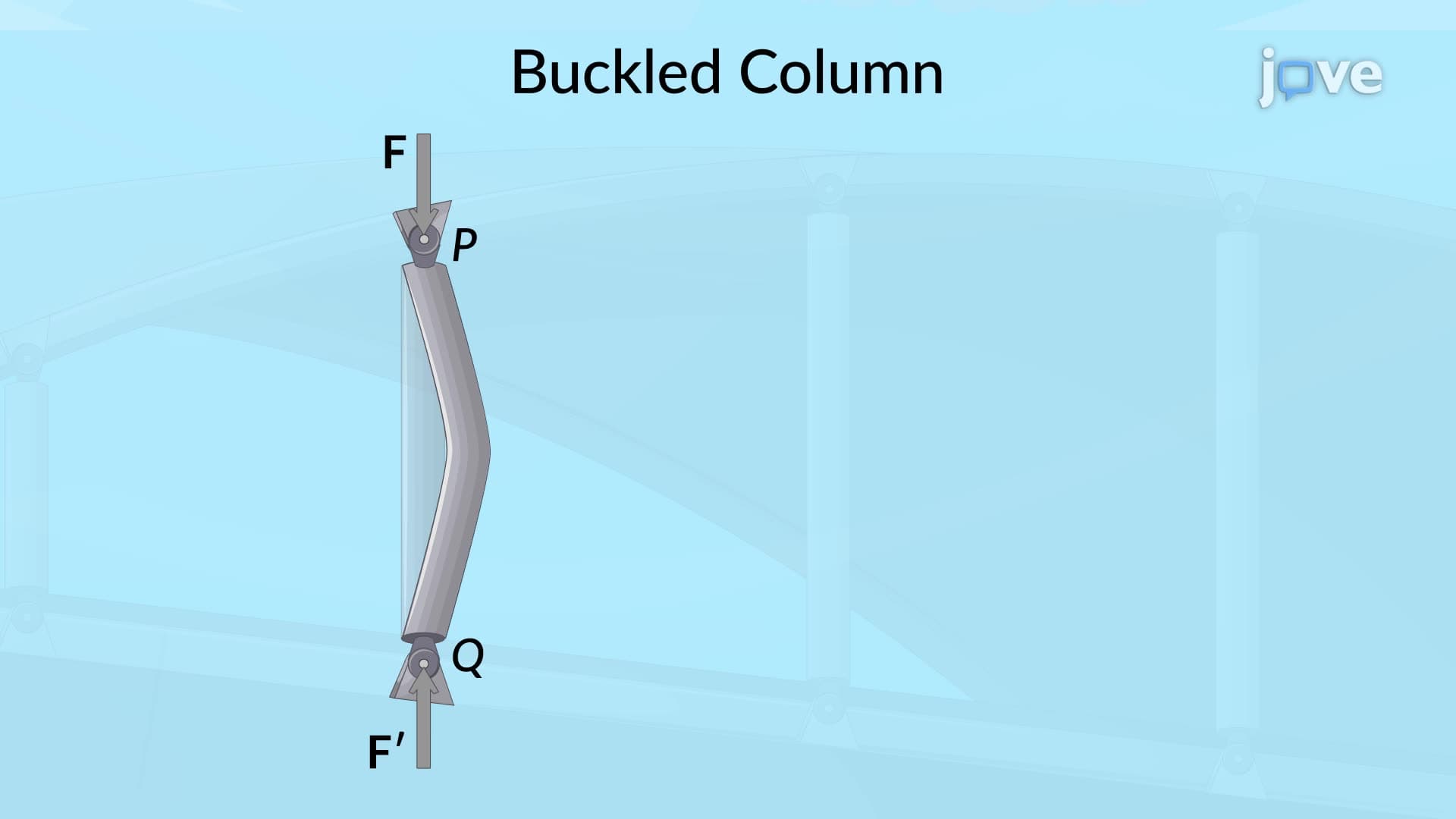

Video Summary: Eulers Formula for Pin Tutorial
Why do skyscrapers like Chicago's Willis Tower need precisely calculated support columns to prevent catastrophic failure? Euler's formula for pin connections provides the critical mathematical foundation for determining when slender columns will buckle under load. This essential engineering principle helps structural engineers at firms like Skidmore, Owings & Merrill design safe buildings by calculating the maximum load a pin-connected column can support before buckling occurs. Watch the full video on JoVE Coach to master this concept with expert-led visuals and step-by-step explanations.
Euler's formula for pin connections represents one of the most fundamental concepts in structural mechanics, providing engineers with the mathematical tools to predict when slender columns will buckle. Developed by Swiss mathematician Leonhard Euler in the 18th century, this formula remains essential for modern structural analysis taught in engineering programs at universities like MIT, Stanford, and Georgia Tech.
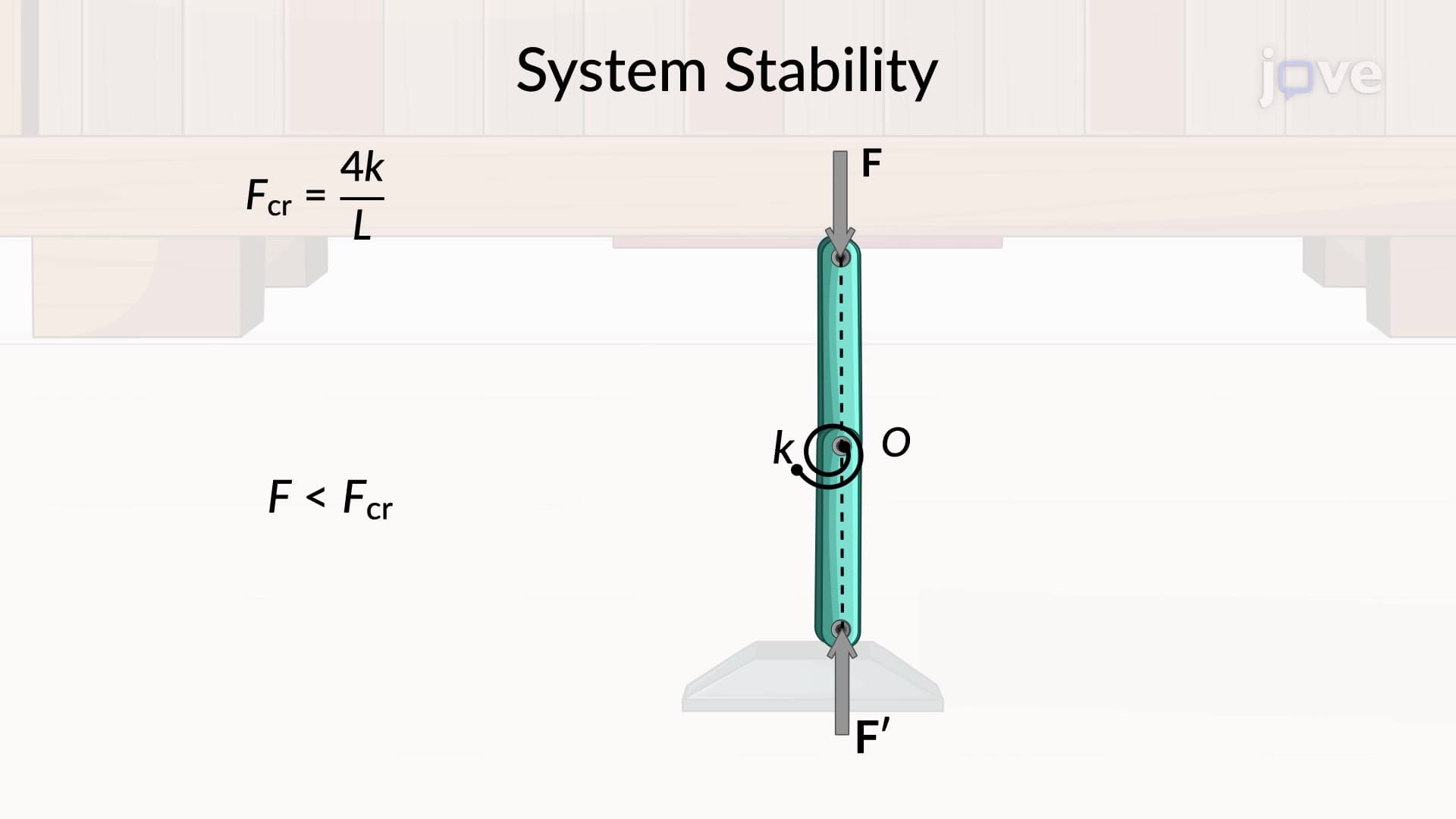
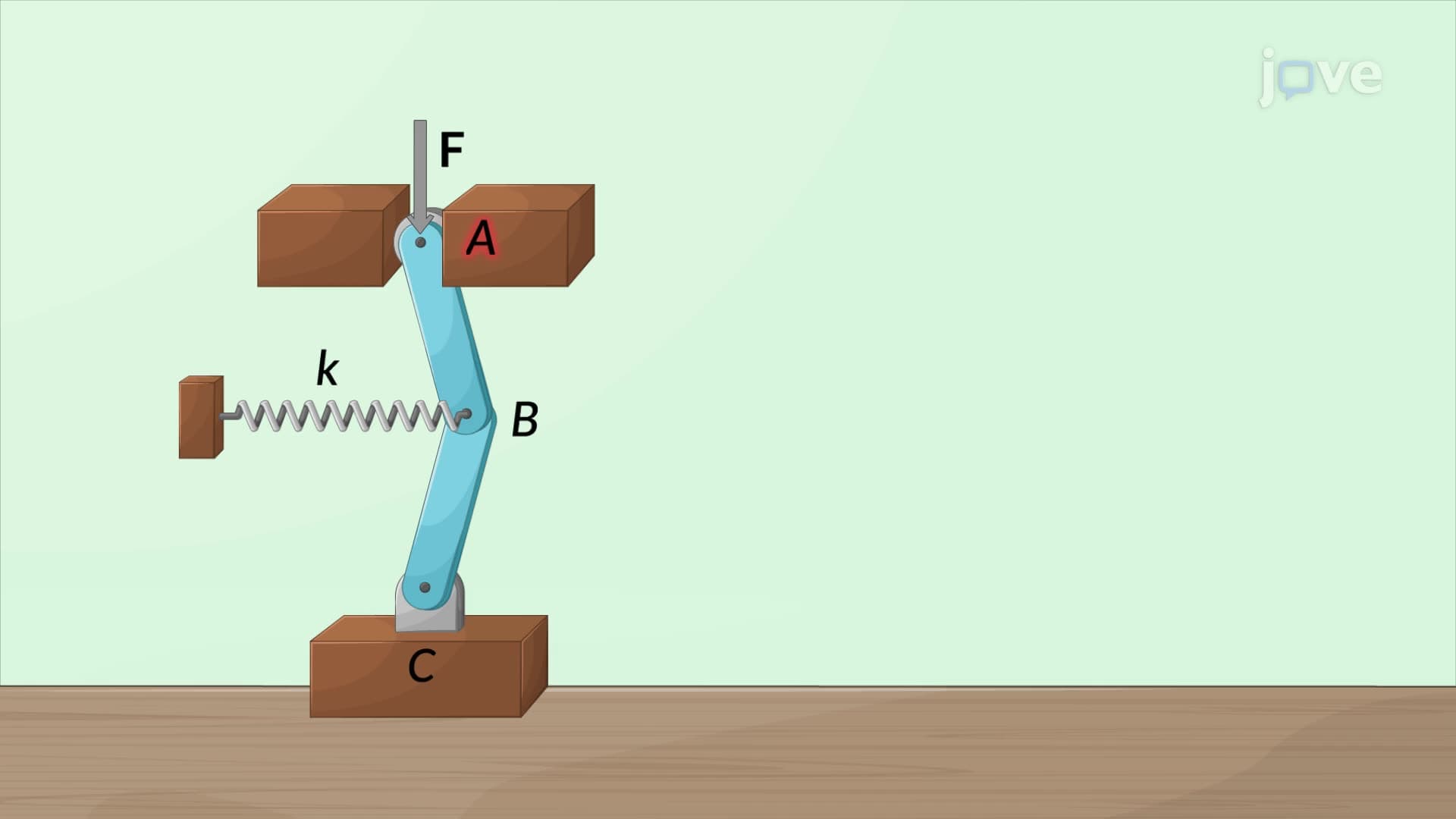
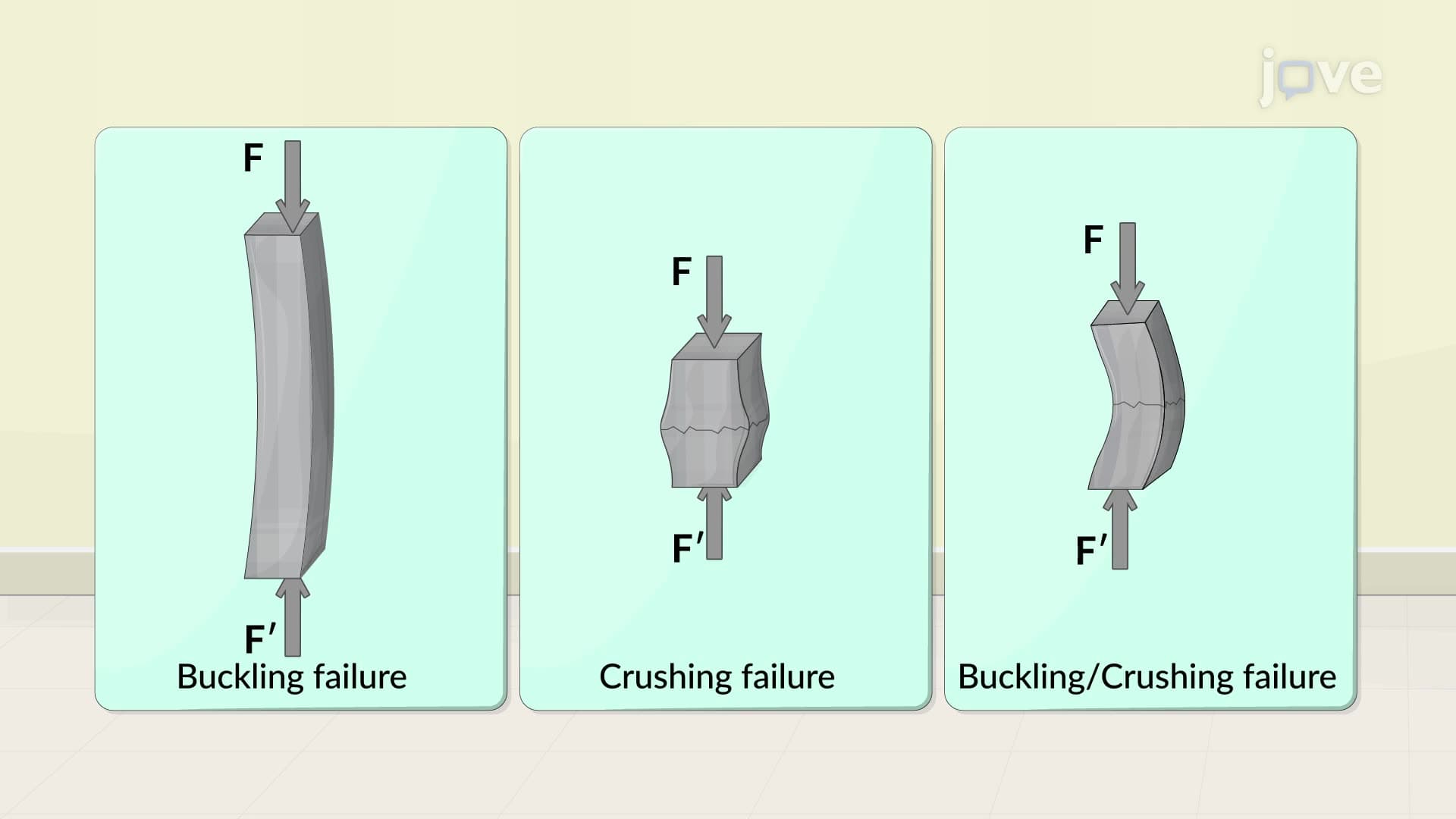
The derivation begins with a pin-connected column under axial load, where both ends are free to rotate but cannot translate. When the applied load approaches the critical value, the column becomes unstable and deflects laterally. This behavior is captured through a second-order differential equation that relates the bending moment to the curvature of the deflected column.
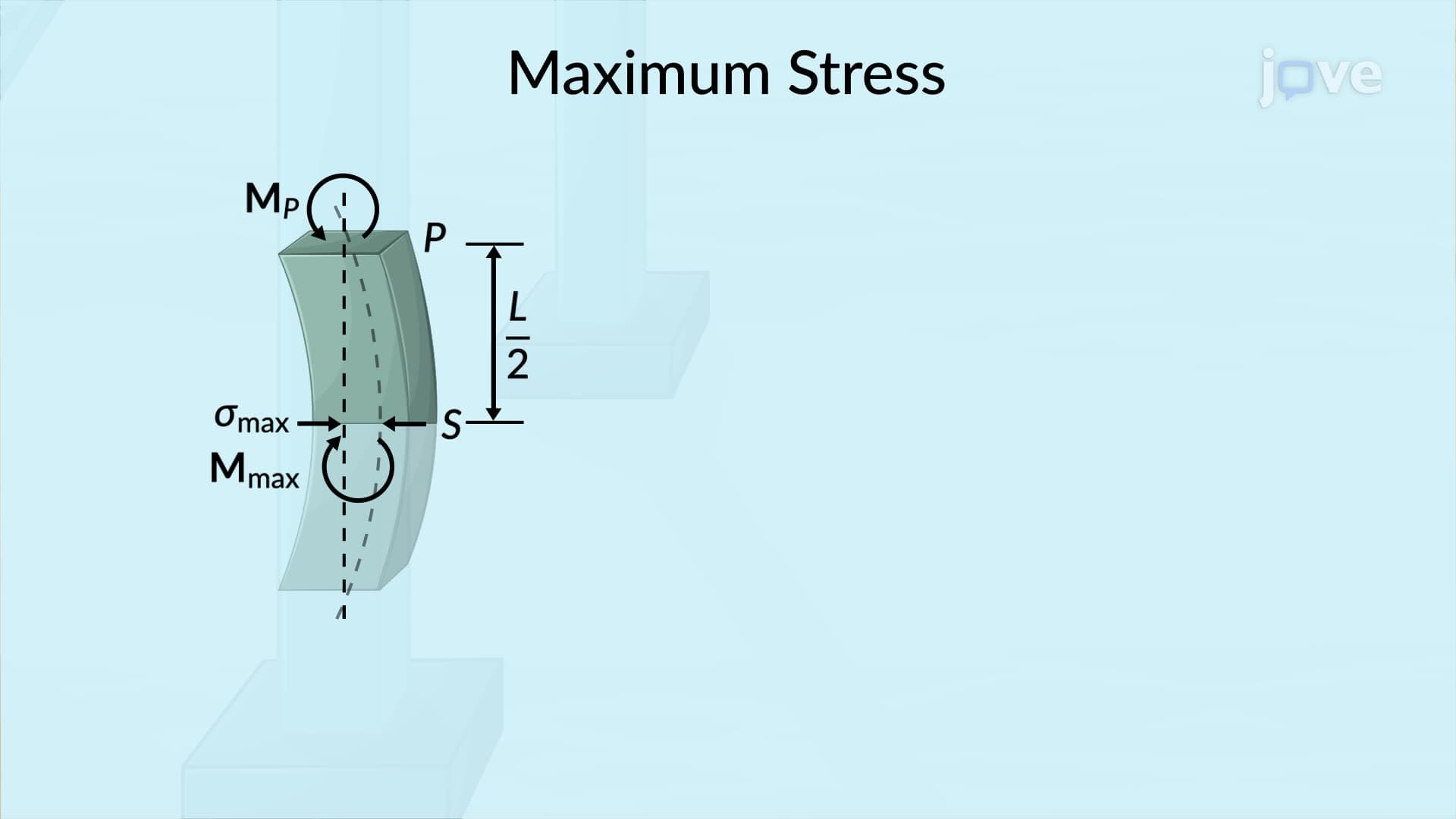
The mathematical relationship starts with M = EI(d²y/dx²), where M represents the bending moment, E is the modulus of elasticity, I is the moment of inertia, and y represents lateral deflection. For a buckled column, the moment equals -Py, leading to the differential equation EI(d²y/dx²) + Py = 0. This simplifies to d²y/dx² + (P/EI)y = 0, a classic harmonic oscillator equation.
The euler's formula for pin step by step solution process involves applying specific boundary conditions. For pin connections, the deflection y must equal zero at both ends (x = 0 and x = L). The general solution takes the form y = A sin(√(P/EI)x) + B cos(√(P/EI)x). The first boundary condition (y = 0 at x = 0) immediately requires B = 0, simplifying the solution to y = A sin(√(P/EI)x).
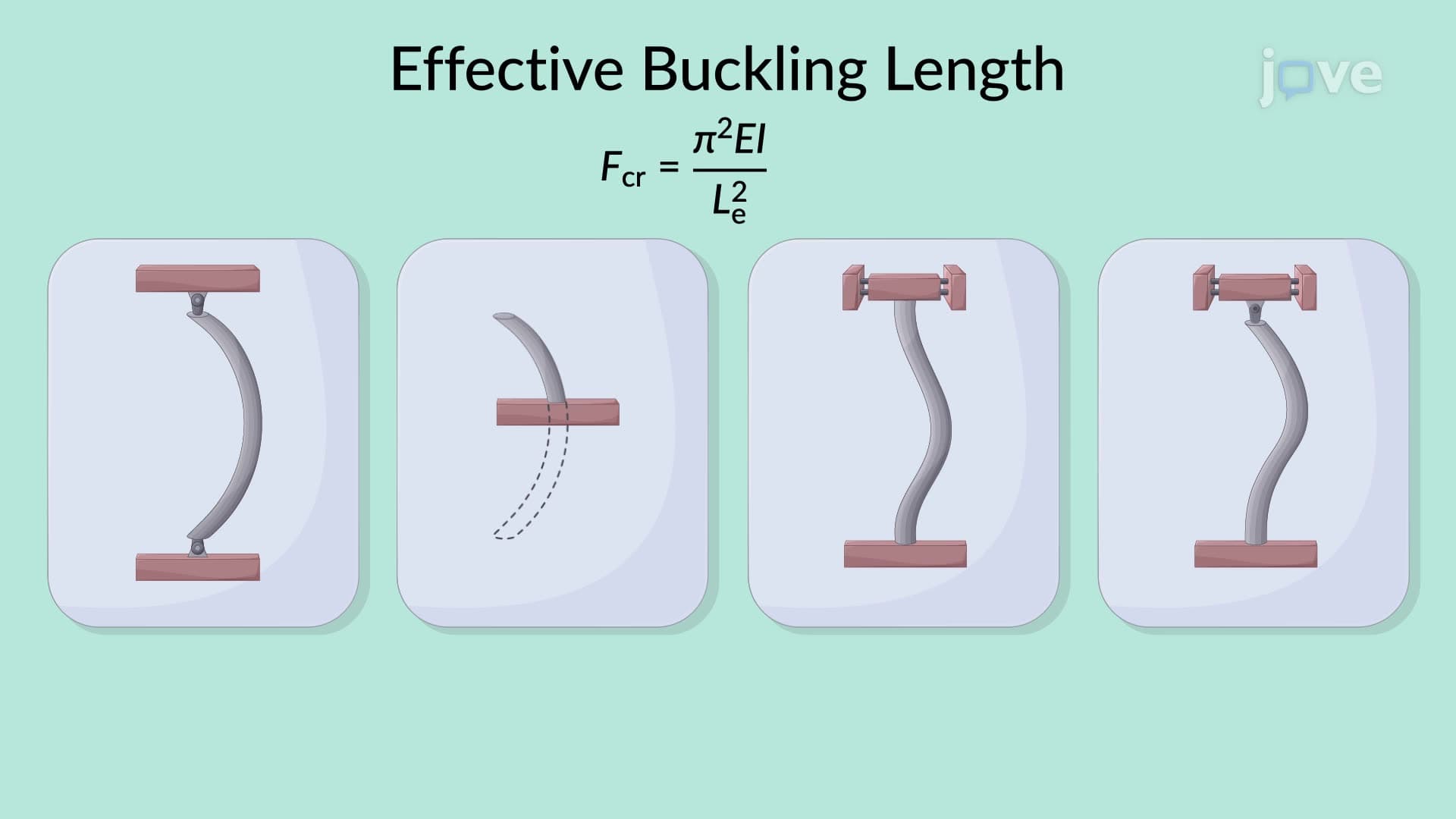
The second boundary condition (y = 0 at x = L) leads to the critical insight. Either A = 0 (trivial solution representing no buckling) or sin(√(P/EI)L) = 0. The non-trivial solution requires √(P/EI)L = nπ, where n represents positive integers. The smallest value occurs when n = 1, yielding the famous Euler buckling formula: P(critical) = π²EI/L².
This formula appears frequently in structural engineering courses and professional practice across the United States. The American Institute of Steel Construction (AISC) incorporates Euler's principles into building codes, while mechanical engineering students encounter it in courses on machine design and structural analysis. For AP Physics C students, understanding this concept provides valuable preparation for college-level mechanics courses.
Engineering firms like Bechtel and Fluor Corporation regularly apply these principles when designing everything from bridge supports to offshore drilling platforms. The formula helps determine appropriate safety factors and guides material selection for critical structural components.
Related Micro-courses