Loading subject page…

10,972 views

Video Summary: What Is Biofilms
Ever wondered why dental plaque is so difficult to remove, even with thorough brushing? Biofilms are sophisticated microbial communities that form protective shields around bacteria, making them incredibly resilient to cleaning and treatment. These structures plague US hospitals daily, causing catheter-associated infections that affect thousands of patients. Understanding what is biofilms reveals how these microscopic fortresses protect harmful bacteria from antibiotics and immune responses. Watch the full video on JoVE Coach to master this concept with expert-led visuals and step-by-step explanations.
Biofilms represent one of the most successful survival strategies in the microbial world. Unlike free-floating planktonic bacteria, biofilms are highly organized communities where microorganisms collaborate within a self-produced protective matrix. This polysaccharide-rich environment creates a microscopic city where bacteria communicate, share nutrients, and defend against threats collectively.
The biofilms definition explained reveals their complexity: these aren't random bacterial clusters but sophisticated structures with distinct architecture, communication networks, and specialized roles for different community members. US medical professionals encounter biofilms daily, from the persistent infections in cystic fibrosis patients at Children's Hospital of Philadelphia to the catheter-associated urinary tract infections affecting over 13,000 Americans annually.
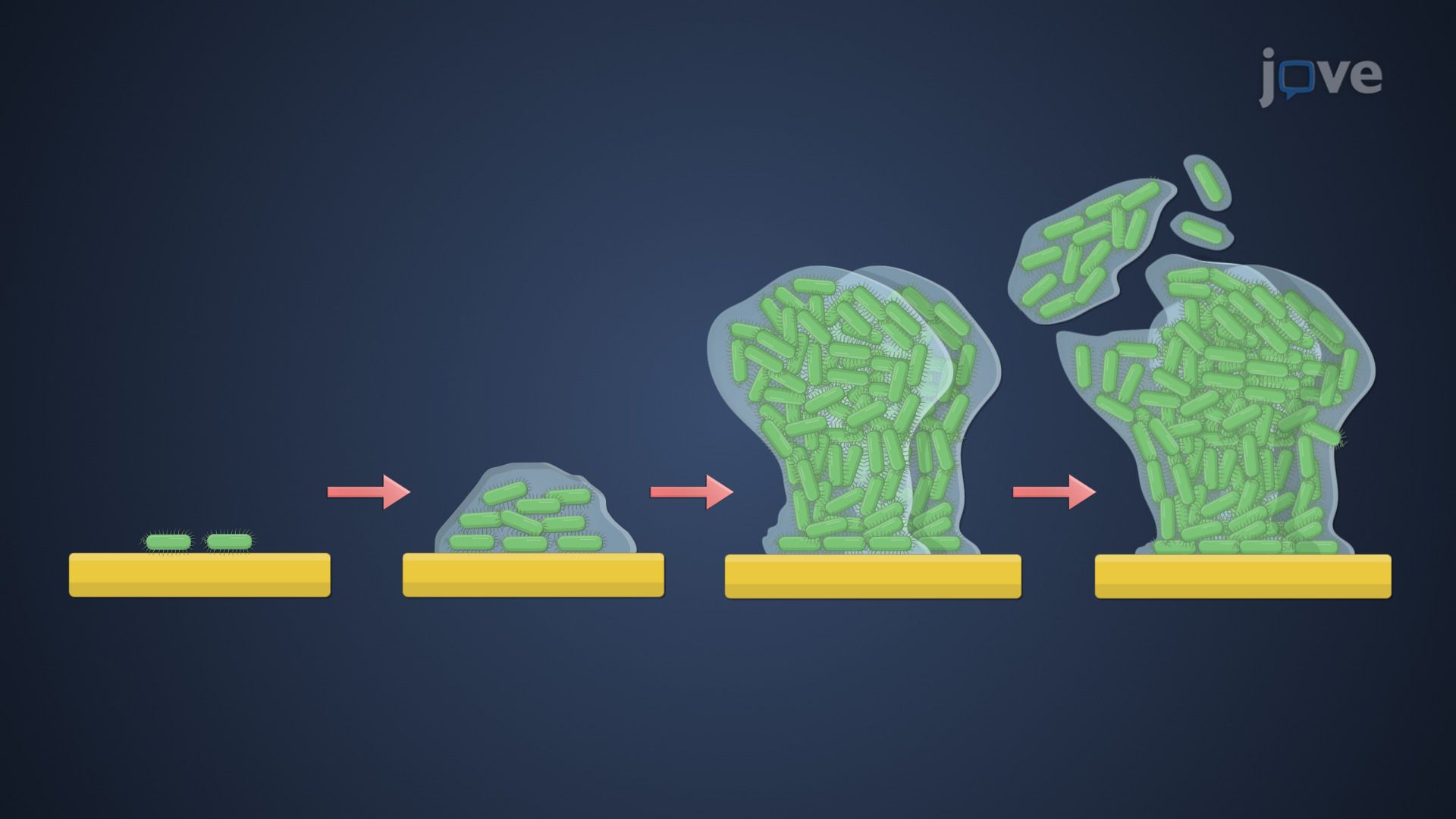
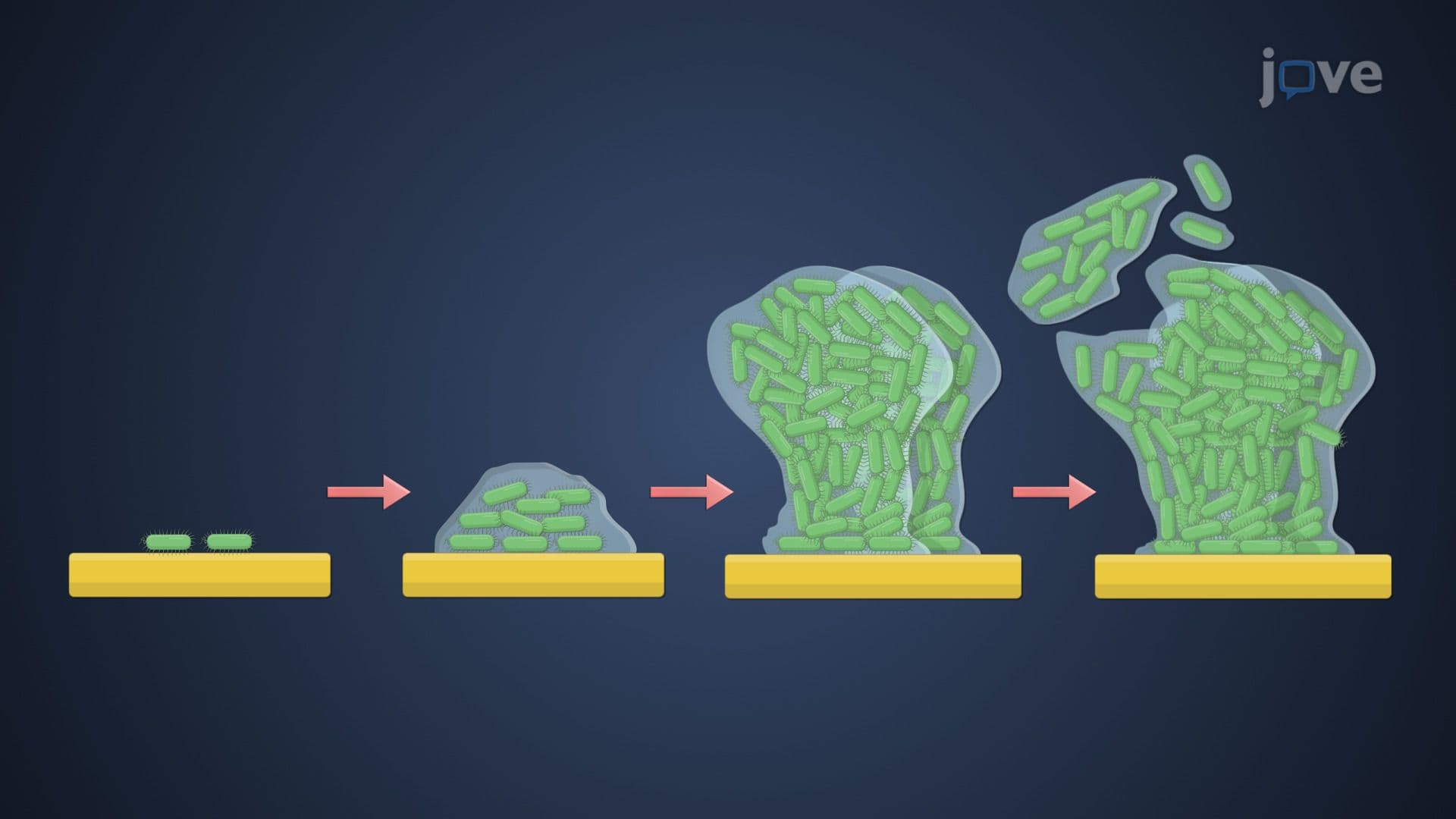
Biofilms overview begins with understanding their developmental stages. Initial attachment occurs when planktonic cells encounter suitable surfaces-whether human tissue, medical devices, or environmental substrates. During colonization, early settlers produce extracellular polymeric substances (EPS), creating the sticky foundation that transforms individual bacteria into a unified community.
The maturation phase builds multilayered architectures with water channels for nutrient distribution and waste removal. Finally, dispersal allows some community members to venture out and establish new colonies, ensuring species survival and expansion. This cycle explains why biofilm infections often recur despite aggressive treatment-dispersed cells can restart the entire process elsewhere in the body.
American healthcare systems spend billions annually combating biofilm-related infections. These structures make bacteria 10-1000 times more resistant to antibiotics compared to planktonic cells. The protective matrix limits drug penetration while creating anaerobic microenvironments where bacteria enter dormant states, essentially hibernating until threats pass.
Biofilms study guide materials emphasize their role in chronic wounds, prosthetic joint infections, and ventilator-associated pneumonia. For students preparing for the MCAT or nursing school entrance exams, understanding biofilm resistance mechanisms proves crucial for clinical reasoning questions about persistent infections and treatment failures.
Despite their pathogenic reputation, biofilms provide essential ecological services. Municipal wastewater treatment facilities across the US rely on beneficial biofilm communities to break down organic pollutants and remove nitrogen compounds. These biofilms concept explained applications demonstrate how the same mechanisms that make pathogenic biofilms problematic can be harnessed for environmental remediation and biotechnology applications.
Related Micro-courses