Loading video…

 13 Concepts
 11K views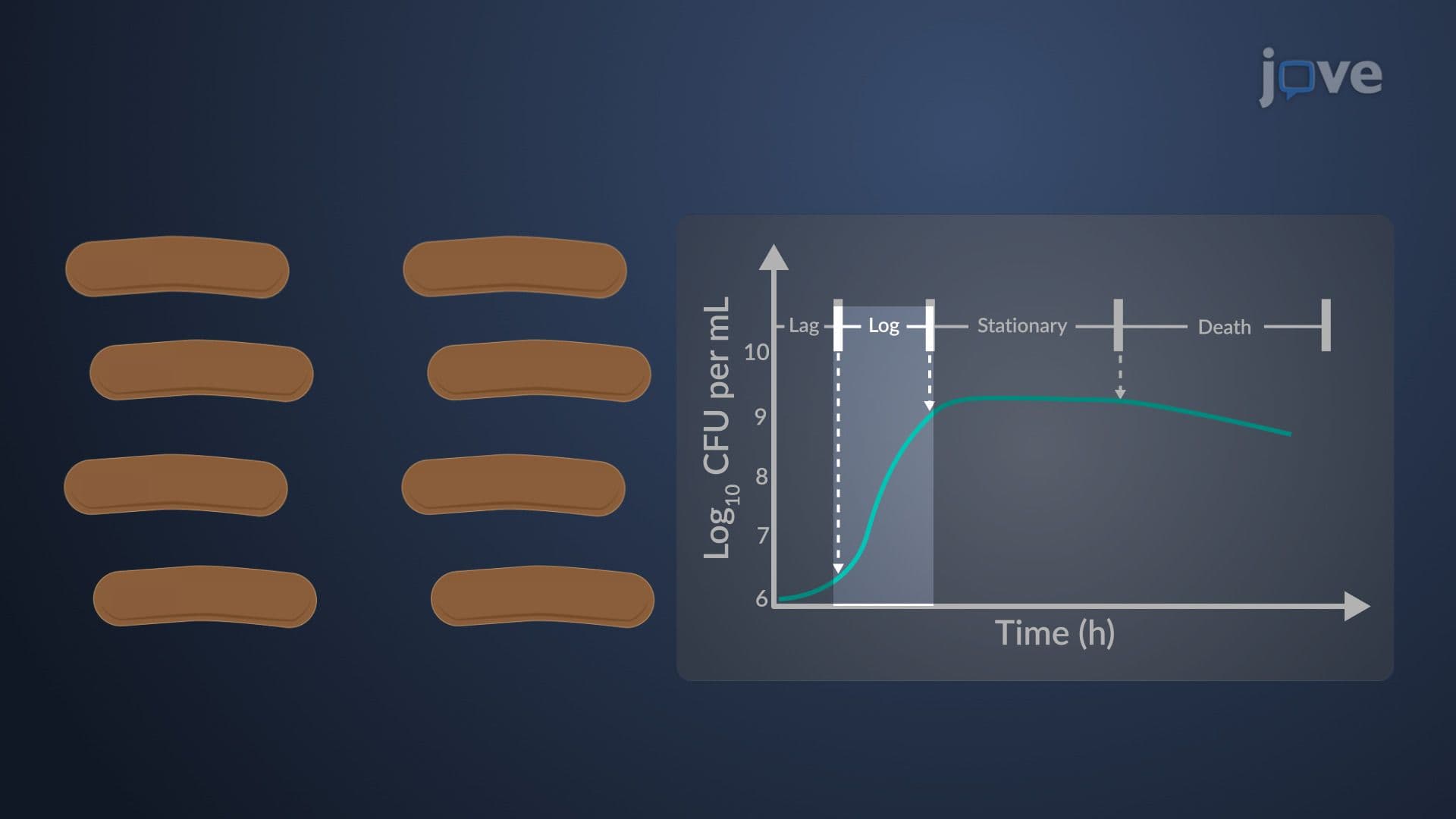

Video Summary: What Is Generation Time
Ever wondered why food poisoning from bacteria like E. coli can happen so quickly after contamination? Generation time is the period required for a bacterial population to double during exponential growth, explaining how rapidly bacteria multiply under ideal conditions. For example, E. coli found in contaminated ground beef at US processing facilities can double every 20 minutes, while Mycobacterium tuberculosis takes 12-24 hours per generation. Watch the full video on JoVE Coach to master this concept with expert-led visuals and step-by-step explanations.
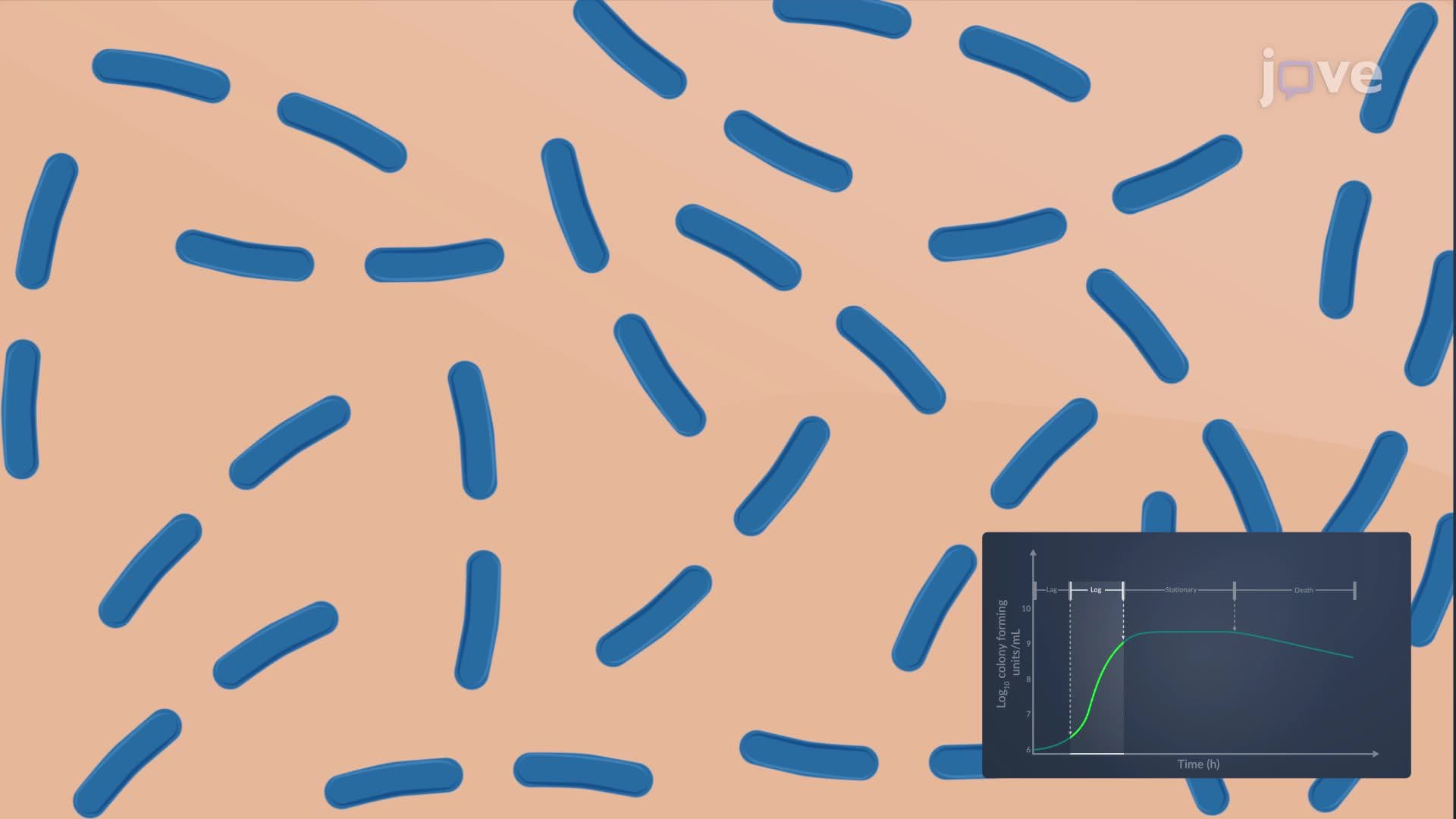
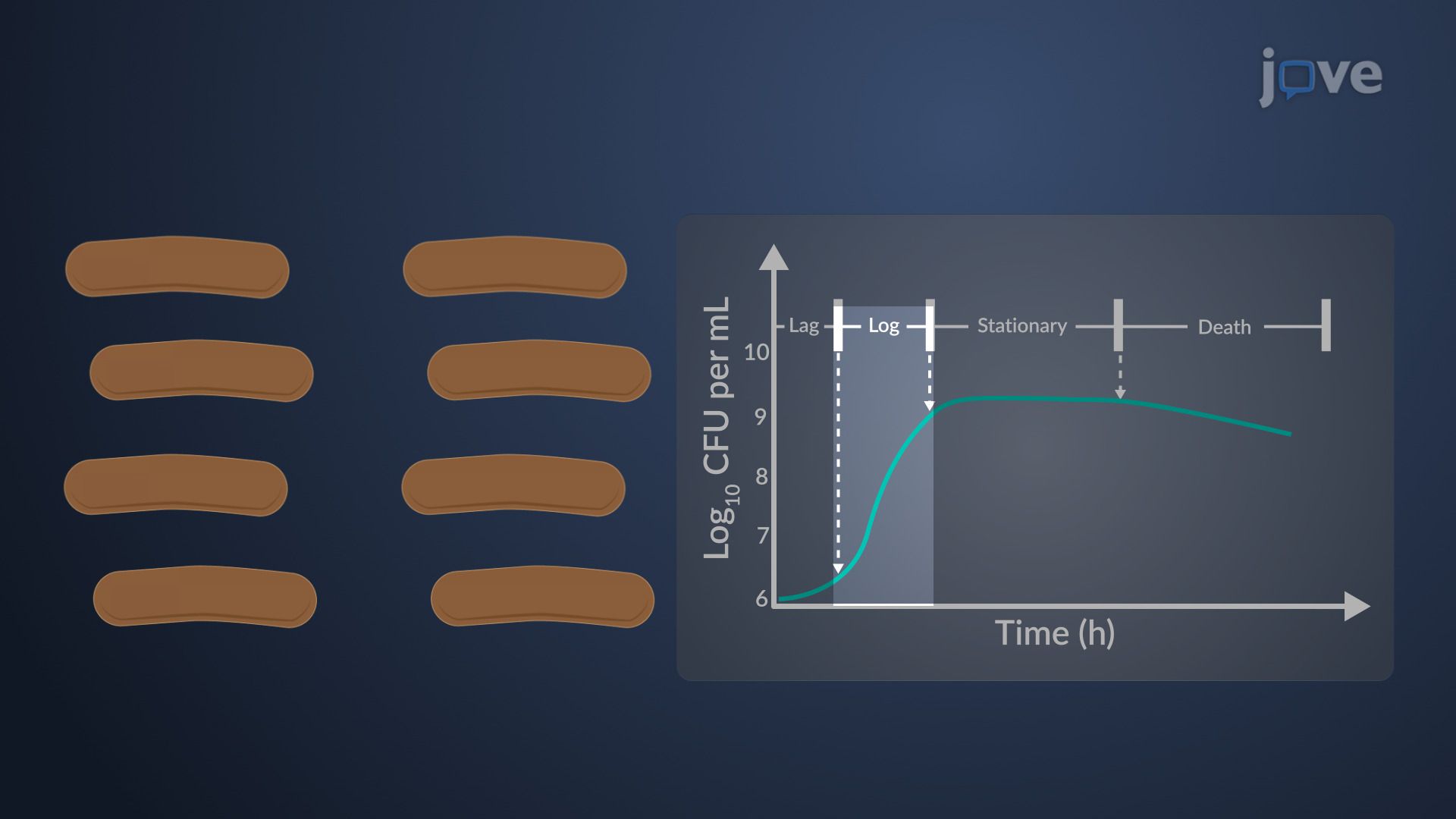
Generation time represents a fundamental concept in microbiology that quantifies how quickly bacterial populations expand under optimal growth conditions. This metric specifically measures the time interval required for a bacterial population to completely double its cell count during the exponential (logarithmic) growth phase. Understanding generation time is crucial for students preparing for AP Biology exams, MCAT microbiology sections, and college-level bacteriology courses.
The generation time calculation relies on two primary formulas that students encounter in standardized exams. The basic formula states that generation time (g) equals the total time period (t) divided by the number of generations (n): g = t/n. To determine the number of generations, microbiologists use the relationship n = log₂(N(t)/N(0)), where N(0) represents the initial cell count and N(t) represents the final cell count after time period t.
For practical application, consider a laboratory scenario common in US college microbiology courses: if a bacterial culture begins with 1,000 cells and reaches 64,000 cells after 180 minutes, the calculation reveals 6 generations occurred (since 64,000 ÷ 1,000 = 64 = 2⁶). Therefore, the generation time equals 180 minutes ÷ 6 generations = 30 minutes per generation.
Generation time varies dramatically among bacterial species, creating important implications for clinical medicine and food safety regulations enforced by the FDA. Escherichia coli, commonly studied in US high school and college laboratories, demonstrates rapid reproduction with a 20-minute generation time under optimal conditions. This explains why foodborne illness outbreaks linked to contaminated lettuce or ground beef can escalate quickly in restaurant chains across multiple states.
Conversely, Mycobacterium tuberculosis requires 12-24 hours per generation, significantly impacting tuberculosis diagnosis and treatment protocols used in US healthcare systems. This extended generation time explains why TB cultures in clinical laboratories require weeks to months for definitive identification, unlike routine bacterial infections that show growth within 24-48 hours.
Healthcare professionals and food safety inspectors rely on generation time data to predict bacterial contamination risks and establish safety protocols. In pharmaceutical manufacturing facilities regulated by the FDA, understanding generation time helps determine sterilization requirements and contamination control measures. Similarly, the USDA incorporates bacterial generation time data into food safety guidelines that govern temperature control requirements for restaurants and food processing plants throughout the United States.
Related Micro-courses