Loading video…

 13 Concepts
 11K views

Video Summary: What Is Binary Fission
Every 20 minutes, a single *E. coli* bacterium in your gut can become two identical cells through binary fission-a remarkable process that allows bacteria to multiply exponentially. Binary fission is the primary method by which prokaryotic organisms reproduce asexually, creating genetically identical offspring through precise cellular division mechanisms. This fundamental biological process occurs billions of times daily in hospital settings, where understanding bacterial reproduction helps medical professionals combat infections. Watch the full video on JoVE Coach to master this concept with expert-led visuals and step-by-step explanations.
Binary fission represents one of nature's most efficient reproductive strategies, allowing single-celled prokaryotes to rapidly multiply without the complexity of sexual reproduction. Unlike eukaryotic cell division, which involves multiple chromosomes and intricate spindle apparatus formation, binary fission operates through a streamlined process that ensures rapid population growth under favorable conditions.
This process proves critical for understanding bacterial infections in clinical settings. For instance, *Streptococcus pyogenes*, the bacterium causing strep throat, can double its population every 30-45 minutes through binary fission, explaining why untreated bacterial infections can rapidly overwhelm immune systems.
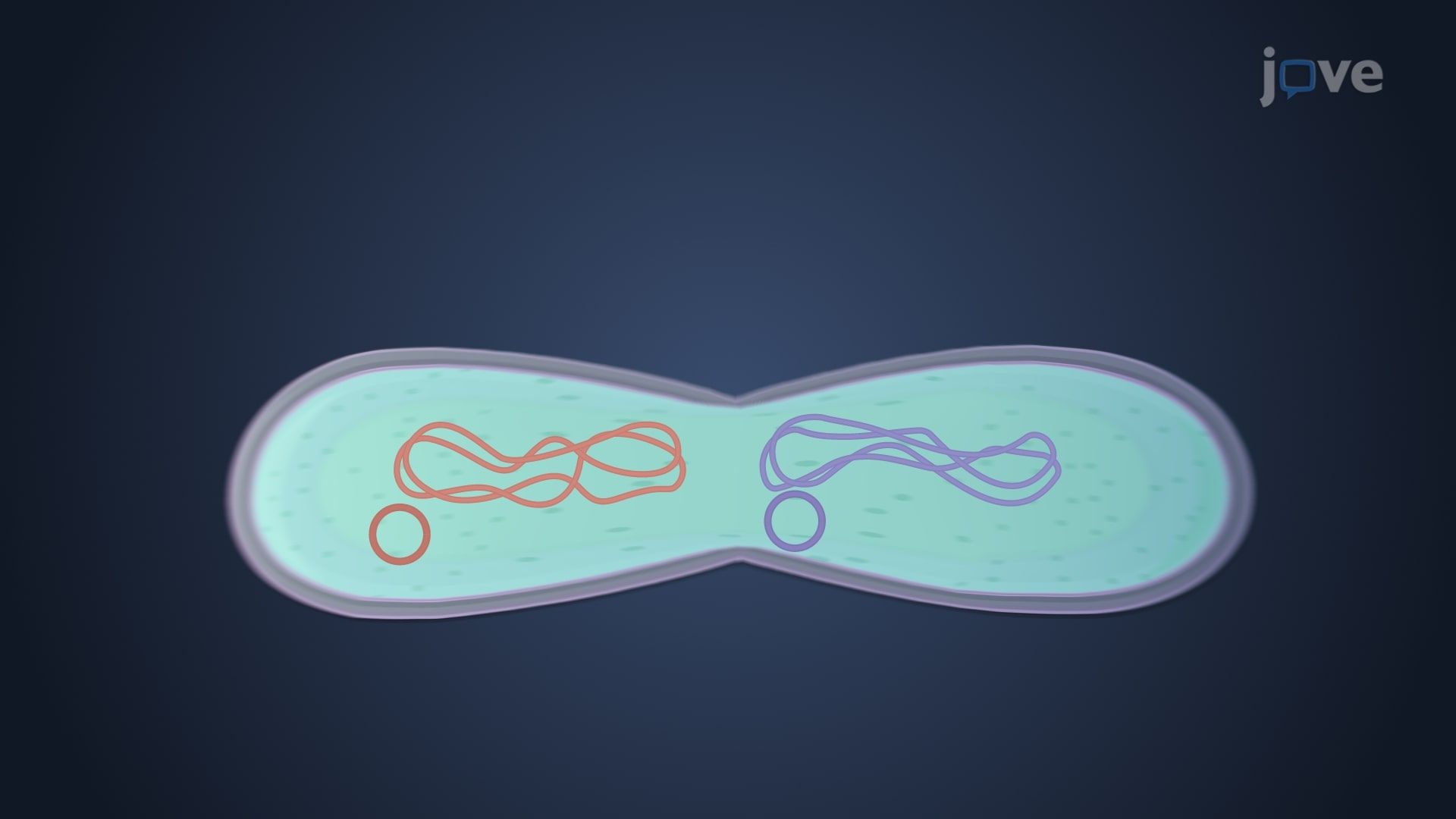
The binary fission process begins with precise DNA replication at the origin of replication (oriC). Bacterial chromosomes exist as single, circular DNA molecules anchored to the cell membrane. DNA polymerases work bidirectionally from the oriC, creating two identical copies of the genetic material. This mechanism differs significantly from eukaryotic DNA replication, which involves multiple origins and linear chromosomes.
Students preparing for AP Biology exams should note that bacterial DNA replication lacks the proofreading mechanisms found in eukaryotes, contributing to higher mutation rates that drive bacterial evolution and antibiotic resistance development.
Following DNA replication, the bacterial cell begins elongating, with newly replicated chromosomes moving toward opposite cell poles. The FtsZ protein, often called the "bacterial tubulin," assembles into a contractile ring structure called the Z-ring. This protein complex coordinates with membrane-anchoring proteins to form the divisome-a sophisticated molecular machine responsible for cell division.
The divisome orchestrates peptidoglycan synthesis, creating the septum that eventually separates daughter cells. Understanding this process proves essential for medical students studying antibiotic mechanisms, as many antibiotics target peptidoglycan synthesis to prevent bacterial reproduction.
Binary fission knowledge directly applies to medical microbiology and pharmaceutical development. Laboratory technicians use binary fission principles to culture bacterial specimens for diagnostic testing, while researchers exploit this process to produce recombinant proteins using bacterial expression systems. MCAT students should understand how binary fission rates influence bacterial load calculations in clinical diagnoses and treatment planning.
Related Micro-courses