Loading subject page…


33,043 views

Video Summary: Redox Titration Iodimetry and Iodometry Explained
Ever wonder how EPA labs determine chlorine levels in drinking water or how pharmaceutical companies verify vitamin C content in supplements? Iodimetry iodometry explained reveals two powerful analytical techniques that answer these critical questions through precise redox titrations. The FDA routinely uses these methods to test antioxidant levels in food products across the United States. Redox Titration Iodimetry And Iodometry Explained demonstrates how these complementary techniques enable scientists to quantify oxidizing and reducing agents with remarkable accuracy. Watch the full video on JoVE Coach to master this concept with expert-led visuals and step-by-step explanations.
Iodimetric iodometric titration methods represent two distinct but related analytical approaches that exploit iodine's unique redox properties. These techniques have become cornerstone methods in analytical chemistry, particularly valuable for their precision and reliability in determining concentrations of oxidizing and reducing agents.
Iodometry operates through an indirect mechanism where the analyte (typically an oxidizing agent) reacts with excess iodide ions in acidic solution. This reaction liberates iodine, which exists in equilibrium with triiodide ions (I3-). The amount of iodine produced directly correlates with the concentration of the original oxidizing agent.
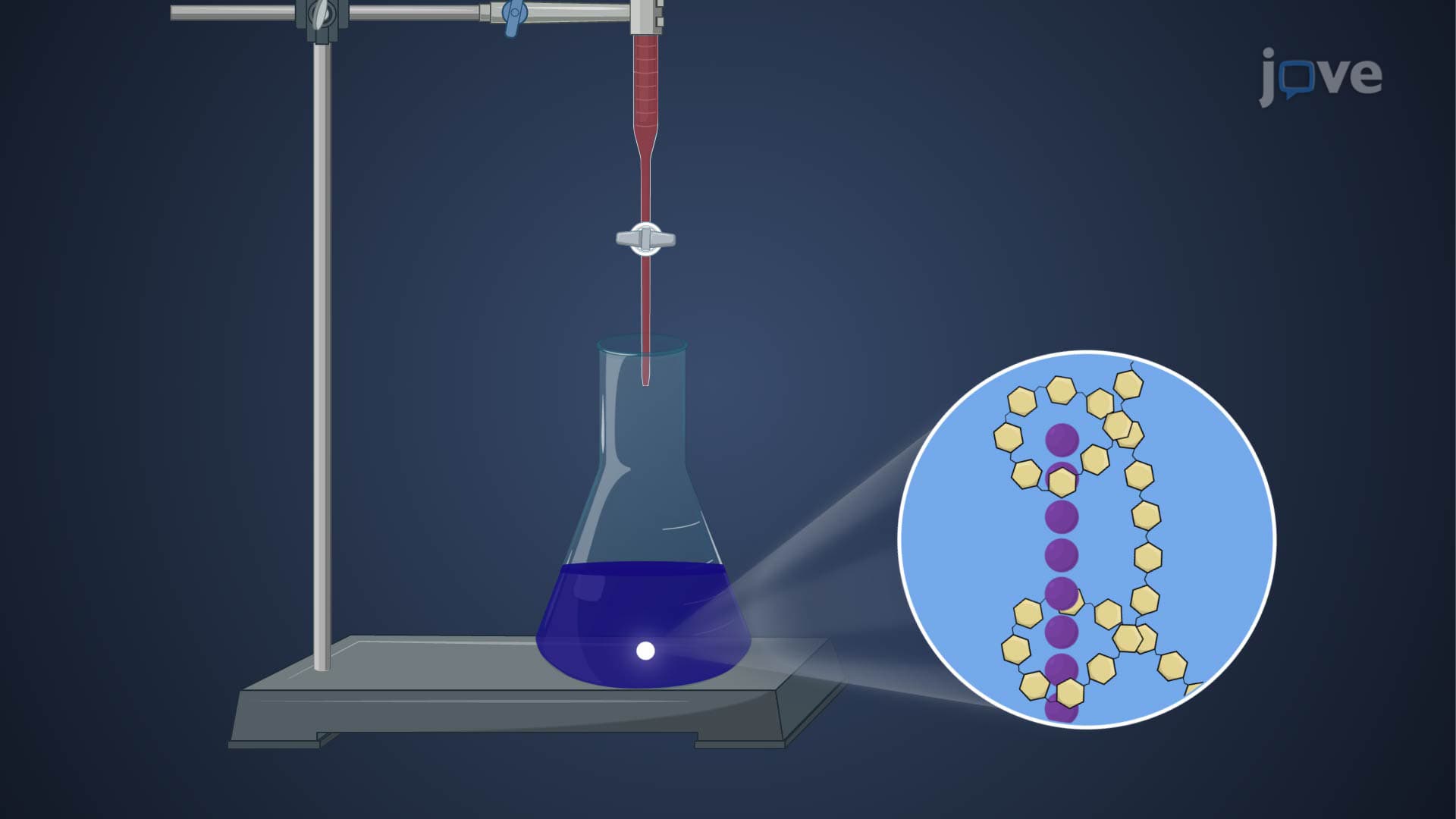
For example, when analyzing hydrogen peroxide in pharmaceutical preparations, the H2O2 oxidizes iodide ions, producing iodine. This liberated iodine is then titrated with standardized sodium thiosulfate solution. The starch indicator iodometric system creates the distinctive dark blue complex that signals the approaching endpoint. Students preparing for AP Chemistry exams frequently encounter this application when studying redox reactions and stoichiometry.
Iodimetric direct titration takes a more straightforward approach, directly titrating reducing agents with standardized iodine solution. The endpoint occurs when excess iodine combines with starch indicator to form the blue complex, indicating complete oxidation of the analyte.
This method proves particularly useful in vitamin C analysis, where ascorbic acid reduces iodine to iodide. Food manufacturers across the United States employ this technique to verify nutritional labeling accuracy. The iodine standard solution must be freshly prepared and standardized, as iodine solutions can be unstable over time.
Understanding what is the difference between iodimetry and iodometry becomes crucial for students tackling MCAT questions or college-level analytical chemistry courses. The key distinction lies in whether iodine is produced (iodometry) or consumed (iodimetry) during the analysis.
These methods appear frequently in undergraduate laboratory courses, where students learn proper technique through hands-on experience. The iodine titration method requires careful attention to factors like light exposure, temperature control, and timing of starch addition to achieve accurate results.
Related Micro-courses