Loading subject page…

- Cell Biology
- Biochemistry of the Cell
- Nucleic Acids
Micro-course: Biochemistry of the Cell
181,211 views
Learn key concepts and earn your certificate.


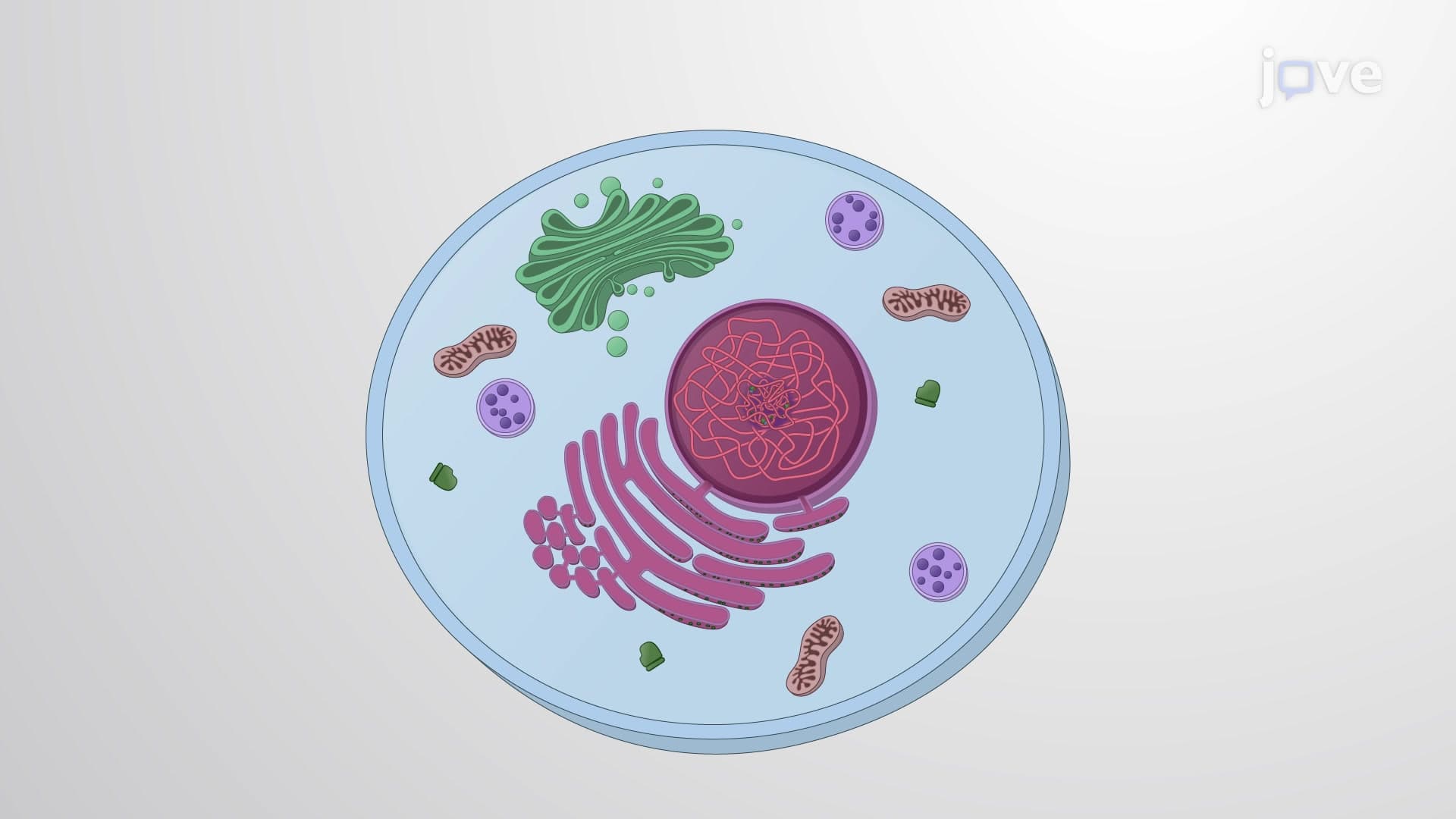
Nucleic Acids

00:00
02:43
Video Summary: What are Nucleic Acids
Ever wondered how your DNA can identify you from a single hair strand in criminal investigations? Nucleic acids biology explained reveals these remarkable molecules as life's blueprint storage system. DNA and RNA serve as the molecular foundation for everything from solving crimes through forensic analysis at the FBI to developing life-saving gene therapies at institutions like the Mayo Clinic. What are nucleic acids? They're the information superhighways that make heredity, evolution, and biotechnology possible. Watch the full video on JoVE Coach to master this concept with expert-led visuals and step-by-step explanations.
- Understand what are nucleic acids and distinguish between DNA and RNA based on their structural components and biological functions
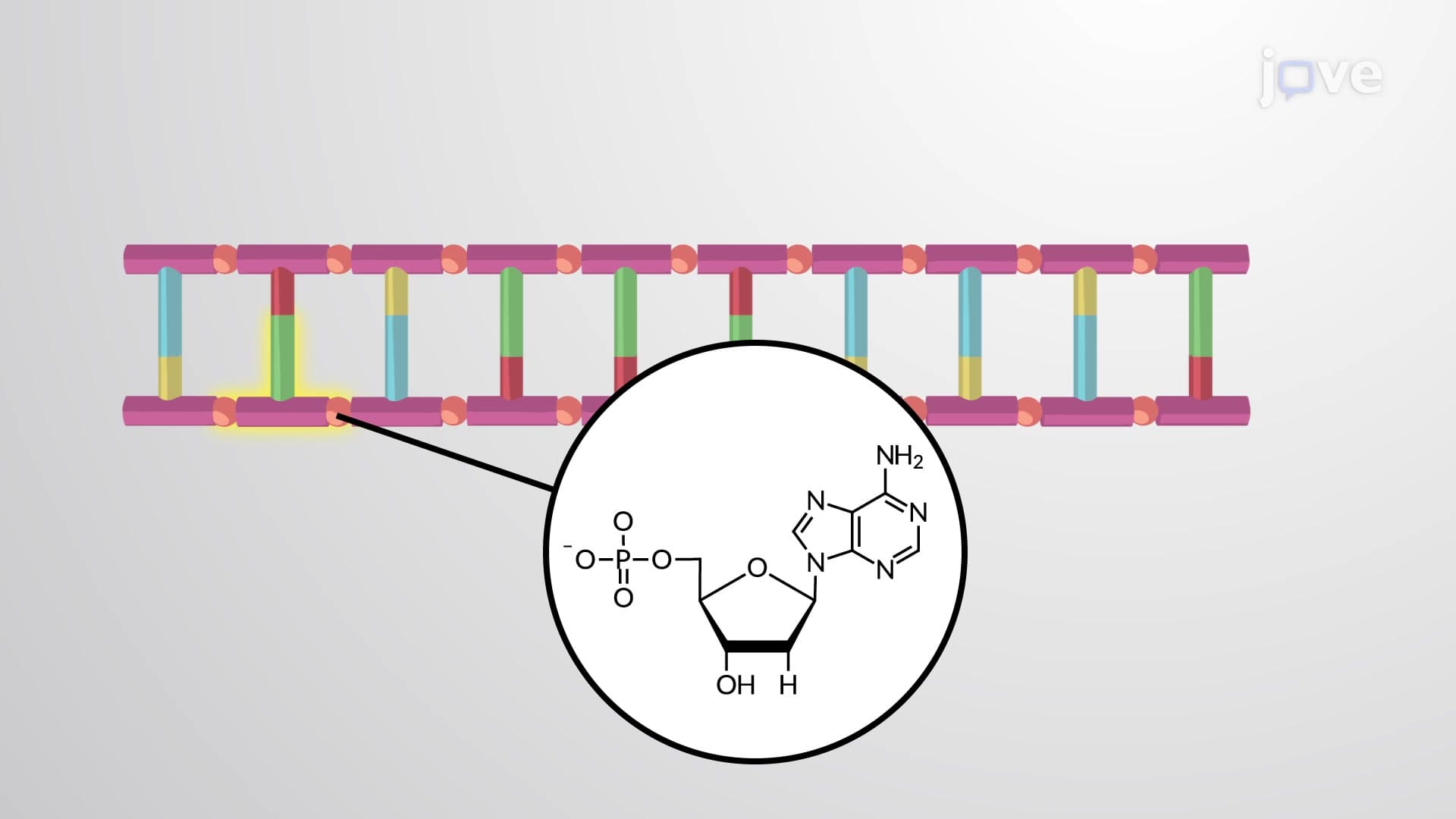
- Identify the three key components of nucleotides: nitrogenous bases, five-carbon sugars, and phosphate groups
- Analyze base-pairing rules in DNA (A-T, C-G) and RNA (A-U, C-G) and explain their importance in genetic fidelity
- Compare the roles of different RNA types (mRNA, tRNA, rRNA) in protein synthesis
- Evaluate how mutations in nucleic acid sequences can lead to genetic disorders and evolutionary changes
- Apply knowledge of nucleic acid structure to understand DNA replication, transcription, and translation processes
- Recognize real-world applications of nucleic acid manipulation in genetic engineering, forensic science, and medical diagnostics
- Explore the historical significance of Watson and Crick's double helix model in advancing molecular biology
Understanding What Are Nucleic Acids: The Molecular Basis of Life
Nucleic acids represent one of biology's most fundamental macromolecules, serving as the universal language of genetic information across all living organisms. These complex polymers consist of nucleotide monomers, each containing three essential components: a nitrogenous base, a five-carbon sugar, and one or more phosphate groups. The DNA RNA nucleic acid overview reveals two primary types-deoxyribonucleic acid (DNA) and ribonucleic acid (RNA)-each with distinct structural features and biological roles.
Nucleotide Building Blocks and Chemical Structure
The nucleotide building block nucleic acids depend on follows a precise architectural pattern. Nitrogenous bases fall into two categories: purines (adenine and guanine) and pyrimidines (cytosine, thymine in DNA, and uracil in RNA). The purine pyrimidine nucleic acid pairing creates the famous complementary base pairs that ensure genetic accuracy. The sugar component differs between DNA (deoxyribose) and RNA (ribose), with RNA's additional hydroxyl group making it less stable but more versatile for cellular processes.
DNA Structure and Genetic Information Storage
Watson and Crick's groundbreaking discovery of DNA's antiparallel double helix structure revolutionized our understanding of nucleic acid information storage. The two sugar-phosphate backbones run in opposite directions (5' to 3' and 3' to 5'), while complementary bases form hydrogen bonds across the center. This elegant design allows DNA to serve as both a stable repository for genetic information and a template for accurate replication during cell division.
RNA's Diverse Functions in Gene Expression
Unlike DNA's primarily storage role, RNA demonstrates remarkable functional diversity. Messenger RNA (mRNA) carries genetic codes from nucleus to ribosomes, transfer RNA (tRNA) delivers specific amino acids during protein synthesis, and ribosomal RNA (rRNA) forms the catalytic core of ribosomes. These genetic nucleic acid functions illustrate the central dogma: DNA → RNA → proteins, fundamental to understanding cellular biology and frequently tested on AP Biology and MCAT exams.
Students preparing for standardized tests like the SAT Subject Test in Biology or college biochemistry courses should focus on understanding how nucleic acid structure relates to function, as this concept appears consistently across assessment formats and forms the foundation for advanced topics in molecular biology and biotechnology.
Frequently Asked Questions
Nucleic acids are large biomolecules that store and transmit genetic information in all living organisms. They include DNA, which holds hereditary information, and RNA, which helps express that information into proteins. These molecules are essential for reproduction, growth, cellular function, and evolution, making them fundamental to understanding how life works at the molecular level.
AP Biology frequently tests nucleic acid structure, function, and processes like DNA replication and transcription. Expect multiple-choice questions about base pairing, free-response questions analyzing experimental data on genetic processes, and laboratory scenarios involving DNA extraction or PCR. Focus on understanding structure-function relationships and connecting nucleic acids to broader biological themes like information flow and evolution.
For MCAT success, remember key structural differences: DNA uses deoxyribose sugar and thymine, RNA uses ribose sugar and uracil. DNA is double-stranded and stable for long-term storage, while RNA is typically single-stranded and involved in active processes. The MCAT emphasizes how these differences enable their respective functions in replication, transcription, and translation.
DNA fingerprinting revolutionized criminal justice by analyzing unique genetic sequences from evidence like blood, hair, or saliva. The FBI's CODIS database contains millions of DNA profiles for identifying suspects and solving cold cases. Additionally, paternity testing, disaster victim identification, and genealogy services like AncestryDNA all rely on nucleic acid analysis to establish biological relationships.
Basic high school chemistry is sufficient to grasp nucleic acid fundamentals. Understanding atomic structure, chemical bonds, and pH will help, but the focus should be on biological function rather than complex organic chemistry. Most biology courses introduce nucleic acids through their roles in heredity and protein synthesis, making them accessible to students with standard science prerequisites.
Use acronyms and visual associations: "Pure As Gold" for purines (Adenine, Guanine) and "Cut The Pyramid" for pyrimidines (Cytosine, Thymine, Uracil). Create concept maps linking structure to function, and practice drawing nucleotide structures repeatedly. Focus on understanding base-pairing rules through the complementary shape analogy-like puzzle pieces that fit together perfectly.
Build on nucleic acid knowledge by exploring protein synthesis in detail, including the genetic code and translation mechanisms. Study genetic regulation, mutations, and biotechnology applications like CRISPR gene editing. Advanced topics include epigenetics, molecular evolution, and bioinformatics, which apply nucleic acid principles to cutting-edge research and medical applications.
College-level biochemistry delves deeper into nucleic acid thermodynamics, enzyme kinetics of DNA polymerases, and three-dimensional structural analysis. You'll study advanced topics like DNA repair mechanisms, chromatin structure, and the molecular details of transcriptional regulation. Laboratory components often include techniques like gel electrophoresis, PCR, and DNA sequencing that directly apply nucleic acid principles.
Related Micro-courses