Loading…
Loading video…

46,903 views
Ever wonder how your muscles contract during a basketball game or why skin bounces back after being stretched? Structural protein function is the key mechanism that gives cells and tissues their shape, strength, and flexibility. From the actin filaments powering muscle contractions in Olympic athletes to the collagen fibers maintaining skin elasticity, these proteins form the architectural framework of all living organisms. Understanding what is structural protein function reveals how life maintains its physical integrity while enabling dynamic movement and growth. Watch the full video on JoVE Coach to master this concept with expert-led visuals and step-by-step explanations.
Structural protein function encompasses the critical roles these specialized molecules play in providing mechanical support, maintaining cellular shape, and enabling tissue integrity. Unlike enzymes that catalyze reactions or transport proteins that move molecules, structural proteins form the physical scaffolding that gives life its three-dimensional organization.
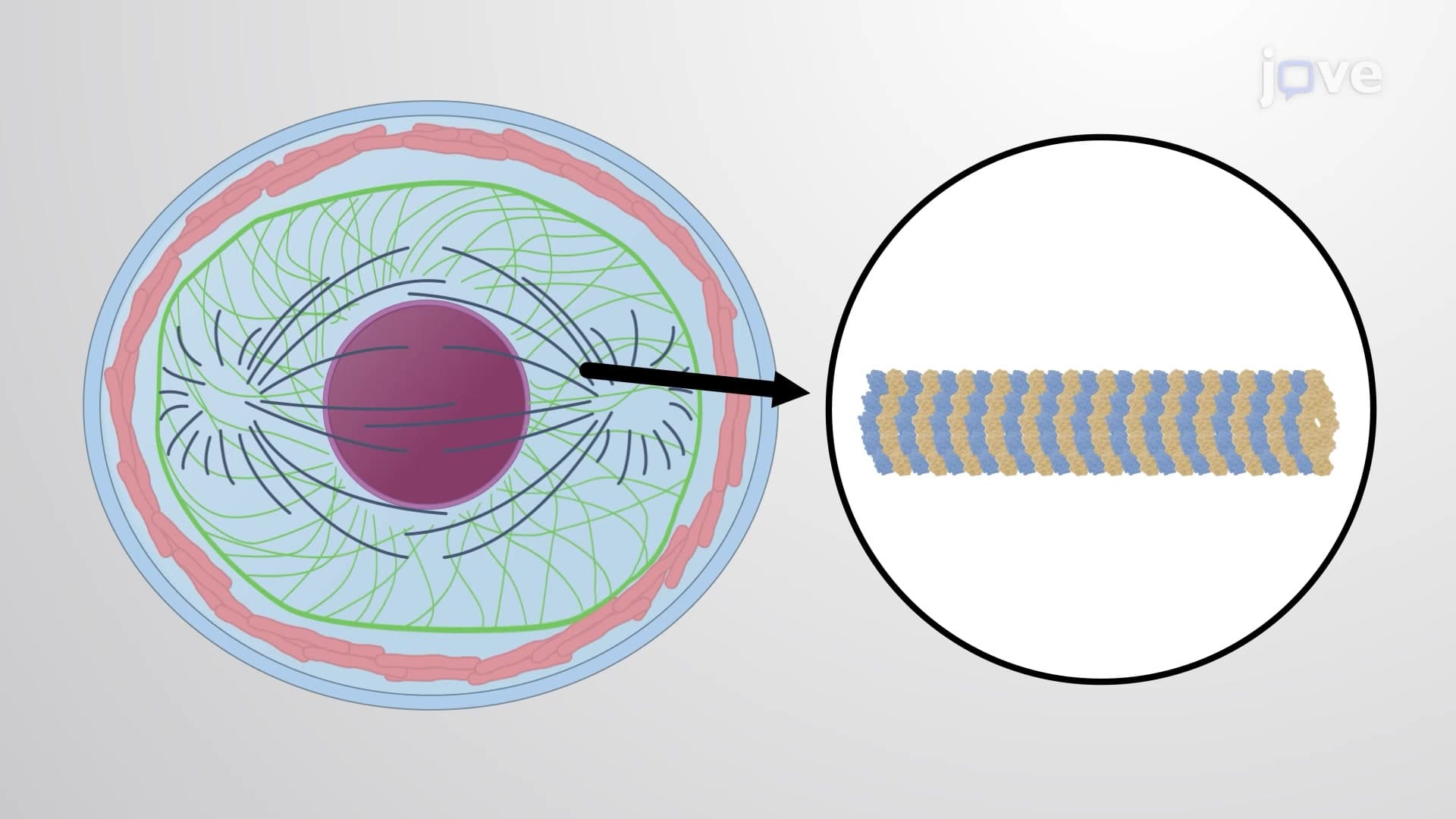
The cytoskeleton represents one of biology's most elegant engineering solutions. Actin filaments, composed of globular actin monomers, form thin, flexible cables that power cellular movement and maintain cell shape. During muscle contraction, actin interacts with myosin to generate force—the same mechanism that allows a pitcher to throw a 100-mph fastball. Microtubules, built from tubulin dimers, serve as cellular highways for organelle transport and form the mitotic spindle during cell division. Intermediate filaments provide tensile strength, with keratin filaments in skin cells and neurofilaments in neurons offering protection against mechanical stress.
Collagen, the most abundant protein in mammals, exemplifies extracellular structural protein function. This triple-helix protein forms the backbone of tendons, bones, and blood vessels. In conditions like scurvy, collagen synthesis becomes impaired due to vitamin C deficiency, leading to weakened blood vessels and delayed wound healing—historically devastating sailors on long voyages. Elastin provides tissues with elastic recoil properties, allowing arteries to handle blood pressure fluctuations and enabling lung tissue to expand and contract during breathing.
Understanding structural protein function proves essential for students preparing for the MCAT, AP Biology exams, or college cell biology courses. Questions often focus on cytoskeletal dynamics during mitosis or the molecular basis of genetic disorders affecting structural proteins. Duchenne muscular dystrophy, caused by dystrophin defects, illustrates how structural protein dysfunction leads to progressive muscle weakness. Similarly, Marfan syndrome results from fibrillin mutations affecting connective tissue integrity, potentially causing life-threatening cardiovascular complications.
The study of structural proteins also connects to emerging fields like tissue engineering and regenerative medicine, where scientists design biomaterials mimicking natural protein networks to repair damaged tissues.
Frequently Asked Questions
Structural protein function refers to how certain proteins act like the body's construction materials, providing shape, support, and strength to cells and tissues. These proteins form networks and frameworks that maintain cellular architecture while allowing for movement and flexibility. Think of them as the steel beams and cables in a building that keep everything structurally sound.
The MCAT frequently tests structural protein function through questions about cytoskeletal dynamics, muscle contraction mechanisms, and extracellular matrix composition. Expect passage-based questions linking protein structure to cellular processes like mitosis, cell migration, or tissue repair. Understanding actin-myosin interactions and collagen assembly proves particularly important for biochemistry and biology sections.
AP Biology exams commonly assess structural protein function through free-response questions about cell division, where students must explain how microtubules organize chromosomes, or cellular movement scenarios involving actin filaments. Multiple-choice questions often test knowledge of cytoskeletal components and their specific roles in maintaining cell shape and enabling cellular processes.
Structural protein dysfunction causes numerous human diseases including muscular dystrophy (dystrophin defects), Ehlers-Danlos syndrome (collagen abnormalities), and certain cancers where cytoskeletal changes enable metastasis. Understanding these connections helps explain why genetic mutations affecting structural proteins often have severe developmental and physiological consequences.
No advanced chemistry background is required to grasp structural protein function concepts. A basic understanding of protein structure (amino acids forming chains that fold into specific shapes) and chemical bonding provides sufficient foundation. The focus should be on understanding how protein structure relates to mechanical function rather than complex biochemical pathways.
Create visual diagrams showing how different structural proteins organize within cells and tissues. Practice drawing cytoskeletal networks and labeling components while explaining their functions. Use medical examples to connect concepts to real-world applications, and focus on understanding the relationship between protein structure and mechanical properties rather than memorizing isolated facts.
Mastering structural protein function provides essential foundation knowledge for advanced topics like developmental biology, physiology, and pathology. These concepts connect to cancer biology (cytoskeletal changes in metastasis), neurobiology (cytoskeletal transport), and immunology (extracellular matrix interactions), making this knowledge valuable throughout upper-level coursework.
Build on structural protein knowledge by exploring motor proteins and cellular movement, signal transduction pathways involving cytoskeletal components, and tissue-specific specializations of structural proteins. Advanced topics include biomechanics, tissue engineering applications, and the molecular basis of aging-related changes in structural proteins.
Related Micro-courses

Related Subjects