Loading subject page…

- Chemistry
- Atoms and Elements
- Ions and Ionic Charges
Micro-course: Atoms and Elements
670,624 views
Learn key concepts and earn your certificate.




Ions and Ionic Charges


00:00
03:27
Video Summary: What Is Ions and Ionic Charges
Ever wonder why table salt dissolves so easily in water or how your smartphone battery generates electricity? The secret lies in ions and ionic charges, electrically charged atoms that power everything from the sodium chloride in your kitchen to the lithium-ion battery in your Tesla. When neutral atoms gain or lose electrons, they transform into charged particles called ions, fundamentally changing their chemical behavior and creating the foundation for countless biological and technological processes throughout the United States, from water treatment plants to medical imaging systems. Watch the full video on JoVE Coach to master this concept with expert-led visuals and step-by-step explanations.
- Understand what ions and ionic charges are and how they form when atoms gain or lose electrons
- Identify the difference between cations (positively charged ions) and anions (negatively charged ions)
- Analyze how electron transfer affects atomic charge while leaving atomic mass essentially unchanged
- Compare the naming conventions for cations and anions, including proper chemical symbol notation
- Recognize periodic table patterns that predict ionic charges for main group elements
- Apply knowledge of electron configuration to determine likely ionic charges for specific elements
- Evaluate why transition metals can form multiple different ionic charges unlike main group elements
- Explore the relationship between electron gain/loss and the resulting electrical properties of matter
Understanding Ions and Ionic Charges Fundamentals
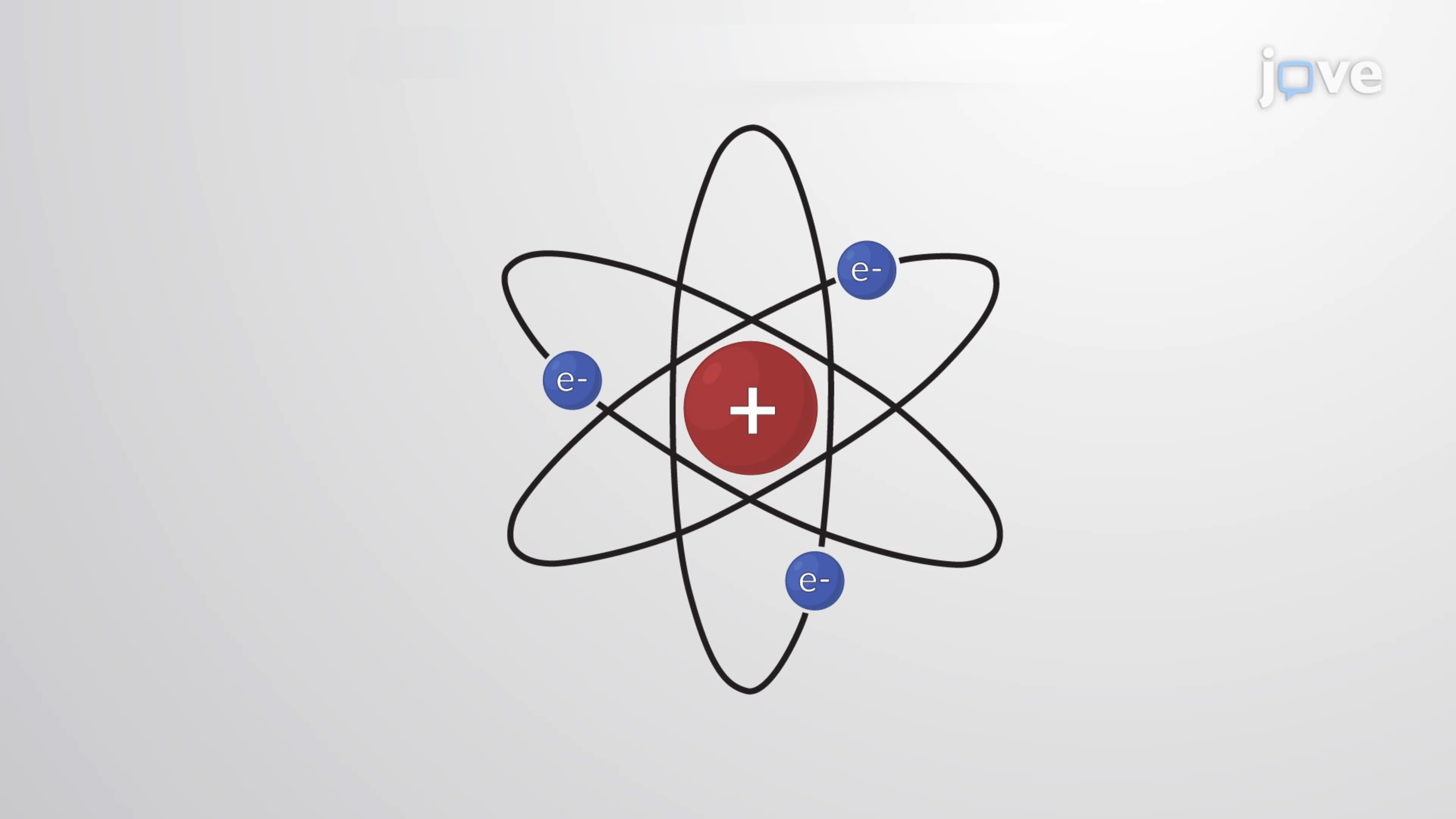
Ions and ionic charges represent one of chemistry's most fundamental concepts, bridging atomic structure with real-world applications. While atoms naturally exist as electrically neutral particles with equal protons and electrons, they can transform into charged species called ions through electron transfer processes. This transformation doesn't alter the atom's identity, determined solely by proton number, but dramatically changes its chemical and physical properties.
Cation Formation and Positive Ionic Charges
Cations form when atoms lose electrons, creating a positive charge imbalance. This occurs because protons (positive) now outnumber electrons (negative). For example, sodium atoms commonly lose one electron to become Na+ ions, the primary component in table salt used across American households. Group 1 alkali metals consistently form +1 cations, while Group 2 alkaline earth metals like calcium form +2 cations (Ca2+), crucial for bone formation and muscle contraction in human physiology.
The periodic table provides predictable patterns for cation formation. Metals, positioned on the left side, readily lose electrons due to their low ionization energies. This principle appears frequently on AP Chemistry exams and college-level assessments, where students must predict ionic charges based on periodic trends.
Anion Formation and Negative Ionic Charges
Anions result from electron gain, creating excess negative charge. Nonmetals, located on the periodic table's right side, typically form anions by accepting electrons to achieve stable electron configurations. Fluorine atoms gain one electron to become fluoride ions (F-), essential components in dental treatments and municipal water fluoridation programs across the United States.
Group 17 halogens consistently form -1 anions, while Group 16 elements like oxygen form -2 anions (O2-), fundamental to countless biological processes and industrial applications. These patterns help students tackle SAT Subject Test questions and MCAT passages involving ionic compounds.
Transition Metals and Variable Ionic Charges
Unlike main group elements, transition metals exhibit variable oxidation states, forming multiple possible ionic charges. Iron can form both Fe2+ and Fe3+ ions, explaining why iron supplements contain different compounds and why rust formation involves multiple chemical processes. This concept challenges students in advanced placement chemistry courses and appears regularly in college organic chemistry prerequisites.
Understanding these variable charges proves essential for predicting compound formulas and balancing chemical equations, skills tested extensively in American undergraduate chemistry programs and professional school entrance examinations.
Frequently Asked Questions
Ions and ionic charges refer to electrically charged atoms or molecules that form when neutral atoms gain or lose electrons. Cations are positively charged (lost electrons), while anions are negatively charged (gained electrons). This electron transfer creates the electrical imbalance responsible for ionic bonding in compounds like table salt and calcium carbonate.
These concepts appear in multiple AP Chemistry free-response questions, particularly in electrochemistry and bonding units. College exams test ionic charge prediction, compound formula writing, and periodic trend analysis. MCAT passages frequently include ionic processes in biological systems, while nursing entrance exams (HESI A2, TEAS) cover basic ionic concepts in chemistry sections.
Main group elements typically form predictable ionic charges based on achieving stable electron configurations, while transition metals have multiple oxidation states due to their d-orbital electron arrangements. This explains why iron forms both Fe2+ and Fe3+ ions, creating different compounds with distinct properties used in various medical and industrial applications.
Electrolyte solutions in sports drinks contain Na+ and K+ ions for muscle function, lithium-ion batteries power electric vehicles across America, and calcium ions (Ca2+) strengthen bones and teeth. Water treatment facilities use ionic processes to purify drinking water, while medical IV fluids contain carefully balanced ionic concentrations for patient care.
This concept builds naturally on atomic structure knowledge from earlier chemistry units. Students who understand protons, electrons, and basic periodic table organization can master ionic charges with consistent practice. The predictable patterns make this topic more accessible than many advanced chemistry concepts.
Focus on periodic table patterns rather than individual memorization: Group 1 metals form +1 cations, Group 2 metals form +2 cations, Group 17 nonmetals form -1 anions, and Group 16 nonmetals form -2 anions. Practice writing formulas for common ionic compounds to reinforce these patterns through application.
Ionic charges determine how atoms combine to form neutral compounds through ionic bonding. Understanding charge balance helps predict chemical formulas, sodium (+1) and chloride (-1) combine in 1:1 ratios for NaCl, while calcium (+2) and fluoride (-1) require 1:2 ratios for CaF2.
Build on this foundation with ionic bonding, writing chemical formulas, and predicting compound properties. Advanced topics include electrochemistry, acid-base chemistry, and solution chemistry, all requiring solid understanding of ionic behavior and charge interactions in various chemical environments.
Related Micro-courses
10 Concepts

13 Concepts
10 Concepts