Loading subject page…


561,000 views

Video Summary: What Is Reaction Mechanisms
Ever wonder how aspirin actually forms in pharmaceutical manufacturing or how your car's catalytic converter reduces emissions? Reaction mechanisms reveal the hidden step-by-step pathways that transform reactants into products, far beyond what simple chemical equations show. While a balanced equation for aspirin synthesis looks straightforward, the actual process involves multiple elementary steps with temporary intermediates that never appear in the final equation. Understanding what is reaction mechanisms helps explain why some reactions happen instantly while others take hours, and why certain conditions speed up industrial processes like those used by companies like Pfizer and DuPont. Watch the full video on JoVE Coach to master this concept with expert-led visuals and step-by-step explanations.
Reaction mechanisms represent the detailed, step-by-step pathways that chemical reactions actually follow to transform reactants into products. Unlike the simplified picture provided by balanced chemical equations, reaction mechanisms reveal the intricate dance of molecular interactions that occur during chemical transformations. Think of it like comparing a GPS route summary ("Chicago to New York, 790 miles") with the detailed turn-by-turn directions showing every highway, rest stop, and intermediate city along the way.
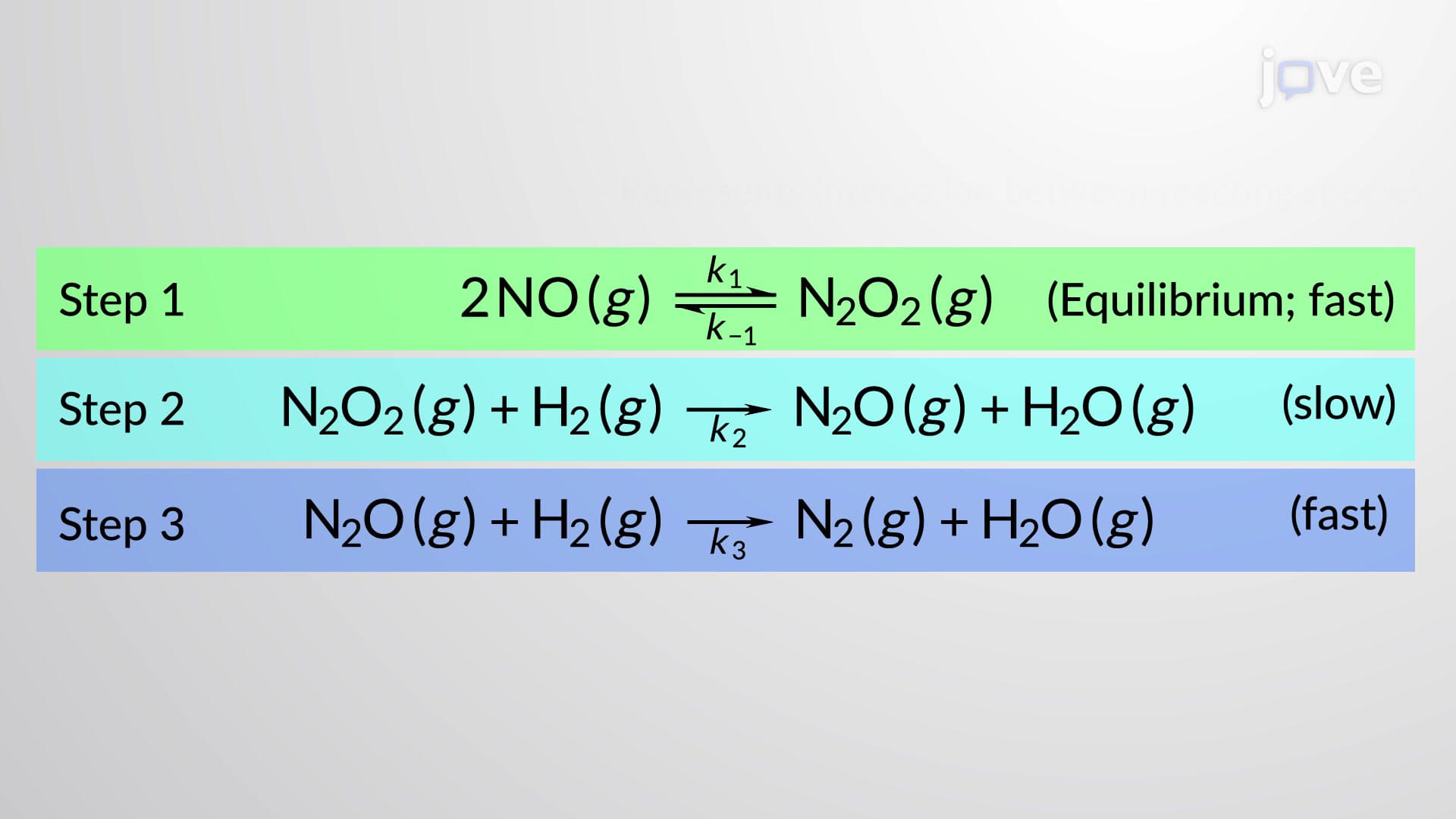
Each individual step in a reaction mechanism is called an elementary reaction, representing a single molecular event such as bond formation, bond breaking, or molecular rearrangement. These elementary steps are characterized by their molecularity - the number of molecules that participate in that specific step. Unimolecular reactions involve one molecule transforming (like the decomposition of ozone in the stratosphere), bimolecular reactions involve two molecules colliding and reacting (like the formation of hydrogen iodide from hydrogen and iodine gases), and termolecular reactions, though extremely rare, involve three molecules simultaneously interacting.
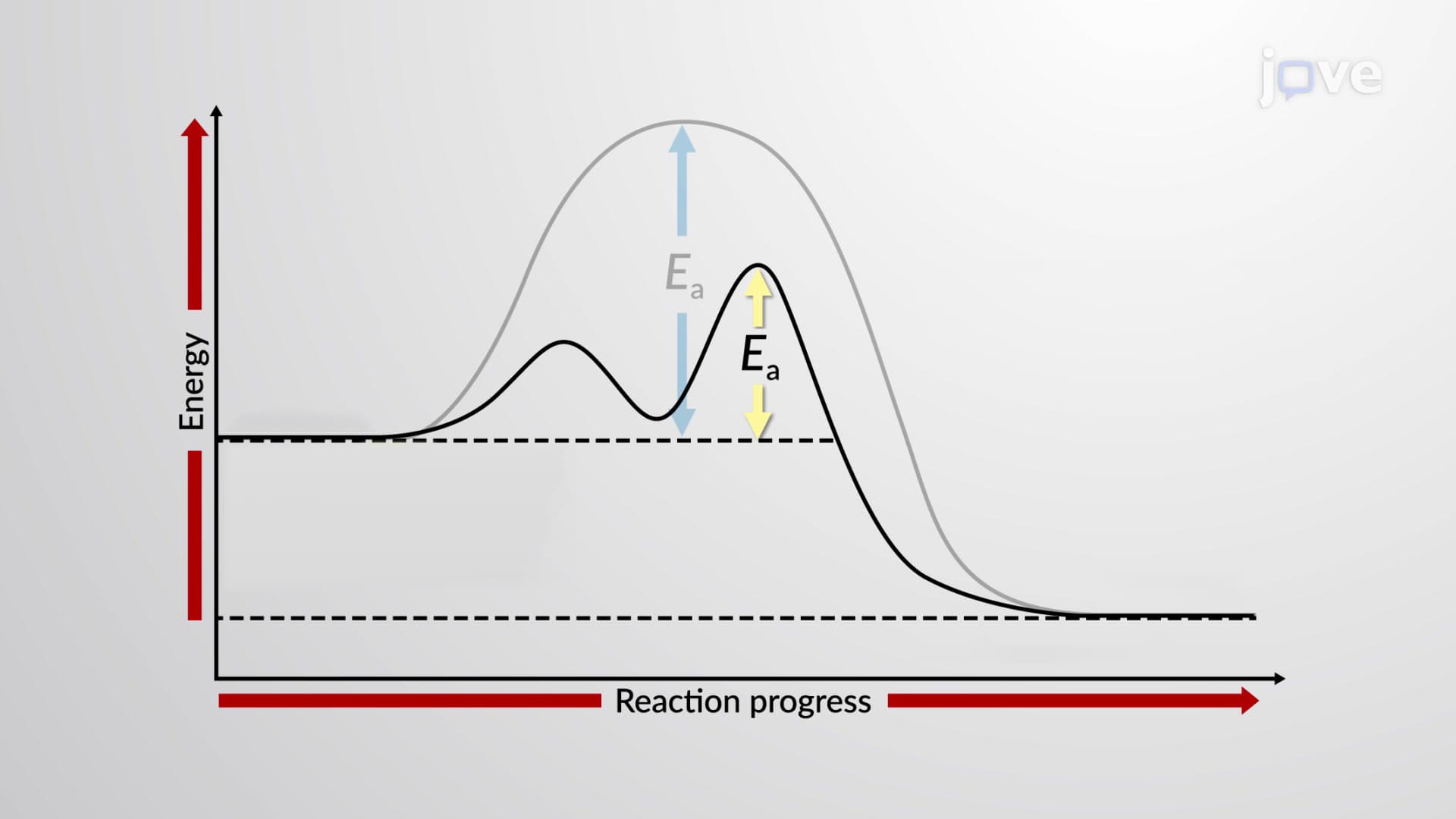
A crucial aspect of understanding reaction mechanisms involves distinguishing between reaction intermediates and activated complexes. Reaction intermediates are actual chemical species with defined structures that exist temporarily during the mechanism - they're formed in one elementary step and consumed in another. For example, in the industrial production of sulfuric acid through the contact process, sulfur trioxide serves as an intermediate. These intermediates have relatively low energy and can sometimes be detected or even isolated. In contrast, activated complexes are high-energy transition states that exist only fleetingly during bond-breaking and bond-forming processes, representing the energy barrier that reactants must overcome.
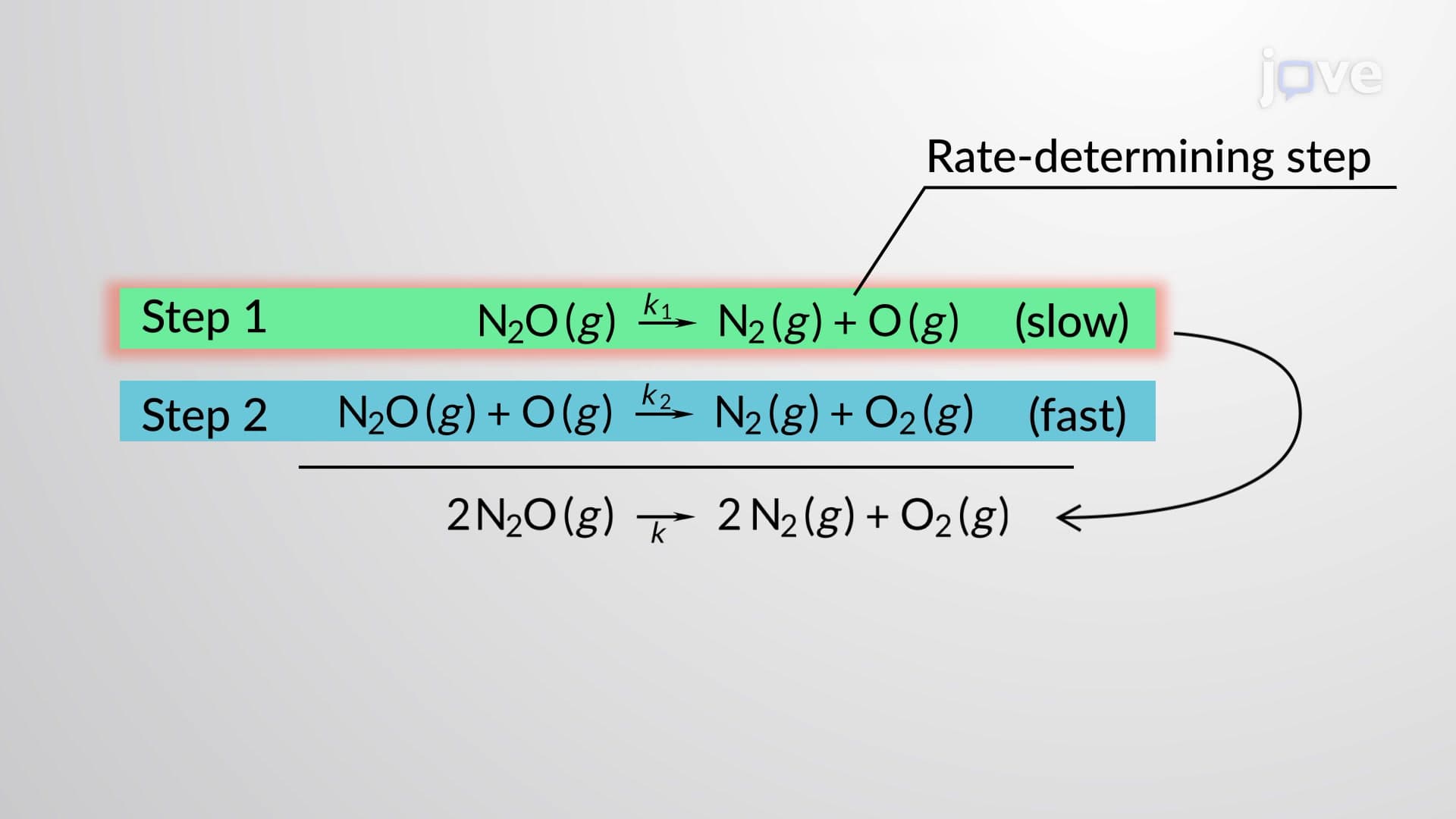
The concept of rate-limiting steps is fundamental to reaction mechanisms and has profound implications for both laboratory work and industrial processes. Just as the slowest car in a convoy determines the overall travel speed, the slowest elementary step in a mechanism controls the overall reaction rate. This principle is crucial for pharmaceutical companies optimizing drug synthesis - by identifying and accelerating the rate-limiting step, chemists can dramatically improve production efficiency. For students preparing for AP Chemistry or college-level physical chemistry courses, understanding rate-limiting steps helps explain why changing reaction conditions affects overall reaction rates and why certain catalysts are effective for specific transformations.
Related Micro-courses