Loading subject page…

- Chemistry
- Chemical Kinetics
- Reaction Rate
Micro-course: Chemical Kinetics
561,000 views
Learn key concepts and earn your certificate.


Reaction Rate

00:00
02:53
Video Summary: What Is Reaction Rate
Ever wonder why some fireworks explode instantly while others create slow, cascading sparkles? The answer lies in reaction rate, the speed at which chemical reactions occur. This fundamental concept measures how quickly reactants transform into products, expressed in molarity per second. From pharmaceutical manufacturing in US labs to catalytic converters in American cars, understanding reaction rate is crucial for controlling chemical processes. Watch the full video on JoVE Coach to master this concept with expert-led visuals and step-by-step explanations.
- Understand what is reaction rate and how it quantifies the speed of chemical transformations
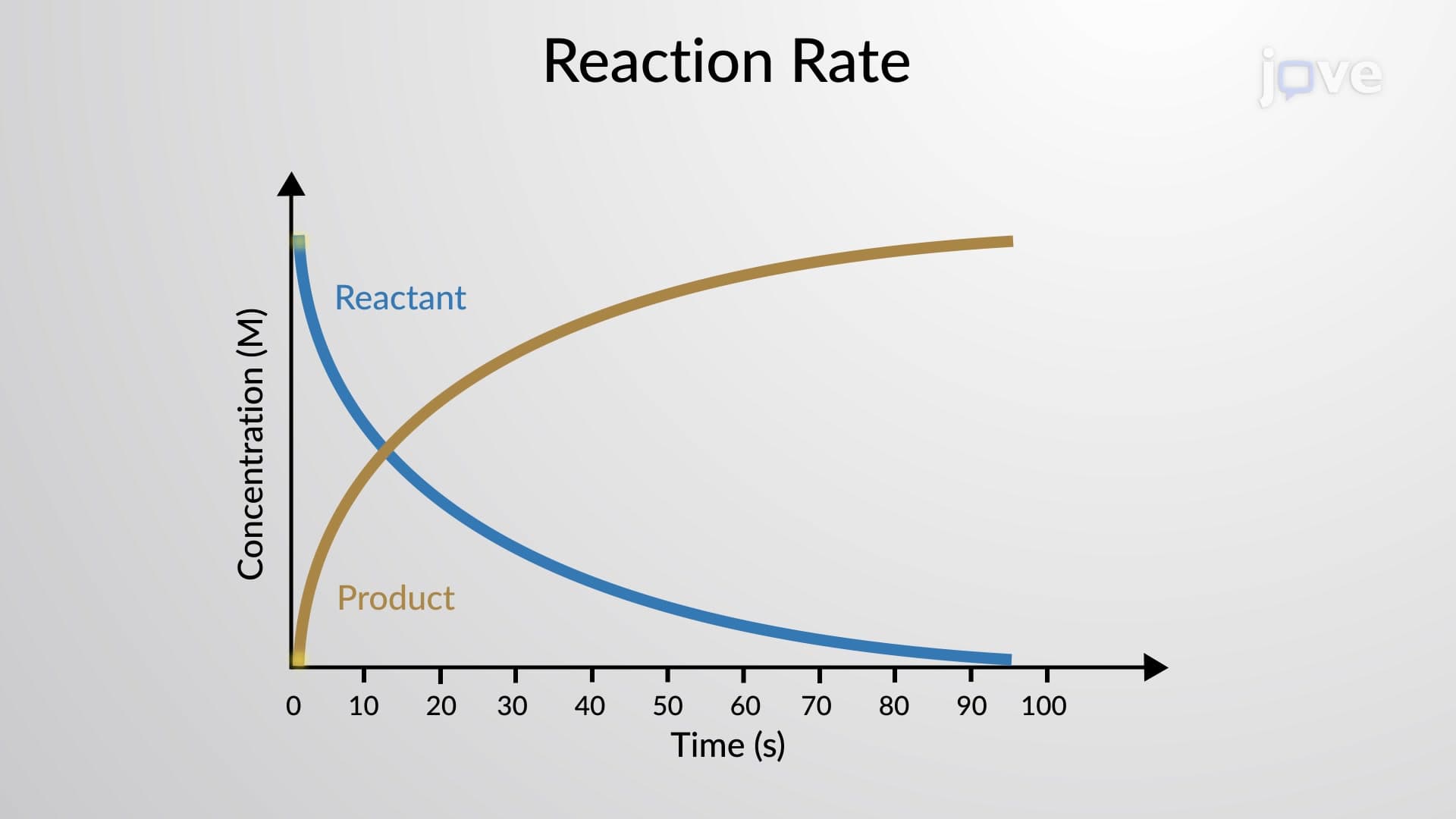
- Identify the relationship between reactant depletion and product formation over time
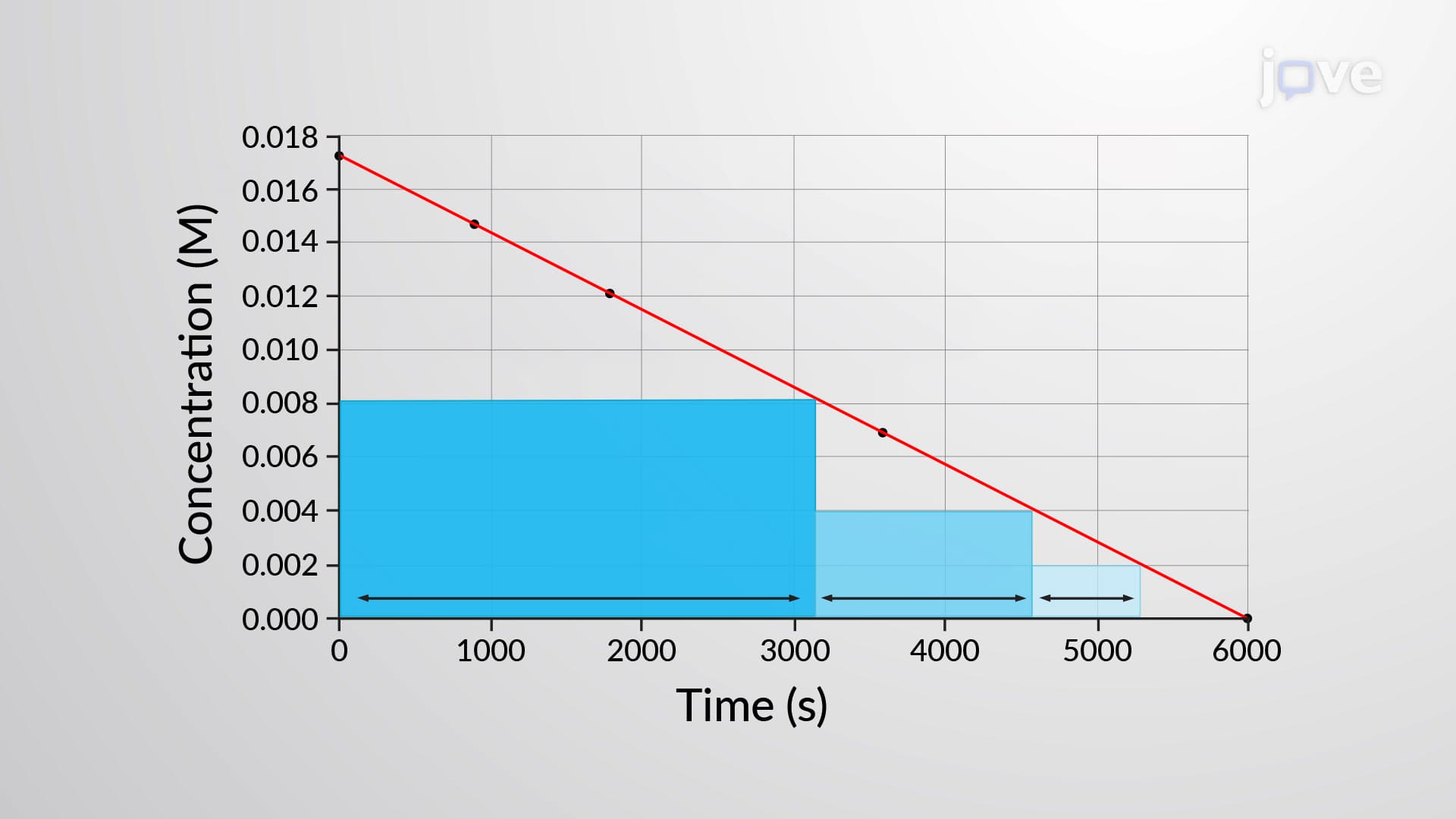
- Analyze concentration vs. time graphs to determine average and instantaneous reaction rates
- Compare initial reaction rates with rates at different time points during a reaction
- Evaluate how stoichiometric coefficients relate to reaction rate calculations
- Apply the generic reaction rate formula to balanced chemical equations
- Recognize why reaction rates typically decrease as reactions progress
- Explore real-world applications of reaction rate in pharmaceuticals, catalysis, and industrial processes
Understanding What is Reaction Rate
Reaction rate represents the fundamental measure of how fast chemical reactions proceed. Think of it as the speedometer for chemistry, just as your car's speedometer tells you miles per hour, reaction rate tells you how many moles of substance change per second. This concept forms the backbone of chemical kinetics, the branch of chemistry that studies reaction speeds.
In practical terms, reaction rate can be measured by tracking either the disappearance of reactants or the appearance of products. US pharmaceutical companies like Pfizer and Merck rely heavily on reaction rate calculations to optimize drug synthesis, ensuring medications are produced efficiently and cost-effectively.
Mathematical Expression and Calculations
The mathematical foundation of reaction rate involves concentration changes over time. For any reaction, the average reaction rate equals the change in concentration (Δ[concentration]) divided by the change in time (Δt). Since reactants decrease during reactions, their concentration change is negative, requiring a negative sign to make the overall rate positive.
For a balanced equation where *a* moles of A react with *b* moles of B to produce *c* moles of C and *d* moles of D, the relationship becomes: (1/a)(Δ[A]/Δt) = (1/b)(Δ[B]/Δt) = (1/c)(Δ[C]/Δt) = (1/d)(Δ[D]/Δt). This stoichiometric relationship ensures all species change at proportional rates.
Instantaneous vs. Average Reaction Rates
Unlike average rates calculated over time intervals, instantaneous reaction rates represent the exact speed at any given moment. Picture this like the difference between your average driving speed on a road trip versus your exact speed when passing another car. Instantaneous rates are determined by calculating the slope of a tangent line to the concentration-time curve at the specific time point of interest.
This distinction proves crucial for AP Chemistry students and college undergraduates studying kinetics, as exam questions frequently test understanding of both concepts.
Real-World Applications and Significance
Reaction rate knowledge drives innovation across American industries. Chemical engineers at companies like DuPont use reaction rate data to design efficient reactors for polymer production. Environmental scientists studying catalytic converters in US vehicles analyze reaction rates to reduce harmful emissions. Even food scientists at companies like General Mills apply reaction rate principles to control browning reactions in baked goods, ensuring consistent product quality and shelf life.
Frequently Asked Questions
Reaction rate measures how fast a chemical reaction occurs, typically expressed as the change in concentration of reactants or products per unit time. It's essentially the "speed limit" of chemical transformations, telling us whether a reaction happens in milliseconds or takes hours to complete.
AP Chemistry frequently tests reaction rate through concentration vs. time graphs, stoichiometric calculations, and kinetics problems. Students must calculate average rates, determine instantaneous rates from tangent slopes, and apply rate expressions to balanced equations. Practice with College Board's released exams helps master these question types.
The MCAT tests reaction rate within enzyme kinetics, drug metabolism, and biochemical pathways. Students need to understand how reaction rates relate to Michaelis-Menten kinetics, competitive inhibition, and metabolic regulation. Focus on connecting reaction rate principles to biological systems and pharmaceutical applications.
Reaction rates decrease because reactant concentrations diminish as the reaction progresses, leading to fewer molecular collisions per second. Think of it like a crowded dance floor that gradually empties, fewer people means fewer interactions, similar to how fewer reactant molecules result in slower reaction rates.
US pharmaceutical companies like Johnson & Johnson optimize reaction rates to maximize drug production efficiency while minimizing costs. They study how temperature, catalysts, and concentrations affect synthesis speeds, ensuring consistent drug quality and determining optimal manufacturing conditions for FDA-approved processes.
Basic algebra and graphing skills suffice for introductory reaction rate concepts. You'll work with slope calculations, concentration units, and simple rate expressions. Most high school chemistry and introductory college courses focus on conceptual understanding rather than complex mathematical derivations.
Practice interpreting concentration vs. time graphs daily, focusing on slope calculations and rate relationships. Create flashcards for rate expressions and stoichiometric relationships. Work through past AP Chemistry or college exam problems, emphasizing unit conversions and sign conventions for reactants versus products.
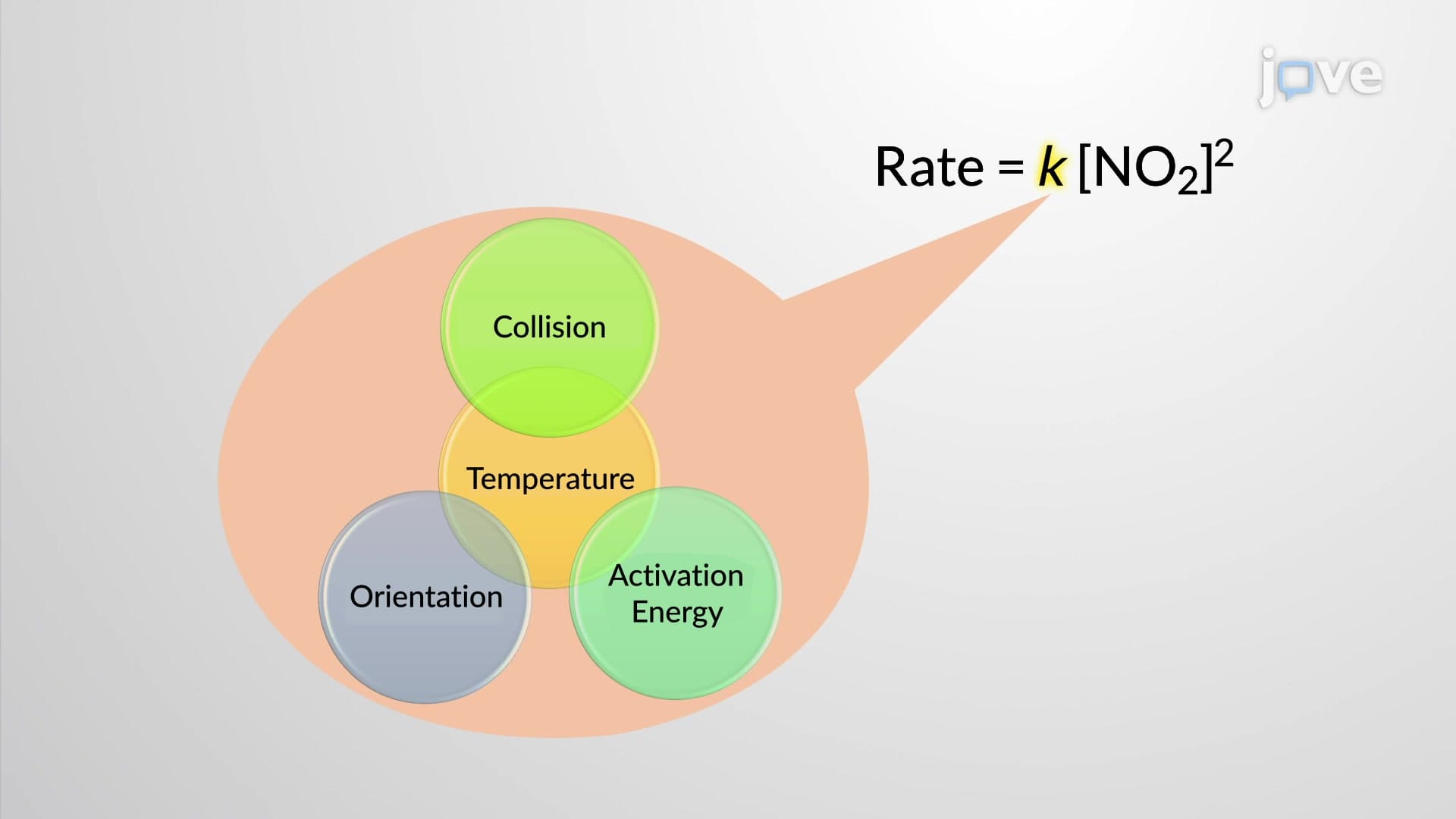
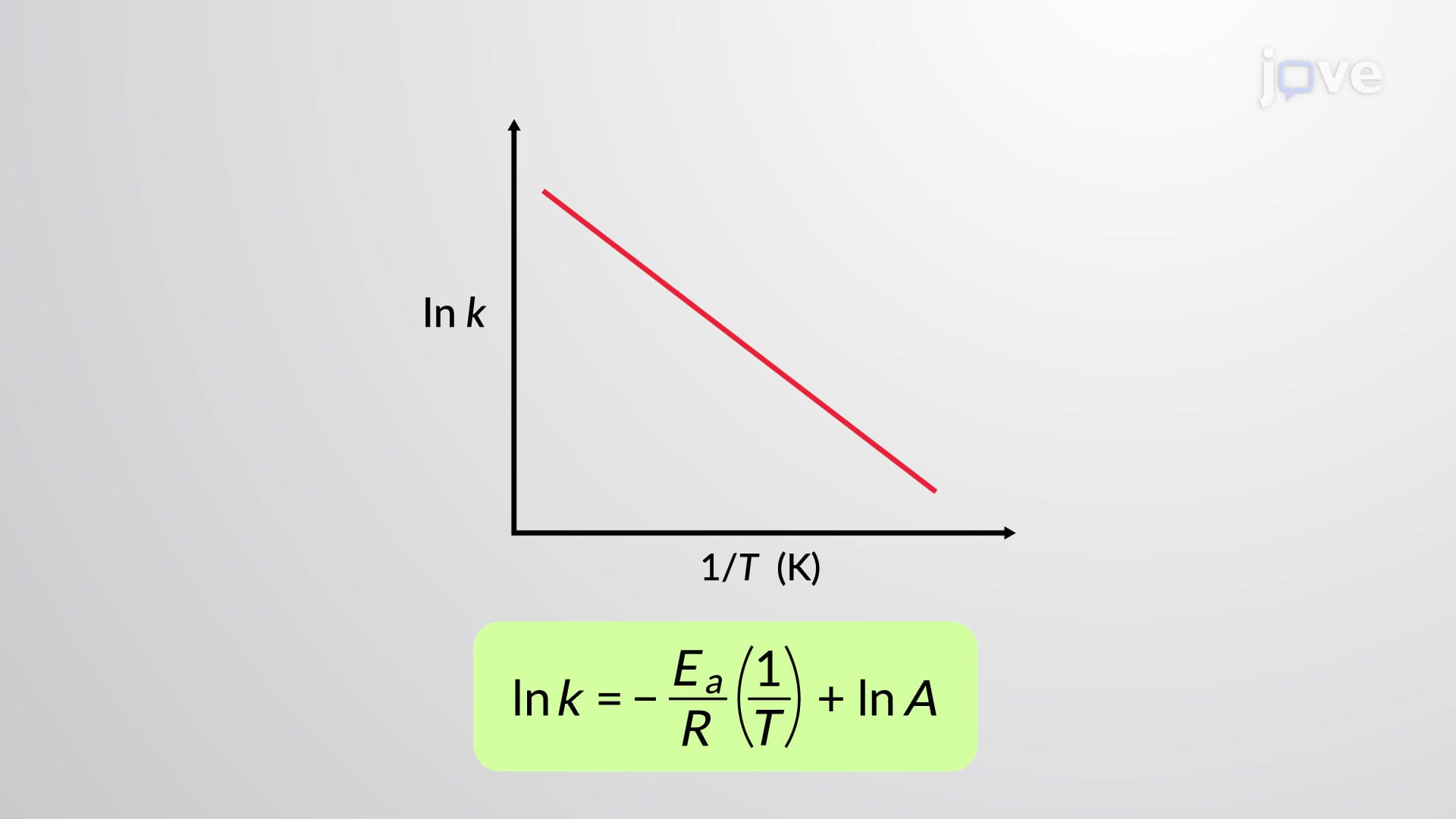
Reaction rate foundations lead to studying reaction mechanisms, enzyme kinetics, and industrial process optimization. Advanced courses explore temperature effects (Arrhenius equation), catalyst mechanisms, and complex rate laws. These concepts prove essential for chemical engineering, biochemistry, and pharmaceutical sciences careers.
Related Micro-courses

10 Concepts
14 Concepts

15 Concepts