Loading subject page…

- Civil Engineering
- Aggregates and Water
- Bonding and Strength of Aggregate
Micro-course: Aggregates and Water
8,112 views
Learn key concepts and earn your certificate.



Bonding and Strength of Aggregate

00:00
01:12
Video Summary: Bonding and Strength of Aggregate Explained
Ever wonder why some concrete sidewalks crack while others withstand decades of freeze-thaw cycles? The secret lies in bonding and strength of aggregate, the crucial relationship between cement paste and the rock particles that make up 60-80% of concrete. Rough, angular gravel from quarries in Colorado creates stronger bonds than smooth river stones, directly impacting structures like the Hoover Dam's durability. Watch the full video on JoVE Coach to master this concept with expert-led visuals and step-by-step explanations.
- Understand how bonding and strength of aggregate determines concrete performance and structural integrity in construction applications
- Identify the key differences between rough versus smooth aggregate surfaces and their impact on cement paste adhesion
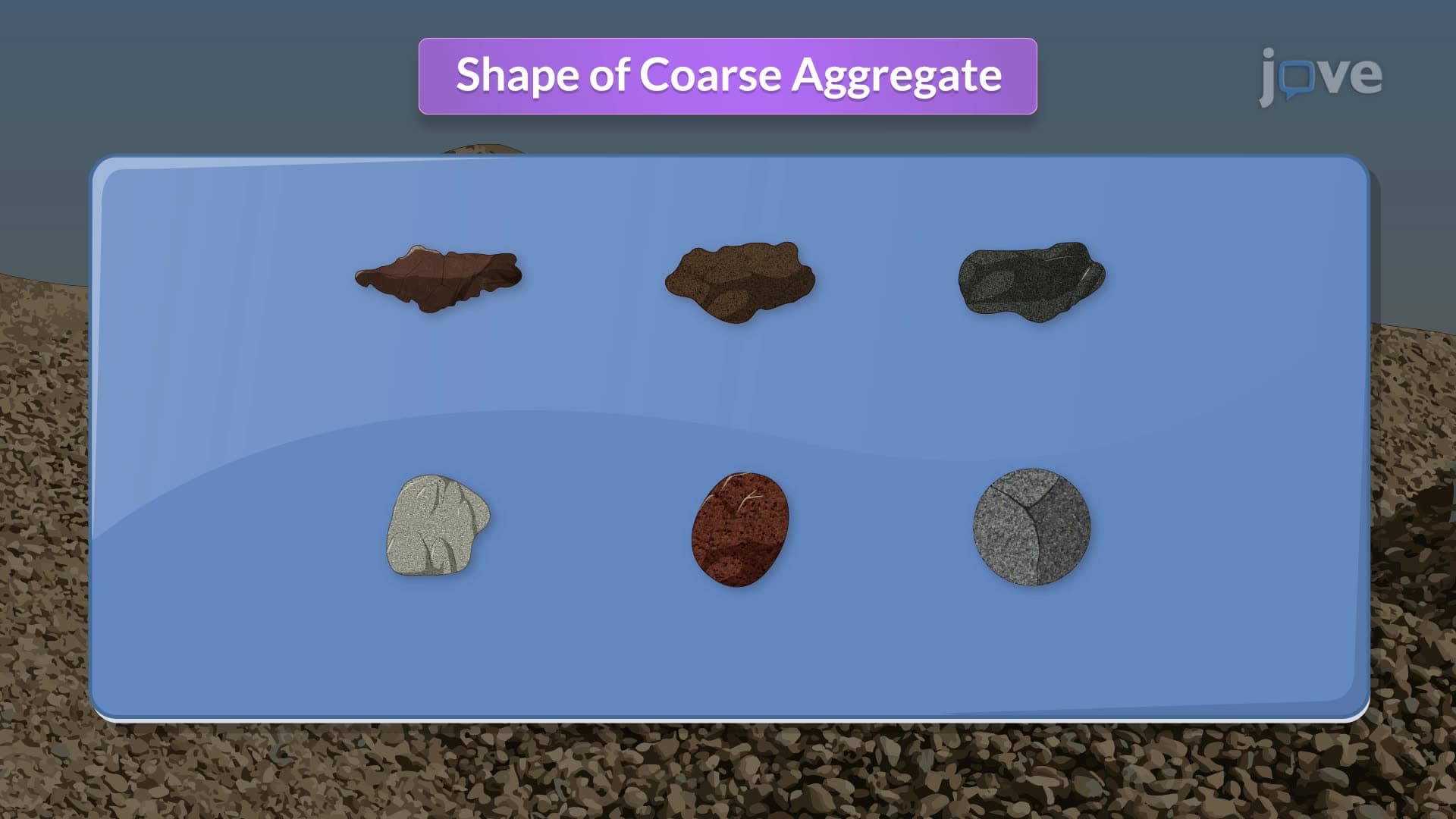
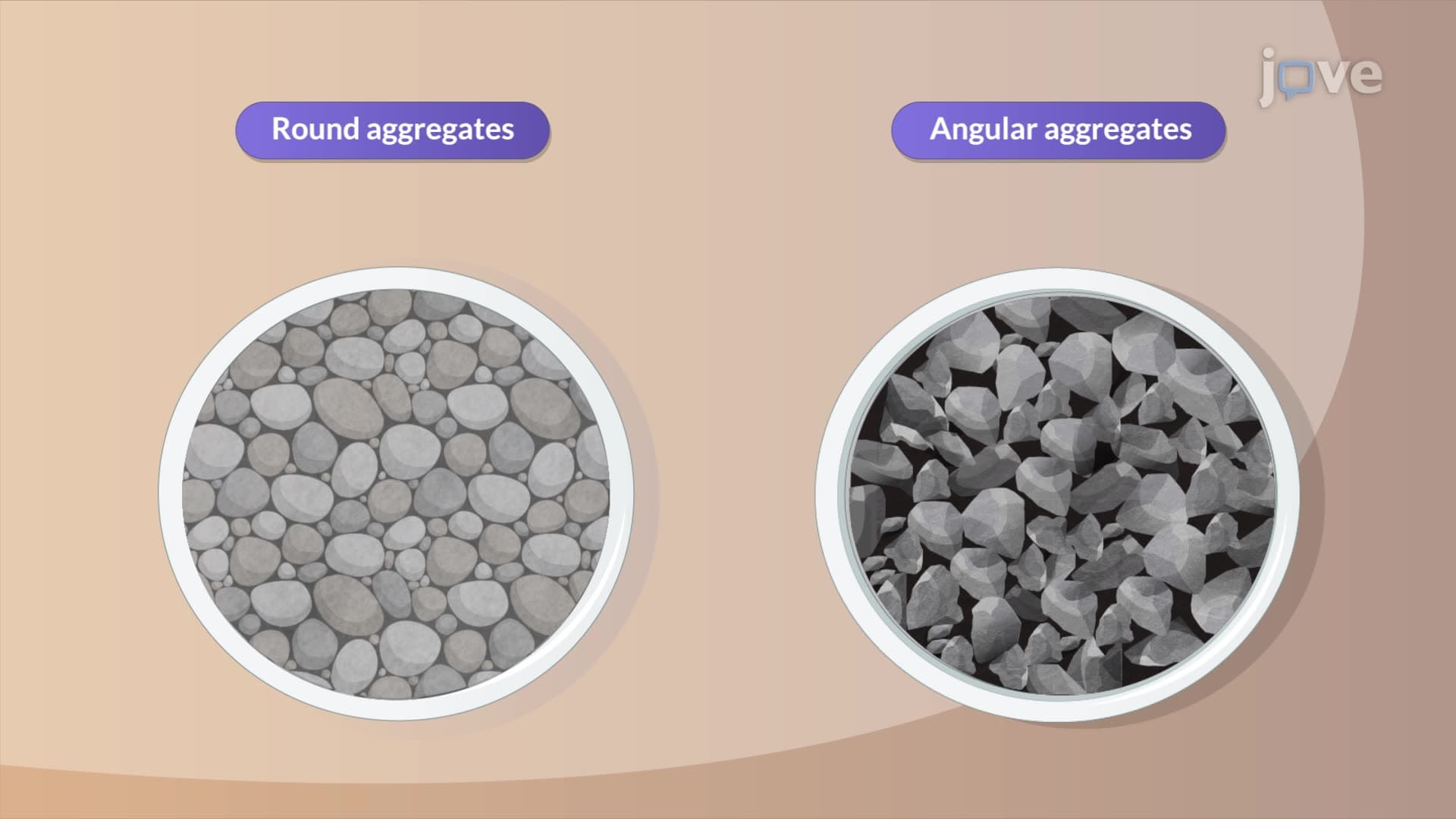
- Analyze why angular aggregates provide superior interlocking and larger surface area compared to rounded particles
- Compare the mechanical advantages of different aggregate shapes in resisting applied loads and stress concentration
- Evaluate aggregate strength requirements relative to the concrete mix design and intended structural use
- Apply knowledge of aggregate-cement bonding to predict concrete failure modes during crushing or loading
- Recognize the role of aggregate rigidity in volume change cracking and thermal expansion considerations
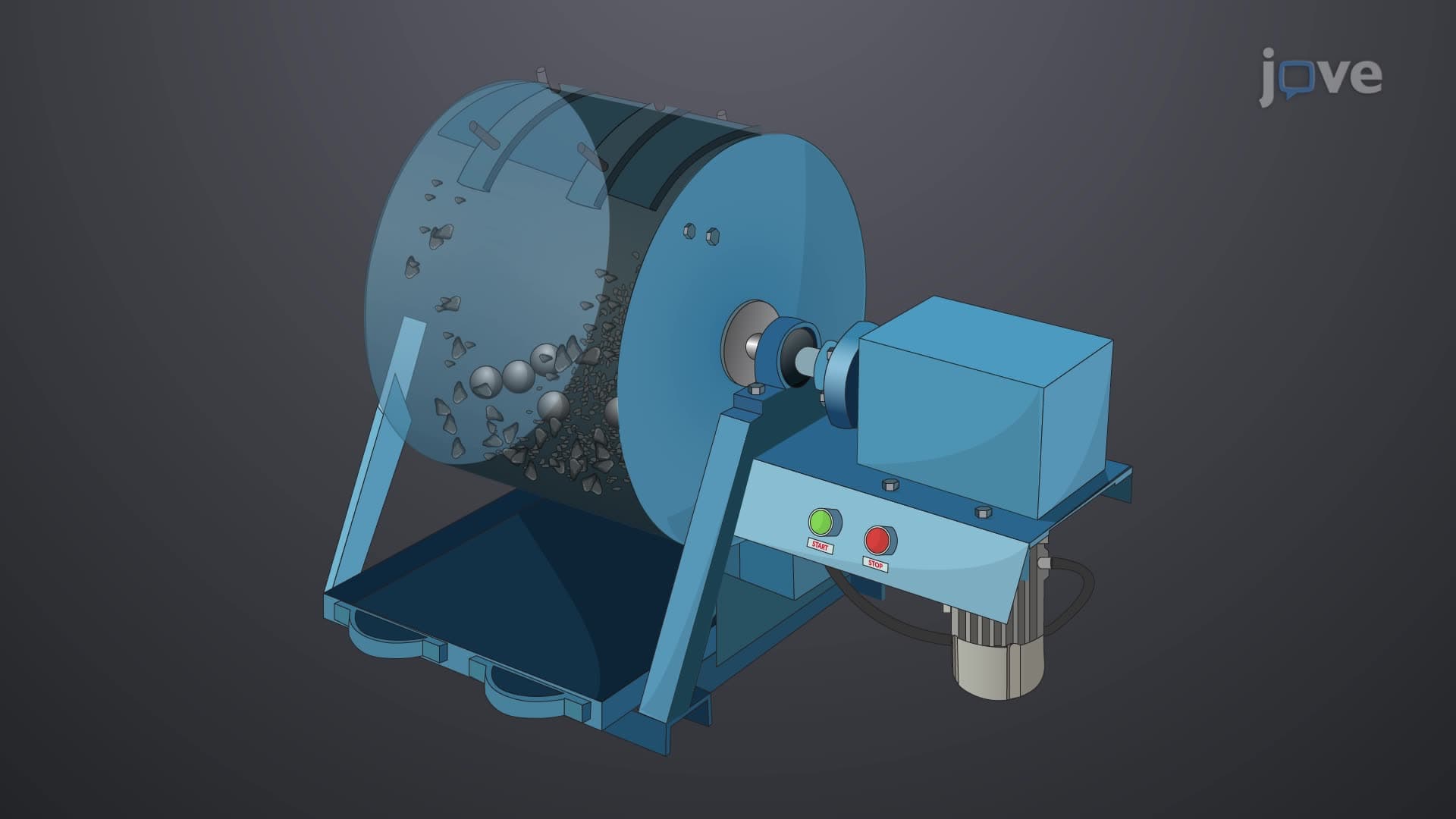
- Explore testing methods for determining aggregate strength through parent rock samples and bulk testing procedures
Understanding Bonding and Strength of Aggregate Fundamentals
The bonding and strength of aggregate represents one of the most critical factors in concrete performance, directly influencing everything from residential foundations to major infrastructure projects like California's Golden Gate Bridge. This concept encompasses the mechanical and chemical interactions between cement paste and aggregate particles, which typically comprise 60-80% of concrete volume.
Surface Texture and Bonding Mechanisms
Aggregate surface texture plays a pivotal role in bonding strength. Rough, angular aggregates, such as crushed granite from quarries in North Carolina or limestone from Texas, create mechanical interlocking with cement paste through their irregular surfaces. These microscopic peaks and valleys provide anchor points that resist pull-out forces during loading. In contrast, smooth river gravel or beach sand offers limited bonding surface, relying primarily on weaker adhesive forces.
The increased surface area of angular particles amplifies this effect. A cubic aggregate particle has significantly more surface area than a spherical particle of equal volume, providing more contact points for cement paste adhesion. This principle explains why highway specifications often require crushed stone rather than natural gravel for high-stress applications.
Stress Distribution and Failure Mechanisms
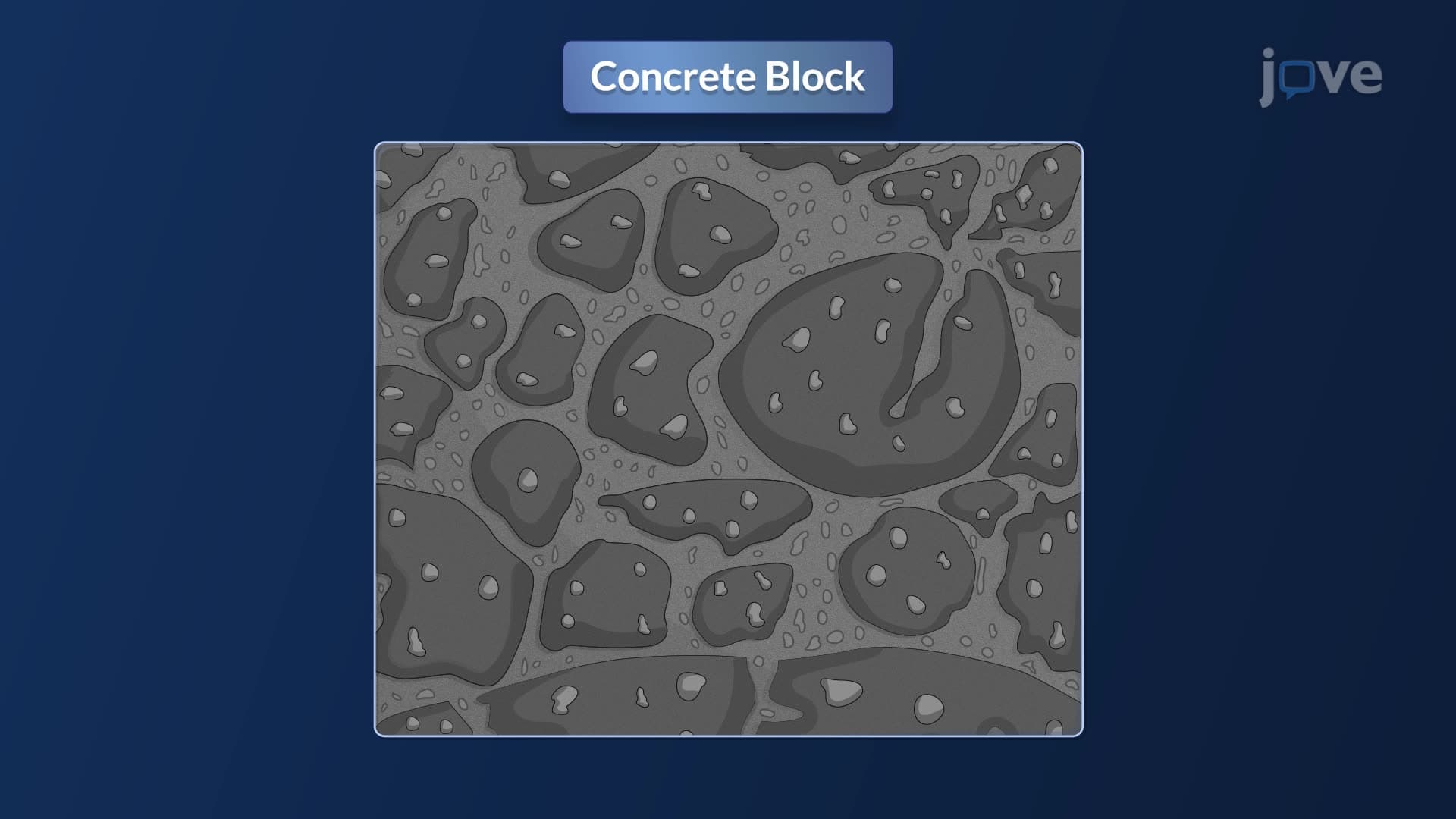
During loading, concrete experiences non-uniform stress distribution. Contact points between aggregates become stress concentration zones where local stresses exceed the overall concrete stress. This phenomenon requires aggregates to possess strength greater than the surrounding concrete matrix, typically 2-3 times stronger for optimal performance.
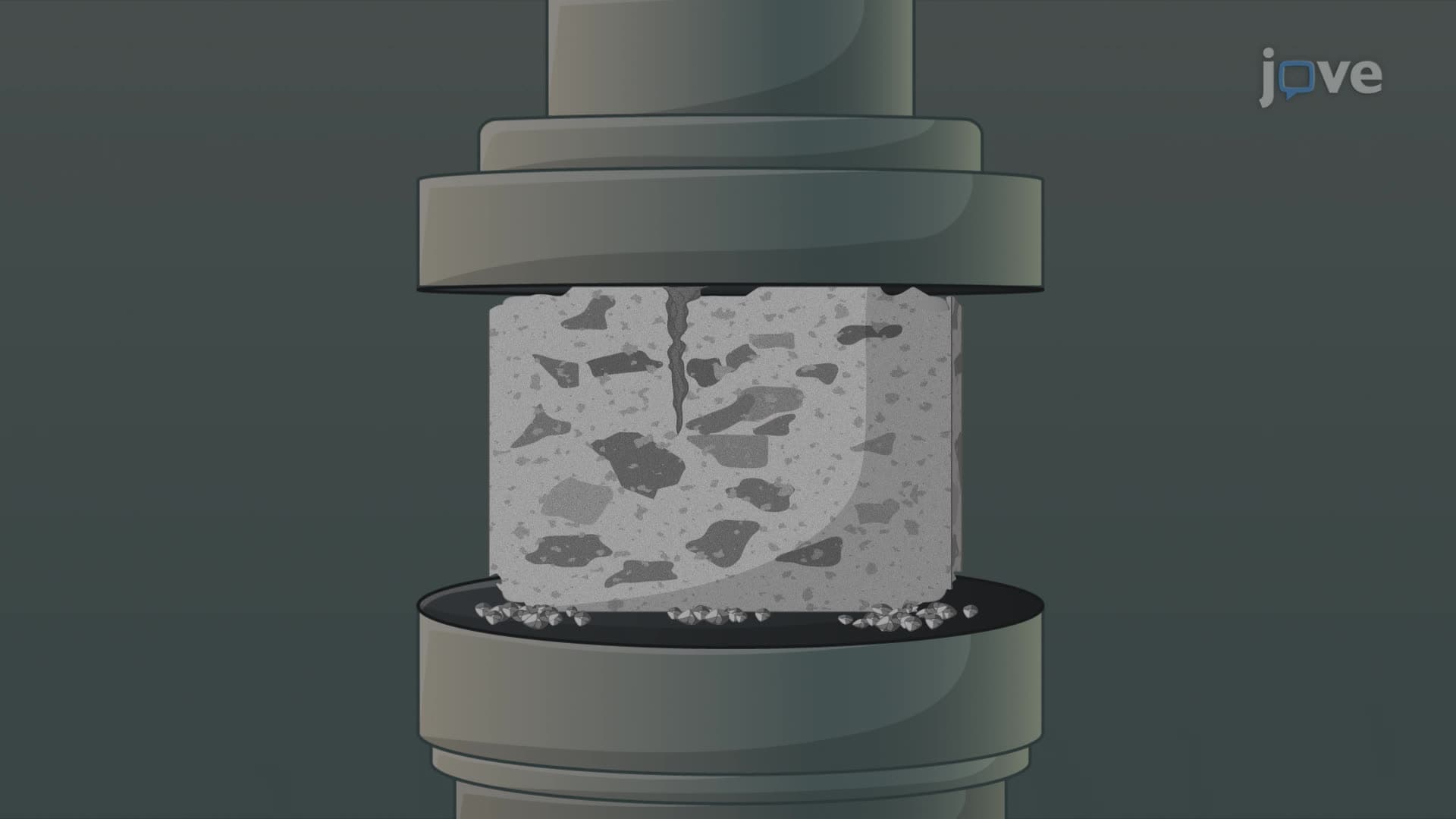
Proper bonding manifests during failure testing through mixed failure modes. Strong aggregate-cement bonds result in some particles fracturing through their centers while others separate cleanly from the paste matrix. This indicates balanced stress transfer between components, a key indicator engineers evaluate when assessing concrete quality for projects like bridge deck construction.
Volume Change Considerations
Thermal expansion, drying shrinkage, and creep create volume changes in concrete. When aggregates are too rigid compared to cement paste, differential movement generates tensile stresses around aggregate particles. These stresses often initiate microcracks that propagate under repeated loading cycles, particularly relevant for structures experiencing temperature fluctuations like airport runways or parking garages.
This concept frequently appears on AP Chemistry and Materials Science exams, where students analyze stress-strain relationships and intermolecular forces. College-level civil engineering courses examine aggregate selection criteria, while MCAT questions may test understanding of material properties and failure mechanisms in biological and engineered systems.
Frequently Asked Questions
Bonding and strength of aggregate refers to the mechanical and chemical interactions between cement paste and rock particles in concrete. It determines how well these components work together to resist applied loads. Strong bonding occurs when rough, angular aggregates create mechanical interlocking with cement paste, while aggregate strength must exceed the concrete matrix strength to handle stress concentrations at contact points.
Exam questions typically focus on intermolecular forces, surface area relationships, and stress-strain analysis. You might analyze why angular particles bond better than smooth ones, calculate surface area differences between particle shapes, or explain failure mechanisms. Practice problems often involve comparing different aggregate types and predicting concrete performance based on bonding principles.
The MCAT may test underlying principles like surface tension, intermolecular forces, and material properties within physics passages. Civil engineering graduate exams frequently include aggregate selection and concrete design questions. Focus on understanding the fundamental science rather than memorizing construction details, as standardized tests emphasize conceptual application over technical specifications.
Highway departments specify crushed stone over river gravel for road construction because angular particles provide superior bonding and load distribution. Bridge engineers select high-strength aggregates that exceed concrete strength requirements by 2-3 times. Airport runway designs consider thermal expansion differences between aggregates and cement paste to prevent cracking from temperature cycles.
This concept builds on familiar physics principles like surface area, mechanical interlocking, and stress concentration that you've likely encountered in introductory courses. The key is visualizing how rough surfaces create more contact points than smooth ones, similar to how Velcro hooks grip fabric loops. Start with basic bonding concepts before advancing to stress analysis and failure mechanisms.
Create comparison charts showing rough vs. smooth aggregates and their bonding characteristics. Practice drawing stress distribution diagrams around aggregate particles. Use real examples like comparing crushed granite to river stones to make concepts concrete. Focus on understanding why angular shapes provide more surface area and better interlocking rather than memorizing technical specifications.
Explore concrete mix design principles, including water-cement ratios and admixture effects on bonding. Study other composite materials like fiber-reinforced plastics or biological composites such as bone structure. Advanced topics include fracture mechanics, fatigue analysis, and durability considerations for different environmental exposures.
This knowledge helps you evaluate construction quality, select appropriate materials for DIY projects, and understand why some concrete structures last longer than others. It also provides foundation concepts for careers in civil engineering, materials science, or construction management where aggregate selection directly impacts project success and safety.
Related Micro-courses
8 Concepts
18 Concepts

12 Concepts