Loading subject page…


8,112 views

Video Summary: Porosity and Absorption of Aggregate Explained
Did you know that the concrete in New York's One World Trade Center contains aggregates that can absorb up to 3% of their weight in water? Porosity and absorption of aggregate directly impacts concrete strength and durability in major construction projects. This fundamental concept explains how tiny pores within stone, gravel, and sand affect material performance through different moisture states-from bone-dry to saturated surface-dry conditions. Watch the full video on JoVE Coach to master this concept with expert-led visuals and step-by-step explanations.
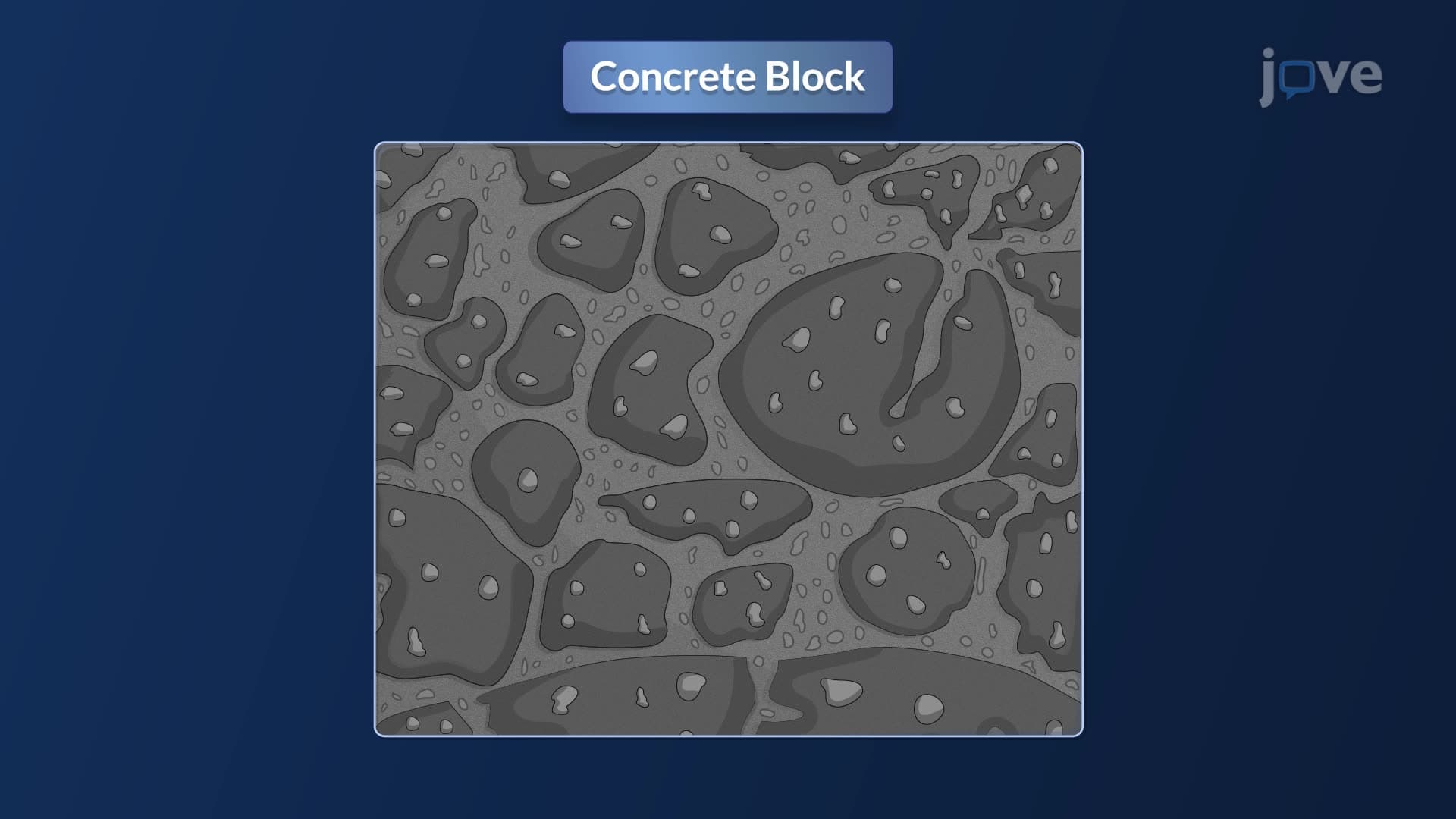
Porosity and absorption of aggregate represents a critical materials science concept that directly impacts construction quality across the United States. Porosity refers to the total volume of void spaces within aggregate particles-the sand, gravel, and crushed stone that comprise roughly 75% of concrete volume. These microscopic pores significantly influence how aggregates interact with water, cement paste, and environmental conditions.
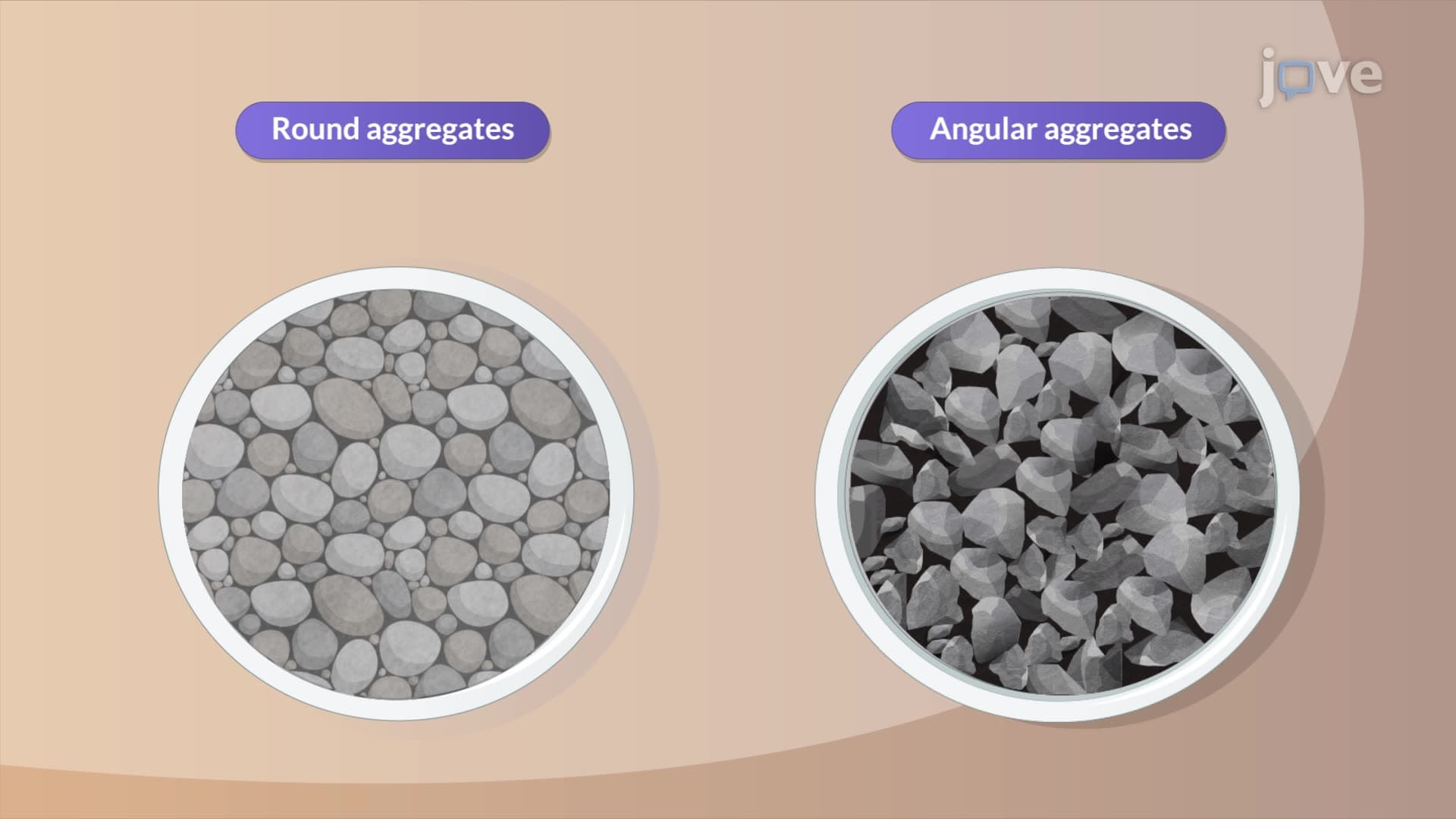
The pore structure varies dramatically between aggregate types. Limestone aggregates commonly used in Florida construction typically exhibit porosity ranges of 5-15%, while volcanic aggregates in Hawaii can reach 40% porosity. This variation directly correlates with regional construction standards and material selection criteria established by the American Concrete Institute (ACI).
Aggregates exist in four distinct moisture conditions that civil engineers must understand for proper concrete design. The bone-dry state occurs after oven-drying at 230°F, removing all moisture from pore spaces. Air-dry conditions develop when aggregates equilibrate with atmospheric humidity-typical for stored materials at construction sites.
The saturated surface-dry (SSD) state represents the most critical condition for concrete mixing calculations. In this state, all internal pores contain water, but no free moisture exists on particle surfaces. Achieving SSD conditions requires careful laboratory procedures involving 24-hour water immersion followed by surface drying with absorbent towels. The moist state indicates excess surface water beyond SSD conditions, requiring mix design adjustments to maintain proper water-cement ratios.
Water absorption percentage equals the mass difference between SSD and bone-dry states, divided by the dry mass and multiplied by 100. For example, if 1000 grams of dry aggregate absorbs 30 grams of water to reach SSD state, the absorption equals 3%. ASTM C127 and C128 standards govern these measurements for coarse and fine aggregates respectively.
High-quality aggregates typically exhibit absorption values below 2%, while porous materials may exceed 5%. The Federal Highway Administration specifies maximum absorption limits of 3% for highway concrete applications, ensuring adequate durability under freeze-thaw conditions common throughout northern states.
Absorbed water significantly affects concrete behavior during mixing, curing, and service life. Unlike mixing water, absorbed water cannot participate in cement hydration reactions, effectively reducing the available water-cement ratio. This phenomenon particularly impacts high-strength concrete where precise water control determines final compressive strength.
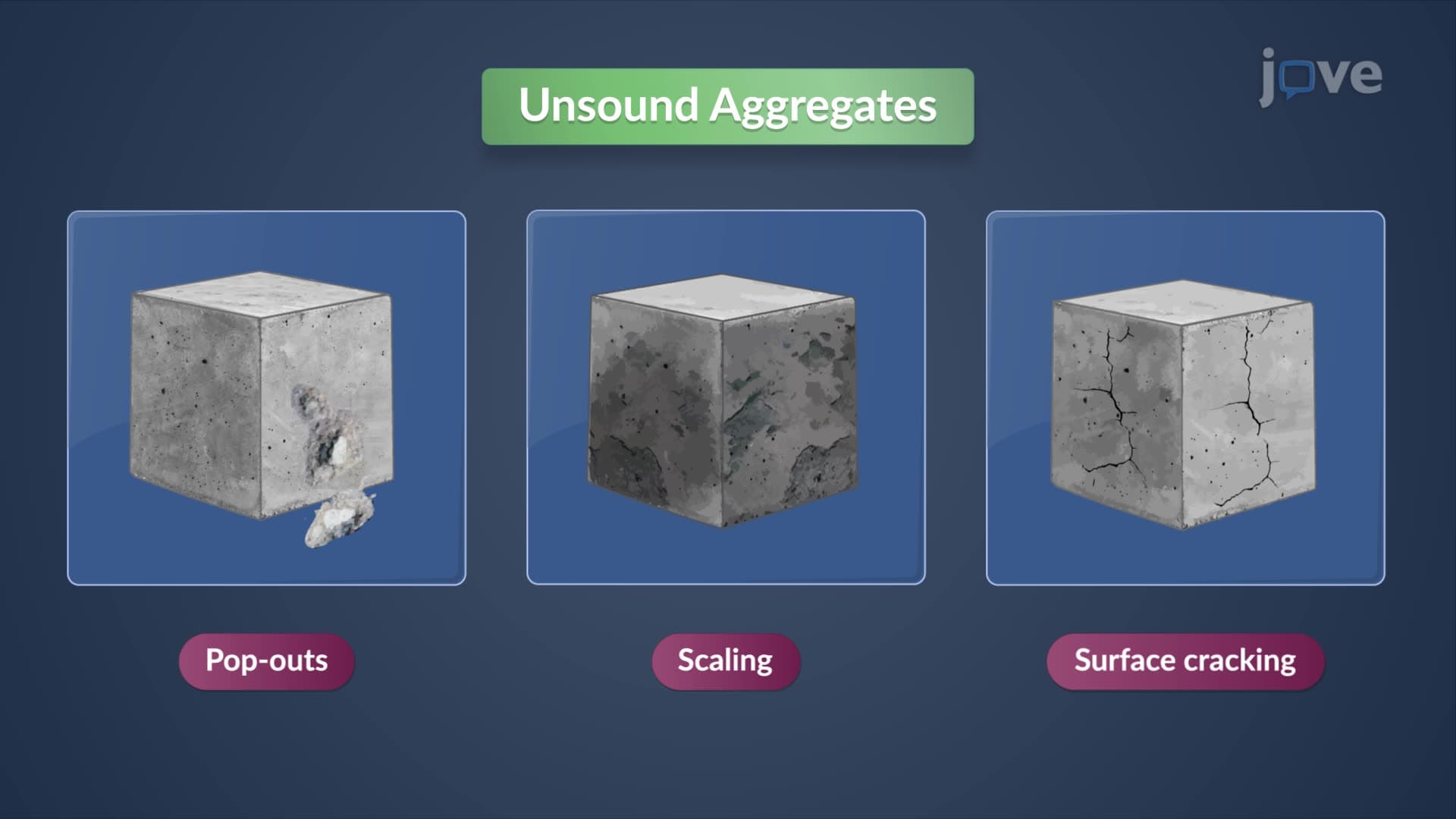
During freeze-thaw cycles-experienced annually across 70% of the continental United States-absorbed water expands upon freezing, creating internal pressures that can fragment aggregate particles. This mechanism contributes to concrete deterioration in infrastructure applications, from interstate highways to airport runways. Understanding these relationships proves essential for AP Chemistry students studying phase transitions and college engineering students in materials science courses.
Related Micro-courses