Loading…
Loading video…

5,215 views
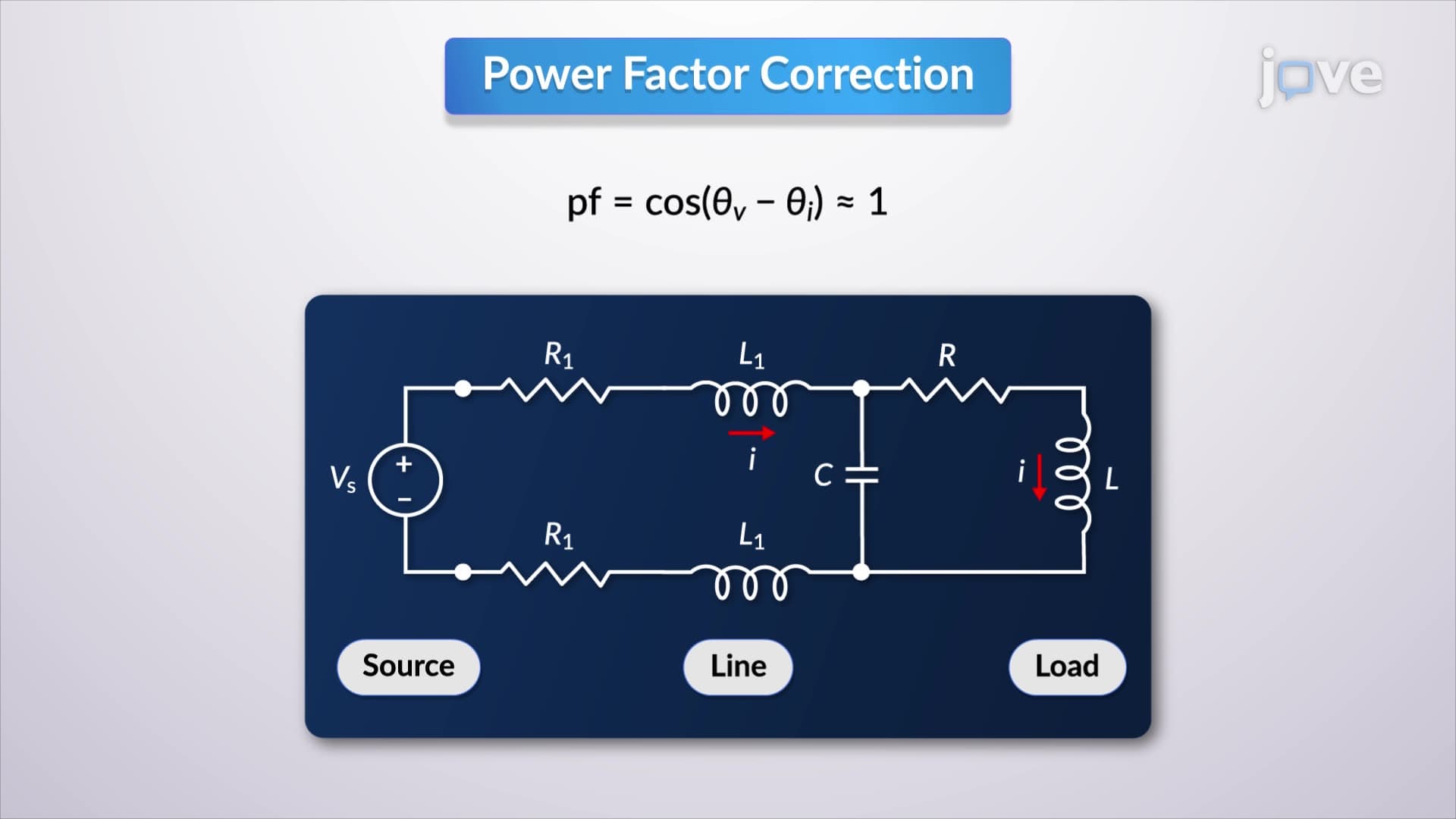
Ever wonder why your electricity bill spikes when factories run inefficient equipment? The power superposition principle helps explain how electrical systems can waste energy through poor power factor management. When a manufacturing plant in Detroit operates motors with low power factor, it draws excessive reactive power from the grid, creating costly inefficiencies. What is Power Factor Correction addresses this critical engineering challenge by demonstrating how capacitors can optimize electrical systems, reducing energy waste and improving overall performance. Watch the full video on JoVE Coach to master this concept with expert-led visuals and step-by-step explanations.
Power factor correction represents a fundamental electrical engineering technique used to improve the efficiency of AC electrical systems. In industrial and commercial applications across the United States, from steel mills in Pittsburgh to semiconductor fabrication plants in Silicon Valley, power factor correction directly impacts operational costs and system performance. The concept builds upon the power superposition principle, which states that the total power in an AC circuit consists of both active (real) power that performs useful work and reactive power that oscillates between source and load.
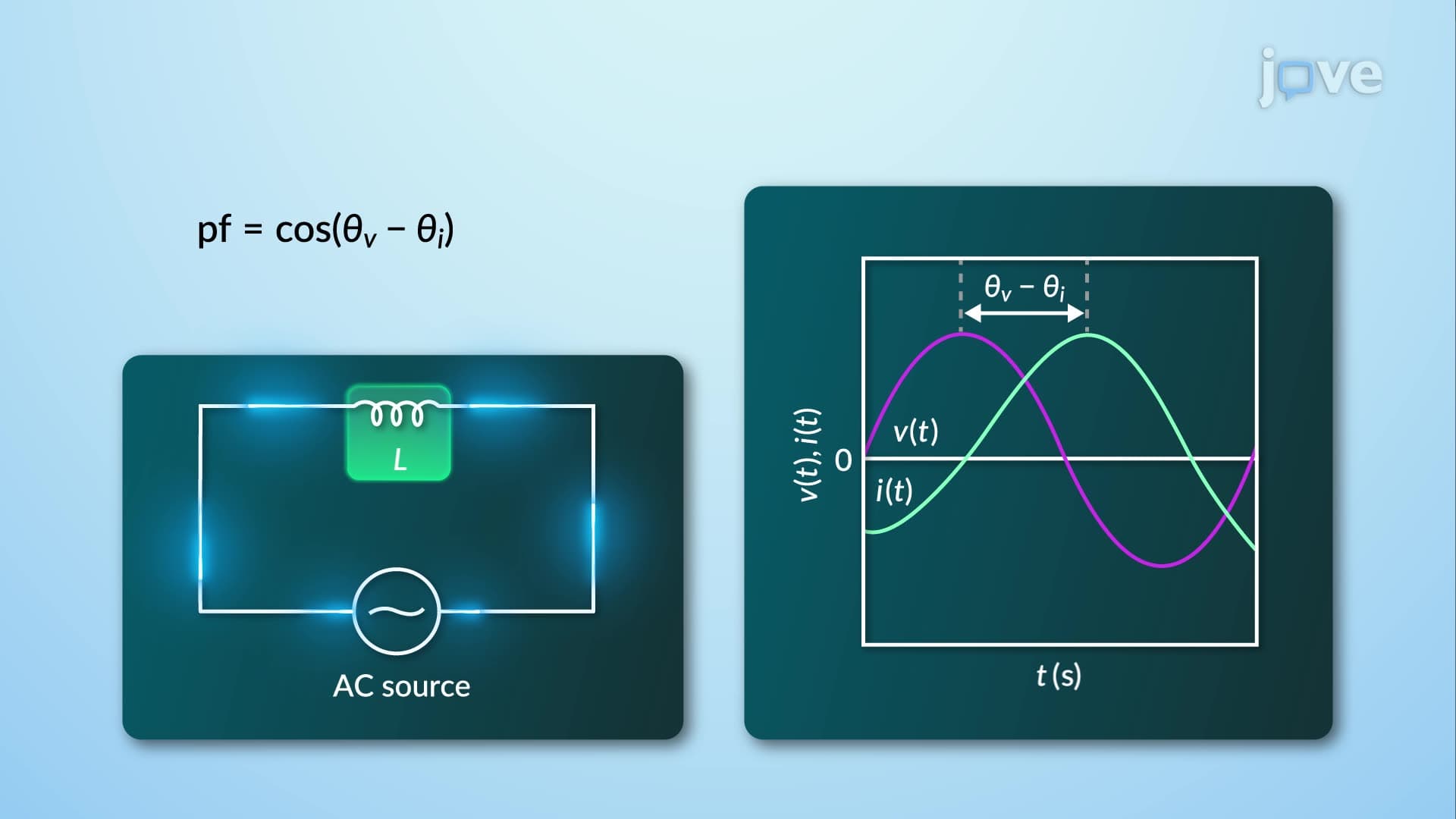
When electrical systems operate with poor power factor, typically below 0.8, they draw excessive current from utility companies without performing proportional useful work. This inefficiency manifests in several ways: increased transmission losses, higher electricity bills due to utility penalties, and potential equipment overheating. The power superposition principle definition explains how reactive components, particularly inductive loads like motors and transformers, create phase differences between voltage and current waveforms. Students preparing for AP Physics C or college-level electrical engineering courses should understand that power factor equals the cosine of this phase angle, with unity (1.0) representing perfect efficiency.
The power triangle provides a visual representation crucial for understanding what is the power superposition principle in detail. This geometric approach shows how apparent power (S) forms the hypotenuse, while active power (P) and reactive power (Q) form the adjacent and opposite sides respectively. When engineers add shunt capacitors to correct power factor, they effectively reduce the reactive power component without affecting active power. The calculation involves determining the required capacitive reactance using the formula: Q(capacitor) = P × (tan θ₁ - tan θ₂), where θ₁ represents the original power factor angle and θ₂ represents the desired corrected angle.
Major US manufacturing companies like General Electric and Ford Motor Company invest heavily in power factor correction systems to reduce operational costs. A typical automotive assembly plant might save hundreds of thousands of dollars annually through strategic capacitor bank installations. These systems automatically adjust capacitance based on load conditions, maintaining optimal power factor throughout varying production cycles. For students studying for the Fundamentals of Engineering (FE) exam, understanding these practical applications demonstrates how theoretical concepts translate into measurable economic benefits and environmental improvements through reduced energy consumption.
Frequently Asked Questions
Power Factor Correction is a technique that improves electrical system efficiency by reducing reactive power consumption through strategic capacitor placement. It's crucial because poor power factor increases electricity costs, causes voltage drops, and reduces overall system capacity. Manufacturing facilities can see 10-30% reductions in electrical costs after implementing proper power factor correction systems.
AP Physics C often includes power factor problems involving AC circuit analysis, phasor diagrams, and energy calculations. Students typically encounter questions about calculating power factor from given voltage and current relationships, determining capacitance needed for correction, or analyzing the economic impact of different power factor scenarios. Practice with power triangles and complex number representations proves essential for success.
College exams frequently test capacitor sizing calculations, harmonic analysis effects, and cost-benefit analyses of correction systems. Students should expect problems involving three-phase systems, automatic power factor correction controllers, and the impact of non-linear loads. Many professors include real industrial case studies requiring students to design complete correction systems for specific facilities.
Most US utilities implement demand charges and power factor penalties when industrial customers operate below 0.85-0.90 power factor. For example, a manufacturing plant drawing 1000 kW at 0.7 power factor pays significantly more than the same facility operating at 0.95 power factor. These penalty structures incentivize businesses to invest in correction equipment, creating a win-win scenario for grid efficiency and customer costs.
Basic trigonometry and algebra suffice for fundamental power factor correction understanding. Students comfortable with right triangles, sine/cosine relationships, and simple circuit analysis can master these concepts. The mathematical complexity increases for three-phase systems and harmonic considerations, but introductory courses focus on single-phase applications using straightforward calculations.
Focus on drawing power triangles for every problem, as visual representation clarifies the relationships between real, reactive, and apparent power. Practice converting between different power factor representations (decimal, percentage, angle) and memorize key formulas for capacitive reactance calculations. Work through multiple industrial examples to understand practical applications and economic implications.
Power factor correction provides foundational knowledge for advanced topics including power system analysis, motor control systems, and renewable energy integration. Students who master these concepts find subsequent courses in power electronics, industrial automation, and smart grid technologies more accessible. The economic analysis skills also prove valuable for engineering management and project evaluation coursework.
Electrical engineers specializing in power systems, energy efficiency consultants, and industrial automation specialists frequently work with power factor correction systems. Utility companies, manufacturing facilities, and renewable energy companies actively seek professionals who understand these concepts. The growing emphasis on energy efficiency and grid modernization creates expanding opportunities in both traditional and emerging energy sectors.
Related Micro-courses
Related Subjects
 Civil Engineering 30 micro-courses›Mechanical Engineering 28 micro-courses›