Loading…
Loading video…

1,704 views
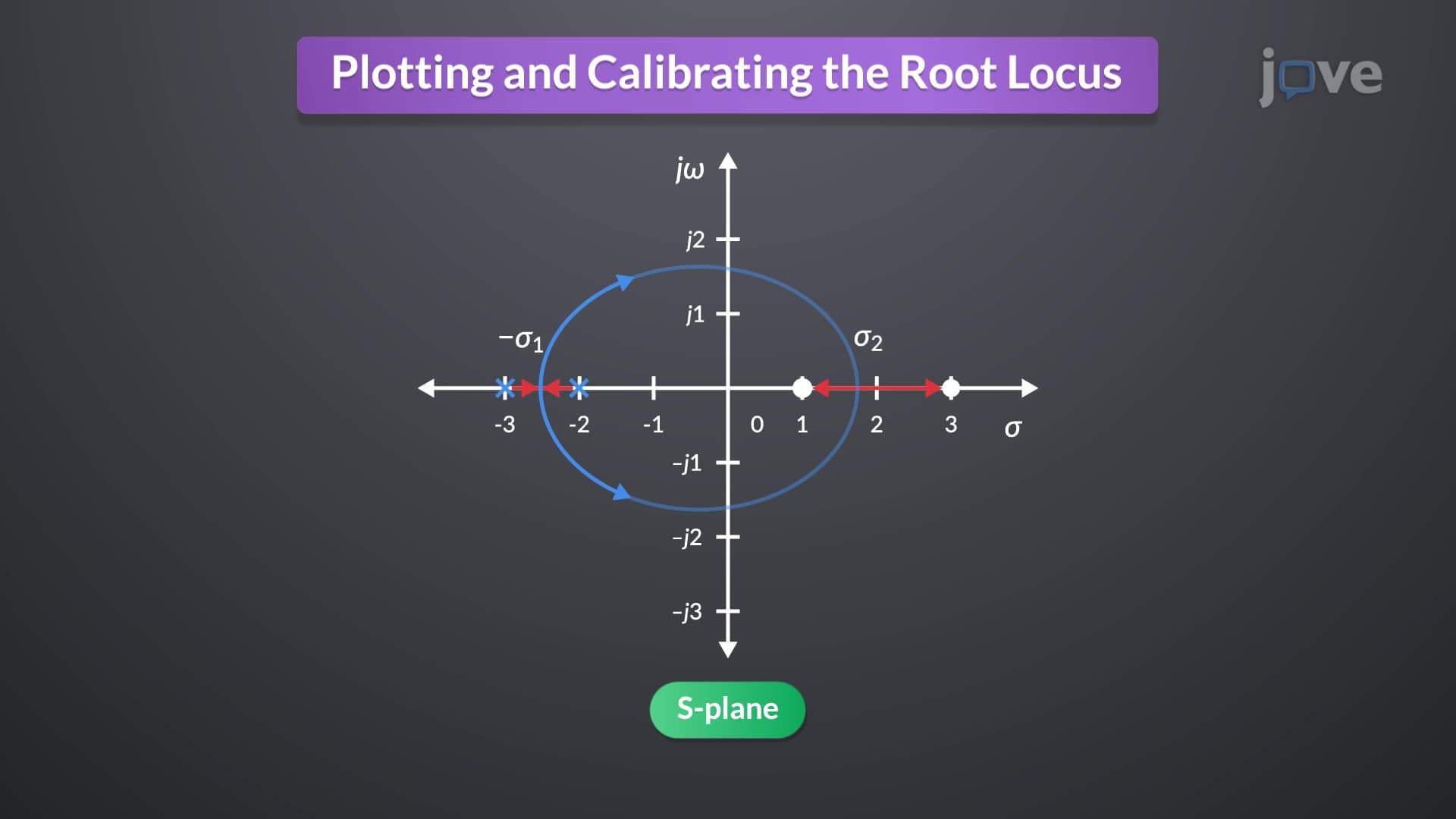
Ever wonder how NASA engineers ensure the Mars Perseverance rover maintains stable control during landing? Root loci for positive feedback systems reveal the critical boundaries where control systems shift from stable to unstable operation. Boeing's autopilot systems rely on these mathematical tools to predict exactly when increasing controller gain might cause dangerous oscillations or complete system failure. Plotting And Calibrating The Root Locus Explained demonstrates how engineers calculate breakaway points, analyze pole movements, and determine precise gain values that keep complex systems operating safely within design parameters. Watch the full video on JoVE Coach to master this concept with expert-led visuals and step-by-step explanations.
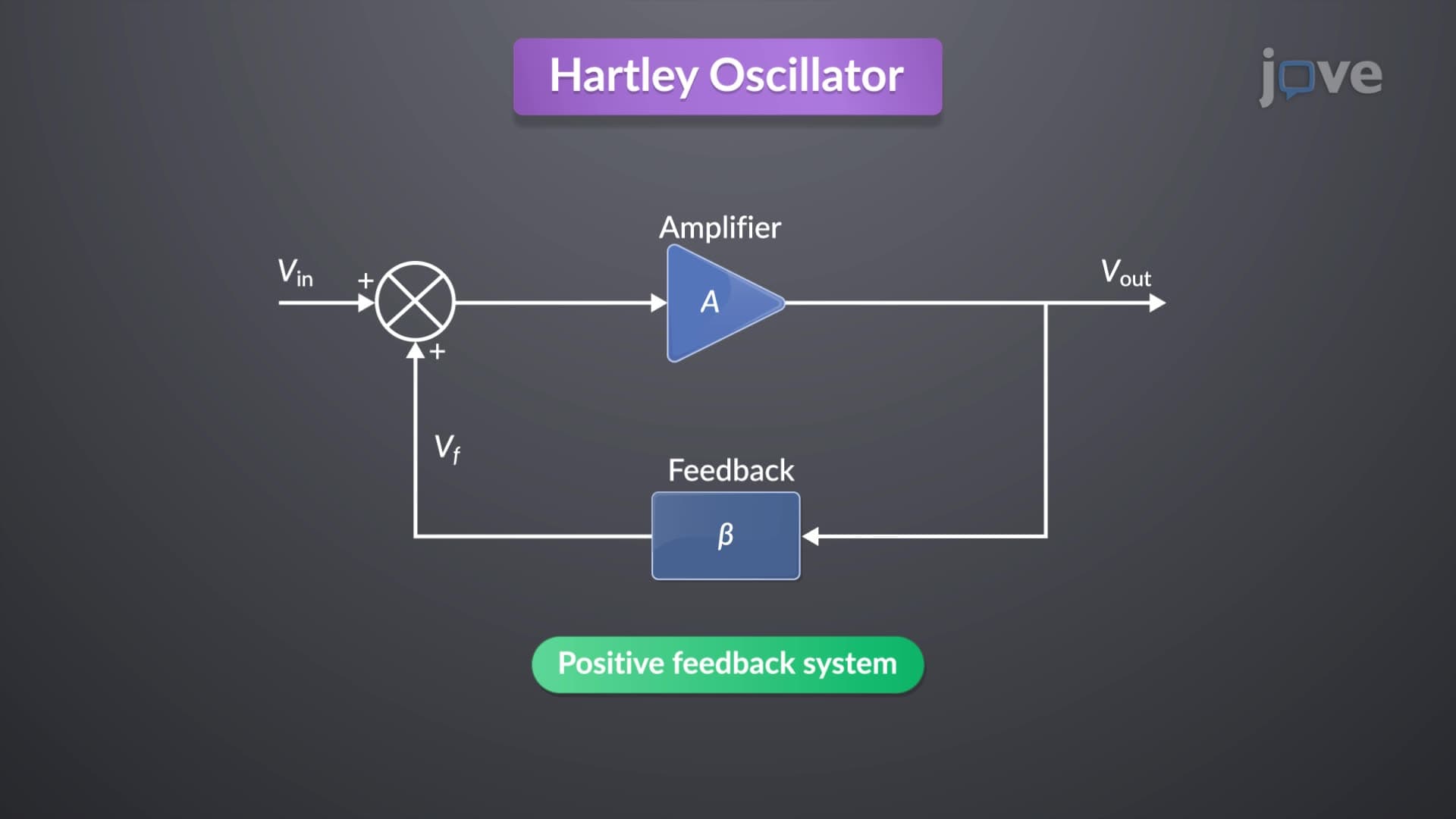
Root locus analysis serves as a fundamental graphical technique for understanding how closed-loop pole locations change as system parameters vary. Unlike negative feedback systems commonly studied in introductory control courses, positive feedback systems present unique challenges that require careful analysis of stability boundaries and gain relationships.
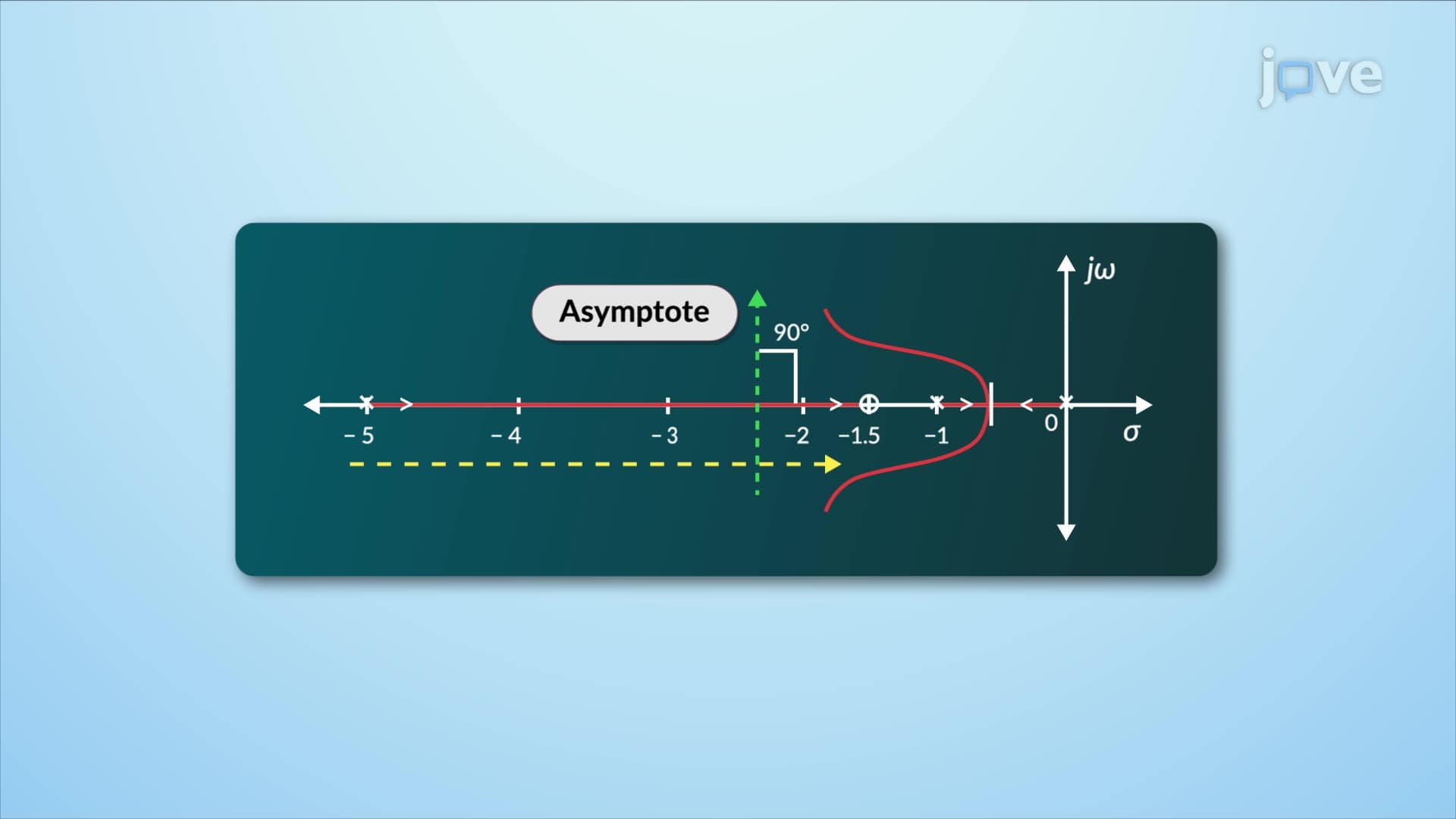
The critical transition points where root loci leave or rejoin the real axis deserve special attention in positive feedback analysis. Breakaway points occur between open-loop poles on the real axis, representing locations where maximum gain occurs before poles migrate into the complex plane. Conversely, break-in points appear between zeros, marking minimum gain locations where complex poles return to real axis behavior.
Consider a typical aircraft flight control system used in commercial aviation. Boeing 737 autopilot systems must account for these transition points when determining safe operating ranges for pitch control gains. Engineers calculate these points by finding where the derivative of the characteristic equation equals zero, ensuring the system maintains acceptable performance margins throughout the flight envelope.
The 180/n degree angular relationship governs where root loci can exist in the complex plane. For positive feedback systems, this criterion becomes particularly important when analyzing multi-loop control architectures common in industrial automation. General Electric's wind turbine control systems exemplify this principle, where blade pitch controllers must satisfy angular conditions to maintain stable power generation across varying wind speeds.
Students preparing for AP Physics C or college-level control systems courses should practice calculating these angles using graphical methods. The angular sum evaluation involves measuring angles from each pole and zero to test points along potential locus paths, verifying existence when the total equals an odd multiple of 180 degrees.
The magnitude condition provides the mathematical foundation for determining exact gain values at any point along the root locus. This calculation involves dividing the product of distances from all zeros by the product of distances from all poles to the point of interest. Tesla's Autopilot system utilizes similar calculations to determine optimal control gains that maintain vehicle stability while responding to steering inputs and road conditions.
For students tackling midterm exams in engineering programs like those at MIT or Stanford, mastering these calculations proves essential. Practice problems typically involve complex conjugate pole pairs and multiple zeros, requiring systematic application of distance formulas and careful arithmetic management.
Frequently Asked Questions
Plotting and calibrating the root locus involves creating precise graphical representations of how closed-loop poles move as system gain varies, with calibration referring to calculating exact coordinates and gain values at specific points. Unlike basic root locus sketching, this process requires quantitative analysis of breakaway points, j-axis crossings, and damping ratio intersections. The calibration aspect ensures engineers can specify exact operating conditions rather than approximate system behavior.
AP Physics C typically includes root locus concepts within oscillation and stability problems, often requiring students to identify stable operating regions and calculate natural frequencies. College Board frequently tests understanding of pole-zero relationships and their impact on system response. Students should practice sketching basic loci and recognizing stability boundaries, as these concepts connect to mechanical oscillations and electrical circuit analysis covered in the curriculum.
College engineering exams commonly feature multi-part problems requiring students to sketch root loci, calculate breakaway points, and determine stability margins for given transfer functions. Universities like UC Berkeley and Georgia Tech typically include numerical problems where students must find exact gain values using the magnitude condition. These problems often involve second or third-order systems with real and complex poles, testing both conceptual understanding and computational skills.
American aerospace companies like Lockheed Martin use root locus techniques to design flight control systems for military aircraft, ensuring stable operation across different flight conditions and payload configurations. Ford Motor Company applies these methods in electronic stability control systems, analyzing how varying road conditions affect vehicle dynamics. Power grid operators across the United States rely on root locus analysis to maintain electrical system stability as load demands fluctuate throughout the day.
Students need solid foundations in complex numbers, basic calculus, and trigonometry to successfully work with root locus analysis. Most concepts become accessible after completing Algebra 2 and Precalculus, though calculus knowledge helps with derivative calculations for breakaway points. High school students in advanced physics or engineering programs can grasp the fundamental principles, while deeper mathematical rigor develops through college-level coursework and practice problems.
Focus on systematic problem-solving approaches that combine graphical sketching with numerical calculations, practicing both hand-drawn loci and computational verification methods. Create summary sheets showing the step-by-step process for finding breakaway points, calculating gains, and assessing stability margins. Work through problems from different contexts—mechanical systems, electrical circuits, and control applications—to build versatility in recognizing when and how to apply root locus techniques across various engineering scenarios.
Advanced students should investigate frequency domain analysis techniques like Bode plots and Nyquist criteria, which complement root locus methods in comprehensive control system design. Digital control systems and z-domain analysis represent natural extensions, particularly relevant for modern computer-controlled systems. State-space methods offer alternative approaches to system analysis, while robust control theory addresses uncertainty and disturbance rejection in practical applications.
Related Micro-courses


Related Subjects
 Civil Engineering 30 micro-courses›Mechanical Engineering 28 micro-courses›