Loading subject page…

- Finance
- Financial Markets and Instruments
- Common Stock vs. Preferred Stock
Micro-course: Financial Markets and Instruments
29,421 views
Learn key concepts and earn your certificate.












Common Stock vs. Preferred Stock

00:00
01:26
Video Summary: Common Stock Vs Preferred Stock Explained
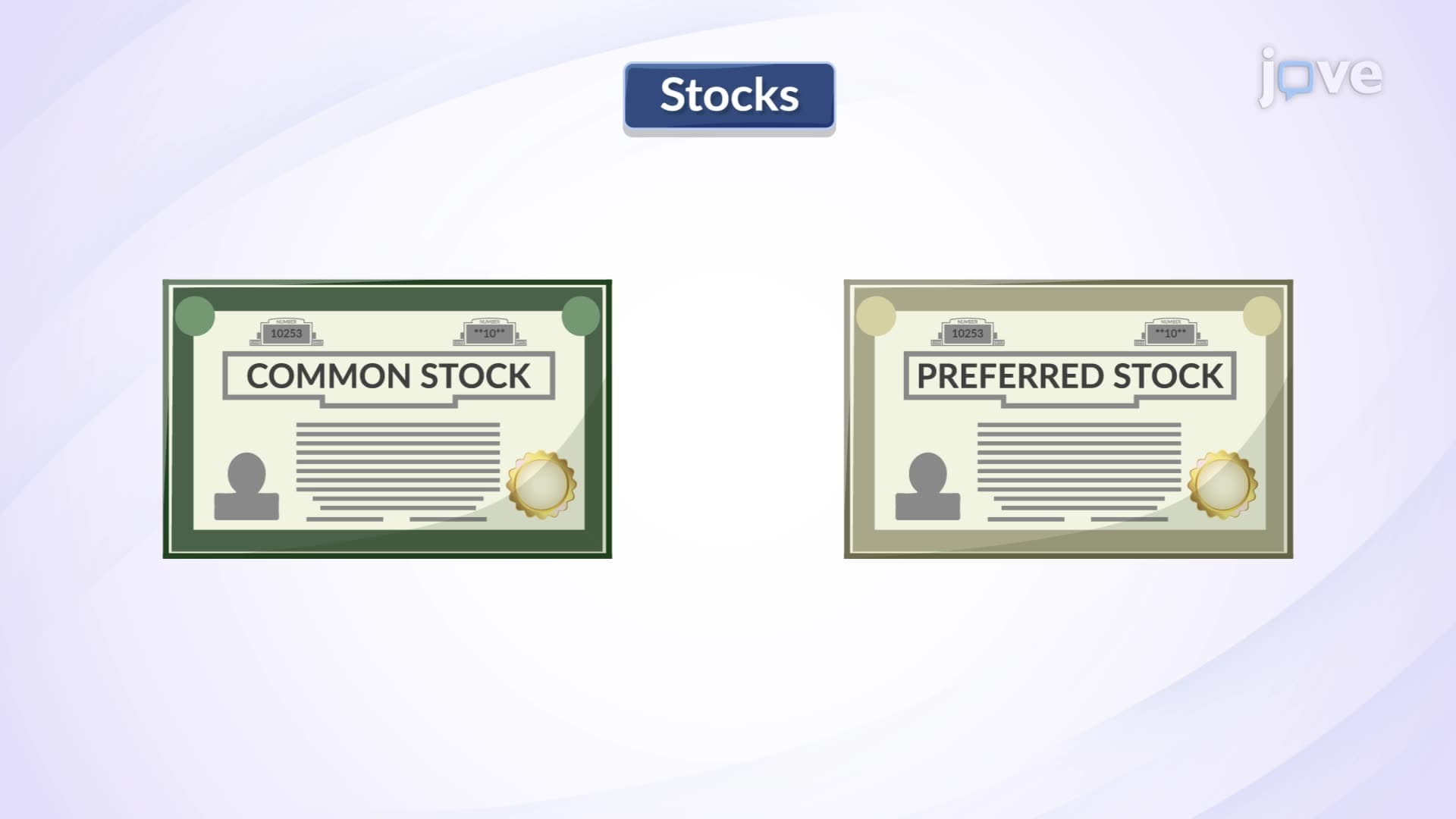
Corporate finance decisions around common stock vs preferred stock directly impact capital structure, investor relations, and long-term strategic positioning for companies like Microsoft, which has issued both equity types throughout its growth phases. Understanding Common Stock VS Preferred Stock Explained becomes critical when evaluating investment opportunities, structuring financing deals, or advising stakeholders on risk-return profiles. The distinction affects dividend policies, voting control, and liquidation priorities that shape corporate governance decisions. Watch the full video on JoVE Coach to master this concept with expert-led visuals and step-by-step explanations.
- Evaluate equity financing options when structuring capital raises or assessing investment proposals in strategic planning sessions
- Compare risk-return characteristics to align stockholder expectations with corporate performance objectives and dividend policies
- Analyze voting rights implications for maintaining management control during mergers, acquisitions, or hostile takeover scenarios
- Apply liquidation priority frameworks when conducting due diligence on distressed companies or bankruptcy restructuring opportunities
- Assess portfolio diversification strategies by understanding how common and preferred shares respond differently to market volatility
- Implement stakeholder communication strategies that clearly articulate the value proposition of each equity class to institutional investors
- Identify market timing opportunities for preferred stock issuances during periods of interest rate fluctuations or credit market stress
- Leverage equity structure knowledge in board presentations, investor relations calls, and strategic partnership negotiations
Understanding Common Stock VS Preferred Stock in Corporate Finance Strategy
When Goldman Sachs restructured its partnership model into a public corporation in 1999, the firm faced critical decisions about equity structure that every growing business encounters today. The fundamental choice between issuing common stock versus preferred stock shapes everything from investor relations to competitive positioning in capital markets.
Common Stock: Growth-Oriented Equity with Strategic Flexibility
Common stockholders represent the entrepreneurial backbone of American capitalism, bearing ultimate business risk while capturing unlimited upside potential. These shareholders exercise voting rights that influence board composition, executive compensation, and major strategic decisions like mergers or spin-offs. Companies like Amazon have leveraged common stock's growth appeal to attract long-term investors willing to forgo immediate dividends for capital appreciation. The variable return structure aligns shareholder interests with management performance, creating powerful incentives for operational excellence and market expansion.
However, this growth potential comes with inherent volatility that affects quarterly earnings calls, analyst coverage, and institutional investor sentiment. During market downturns, common stockholders absorb the first losses, making this equity class unsuitable for conservative institutional portfolios or companies requiring predictable investor income streams.
Preferred Stock: Institutional-Grade Income with Risk Mitigation
Preferred stockholders occupy the strategic middle ground between debt and equity, offering corporate treasurers flexible financing tools without the restrictive covenants typical of bond issuances. Bank of America has successfully utilized preferred stock to meet regulatory capital requirements while preserving common shareholder voting control. The fixed dividend structure appeals to insurance companies, pension funds, and other institutional investors seeking predictable cash flows for liability matching.
The liquidation preference provides downside protection that becomes crucial during economic stress or industry consolidation. When Lehman Brothers collapsed, preferred stockholders recovered significantly more value than common shareholders, demonstrating the practical importance of capital structure hierarchy in wealth preservation strategies.
Strategic Applications in Modern Corporate Finance
Today's CFOs increasingly view equity structure as a competitive weapon, using preferred stock to attract ESG-focused institutional capital while maintaining founder control through common stock voting arrangements. This dual-class approach enables companies to access public markets without sacrificing long-term strategic vision to short-term quarterly pressures.
Frequently Asked Questions
Common stock represents full ownership participation with voting rights and unlimited profit potential, while preferred stock provides ownership claims with priority dividend payments but limited voting influence. Common stockholders control corporate governance decisions, whereas preferred stockholders focus primarily on income generation and capital preservation. Both equity types represent legitimate ownership stakes, but with distinctly different risk-return profiles and strategic purposes.
Assess the target's equity structure to understand voting control dynamics, dividend obligations, and liquidation priorities that affect deal valuation and integration complexity. Common stock concentration indicates management entrenchment or founder control, while significant preferred stock suggests institutional investor involvement and potential dividend payment obligations. This analysis directly impacts your negotiation strategy, financing structure, and post-acquisition governance arrangements.
Frame common stock as growth-oriented investments aligned with aggressive expansion strategies and long-term value creation, emphasizing voting rights that enable strategic influence. Position preferred stock as income-focused investments suitable for conservative portfolio allocation, highlighting downside protection and predictable cash flows. Connect each recommendation to specific business objectives, risk tolerance levels, and competitive positioning requirements your leadership team faces.
Berkshire Hathaway operates with both Class A common stock (BRK.A) and Class B common stock (BRK.B) to accommodate different investor segments, while also holding significant preferred stock positions in companies like Bank of America. Warren Buffett's structure demonstrates how equity diversity serves strategic purposes: Class A shares maintain voting control and premium pricing, Class B shares increase accessibility for retail investors, and preferred holdings generate steady dividend income with downside protection.
No advanced finance degree is required, but understanding basic financial statements and corporate governance principles enhances your effectiveness. Most professionals can master these concepts through practical application in budgeting, strategic planning, or investor relations contexts. The key is connecting equity structure knowledge to your specific business challenges, whether that involves capital allocation decisions, partnership negotiations, or competitive analysis frameworks.
This knowledge positions you for strategic finance roles, business development opportunities, and executive leadership positions requiring capital markets expertise. You'll contribute more effectively to board presentations, acquisition discussions, and investor relations activities that directly influence corporate strategy. Understanding equity structures also enhances your credibility in cross-functional teams and demonstrates the financial acumen increasingly valued in senior management positions.
Dive into convertible securities and warrants, which combine features of both debt and equity while providing additional strategic flexibility for growing companies. Understanding these hybrid instruments builds naturally on common and preferred stock knowledge while introducing more sophisticated capital structure optimization techniques used by Fortune 500 companies.
Related Micro-courses

21 Concepts

28 Concepts

12 Concepts