Loading subject page…


29,438 views

Video Summary: What are Types of Bonds
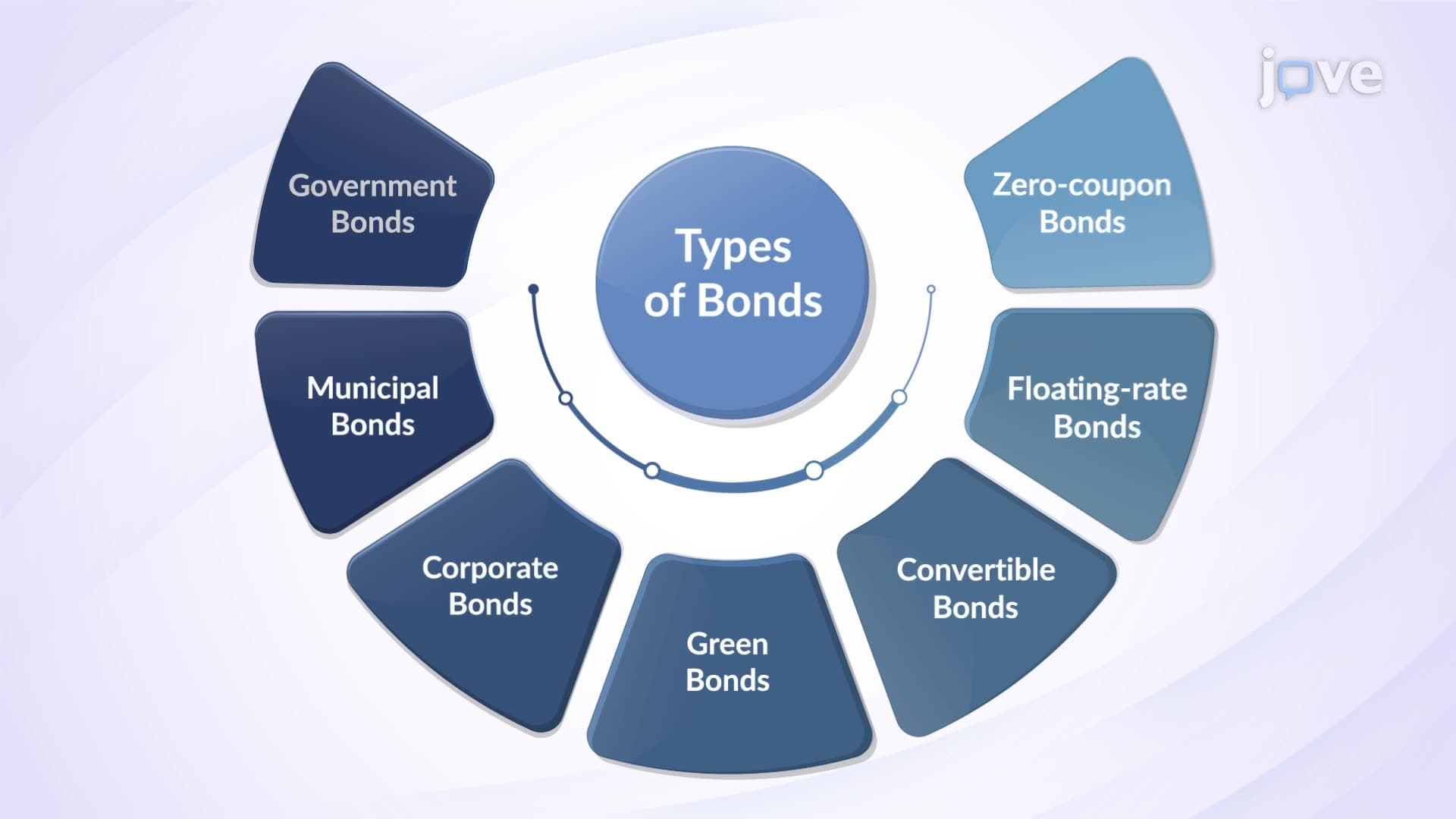
Understanding the different types of bonds is crucial when corporate treasurers at Fortune 500 companies like Apple issue $7 billion in debt to fund operations and growth initiatives. The various types of bonds serve distinct strategic purposes in capital markets, from government Treasury securities providing portfolio stability to corporate bonds enabling business expansion. Companies like Tesla leverage green bonds to finance sustainable projects, while convertible bonds allow firms like Airbnb to offer investors both fixed income and equity upside potential. Watch the full video on JoVE Coach to master this concept with expert-led visuals and step-by-step explanations.
When Microsoft's treasury team decides to issue $2.25 billion in bonds to fund acquisitions and share buybacks, they're selecting from a sophisticated menu of debt instruments. Each type of bond serves specific strategic objectives, risk profiles, and investor demographics that directly impact cost of capital and financial flexibility.
U.S. Treasury bonds represent the risk-free rate benchmark that influences all other borrowing costs across the economy. Corporate finance professionals use Treasury yields as the baseline for pricing corporate debt and evaluating investment returns. Municipal bonds issued by entities like the California Public Finance Authority offer tax-exempt income, making them attractive for high-tax-bracket investors and corporate cash management strategies seeking after-tax yield optimization.
The municipal bond market's $4 trillion size demonstrates its importance in infrastructure financing. Corporate treasurers often hold municipal securities in their short-term investment portfolios, particularly when managing seasonal cash flows or regulatory capital requirements that demand high-quality, liquid assets.
Corporate bonds like IBM's recent $1.75 billion issuance showcase how established companies access capital markets for operational funding and strategic initiatives. Investment-grade corporate bonds typically trade at spreads of 100-300 basis points above comparable Treasury securities, reflecting credit risk premiums that directly impact weighted average cost of capital calculations.
High-yield corporate bonds serve different strategic purposes, often funding leveraged buyouts, aggressive growth strategies, or refinancing existing debt structures. Private equity firms and growth companies frequently utilize these instruments when traditional bank financing proves insufficient or restrictive.
Tesla's pioneering green bond issuances demonstrate how specialized structures align financing with strategic objectives. These environmental bonds often command pricing premiums due to strong ESG-focused investor demand, potentially reducing borrowing costs while enhancing corporate sustainability credentials.
Convertible bonds, exemplified by companies like Airbnb during their pre-IPO growth phase, offer hybrid characteristics appealing to both growth-oriented investors and income-focused portfolios. The embedded option value allows companies to issue debt at lower coupon rates while providing investors potential equity upside.
Related Micro-courses