Loading subject page…

- Microeconomics
- Game Theory
- Finitely Repeated Games
Micro-course: Game Theory
5,003 views
Learn key concepts and earn your certificate.








Finitely Repeated Games

00:00
01:20
Video Summary: What Is Finitely Repeated Games
Ever wonder why gas stations often match competitors' prices, but airlines slash fares right before bankruptcy? Finitely repeated games reveal how knowing when competition ends changes everything. In these strategic scenarios, players face the same decision multiple times with a predetermined endpoint. Consider Netflix and Hulu competing over pricing strategies during a specific promotional period-each platform knows exactly when the competition window closes. This knowledge fundamentally alters their strategic choices compared to open-ended rivalry. Watch the full video on JoVE Coach to master this concept with expert-led visuals and step-by-step explanations.
- Understand what is finitely repeated games and how they differ from single-shot games and infinitely repeated games
- Identify the key characteristics that define finitely repeated game scenarios in business and economics
- Analyze how backward induction logic unravels cooperative strategies in finite time horizons
- Compare strategic outcomes between early rounds and final rounds of finitely repeated games
- Evaluate why the "end game effect" leads to competitive behavior even when cooperation seems beneficial
- Apply backward induction reasoning to predict player strategies in real-world competitive scenarios
- Recognize how finite time horizons affect pricing decisions, negotiations, and market competition
- Explore the mathematical foundations underlying strategic decision-making in repeated interactions
Understanding Finitely Repeated Games Framework
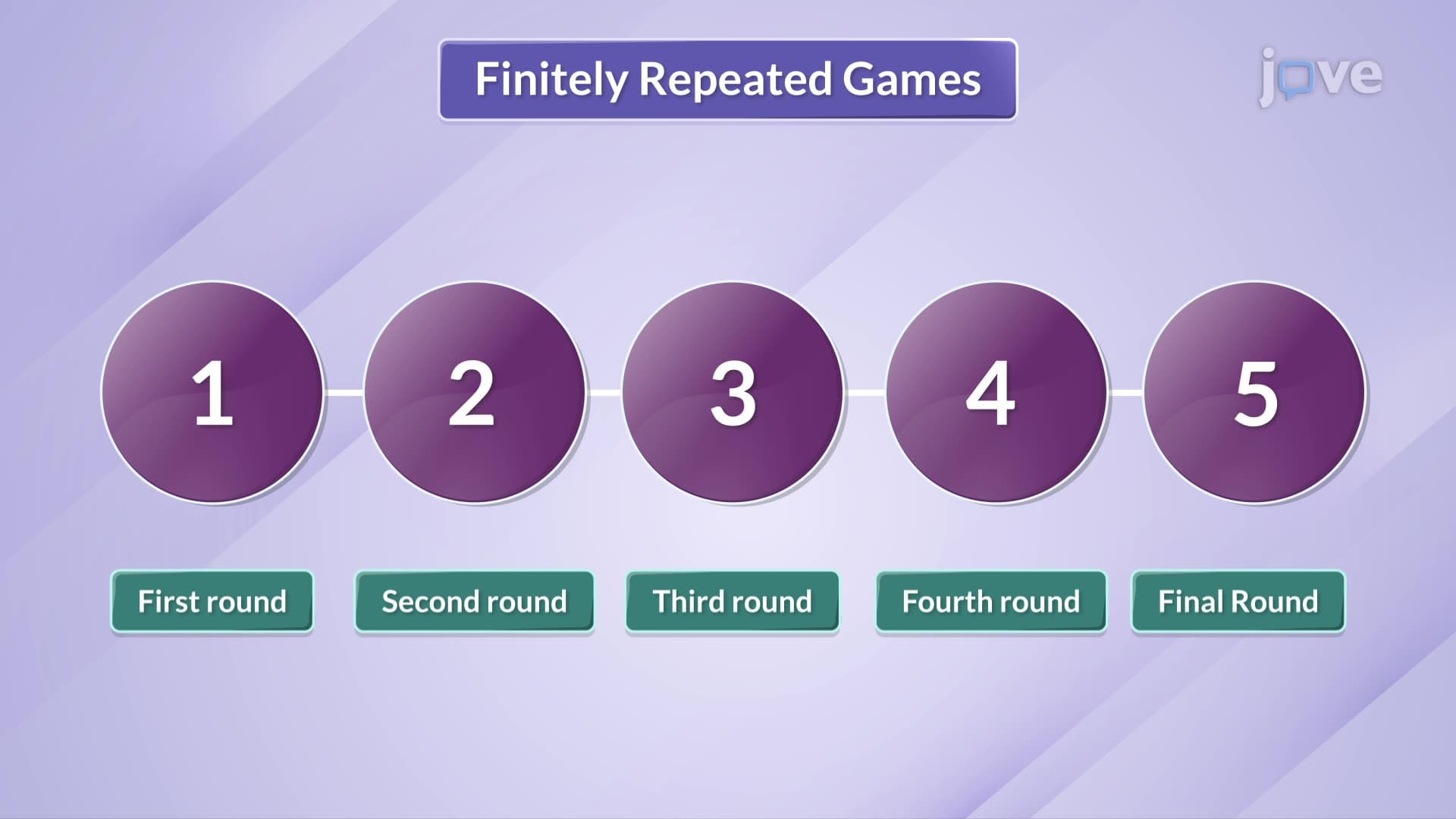
Finitely repeated games represent a fundamental concept in game theory where players engage in the same strategic interaction a predetermined number of times. Unlike single-shot games, these scenarios allow players to observe past behaviors and adjust future strategies accordingly. However, the crucial element distinguishing them from infinitely repeated games is the known endpoint, which creates unique strategic implications.
The finite horizon introduces what economists call the "unraveling effect" or "chain-store paradox." Players understand that cooperation in early rounds cannot be sustained because rational players will defect in the final round when no future punishment is possible. This logic works backward through every round, potentially eliminating cooperative outcomes entirely.
Real-World Applications in US Markets
Consider major US retailers during Black Friday promotions. Walmart and Target know their price competition has a specific end date, creating a finitely repeated game. Early in the promotional period, stores might attempt to maintain higher prices through implicit cooperation. However, as the deadline approaches, competitive pressures intensify because neither store can retaliate after the promotion ends.
Similarly, pharmaceutical companies competing for market share during patent expiration periods face finitely repeated scenarios. When a generic drug manufacturer knows exactly when a competitor's exclusivity period ends, strategic pricing decisions reflect this finite time horizon. The approaching deadline fundamentally alters competitive dynamics compared to open-ended market competition.
Strategic Analysis Through Backward Induction
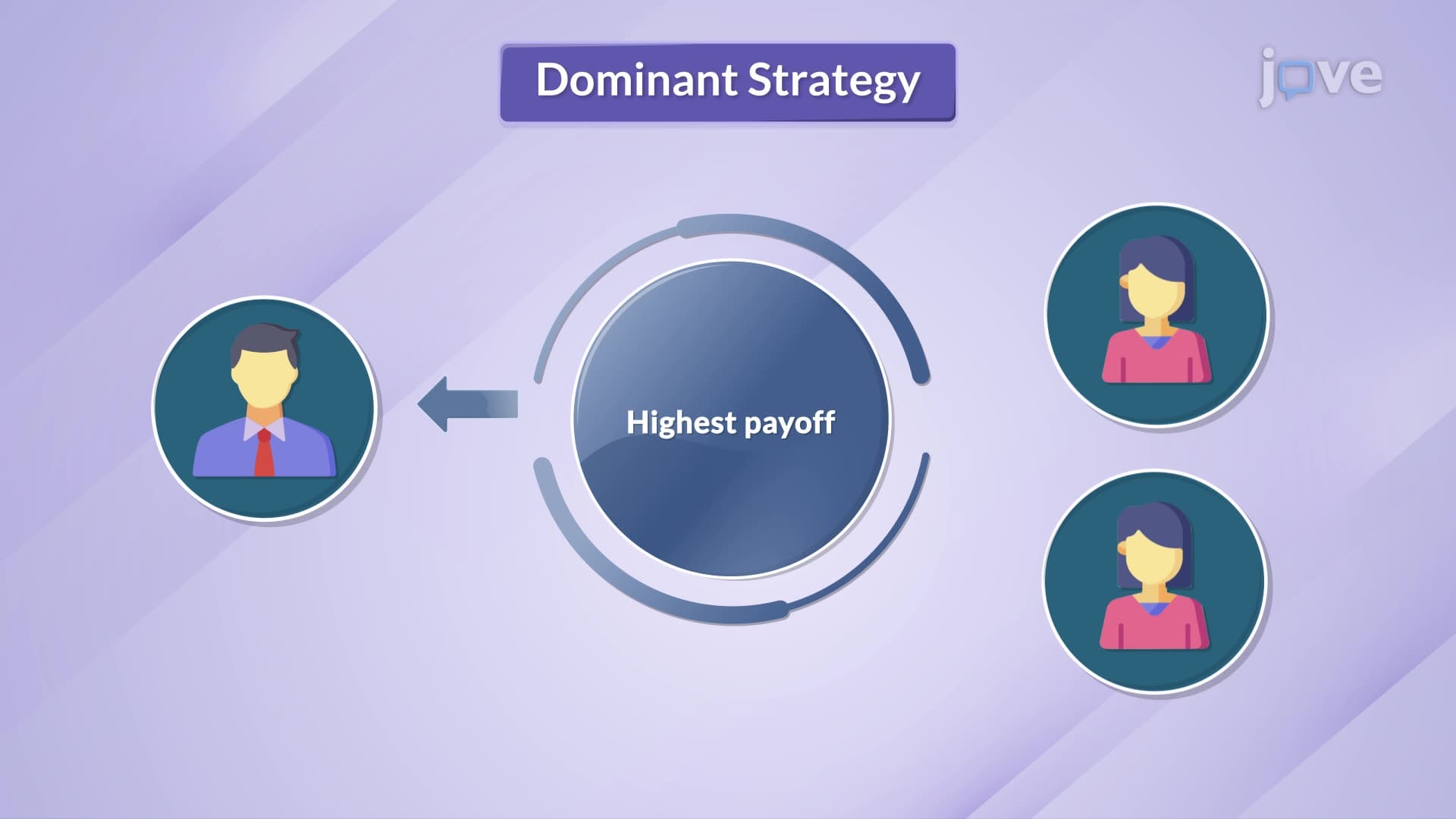
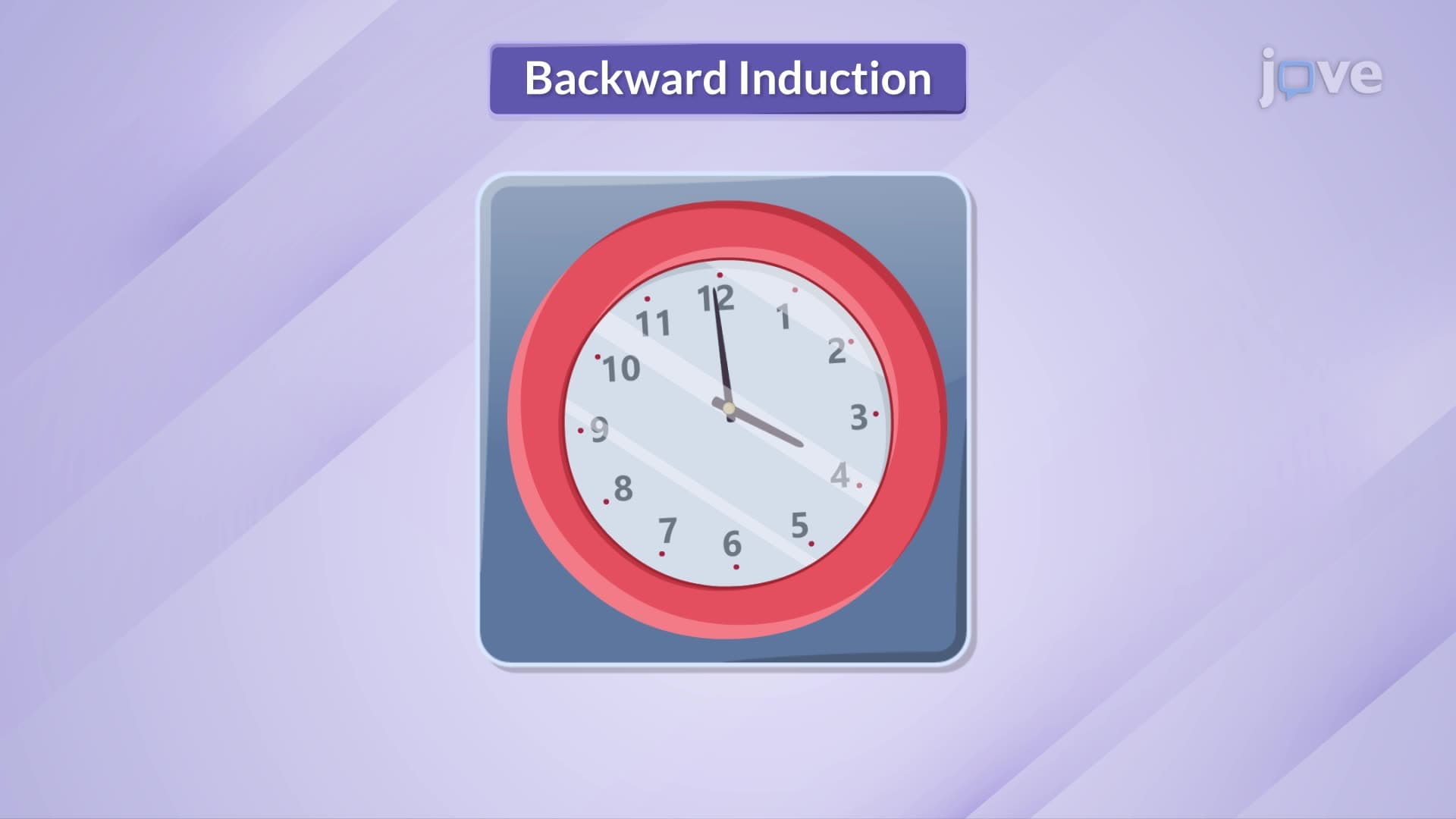
Backward induction provides the analytical framework for solving finitely repeated games. Starting from the final round, players determine optimal strategies when no future interactions exist. In the last period, players typically choose dominant strategies without considering reputation effects or future cooperation benefits.
This end-game logic cascades backward through previous rounds. If players know they'll compete aggressively in round 10, they anticipate this behavior in round 9, then round 8, and so forth. The mathematical precision of backward induction often predicts competitive outcomes throughout the entire game sequence.
Academic and Professional Relevance
Students preparing for AP Microeconomics exams frequently encounter finitely repeated games in market structure questions. The College Board emphasizes understanding how time horizons affect competitive behavior, making this concept essential for achieving top scores. Similarly, business school case studies often feature finite competition scenarios, preparing students for real-world strategic decision-making.
MBA programs at institutions like Wharton and Kellogg incorporate finitely repeated games into strategy coursework, demonstrating their practical importance in executive decision-making. Understanding these concepts proves crucial for consulting interviews, particularly with firms like McKinsey and Bain that emphasize strategic thinking.
Frequently Asked Questions
Finitely repeated games occur when players engage in the same strategic interaction a specific, predetermined number of times. Unlike single-shot games, players can observe and respond to past behaviors, but unlike infinitely repeated games, everyone knows exactly when the interactions will end. This finite horizon creates unique strategic dynamics where cooperation often unravels due to end-game effects.
AP Microeconomics frequently tests finitely repeated games through oligopoly scenarios and prisoner's dilemma variations. Students must analyze how firms behave differently when competition has a known endpoint versus ongoing interactions. Expect questions about backward induction reasoning and why cooperation fails when players know the game will end.
The key difference lies in the known endpoint of finitely repeated games. In infinitely repeated games, players can maintain cooperation through threat of future punishment, creating stable cooperative equilibria. However, finite games suffer from backward induction logic that unravels cooperation, often leading to competitive outcomes from the very first round.
Consider airline pricing during specific promotional periods, retail competition during holiday seasons, or pharmaceutical companies competing during limited patent windows. In each case, knowing when competition ends fundamentally changes strategic behavior compared to ongoing market rivalry. Companies often become more aggressive as deadlines approach.
Basic algebra and logical reasoning suffice for understanding finitely repeated games at the high school and undergraduate level. The concept emphasizes strategic thinking rather than complex calculations. Students comfortable with simple game theory matrices and sequential reasoning can master this topic effectively.
Practice backward induction problems starting with simple two-round games, then progress to longer sequences. Focus on understanding why rational players defect in final rounds and how this logic works backward. Create timeline diagrams showing how strategies change as the end approaches, and study real business examples.
Explore infinitely repeated games to understand how unlimited time horizons enable cooperation through trigger strategies. Additionally, study mixed-strategy equilibria and evolutionary game theory to deepen your strategic analysis skills. These concepts build naturally on finitely repeated game foundations.
Backward induction logic explains this phenomenon perfectly. Since players cannot punish defection after the final round, rational players will compete aggressively in the last period. Anticipating this final-round competition, players lose incentive to cooperate in earlier rounds, causing the entire cooperative structure to collapse.
Related Micro-courses