Loading video…


 22 Concepts
 5K views

Video Summary: Cooperative Vs Non Cooperative Games Explained
Ever wonder why Netflix and Hulu don't start brutal pricing wars that could destroy both companies? The answer lies in understanding cooperative non cooperative games, strategic scenarios where players either work together or compete independently. In non-cooperative games like presidential elections, candidates make independent strategic decisions without formal agreements, while cooperative games allow players to form beneficial alliances, such as when major US airlines coordinate flight schedules to maximize profits. Cooperative VS Non Cooperative Games Explained reveals how these fundamental game theory concepts shape everything from business strategy to political campaigns. Watch the full video on JoVE Coach to master this concept with expert-led visuals and step-by-step explanations.
Game theory provides a mathematical framework for analyzing strategic interactions between rational decision-makers. The fundamental distinction between cooperative non cooperative games lies in whether players can form binding agreements and communicate effectively to coordinate their strategies.
In non-cooperative games, players make decisions independently without the ability to form enforceable agreements. Each participant must anticipate others' moves while pursuing their individual objectives. The classic prisoner's dilemma exemplifies this concept, two suspects arrested separately cannot communicate and must decide whether to confess or remain silent, knowing their fate depends on both their choice and their partner's unknown decision.
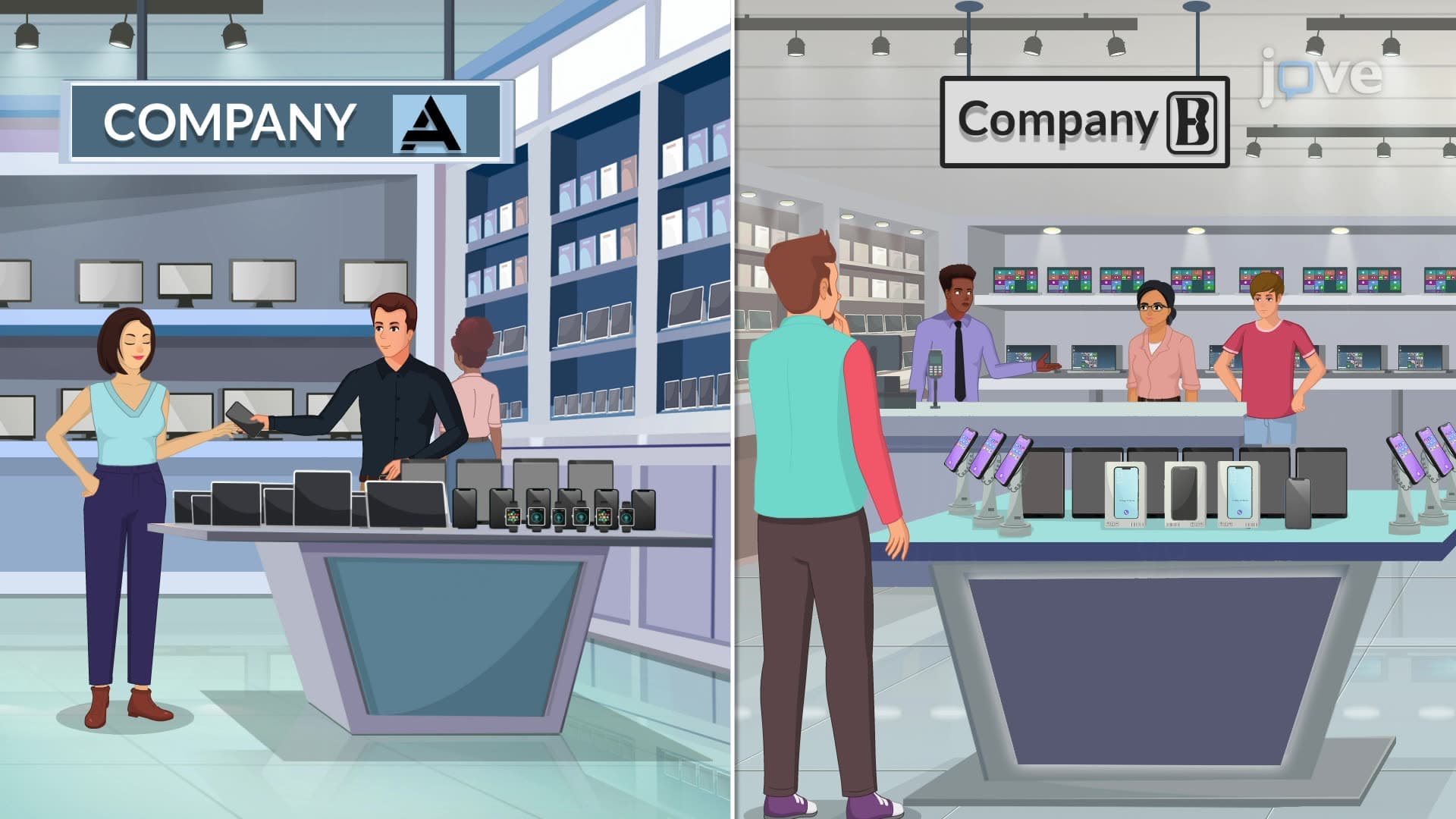
Consider the smartphone market competition between Apple and Samsung. Both companies make strategic decisions about pricing, product features, and marketing campaigns without formal coordination. Each must anticipate the competitor's moves while maximizing their own market share and profits. This reflects the essence of non-cooperative game theory, where players operate in strategic isolation despite mutual interdependence.
US college admissions represent another non-cooperative game scenario. Students applying to competitive universities like Harvard or Stanford cannot coordinate their applications or share strategies. Each applicant must independently decide which schools to apply to, how to craft their essays, and where to invest their time and resources, all while competing against thousands of other independent decision-makers.
Cooperative games allow players to communicate, negotiate, and form binding agreements that benefit multiple participants. Players can create coalitions, share information, and coordinate strategies to achieve outcomes superior to what they could accomplish independently.
The formation of business alliances exemplifies cooperative game theory. When Starbucks partners with Barnes & Noble to place coffee shops inside bookstores, both companies benefit from increased foot traffic and complementary services. This cooperative arrangement creates value that neither company could achieve alone, demonstrating how cooperative vs non cooperative games explained through real-world partnerships.
Professional sports leagues like the NFL illustrate cooperative game principles through revenue sharing agreements. Individual teams could compete entirely independently, but they recognize that coordinated scheduling, shared television contracts, and salary caps create greater overall value for all participants.
Understanding cooperative non cooperative definition proves essential for students taking AP Economics, business school entrance exams, and college-level game theory courses. The MCAT includes game theory questions in its psychological and behavioral sciences sections, while AP Microeconomics frequently tests students' ability to analyze market structures through game theory lenses.
Students preparing for these examinations should focus on identifying game characteristics, predicting equilibrium outcomes, and applying mathematical models to strategic scenarios. Practice problems often involve analyzing business competition, international trade negotiations, and resource allocation decisions using both cooperative and non-cooperative frameworks.
Related Micro-courses