Loading video…


 22 Concepts
 5K views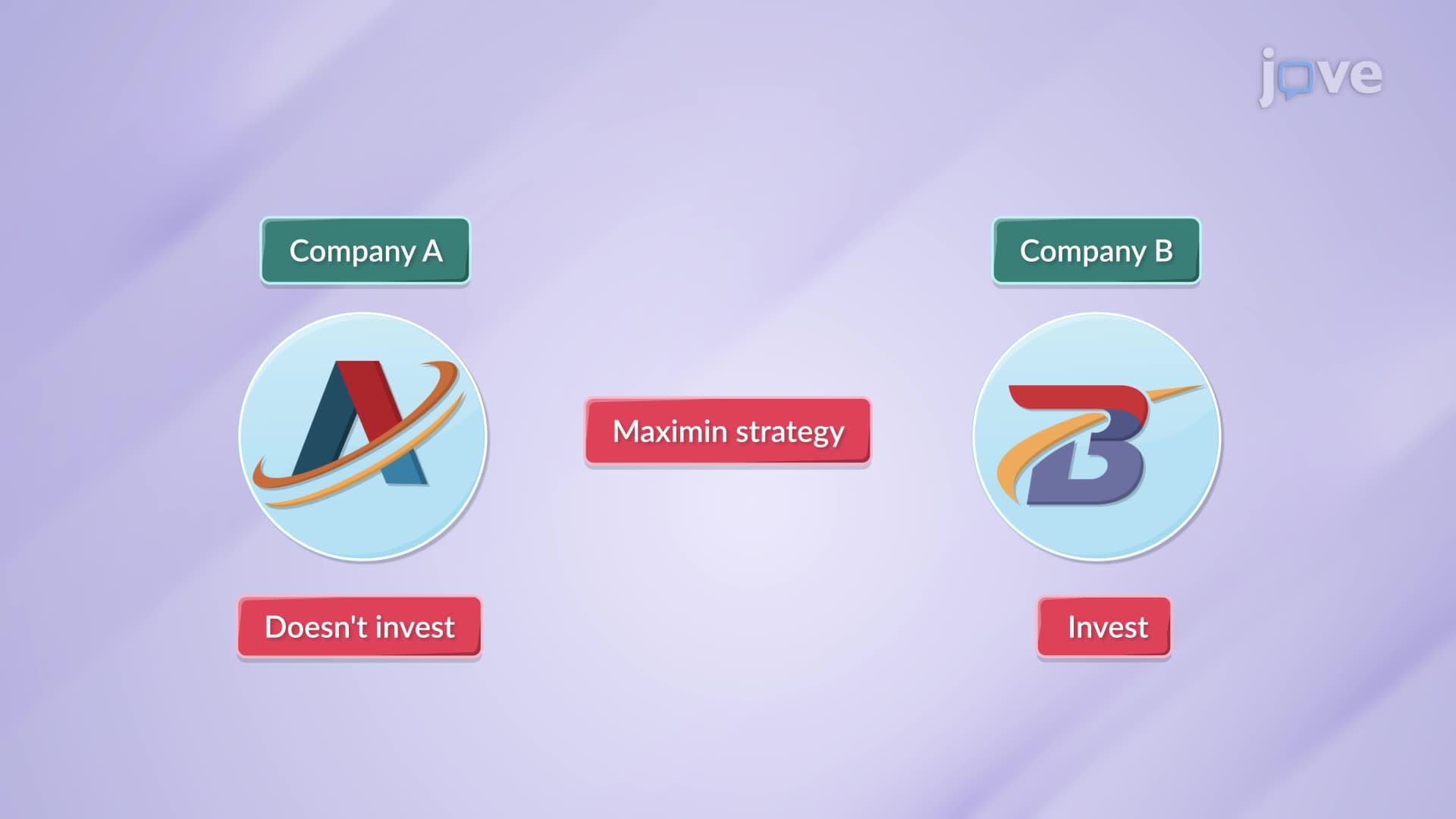

Video Summary: What Is the Maximin Strategy Ii
When Tesla and Electrify America face decisions about ultra-fast charging investments, how do they protect against worst-case scenarios? The maximin strategy offers a risk-averse approach where companies choose the option that maximizes their minimum possible payoff, essentially selecting the "best of the worst" outcomes. In electric vehicle charging markets, this conservative decision-making framework helps companies like ChargePoint avoid catastrophic losses while potentially limiting upward profit potential. Watch the full video on JoVE Coach to master this concept with expert-led visuals and step-by-step explanations.
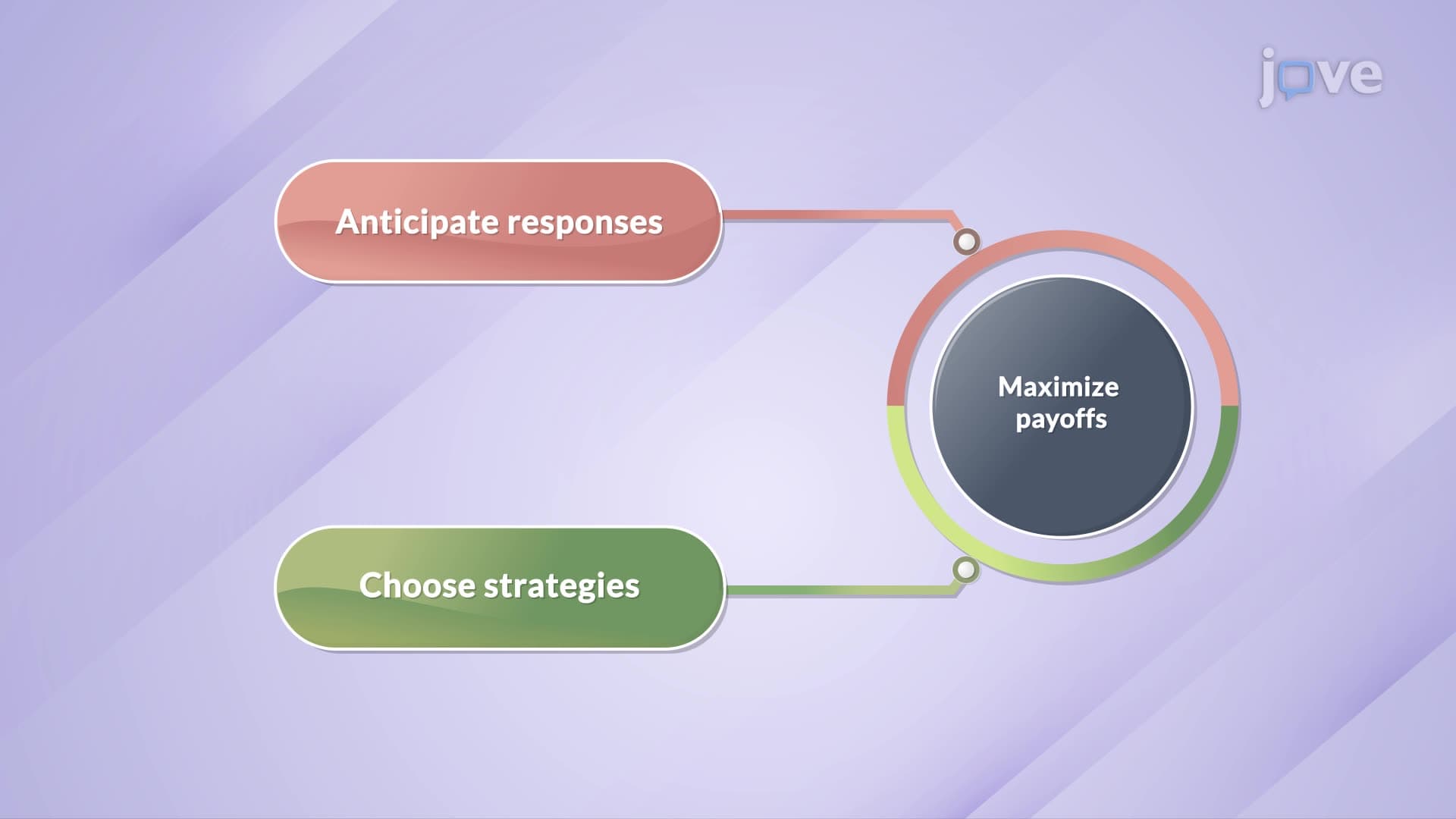
The maximin strategy represents a fundamentally conservative approach to decision-making under uncertainty, where players focus on avoiding the worst possible outcomes rather than pursuing maximum gains. This risk-averse framework proves particularly valuable when companies face significant downside risks or operate in highly volatile markets where catastrophic losses could threaten organizational survival.
To implement a maximin strategy, decision-makers follow a systematic three-step process. First, identify the minimum payoff for each available strategic option. Second, compare these minimum payoffs across all choices. Third, select the option that yields the highest minimum payoff-essentially choosing the "best of the worst" scenarios. This methodical approach ensures protection against catastrophic outcomes while maintaining some upside potential.
Consider the electric vehicle charging example: Company A faces minimum payoffs of -10 (no investment) versus -80 (investment), making non-investment the maximin choice. Company B sees minimum payoffs of 0 (no investment) versus 10 (investment), favoring investment. These calculations demonstrate how identical market conditions can lead to opposite maximin strategies based on each company's specific payoff structure.
Maximin strategy concepts frequently appear in American business contexts, from pharmaceutical companies deciding on drug development investments to tech startups choosing market entry strategies. Amazon's gradual expansion into new product categories often reflects maximin thinking, testing markets with limited initial investment to avoid major losses while learning about consumer demand.
This conservative approach becomes particularly relevant during economic uncertainty, such as during the 2008 financial crisis when many companies adopted maximin-like strategies to preserve cash and avoid bankruptcy. Similarly, during the COVID-19 pandemic, restaurant chains like McDonald's used maximin thinking when deciding whether to invest in delivery infrastructure or maintain traditional operations.
Students encounter maximin strategy problems on AP Microeconomics exams, college game theory courses, and business strategy assessments. These problems typically present payoff matrices requiring students to identify minimum values, compare options, and explain why maximin choices might differ from Nash equilibrium solutions. Understanding this concept proves essential for GMAT quantitative sections and graduate-level economics coursework, where strategic decision-making under uncertainty forms a core component of business analysis.
Related Micro-courses