Loading video…


 22 Concepts
 5K views

Video Summary: What Is Entry Deterrence Credibility Applied
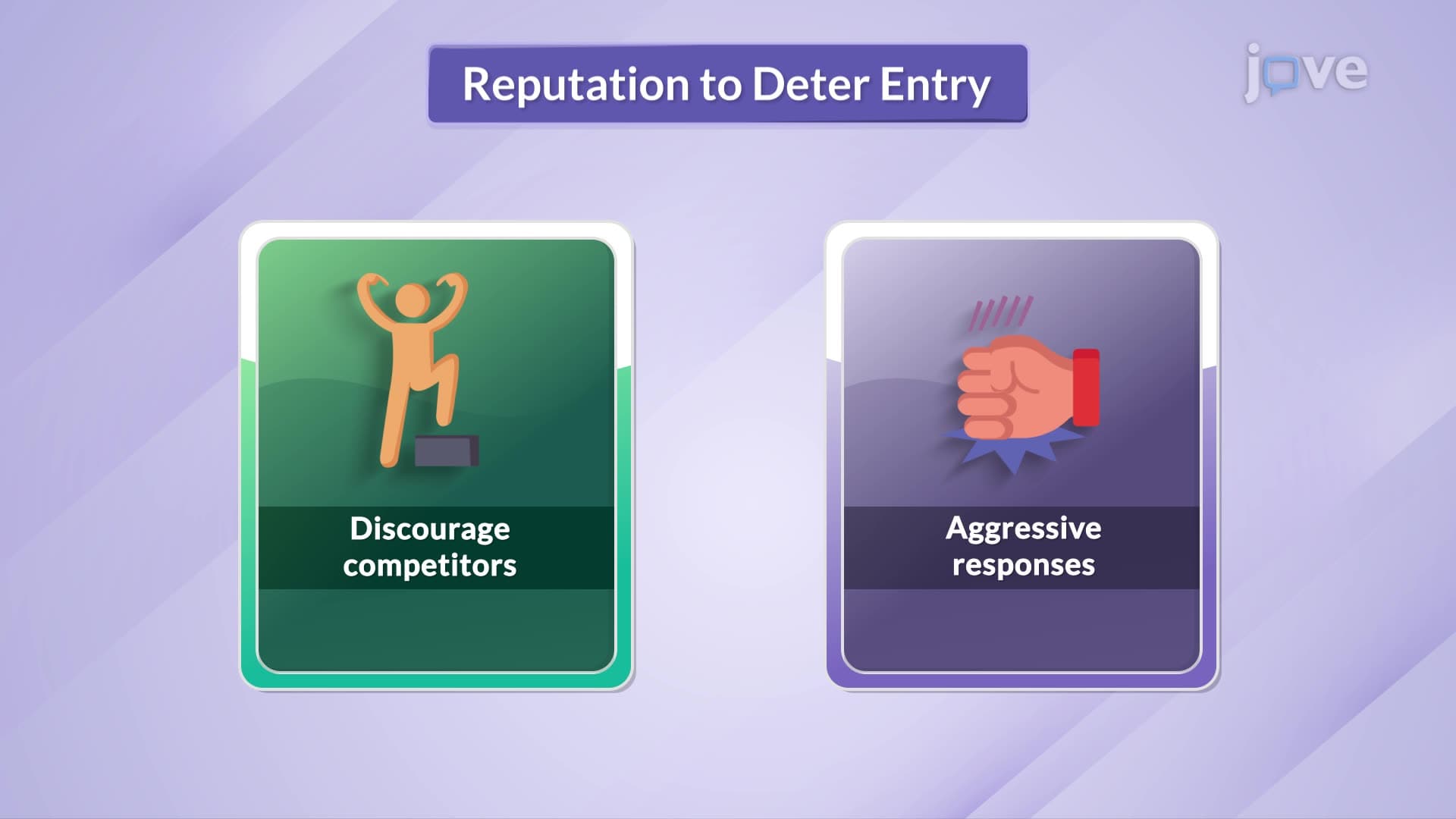
Why do potential competitors sometimes avoid entering profitable markets even when they could succeed? Entry deterrence credibility applied explains how established companies use believable threats to discourage new entrants, protecting their market position through strategic signaling rather than actual competition. Amazon's aggressive pricing when competitors enter their product categories exemplifies this powerful economic strategy. Understanding what is entry deterrence credibility applied reveals how market leaders maintain dominance by making entry appear too risky for potential rivals. Watch the full video on JoVE Coach to master this concept with expert-led visuals and step-by-step explanations.
Entry deterrence credibility applied represents a sophisticated game theory concept where established firms use believable threats to prevent potential competitors from entering their markets. Unlike simple intimidation, this strategy requires careful economic calculation and often substantial upfront investment to make threats appear genuine and rational to potential entrants.
The credibility component distinguishes effective deterrence from empty threats. For deterrence to work, the threatened action must appear economically logical for the incumbent firm to actually execute. This creates a fascinating paradox: the most effective deterrent threats are often those the company hopes never to use, but could realistically implement if necessary.
Major US corporations regularly employ entry deterrence strategies across industries. When Southwest Airlines enters new routes, established carriers often preemptively cut prices and increase flight frequency, signaling their willingness to engage in costly competition. Similarly, pharmaceutical companies invest heavily in patent portfolios and legal departments, creating credible threats of expensive litigation against potential generic competitors.
The technology sector provides particularly clear examples. When Facebook acquired Instagram and WhatsApp, these moves served dual purposes: eliminating existing competition while signaling to future social media startups that Facebook possessed both the resources and willingness to acquire or outcompete emerging threats.
The mathematical foundation of entry deterrence credibility applied relies on sequential game analysis where timing matters crucially. The incumbent firm moves first by establishing credible deterrent signals, then potential entrants respond based on their assessment of likely outcomes.
Key factors determining credibility include sunk costs, reputation effects, and strategic commitments. Airlines purchasing additional aircraft for specific routes, retailers signing long-term leases in prime locations, or technology companies investing in research and development all represent credible signals because these investments would be costly to abandon.
This concept appears frequently in AP Economics exams, college microeconomics courses, and MBA strategic management curricula. Students should focus on distinguishing credible from non-credible threats, analyzing payoff matrices, and understanding how strategic investments can alter game outcomes.
The Federal Trade Commission and Department of Justice regularly examine entry deterrence practices during antitrust investigations, making this concept essential for understanding US competition policy. Legal and business professionals must navigate the fine line between legitimate competitive strategy and anti-competitive behavior.
Related Micro-courses