Loading subject page…

- Microeconomics
- Game Theory
- Introduction to Game Theory
Micro-course: Game Theory
5,002 views
Learn key concepts and earn your certificate.


















Introduction to Game Theory


00:00
01:30
Video Summary: What Is Game Theory
When Netflix and Disney+ battle for subscribers, or when Walmart and Target compete on pricing, they're playing complex strategic games where each company's success depends on predicting their rival's next move. Game theory provides the mathematical framework to analyze these competitive scenarios, helping decision-makers understand how rational players interact when their outcomes are interconnected. Consider how two major airlines might strategically set flight prices on the same route-if one cuts prices, the other must decide whether to match or maintain higher fares. Watch the full video on JoVE Coach to master this concept with expert-led visuals and step-by-step explanations.
- Understand what is game theory and its fundamental role in analyzing strategic interactions between rational decision-makers
- Identify key components of strategic games including players, strategies, payoffs, and equilibrium outcomes
- Analyze real-world competitive scenarios using basic game theory frameworks and mathematical models
- Compare different types of strategic situations, from zero-sum games to cooperative scenarios
- Evaluate the Nash equilibrium concept and its applications in business and economic decision-making
- Apply game theory principles to predict outcomes in competitive markets and strategic interactions
- Recognize how game theory extends beyond economics into political science, biology, and computer science applications
- Explore the limitations and assumptions underlying game theory models in practical decision-making contexts
Understanding Game Theory Fundamentals
Game theory represents a revolutionary approach to understanding strategic decision-making in competitive environments. At its core, this mathematical discipline examines how rational players make choices when their outcomes depend not only on their own actions but also on the decisions of others. Unlike traditional economic models that focus on individual optimization, game theory recognizes that in many real-world situations, the best choice for one player depends critically on what others are likely to do.
The foundation of any game theory analysis rests on four essential elements: players (the decision-makers), strategies (available choices), payoffs (outcomes or rewards), and information (what each player knows). These components work together to create a structured framework for analyzing everything from corporate pricing decisions to international trade negotiations.
Types of Strategic Games and Market Applications
Strategic interactions can be classified into several categories, each with distinct characteristics and solution approaches. Simultaneous games occur when players make decisions at the same time without knowing others' choices-like when Amazon and eBay simultaneously set their shipping policies during holiday seasons. Sequential games involve players making decisions in a specific order, such as when Apple announces a new iPhone price and Samsung responds with its Galaxy pricing strategy.
Zero-sum games represent situations where one player's gain equals another's loss, commonly seen in stock trading or sports betting. However, most business scenarios involve non-zero-sum games where mutual benefit or mutual harm is possible. The classic "Prisoner's Dilemma" illustrates how individual rational choices can lead to collectively suboptimal outcomes-a principle regularly observed in price wars between competing retailers.
Nash Equilibrium and Real-World Predictions
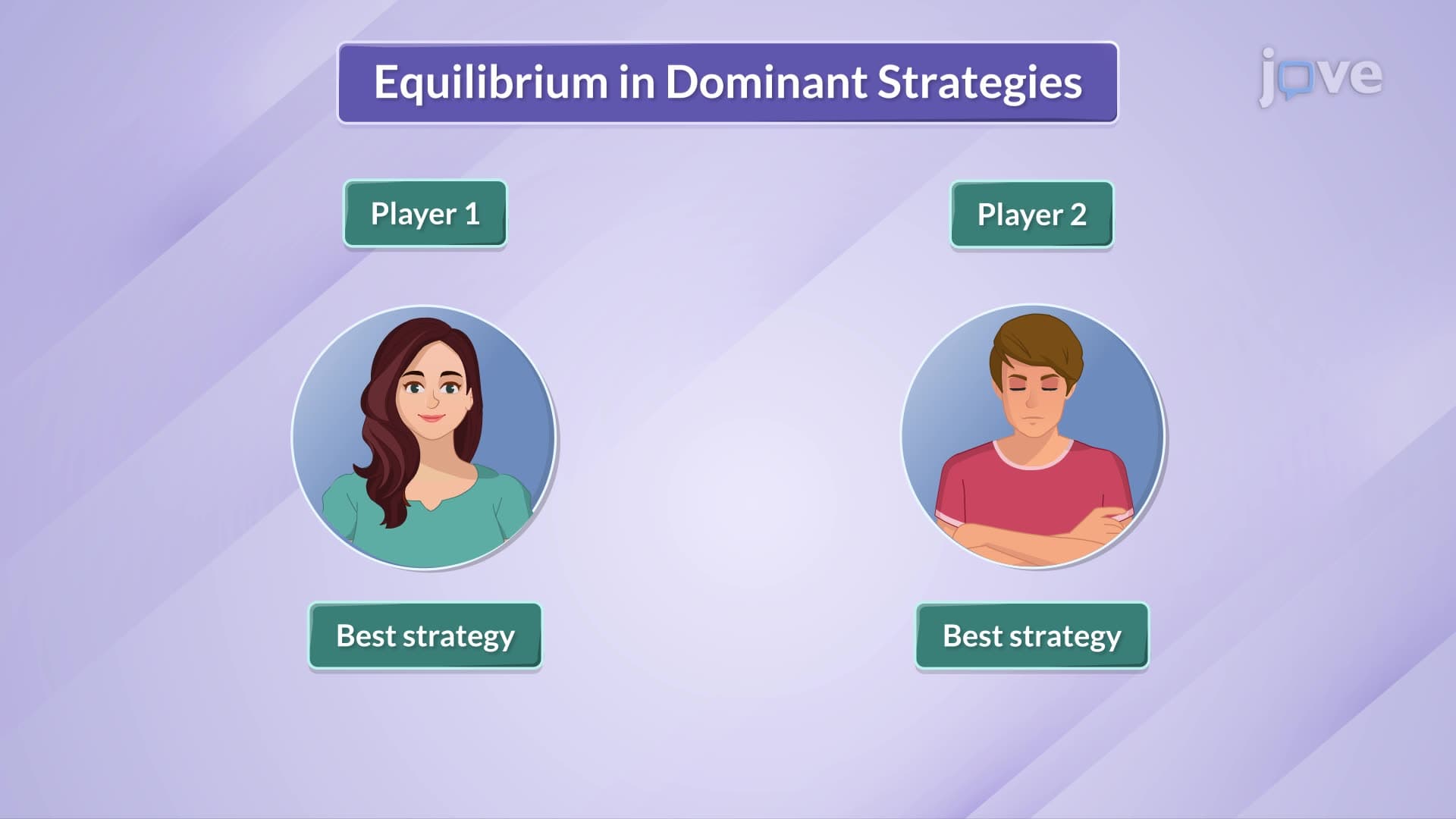
The Nobel Prize-winning concept of Nash equilibrium provides game theory's most powerful predictive tool. This equilibrium occurs when each player chooses their best strategy given the strategies chosen by all other players-essentially, no player can improve their outcome by unilaterally changing their strategy. In practice, this helps explain why gas stations on the same intersection often maintain similar prices, or why competing airlines frequently match each other's baggage fees.
For students preparing for AP Economics or college-level microeconomics courses, understanding Nash equilibrium is crucial for analyzing market structures and competitive behavior. The concept frequently appears on standardized tests and provides a foundation for more advanced topics in industrial organization and behavioral economics.
Applications Beyond Economics
While game theory originated in economics, its applications have expanded dramatically across disciplines. In political science, it explains voting strategies and international relations. Computer scientists use game theory to design algorithms for network routing and cybersecurity. Evolutionary biologists apply these principles to understand animal behavior and natural selection processes.
For students, recognizing these cross-disciplinary applications enhances critical thinking skills and provides valuable analytical tools applicable across STEM and social science fields. Understanding game theory fundamentals prepares students for advanced coursework in economics, political science, computer science, and even psychology programs at major US universities.
Frequently Asked Questions
Game theory is the mathematical study of strategic interactions between rational decision-makers whose outcomes depend on others' choices. It's crucial because it provides analytical tools to predict behavior in competitive situations, from business pricing strategies to political negotiations. This framework helps decision-makers anticipate competitors' moves and choose optimal strategies in complex, interconnected environments.
Game theory concepts frequently appear on AP Microeconomics exams through prisoner's dilemma scenarios, Nash equilibrium problems, and oligopoly market analysis questions. College microeconomics courses typically include game theory in 15-20% of exam content, focusing on strategic firm behavior, price competition, and market entry decisions. Students should practice identifying dominant strategies and calculating equilibrium outcomes.
Non-cooperative games involve players making independent decisions without binding agreements, like competing firms setting prices simultaneously. Cooperative games allow players to form coalitions and make binding commitments, such as companies forming joint ventures or cartels. Most real-world business scenarios involve non-cooperative elements, making this distinction crucial for analyzing competitive markets and strategic alliances.
While game theory rarely appears directly on the MCAT, its logical reasoning principles support critical thinking sections and behavioral science passages. Business school entrance exams (GMAT, GRE) occasionally include game theory logic problems. The analytical skills developed through studying game theory enhance performance on any test requiring strategic reasoning and decision analysis.
Tech giants regularly apply game theory when timing product launches, setting prices, and choosing market entry strategies. Apple's iPhone release timing considers Samsung's Galaxy launch schedule, while Microsoft's Xbox pricing reflects Sony's PlayStation strategies. These companies employ game theorists to analyze competitive responses and optimize strategic decisions in multi-billion-dollar markets.
Basic game theory requires only high school algebra and logical reasoning skills, making it accessible to most students. While advanced applications involve calculus and probability theory, introductory concepts focus on strategic thinking rather than complex mathematics. Students comfortable with basic equations and logical analysis can successfully master fundamental game theory principles.
Practice with real-world examples and work through numerous prisoner's dilemma variations to build intuition. Create payoff matrices for familiar scenarios like restaurant competition or streaming service pricing. Focus on identifying dominant strategies before calculating Nash equilibria, and always verify your solutions by checking if any player wants to deviate from the proposed equilibrium.
After mastering fundamentals, explore behavioral game theory, which incorporates psychological factors into strategic analysis. Mechanism design and auction theory provide practical applications in business and public policy. Evolutionary game theory offers fascinating insights into biological and social systems, while algorithmic game theory bridges computer science and strategic analysis for students interested in technology applications.
Related Micro-courses