Loading subject page…

- Microeconomics
- Game Theory
- Infinitely Repeated Games
Micro-course: Game Theory
5,002 views
Learn key concepts and earn your certificate.



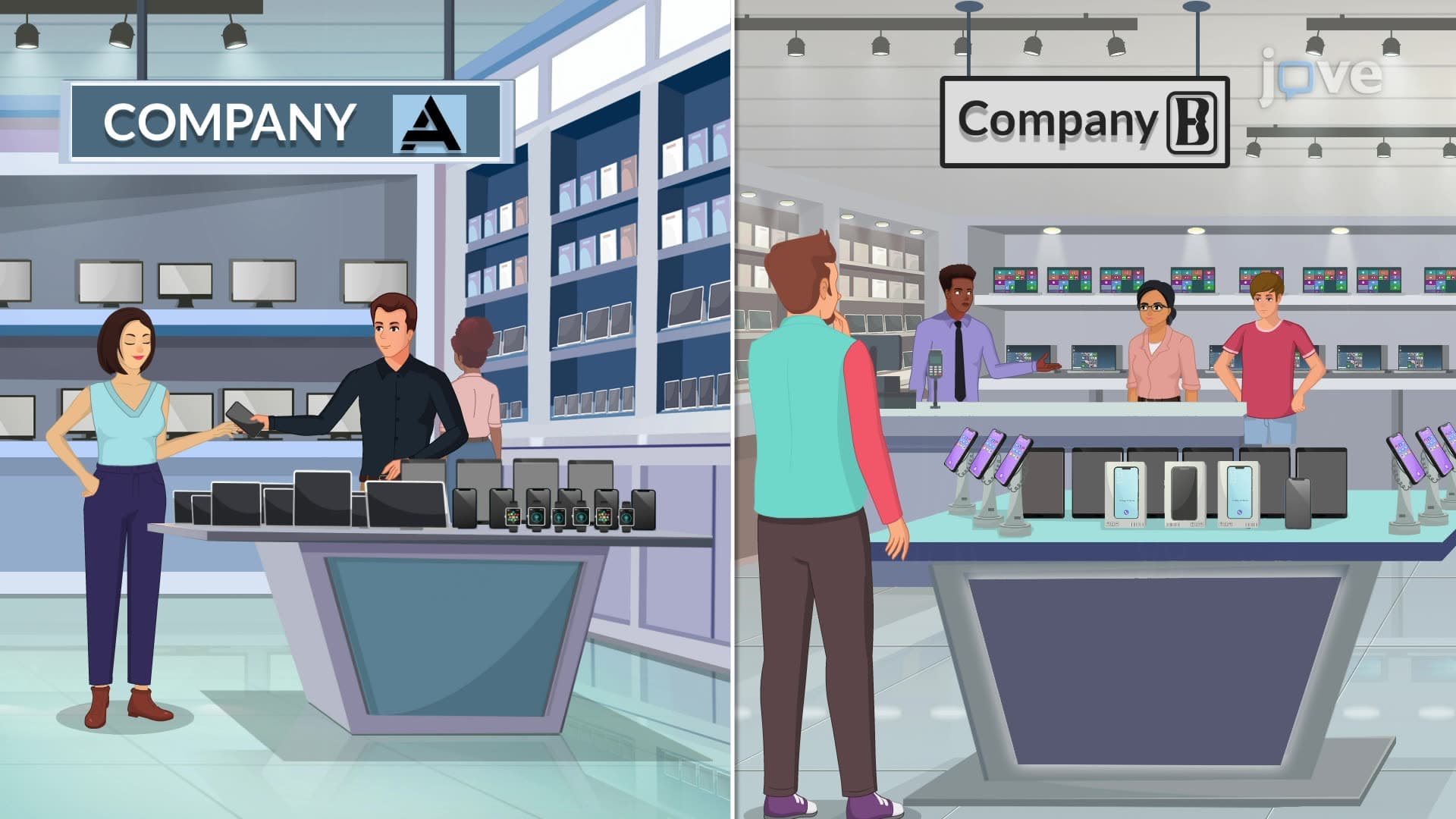






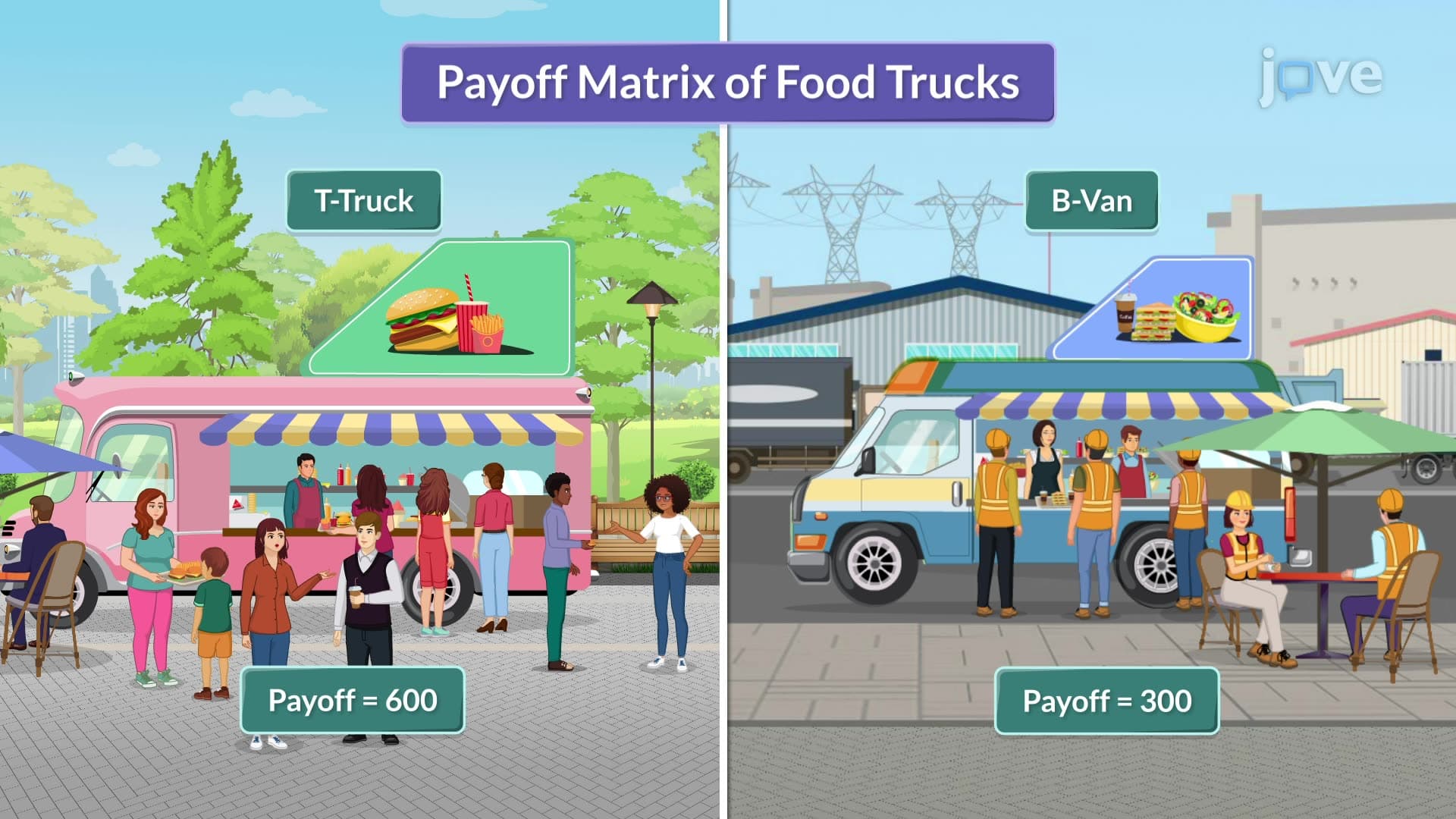

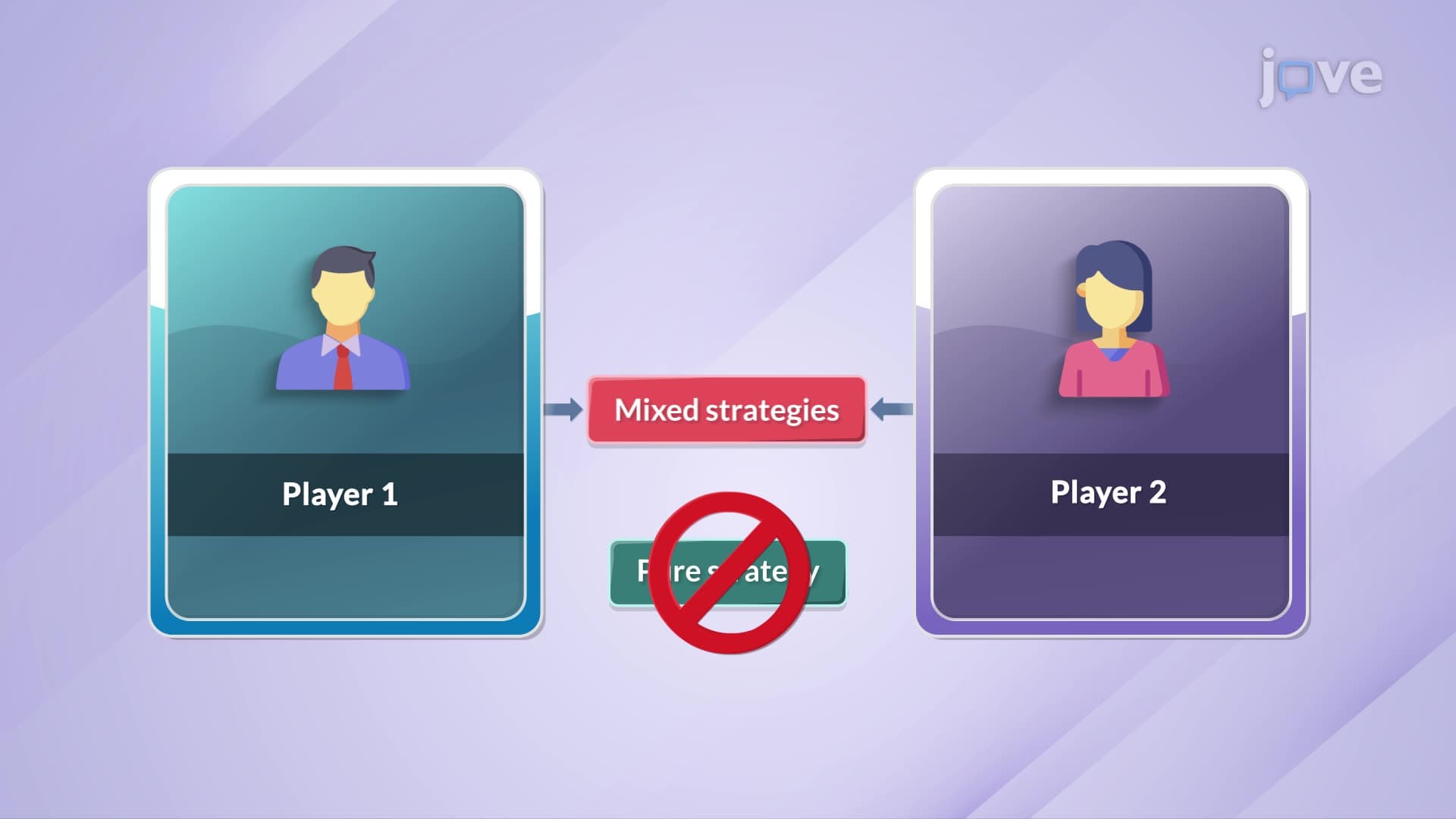








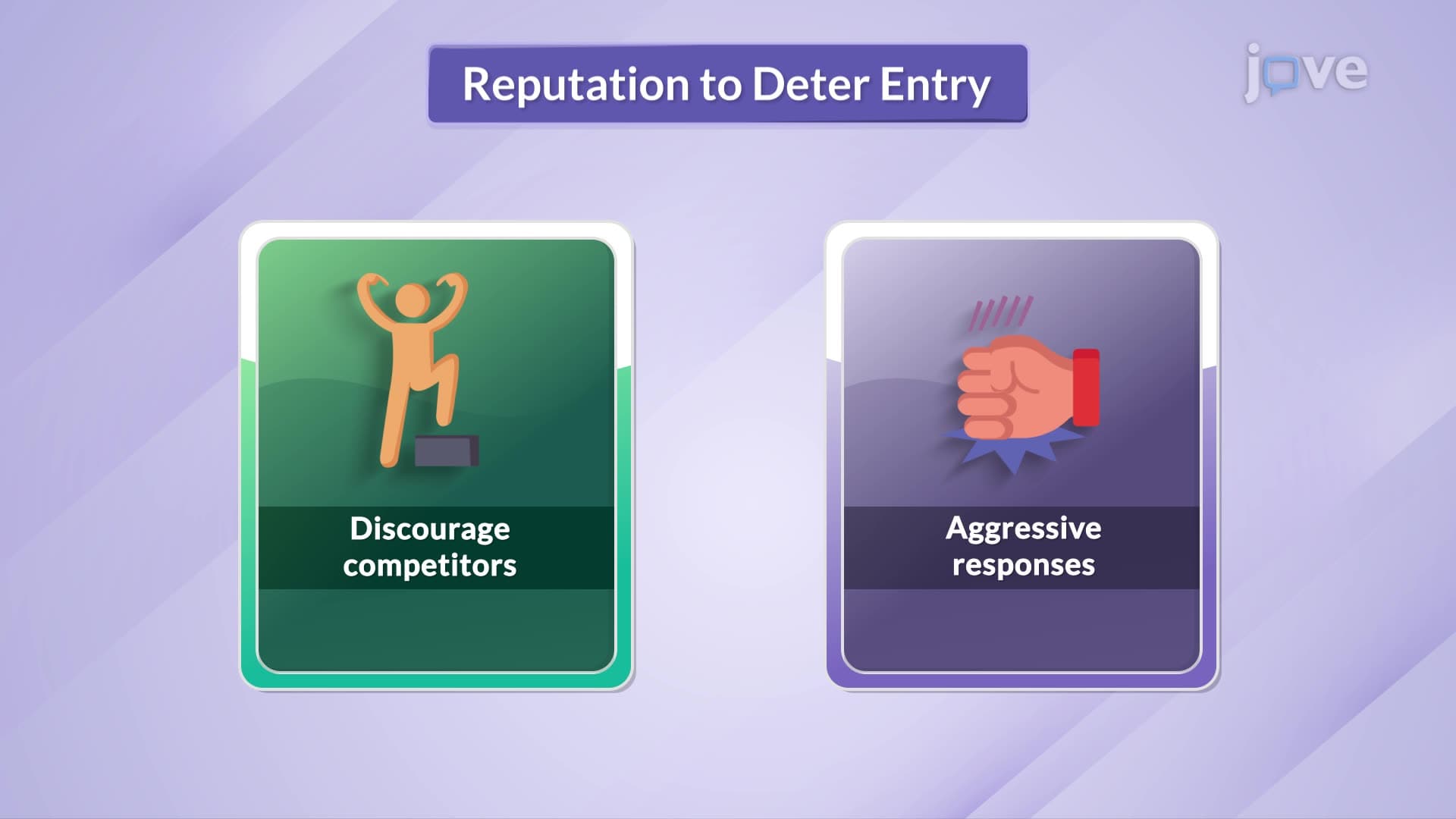
Infinitely Repeated Games


00:00
01:28
Video Summary: What Is Infinitely Repeated Games
Ever wonder why Coca-Cola and Pepsi rarely engage in devastating price wars despite fierce competition? Infinitely repeated games explain this strategic behavior where players engage in the same competitive scenario multiple times without a predetermined endpoint. Companies like these beverage giants use tit-for-tat strategies to maintain profitable cooperation over time, recognizing that short-term gains from price cutting pale compared to long-term mutual benefits. Watch the full video on JoVE Coach to master this concept with expert-led visuals and step-by-step explanations.
- Understand what infinitely repeated games are and how they differ from single-shot strategic interactions
- Identify the key characteristics that make cooperation sustainable in repeated competitive scenarios
- Analyze the tit-for-tat strategy and its role in maintaining long-term cooperation between competitors
- Compare short-term versus long-term payoffs in repeated game scenarios
- Evaluate real-world examples of sustained cooperation in business and international relations
- Apply game theory principles to predict outcomes in ongoing competitive relationships
- Recognize how the shadow of the future influences present strategic decisions
- Explore the conditions necessary for cooperative equilibrium in competitive markets
Understanding Infinitely Repeated Games
Infinitely repeated games represent a fundamental concept in game theory where the same strategic interaction occurs repeatedly without a known endpoint. Unlike single-shot games where players make one-time decisions, these scenarios allow for the development of reputation, trust, and strategic patterns that can sustain cooperation even among competitors.
The Mechanics of Sustained Cooperation
The key insight behind infinitely repeated games lies in how future consequences shape present behavior. When players know they'll interact repeatedly, the threat of retaliation in future rounds can deter short-term opportunistic behavior. This creates what economists call the "shadow of the future", where anticipation of ongoing interaction promotes cooperative strategies.
The tit-for-tat strategy exemplifies this principle perfectly. Players begin cooperatively, continue cooperating as long as opponents do likewise, and immediately punish defection with their own non-cooperative response. This strategy succeeds because it's nice (starts cooperatively), retaliatory (punishes defection), and forgiving (returns to cooperation when opponents do).
Real-World Applications in American Markets
Consider the airline industry, where major carriers like American Airlines, Delta, and United could theoretically engage in destructive price wars. Instead, they often maintain relatively stable pricing structures, understanding that sustained profitability benefits everyone more than temporary market share gains. When one airline cuts prices dramatically, others typically match quickly, demonstrating the tit-for-tat principle in action.
Similarly, pharmaceutical companies often avoid patent wars that could devastate entire research pipelines. Instead, they engage in cross-licensing agreements and maintain pricing disciplines that preserve industry-wide profitability while still competing on innovation and market access.
Academic and Professional Applications
For students preparing for AP Microeconomics exams or college-level game theory courses, understanding infinitely repeated games is crucial for analyzing oligopoly behavior, international trade negotiations, and regulatory compliance scenarios. These concepts frequently appear in multiple-choice questions about market structures and strategic business decisions.
In MBA programs and economics graduate studies, infinitely repeated games form the foundation for understanding complex business relationships, supply chain partnerships, and competitive dynamics in concentrated industries. The mathematical models underlying these games, while complex in advanced applications, rest on intuitive principles about how rational actors balance immediate gains against future relationship value.
Frequently Asked Questions
Infinitely repeated games occur when the same competitive situation happens over and over without a predetermined end date. Players make strategic decisions knowing they'll face the same opponents repeatedly, which encourages cooperation over short-term advantage-seeking. Think of it like neighboring businesses that must coexist profitably rather than destroy each other through price wars.
AP Microeconomics frequently tests this concept through oligopoly scenarios where firms must choose between cooperation and competition. Expect questions about tit-for-tat strategies, prisoner's dilemma variations, and why sustained cooperation might emerge even without explicit agreements. Focus on understanding how future interactions influence present decisions.
Absolutely, especially in intermediate microeconomics and game theory courses. College exams typically require deeper mathematical analysis, including calculating equilibrium conditions and comparing payoffs across different time horizons. Practice identifying when cooperation is sustainable versus when it breaks down.
The relationship between major credit card companies like Visa and Mastercard illustrates this perfectly. Rather than engaging in destructive fee wars that would hurt both companies, they maintain relatively stable interchange rates and focus competition on merchant services and consumer benefits, recognizing their ongoing interdependence.
Not for introductory understanding, though calculus helps with advanced applications. High school students can grasp the core concepts using basic arithmetic and logical reasoning about payoffs over time. Focus first on understanding the strategic logic before diving into mathematical formulations.
Create comparison charts showing short-term versus long-term payoffs in different scenarios. Practice identifying when cooperation will emerge naturally versus when it requires external enforcement. Work through examples of tit-for-tat strategies and understand why the "shadow of the future" matters for present decisions.
Consider studying Nash equilibrium refinements, reputation models, and mechanism design. These concepts build naturally from repeated game foundations and appear frequently in advanced economics courses and graduate school preparation.
Related Micro-courses