Loading subject page…


5,003 views


Video Summary: What Is Prisoners Dilemma Ii
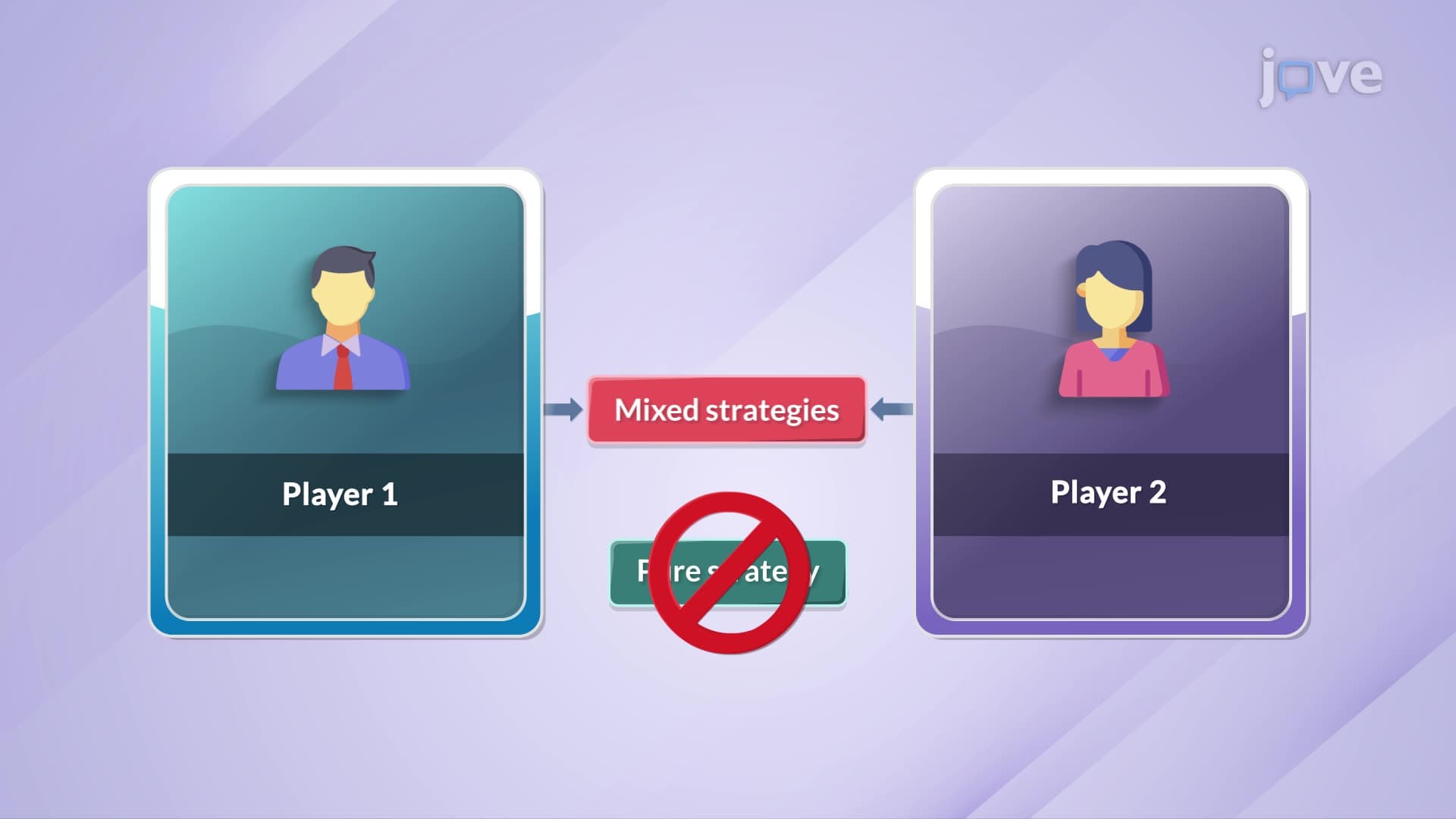
When two suspects are arrested for a crime they committed together, why do they almost always betray each other instead of staying loyal? The prisoner's dilemma reveals a fascinating paradox where rational self-interest leads to outcomes that hurt everyone involved. Consider two corporate executives caught price-fixing-each faces the choice to cooperate with prosecutors or stay silent, knowing their partner faces the same decision. What is Prisoner's Dilemma II demonstrates how Nash Equilibrium emerges when both players choose the dominant strategy of betrayal, even though mutual cooperation would benefit them more. Watch the full video on JoVE Coach to master this concept with expert-led visuals and step-by-step explanations.
The prisoner's dilemma represents one of game theory's most powerful illustrations of strategic interaction. This classic scenario reveals why two rational individuals might not cooperate even when it would be in their mutual interest to do so. The "II" designation often refers to advanced analysis beyond the basic setup, focusing on Nash Equilibrium identification and strategic reasoning.
In the prisoner's dilemma matrix, Nash Equilibrium occurs when both players choose to betray (defect). This outcome emerges because betrayal represents each player's dominant strategy-the best response regardless of what the opponent chooses. From Suspect A's perspective, if B remains silent, betraying yields freedom (0 years) versus one year in prison. If B betrays, A still prefers betraying (2 years) over remaining silent (3 years). The same logic applies to Suspect B, creating a stable equilibrium where neither player benefits from unilateral strategy changes.
This concept appears frequently on AP Microeconomics exams and college economics courses, where students must identify Nash Equilibria in various market scenarios. Business schools often use prisoner's dilemma to explain competitive dynamics in oligopolistic markets, such as airline pricing wars or pharmaceutical patent races.
The prisoner's dilemma demonstrates how risk aversion drives strategic choices. Players choose betrayal not necessarily to maximize their best-case scenario, but to avoid their worst-case outcome-being betrayed while remaining loyal. This risk-minimizing behavior creates what economists call a "dominant strategy equilibrium," where one strategy dominates all others regardless of opponent actions.
College students studying for MCAT behavioral sciences sections encounter similar decision-making frameworks when analyzing patient compliance or healthcare provider strategies. The underlying principle-individual optimization leading to collective suboptimization-appears across disciplines from psychology to public policy.
American businesses frequently face prisoner's dilemma situations. Consider two competing pharmaceutical companies deciding whether to invest in expensive R&D or free-ride on competitor innovations. Each company's rational self-interest might discourage innovation investment, potentially reducing overall industry advancement. Similarly, environmental regulation compliance presents classic prisoner's dilemma dynamics-companies benefit collectively from clean practices but individually from cutting environmental corners.
Understanding these strategic interactions helps students tackle case studies in business school applications and prepares them for real-world decision-making scenarios they'll encounter in their careers.
Related Micro-courses