Loading subject page…

- Microeconomics
- Oligopoly
- Public Policy under Oligopoly: Antitrust Laws
Micro-course: Oligopoly
3,604 views
Learn key concepts and earn your certificate.


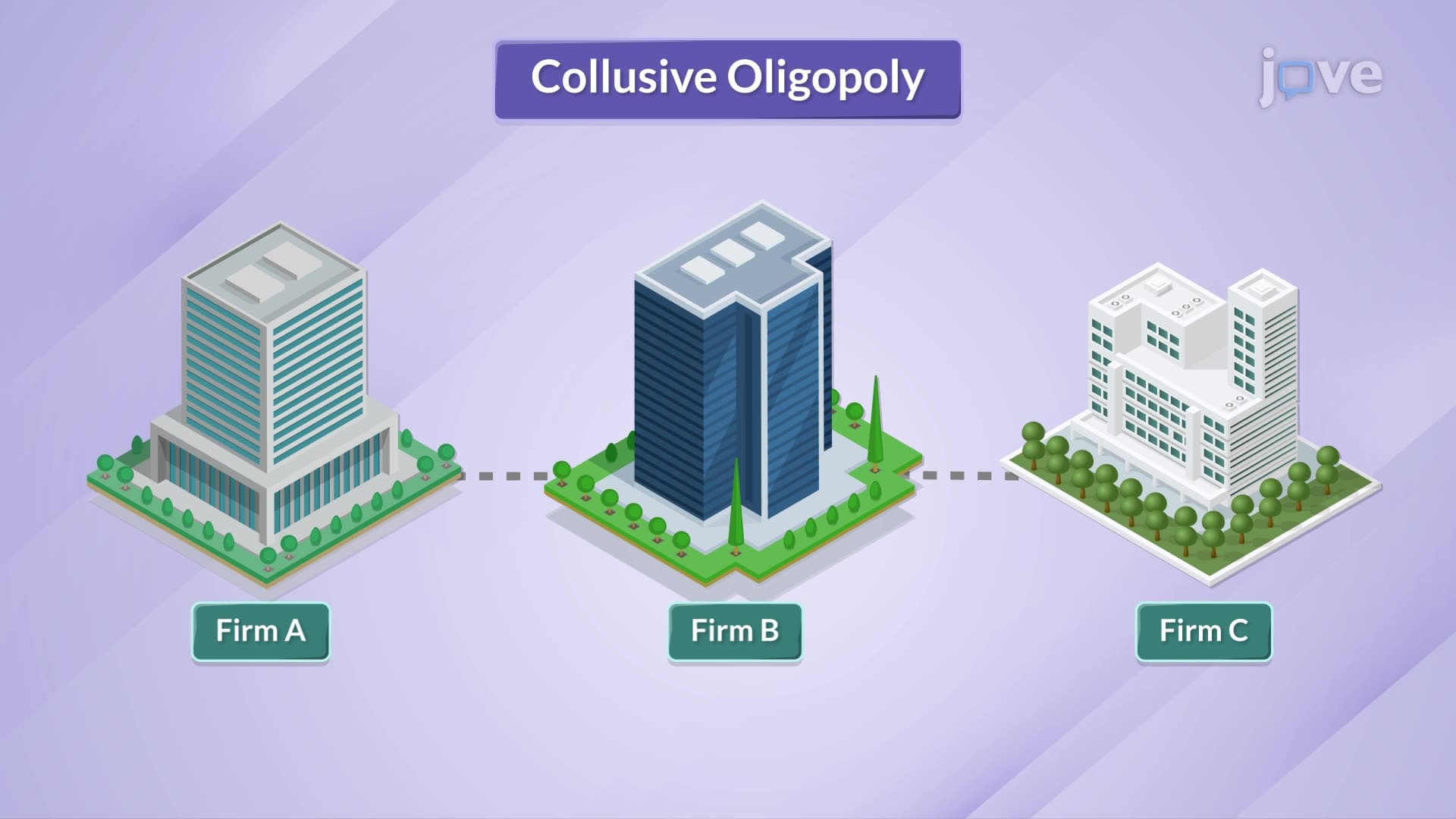











Public Policy under Oligopoly: Antitrust Laws


00:00
01:30
Video Summary: Public Policy Under Oligopoly Antitrust Laws Explained
Did you know that when Apple, Google, Adobe, and Intel were caught agreeing not to poach each other's employees, they paid over $400 million in settlements? Public policy under oligopoly becomes critical when a few large firms dominate markets and potentially harm consumer welfare. The Sherman Antitrust Act of 1890 exemplifies how Public Policy Under Oligopoly Antitrust Laws Explained protects American consumers from price-fixing schemes and market manipulation by major corporations. Watch the full video on JoVE Coach to master this concept with expert-led visuals and step-by-step explanations.
- Understand how Public Policy Under Oligopoly Antitrust Laws Explained serves as the foundation for maintaining competitive markets in industries dominated by few firms
- Identify specific anticompetitive practices prohibited by US antitrust legislation, including price fixing, predatory pricing, and market allocation schemes
- Analyze the historical significance and provisions of the Sherman Antitrust Act of 1890 in regulating oligopolistic behavior
- Compare different enforcement mechanisms used by federal agencies to prevent collusion among oligopolistic firms
- Evaluate real-world cases where antitrust laws successfully challenged oligopolistic market structures and practices
- Apply knowledge of antitrust principles to assess whether specific business practices violate competition laws
- Recognize the balance between allowing legitimate business cooperation and preventing harmful anticompetitive conduct
- Explore how modern digital markets present new challenges for traditional antitrust enforcement strategies
Understanding Public Policy Under Oligopoly Antitrust Framework
Public policy under oligopoly represents government intervention designed to prevent market failures when few firms control entire industries. Unlike perfect competition, oligopolies create unique challenges where companies can coordinate behavior to exploit consumers through higher prices, reduced innovation, and limited choices. The federal government responds through comprehensive antitrust legislation that specifically targets these concentrated market structures.
Historical Development of US Antitrust Policy
The Sherman Antitrust Act of 1890 emerged during America's Gilded Age when industrial giants like Standard Oil and Carnegie Steel dominated their respective markets. This landmark legislation established two fundamental prohibitions: Section 1 outlaws contracts, combinations, or conspiracies that restrain trade, while Section 2 prohibits monopolization attempts. The Clayton Act (1914) later strengthened these provisions by addressing specific practices like exclusive dealing arrangements and interlocking directorates.
Key Prohibited Practices in Oligopolistic Markets
Modern antitrust enforcement focuses on several critical areas. Price fixing occurs when competitors agree on pricing strategies rather than competing independently-like when major airlines coordinate ticket prices on popular routes. Market allocation involves dividing territories or customers among competitors, as seen in construction industry bid-rigging cases. Predatory pricing targets competitors through below-cost pricing designed to eliminate competition, then raising prices once rivals exit the market.
Contemporary Enforcement and Academic Applications
Students preparing for AP Economics exams frequently encounter oligopoly antitrust questions requiring analysis of specific scenarios. The Department of Justice and Federal Trade Commission regularly challenge mergers that would create excessive market concentration, such as blocking the proposed T-Mobile/Sprint merger initially due to competitive concerns. College-level microeconomics courses emphasize how antitrust policy creates dynamic tension between economic efficiency and competitive market structures, making this topic essential for business and economics majors.
Frequently Asked Questions
Public policy under oligopoly antitrust laws refers to government regulations that prevent few large firms from abusing market power. These policies include the Sherman Act, Clayton Act, and FTC Act that prohibit price fixing, market division, and anticompetitive mergers. The goal is maintaining competitive markets despite industry concentration.
AP Economics frequently tests antitrust concepts through free-response questions analyzing market structures and policy effectiveness. Students must identify oligopoly characteristics, explain how antitrust laws address market failures, and evaluate government intervention outcomes. Practice with real case studies like Microsoft or telecommunications mergers proves essential.
College exams typically focus on Sherman Act provisions, distinguishing between legal and illegal business practices, and analyzing welfare effects of antitrust enforcement. Students should understand price discrimination, predatory pricing models, and how courts evaluate merger impacts. Game theory applications to oligopoly behavior frequently appear on advanced exams.
The 2001 Microsoft antitrust case demonstrates government action against oligopolistic practices perfectly. Microsoft bundled Internet Explorer with Windows to eliminate browser competition, violating Sherman Act provisions. The settlement required Microsoft to share technical information with competitors and submit to ongoing oversight, illustrating how antitrust enforcement maintains competitive markets.
Antitrust concepts become manageable when students focus on basic economic principles rather than complex legal details. Understanding supply and demand, market power, and consumer welfare provides sufficient foundation for grasping why governments regulate oligopolies. Real-world examples make abstract concepts concrete and memorable.
Create comparison charts showing legal versus illegal business practices, memorize key legislation dates and provisions, and practice with past exam questions. Focus on understanding policy goals rather than memorizing case details. Drawing market diagrams showing welfare effects of monopolistic versus competitive outcomes reinforces conceptual understanding effectively.
Advanced students should examine modern challenges like digital platform regulation, international antitrust coordination, and behavioral economics applications to merger analysis. Network effects in technology markets and vertical integration strategies provide fascinating extensions of traditional antitrust theory for students considering economics or law careers.
Related Micro-courses