Loading video…


 14 Concepts
 3.6K views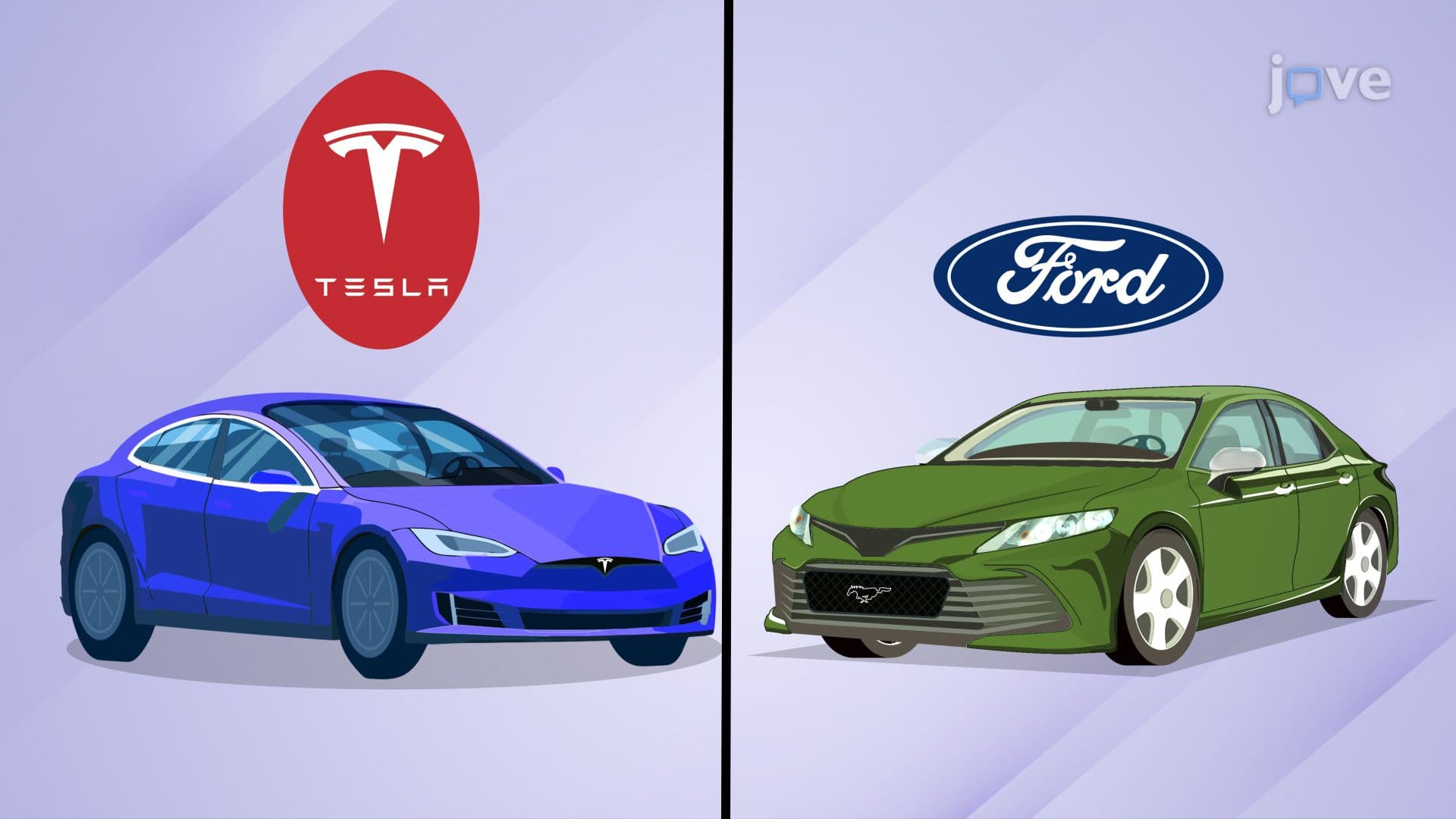

Video Summary: Equilibrium in a Differentiated Products Explained
Ever wonder why Tesla can charge $50,000 for an electric vehicle while Ford prices theirs at $30,000, yet both companies thrive? Equilibrium in a differentiated products occurs when competing firms find optimal pricing strategies for similar but distinct goods. In the automotive market, Tesla and Ford demonstrate this concept perfectly-each company sets prices based on both their own costs and their competitor's pricing decisions. Watch the full video on JoVE Coach to master this concept with expert-led visuals and step-by-step explanations.
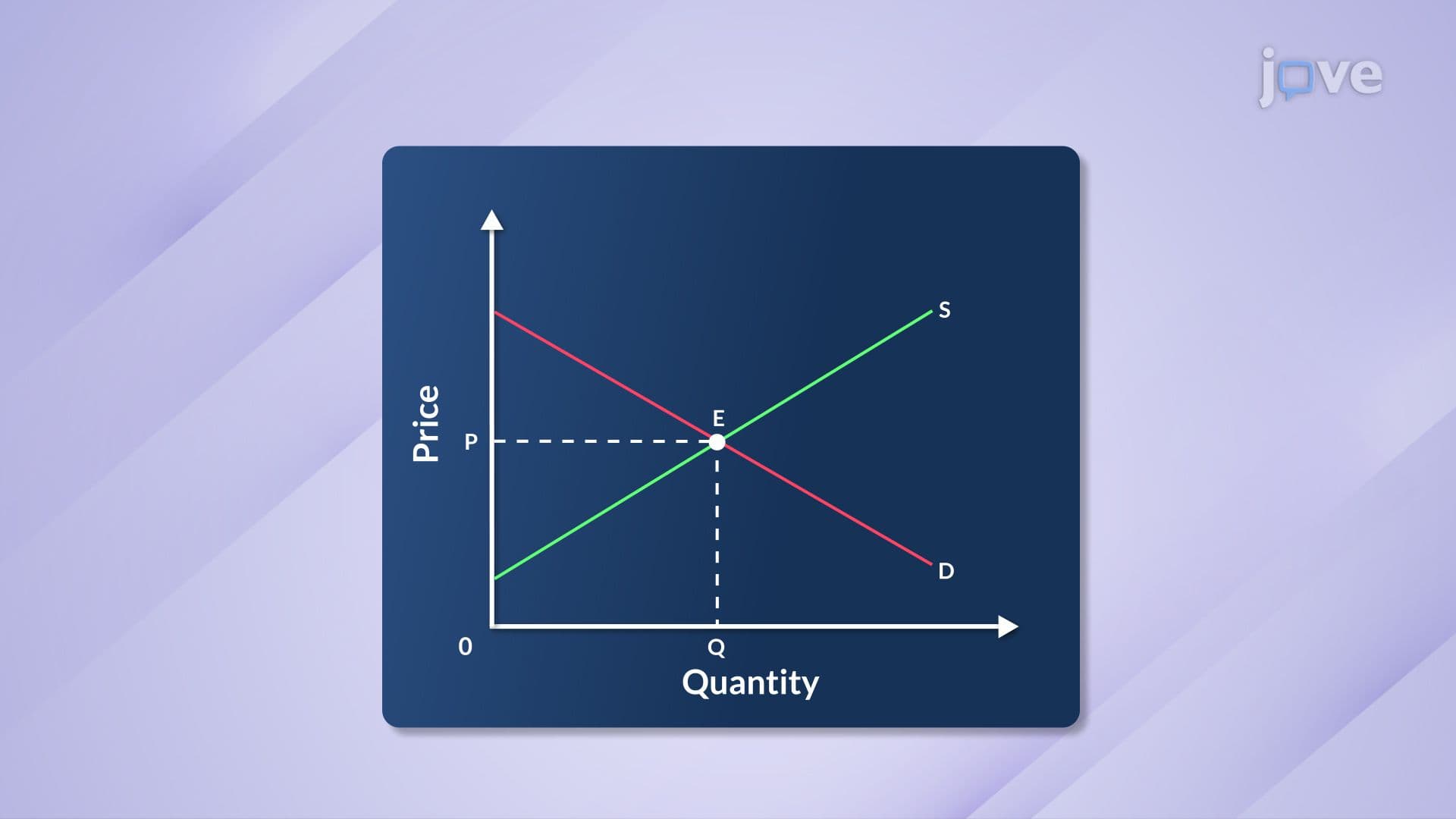
Equilibrium in a differentiated products represents a fundamental concept in microeconomics where competing firms reach stable pricing strategies for goods that are similar but not identical. Unlike perfect competition where products are homogeneous, differentiated markets allow companies to maintain pricing power while still facing competitive pressures. This equilibrium occurs when each firm maximizes profits given their competitor's pricing strategy, and no firm has an incentive to unilaterally change their price.
The Bertrand model with product differentiation uses specific demand functions to capture market dynamics. For two competing firms, the demand structure follows the pattern: Q(firm 1) = D(baseline) - 2P(firm 1) + P(firm 2). This mathematical relationship reveals three critical insights. First, the coefficient -2 indicates that a firm's demand decreases significantly when it raises its own price. Second, the positive coefficient on the competitor's price (+1) shows that higher competitor prices increase your demand-customers substitute toward the relatively cheaper option. Third, the baseline demand (D) represents market size when both firms price at zero.
Students preparing for AP Economics or college microeconomics exams should understand that this cross-price sensitivity distinguishes differentiated markets from monopolies (where competitor prices don't matter) and perfect competition (where firms are price-takers). The mathematical framework appears frequently in multiple-choice questions and free-response sections.
Consider the smartphone industry, where Apple and Samsung compete with differentiated products. When Apple increases iPhone prices by $100, some consumers switch to Samsung Galaxy phones, but many loyal Apple customers remain due to ecosystem preferences, design differences, and brand loyalty. This product differentiation prevents complete customer migration and allows both companies to maintain premium pricing.
Similarly, in the streaming service market, Netflix and Disney+ demonstrate equilibrium in differentiated products. When Disney+ launched at $6.99 monthly compared to Netflix's $15.99, both services found equilibrium by targeting different content preferences-Netflix focusing on diverse original content while Disney+ emphasized family entertainment and Marvel properties.
The equilibrium concept helps explain why competing firms often avoid aggressive price wars. In differentiated markets, cutting prices doesn't capture all competitor customers due to product loyalty and preferences. Instead, firms invest in innovation, marketing, and brand building to increase their baseline demand (D) and reduce cross-price sensitivity. This strategic behavior appears in case study questions on business school exams and forms the foundation for advanced game theory applications in graduate-level economics courses.
Related Micro-courses