Loading subject page…


3,604 views

Video Summary: What are Differentiating Types of Markets
Why does your morning coffee cost $5 at Starbucks but only $1 at a gas station? Understanding differentiating types of markets explains how businesses set prices and compete in the real economy. From Amazon's near-monopoly in e-commerce to the fierce competition among smartphone manufacturers like Apple, Samsung, and Google, different market structures create vastly different business environments and consumer experiences. Watch the full video on JoVE Coach to master this concept with expert-led visuals and step-by-step explanations.
Market structures form the backbone of economic analysis, determining how businesses compete, set prices, and interact with consumers. What are differentiating types of markets? They represent distinct competitive environments characterized by specific features that influence firm behavior and market outcomes. These structures range from highly competitive markets where no single firm has pricing power to monopolistic markets where one company dominates entirely.
The classification system helps economists, business students, and policymakers predict market behavior and assess economic efficiency. For AP Economics students and college undergraduates studying microeconomics, mastering these concepts is essential for understanding real-world business dynamics and succeeding on standardized exams.
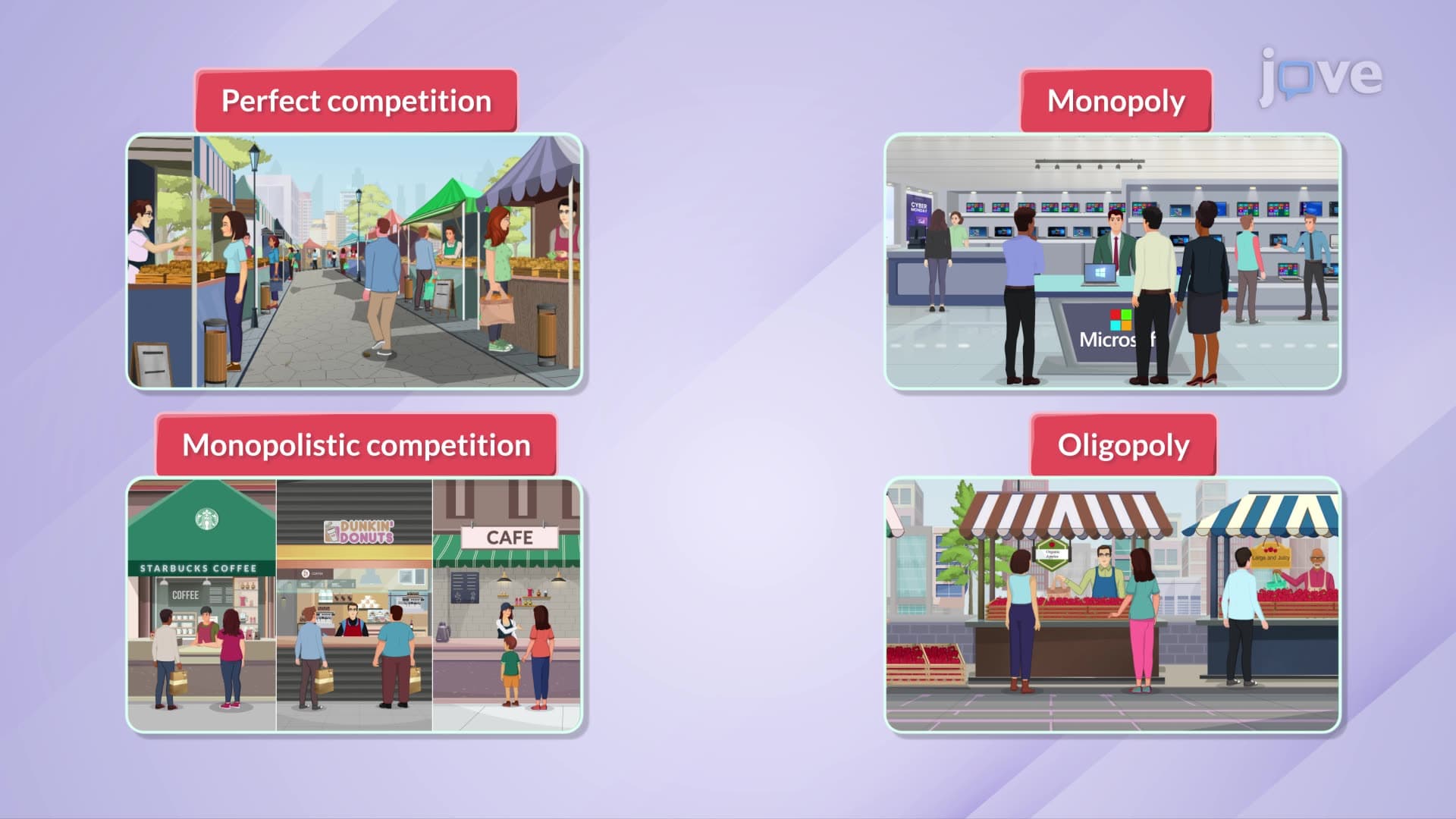
Perfect competition represents the most competitive market structure, characterized by numerous small firms selling identical products. Think of agricultural markets like wheat or corn, where thousands of farmers sell virtually indistinguishable products. In perfect competition, no single firm can influence market price-they're "price takers" who must accept the market-determined price.
Key features include perfect information (all participants know prices and product quality), free entry and exit, and homogeneous products. While rare in pure form, markets like stock exchanges and some commodity markets approximate perfect competition. Students preparing for AP Microeconomics should understand that perfectly competitive firms maximize profits where marginal revenue equals marginal cost, and long-run economic profits equal zero due to free entry.
Monopolies exist when one firm controls an entire market, often due to high barriers to entry like patents, government regulations, or control of essential resources. Microsoft's dominance in operating systems during the 1990s exemplifies near-monopolistic behavior. Monopolists are "price makers" who can set prices above marginal cost, leading to higher profits but potentially reduced consumer welfare.
Natural monopolies occur in industries where economies of scale make single-firm production most efficient, such as local utility companies. The US government regulates many monopolies to prevent abuse of market power, making this topic crucial for understanding both economics and public policy.
Monopolistic competition features many firms selling differentiated products, like restaurants or clothing brands. Each firm has some pricing power due to product differentiation, but competition limits this power. Fast-food chains like McDonald's, Burger King, and Wendy's compete in monopolistically competitive markets.
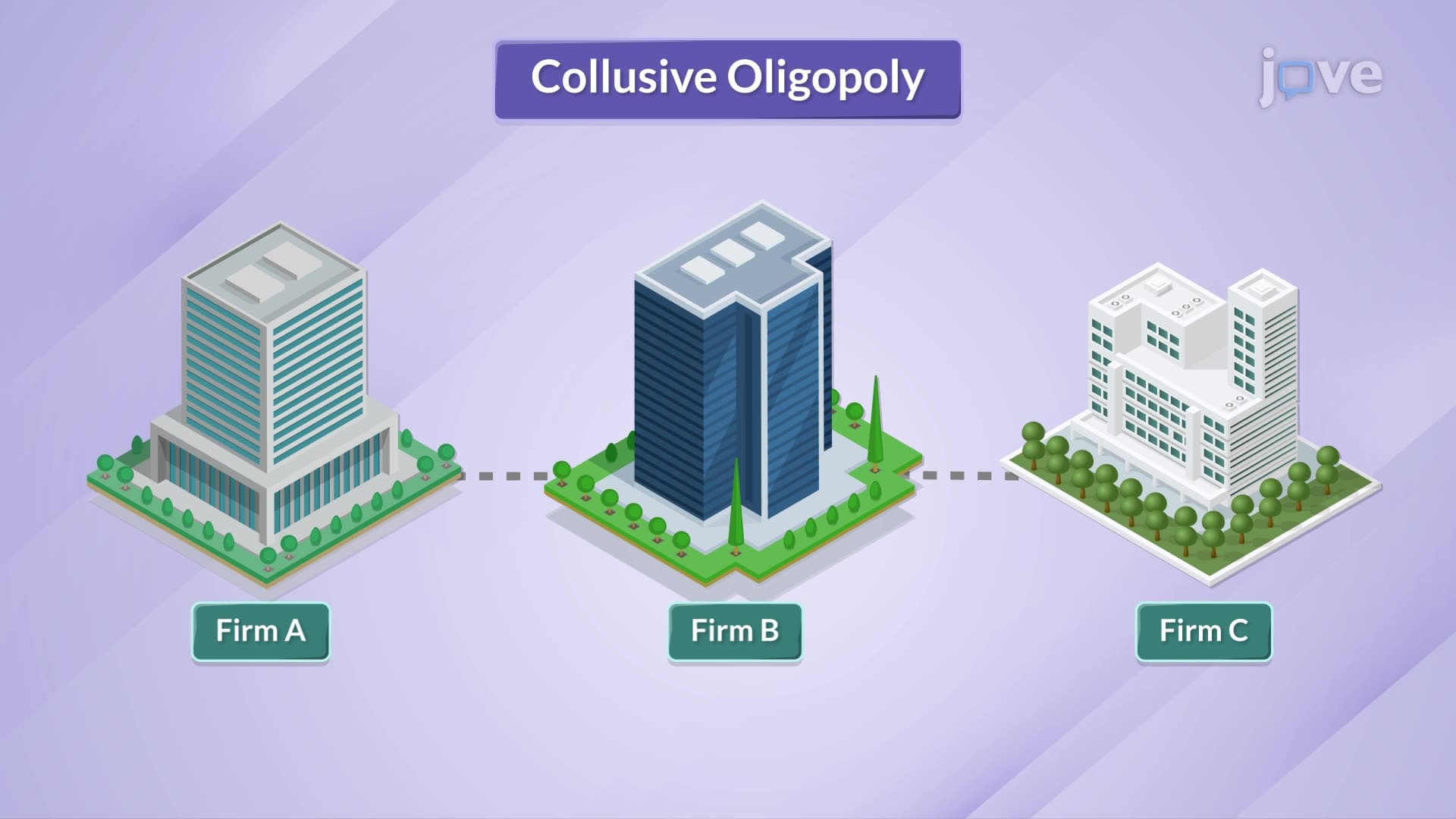
Oligopolies involve few large firms dominating markets, such as the airline industry (American, Delta, United) or smartphone manufacturers (Apple, Samsung, Google). These firms are interdependent-each company's decisions significantly impact competitors. Game theory becomes crucial for understanding oligopolistic behavior, making this concept particularly important for advanced economics courses and business strategy classes.
Related Micro-courses