Loading subject page…

2,681 views

Video Summary: Clarifying Roles with the Raci Method
The RACI method for teams solves one of the most frustrating challenges in project management: when hardworking teams deliver slowly because task ownership remains unclear. Without defined role clarification, even experienced professionals waste time on duplicated efforts or missed handoffs. This practical framework helps managers assign clear responsibility and decision authority across complex workflows. By systematically defining who is responsible, accountable, consulted, and informed for each task, team leads can eliminate bottlenecks and restore forward momentum. Watch the full video on JoVE Coach to master this concept with expert-led visuals and step-by-step explanations.
Picture this scenario: Your quarterly product launch involves engineering, marketing, sales, and customer success teams. Everyone attends the same meetings, receives the same updates, yet three weeks before launch, you discover two teams built competing solutions while a third critical component has no clear owner. This confusion costs time, creates frustration, and damages cross-functional relationships.
Traditional project planning focuses heavily on timelines and deliverables while treating role assignment as an afterthought. Many managers assume that assigning tasks automatically clarifies decision-making authority, but task completion and decision ownership operate differently. When multiple stakeholders feel responsible for outcomes, paralysis replaces progress. The result: endless email chains, redundant work, and missed deadlines despite individual competence.
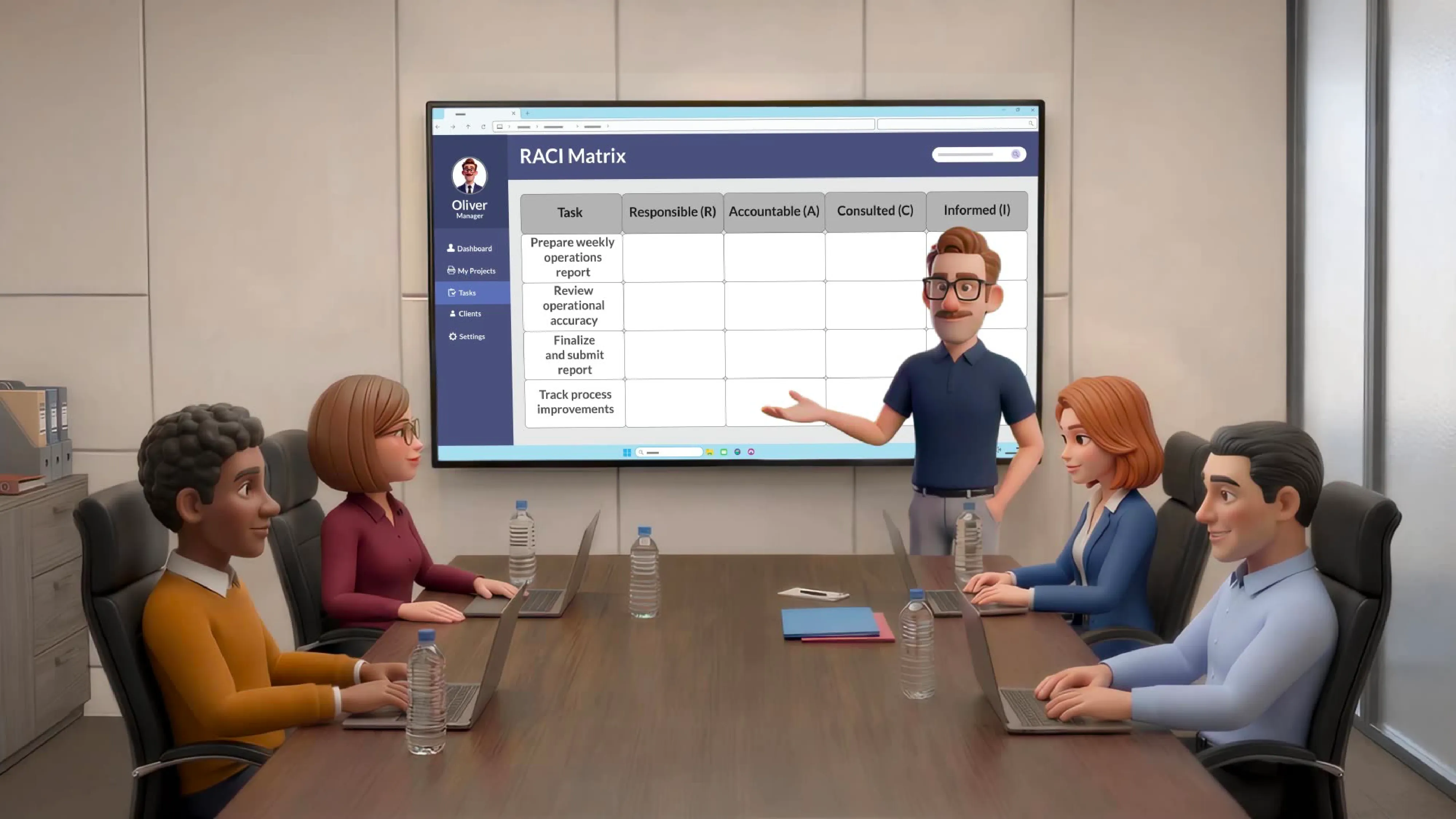
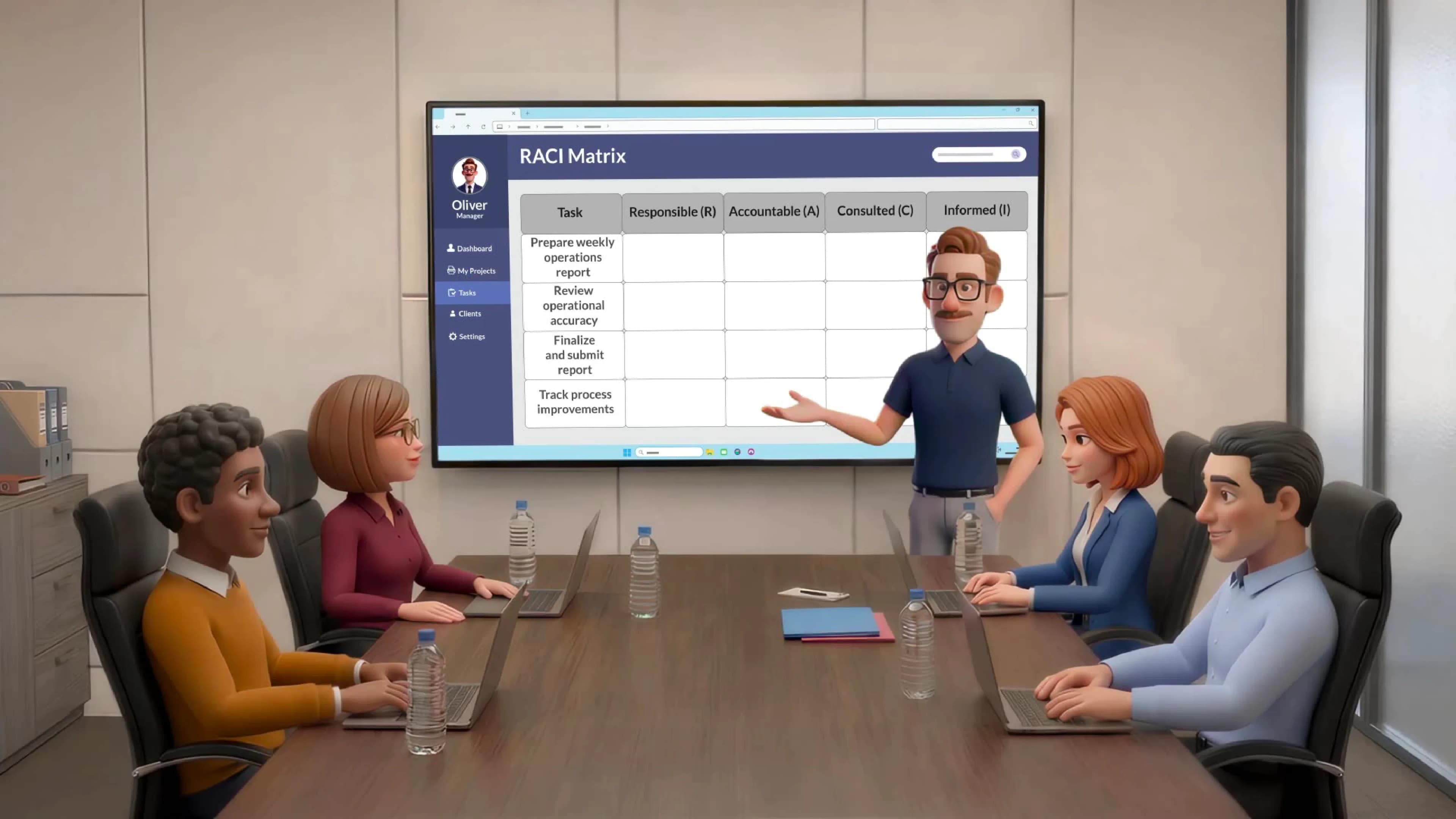
The RACI framework provides a systematic approach to role clarification across any project size or organizational structure. Responsible identifies who performs the actual work-these are your execution owners. Accountable designates the single person who answers for results and makes final decisions when conflict arises. Consulted includes stakeholders whose expertise or approval is required before moving forward. Informed captures those who need updates but don't participate in day-to-day execution.
This distinction matters because responsibility can be shared while accountability cannot. Multiple team members might contribute to a marketing campaign's execution, but only one person should hold final approval authority for messaging, budget, and timeline decisions.
Start your implementation by listing all major deliverables down the left side of a matrix, then add key stakeholders across the top. Work through each intersection systematically, asking: "What role does this person play for this specific deliverable?" Resist the temptation to mark everyone as consulted-this creates the very bottlenecks you're trying to eliminate.
Focus conversations on decision-making authority rather than task participation. When stakeholders push back on limited consultation roles, remind them that streamlined input processes actually increase their influence by ensuring their feedback gets incorporated rather than lost in committee discussions.
The most frequent error involves assigning multiple accountable parties to single deliverables. While shared responsibility feels collaborative, it creates confusion during crunch time when quick decisions become necessary. Similarly, over-consulting slows progress without adding proportional value-limit this category to stakeholders whose input fundamentally changes work quality or organizational acceptance.
Related Micro-courses