Loading video…


 5 Concepts
 2.7K views

Video Summary: Creating a Team Charter
A team charter is a document that aligns a team on purpose, goals, roles, and working guidelines before a project begins. It captures key deliverables, who owns what, and how the team will communicate and escalate issues. Created with input from both stakeholders and team members, it serves as a shared reference throughout the project, keeping decisions faster and coordination cleaner. Learn more about aligning people and roles in teams.
The first step in building a team charter is stating what the team exists to accomplish. This means writing out the project goals, listing key deliverables, and explaining how each role contributes to the final outcome. Clear purpose gives the team a shared target to work toward from day one. This foundation also helps with eliminating role confusion before it starts.
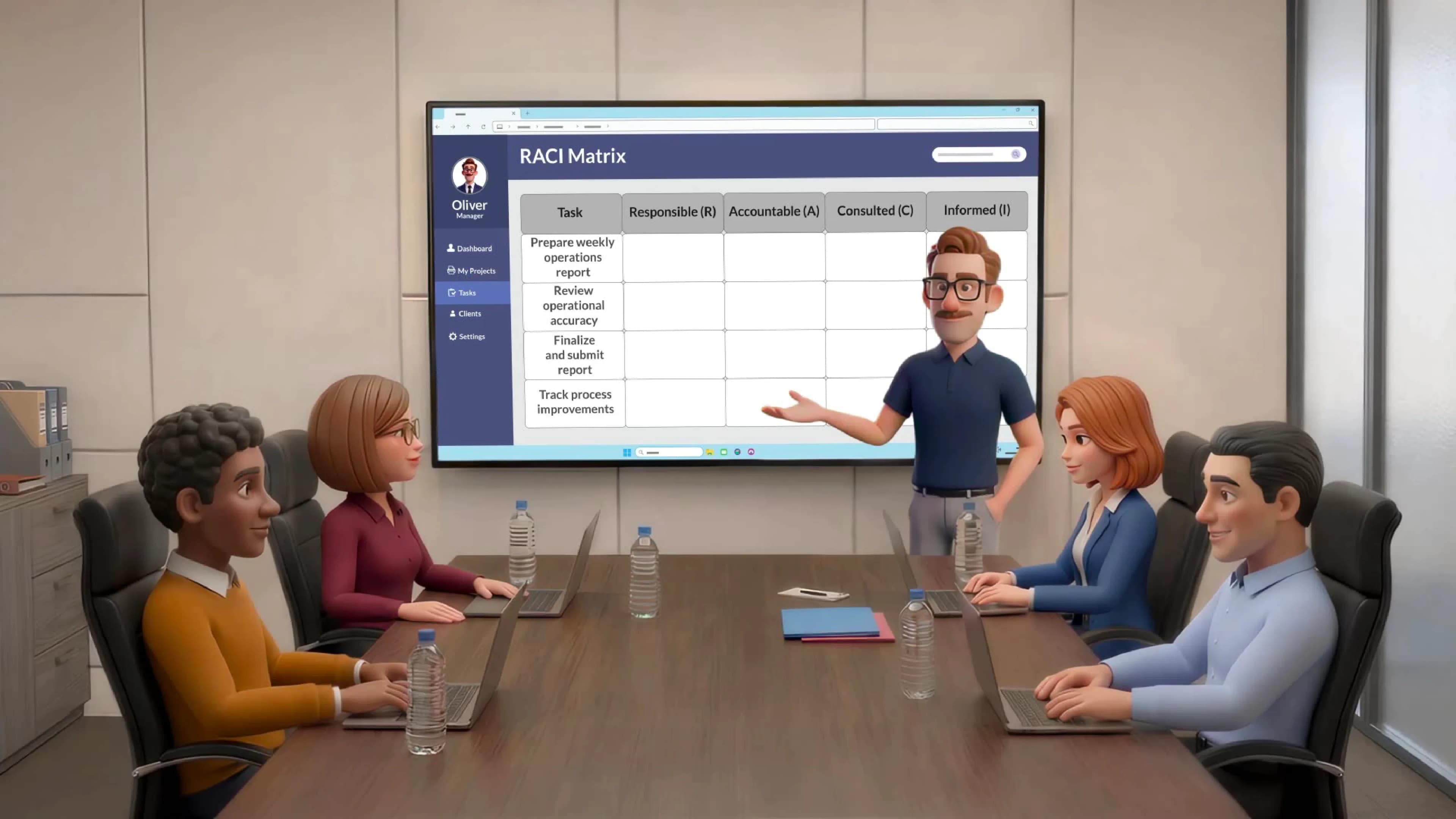
Once purpose is defined, each major deliverable needs a task owner, a reviewer, and an approver. Spelling out who does what and who signs off removes ambiguity about decision authority. This structure keeps work moving without repeated back-and-forth over who is responsible. For a structured approach to mapping these relationships, see clarifying roles with the RACI method.
Operating guidelines define how the team actually works together day to day. The charter should specify communication channels, meeting schedules, escalation steps, and response-time expectations. These shared norms reduce friction because everyone already agreed on the rules before a problem arises. Documenting them in the charter connects directly to managing team operations and priorities.
A team charter is not written in isolation. You gather input from both stakeholders and team members so the document reflects real expectations on all sides. Reviewing the draft together and confirming agreement on goals, roles, and working norms means the charter carries genuine buy-in, not just top-down direction. This process also supports onboarding new hires for faster productivity when team composition changes.
The charter earns its value when it becomes a working tool, not a filed document. You use it at project kickoff to set expectations and return to it during regular check-ins to catch drift. When roles shift or questions arise, the charter gives the team a single source to resolve them quickly.
Related Micro-courses