Three people reply to the same client email. A task sits for a week because nobody knows who signs off. A new hire spends day two hunting for logins. Usually the people are fine. In the first-time manager courses on JoVE Coach, this one is about writing down team roles and responsibilities so everyone can see them. The two-minute videos start at a project kickoff and finish with a new hire's first weeks.
Run a project kickoff where everyone leaves knowing their part
Stop the duplicate replies when several people think they own a client
Get decisions moving by naming one approver for each task
Hire from evidence of past behavior instead of a polished resume
Give a new hire everything they need before their first real task
Agree on channels and response times so workplace communication stops depending on who you ask
1. Start with a team charter
Before a project starts, agree with the team, in writing, why it exists, what it must deliver, who owns, reviews and approves each deliverable, and how work will flow day to day: channels, meetings, escalation and response times. A team charter only pays off if you open it at kickoff and at every check-in. Filed away, it does nothing.
2. One point of contact per client
When three people answer the same client email, the fix is simple. Pick a single point of contact for each client or recurring process, plus a named backup for days off. Every incoming request goes to that person, they send every reply, and each exchange goes into a shared log. Anyone on the team can then check status without asking around.
3. RACI, and the one rule that makes it work
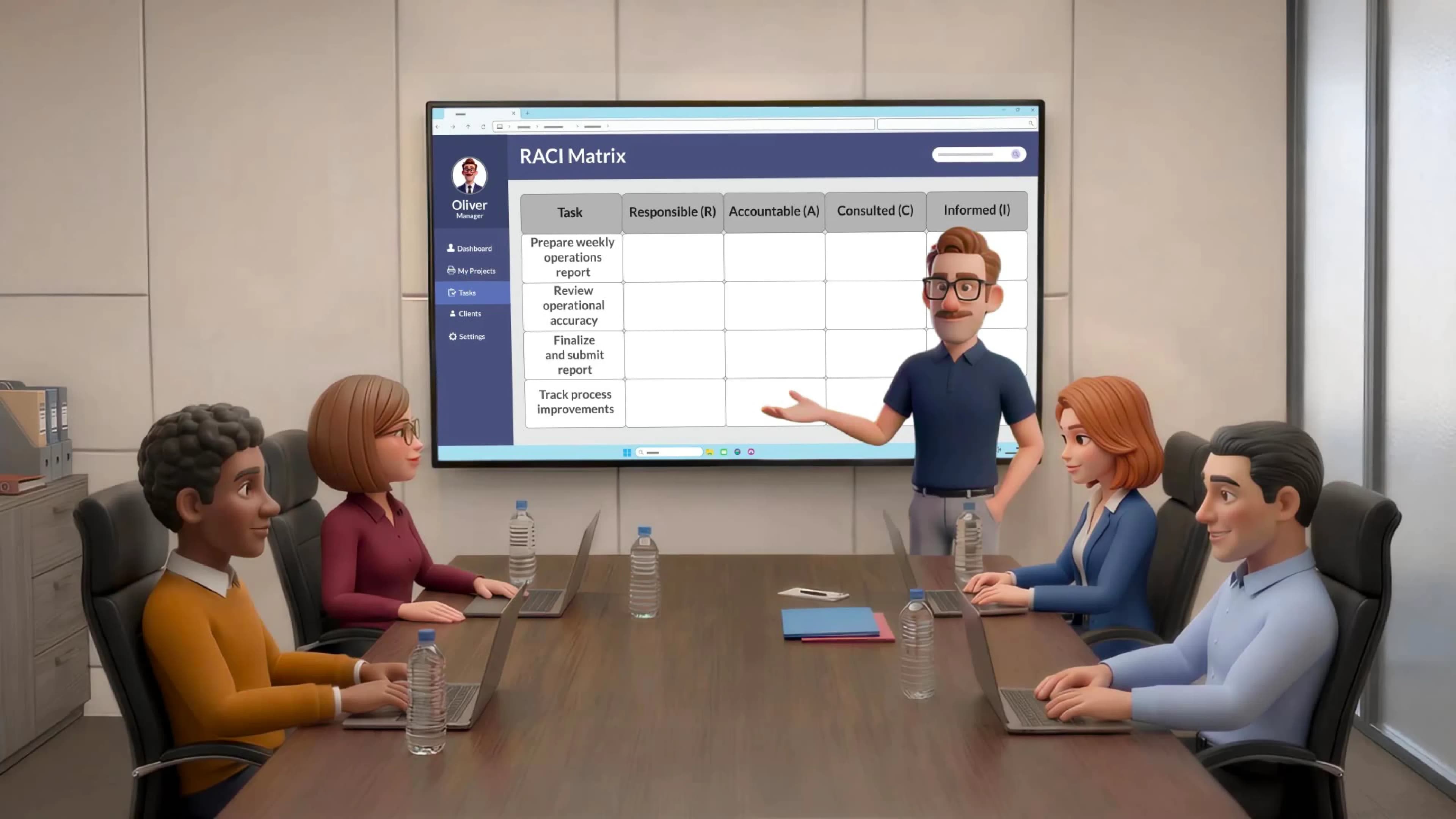
RACI gives every task four roles: Responsible (does the work), Accountable (signs off), Consulted (input you truly need) and Informed (kept up to date). Several people can be Responsible. Only one can be Accountable, and that rule does most of the work. Keep the Consulted list short, because every extra name slows the task down. The RACI method helps most when a team works hard and still stalls.
4. Onboarding with the 4Cs
Start by telling a new hire which tasks they own and how they keep the task tracker current. That is Clarification, the first of four Cs. Compliance means tools, files and templates ready on day one. Culture covers the unwritten rules of how the team works. Connection is one senior colleague they can ask anything. Keep the early check-ins short and frequent.
Frequently asked questions
Watch for duplicate work, two different answers going to the same client, and people waiting for someone else to move first. Role confusion usually means several people think they own a task, or nobody thinks they do. Your recent emails and chat threads will show you where it is happening.
Ask candidates about things they have already done. Prepare questions tied to the skills the role needs, such as a time they handled a tight deadline, and use STAR (situation, task, actions, results) to see what they did themselves. Scoring every answer on the same sheet is what makes behavioral interviewing fair.
Better not. The Accountable person is there to check the work, and that check disappears when they also did it. On a small team people will wear different hats on different tasks, which is fine. Just keep the doer and the approver apart on any one task.
Once the charter and RACI show who owns each area, delegating work stops being a negotiation. You already know whose desk a task belongs on, so the conversation can go straight to the outcome, the deadline and the support the person needs.
Most of the delay is avoidable. They wait on access, guess at the team structure and its unwritten rules, and hold back questions because nobody told them who to ask. Structured new hire onboarding clears those blockers in the first days, which is where the time goes.
You don't need a reorganization. Ask each person what they think they own, the same habit individual contributors use when confirming expectations, and compare the answers with recent tasks and messages. Gaps in role clarity show up fast. Then map owners with RACI at the next kickoff or restructure.