Loading video…

 5 Concepts
 2.7K views

Video Summary: Clarifying Roles with the Raci Method
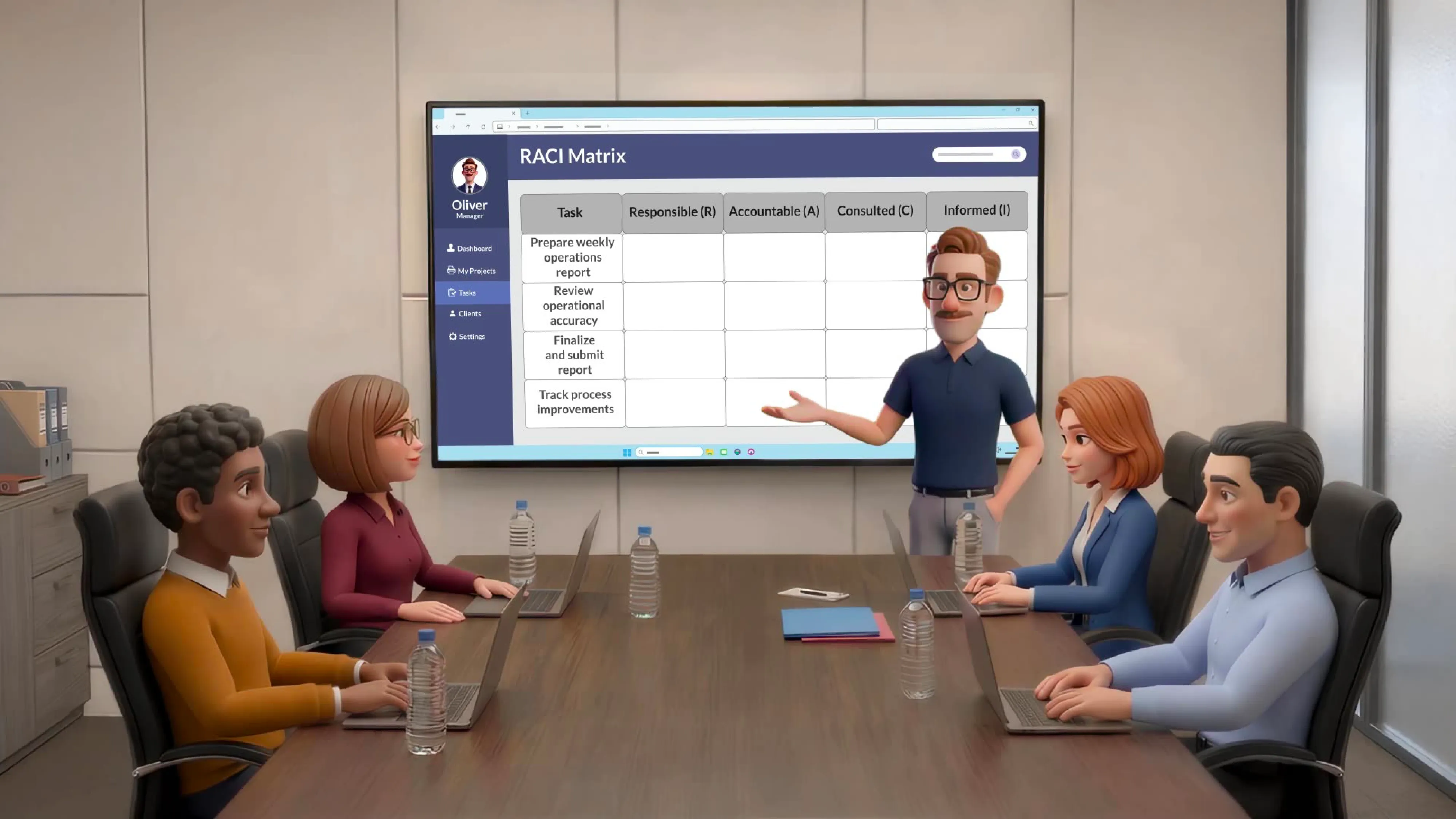
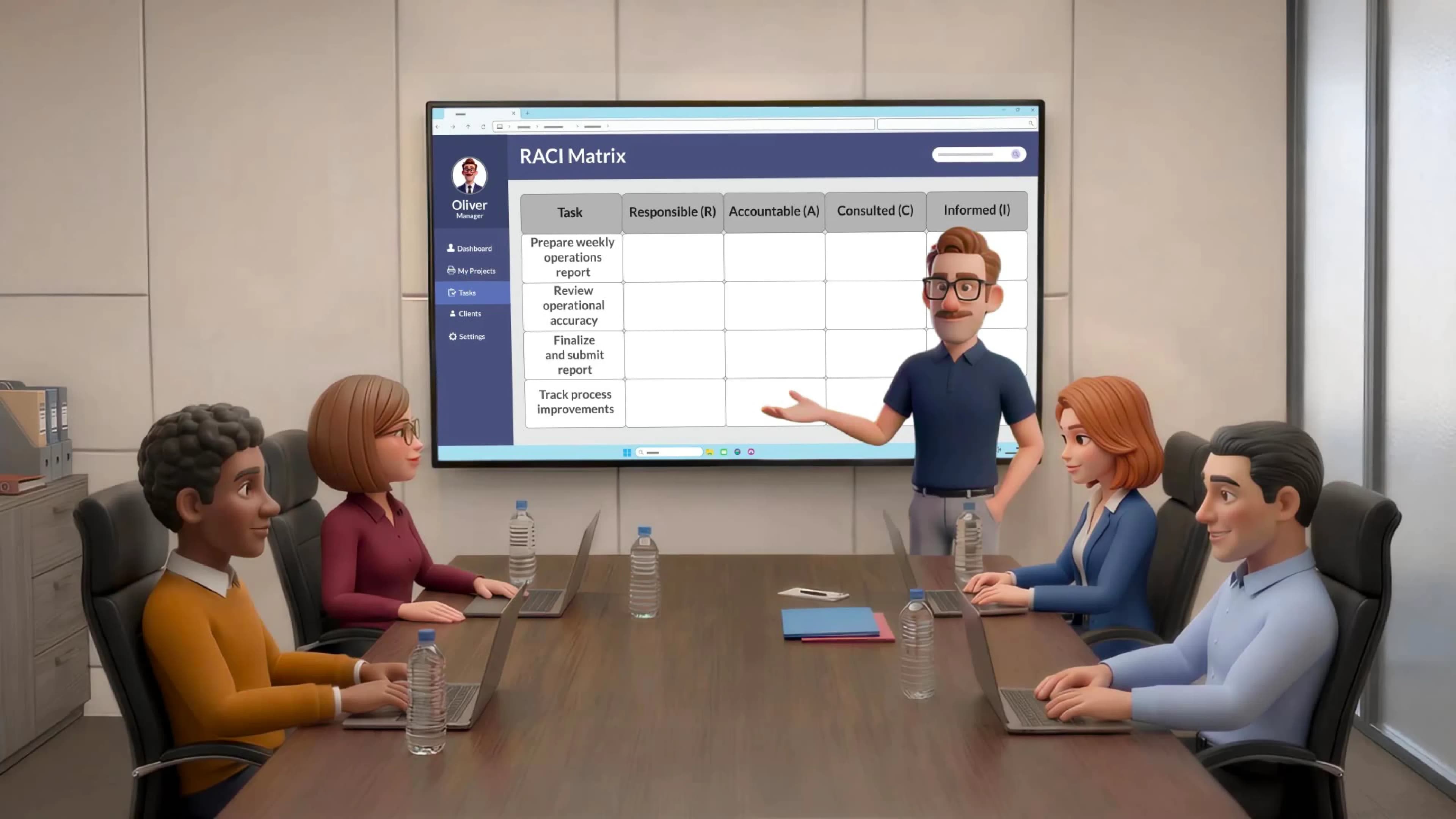
The RACI method is a role-clarity framework that assigns one of four designations to each person involved in a task: Responsible, Accountable, Consulted, or Informed. Managers use it to eliminate confusion about task ownership, reduce delays, and speed up decision-making. When teams lack clear ownership, effort does not translate into progress. RACI solves that by making it explicit who does the work, who approves it, who provides input, and who stays updated. For more on this, see eliminating role confusion.
The Responsible role identifies the person who must complete a task. Assigning this role removes ambiguity about who owns the work. Without a clear Responsible party, team members may assume someone else will act, which causes delays. Creating a team charter is one way to formalize these assignments from the start.
The Accountable role designates one person per task who is answerable for decisions, approvals, and outcomes. Only one person holds this role per task. Having more than one Accountable person creates shared ownership, which tends to produce the same confusion RACI is designed to fix. This principle sits at the core of delegating work with clarity and accountability.
The Consulted role covers people whose input the task owner needs before moving forward. The key discipline here is limiting this group to only those whose contribution is genuinely necessary. A long Consulted list slows execution. Keeping it short protects momentum and supports the broader goal of aligning people and roles in teams.
The Informed role covers people who need updates on progress and outcomes but do not shape the work. Keeping this group appropriately scoped means key stakeholders stay in the loop without interrupting the team. It separates communication from execution.
Related Micro-courses