Loading subject page…


2,692 views


Video Summary: Eliminating Role Confusion
Eliminating role confusion in teams becomes critical when multiple team members respond to the same client inquiry, creating duplicate work and inconsistent messaging. Without clear team role clarity, managers watch productivity decline as work gets duplicated and quality suffers from competing responses. This video demonstrates how establishing a Single Point of Contact (SPOC) system transforms chaotic communication patterns into streamlined processes. Watch the full video on JoVE Coach to master this concept with expert-led visuals and step-by-step explanations.
Role confusion destroys team efficiency faster than almost any other workplace dysfunction. When three different team members email the same client with conflicting information, or when two people show up to the same meeting thinking they're leading it, you're witnessing the costly breakdown of unclear ownership.
Even experienced teams fall into ownership confusion when managers assume everyone understands their boundaries. The issue intensifies during growth phases, project handoffs, or when team members have overlapping skill sets. Without explicit role definition, capable employees naturally step in to help-creating the very duplicative work that slows everything down.
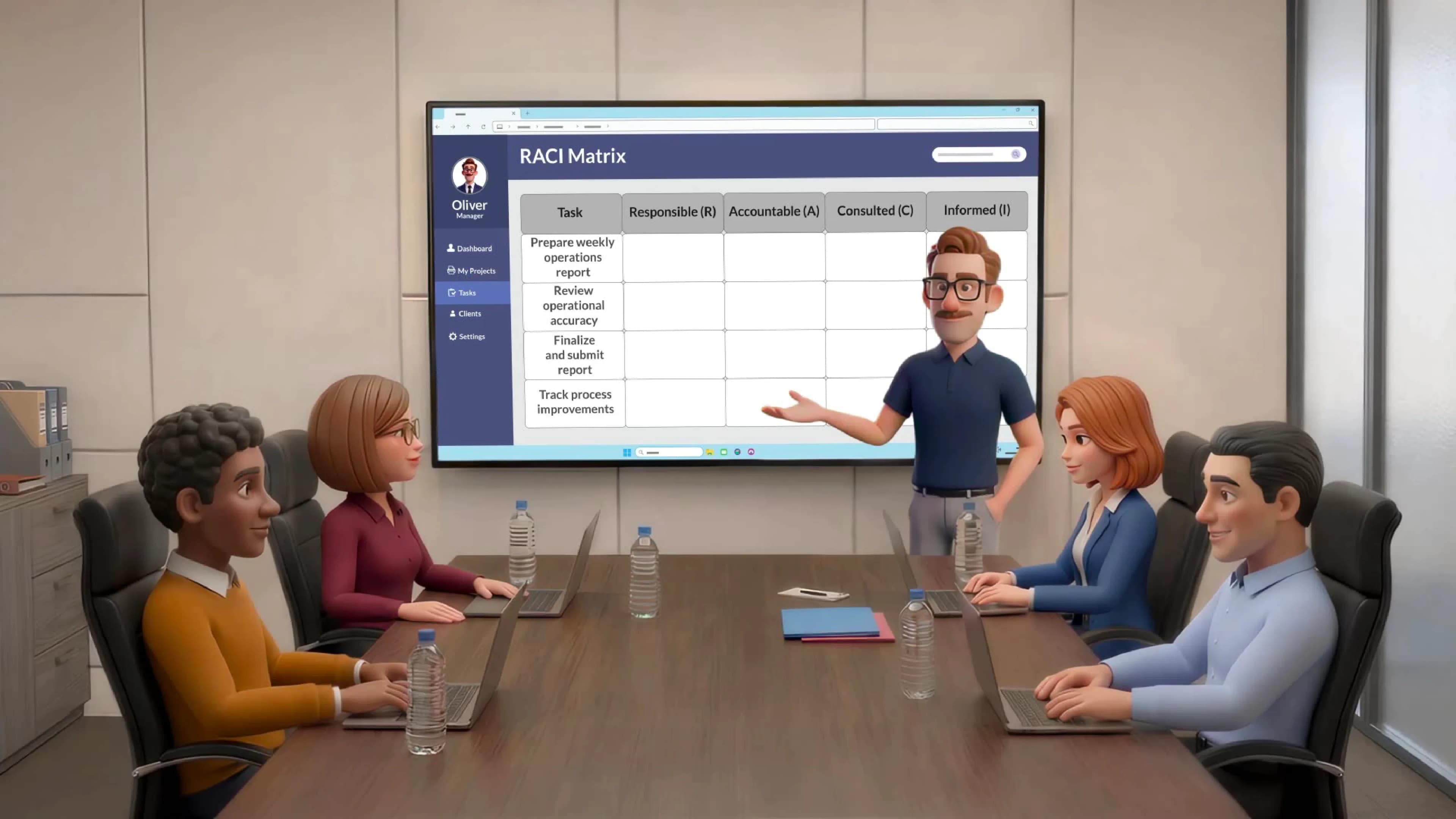
Beyond the SPOC model, implement RACI (Responsible, Accountable, Consulted, Informed) matrices for recurring processes. For each client interaction or project deliverable, designate who is Responsible for execution, Accountable for outcomes, must be Consulted before decisions, and needs to be Informed of results. This framework scales across teams of any size and eliminates the "I thought you were handling that" conversations.
Start with your highest-stakes processes-client communication, project deliverables, or cross-functional handoffs. Map current workflows to identify overlap points, then assign clear primary ownership with designated backup coverage. Create simple tracking mechanisms: shared logs, status updates, or brief weekly check-ins. The key is making ownership visible to everyone, not just the people doing the work.
Role clarity requires active maintenance, especially as teams grow or shift priorities. Build ownership reviews into quarterly planning sessions. When onboarding new team members, explicitly walk through existing SPOC assignments and RACI charts. Address role creep immediately when you see it-waiting for confusion to resolve itself never works.
The payoff is immediate: faster decision-making, reduced rework, clearer client relationships, and teams that operate with confidence rather than constantly checking whether they're stepping on someone else's work.
Related Micro-courses