Loading subject page…
- New Manager Essentials
- Building a Managerial Mindset
- Adapting to Uncertainty and Change
Micro-course: Building a Managerial Mindset
3,071 views
Learn key concepts and earn your certificate.







Adapting to Uncertainty and Change

00:00
01:28
Video Summary: Adapting to Uncertainty and Change
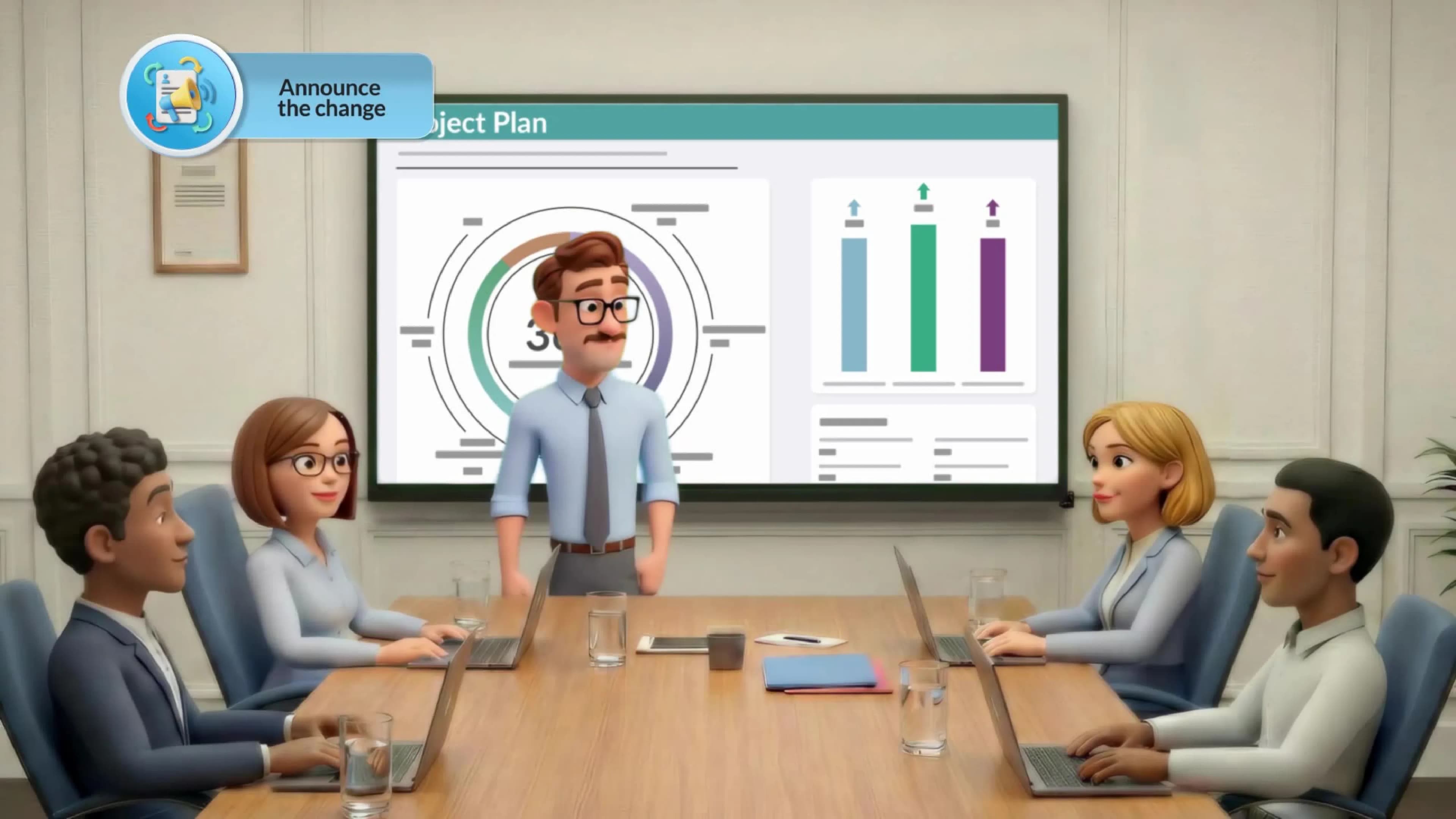
When client demands shift overnight or priorities suddenly flip, managing uncertainty and change becomes your defining leadership moment. Most managers panic, sending mixed signals that destabilize their teams further. The most effective leaders use a structured four-step framework: announce the change directly, reassess priorities collaboratively, update responsibilities clearly, and communicate the final plan comprehensively. This systematic approach transforms chaos into clarity and keeps teams productive during turbulent periods. Watch the full video on JoVE Coach to master this concept with expert-led visuals and step-by-step explanations.
- Lead your team through sudden priority shifts without losing productivity or morale
- Navigate VUCA environments by maintaining clear communication during volatile periods
- Structure change announcements to reduce team anxiety and prevent information gaps
- Facilitate collaborative priority reassessment sessions that engage your team in solution-building
- Manage timeline adjustments and task redistribution based on current team capacity
- Build team resilience by demonstrating calm, decisive leadership during uncertain periods
- Align team members on new roles, responsibilities, and expectations after organizational shifts
- Handle ambiguity at work by creating clarity through systematic planning processes
How Managers Lead Teams Through Uncertainty and Change
Picture this: Your biggest client just called with completely new requirements, your Q4 roadmap is now obsolete, and your team is looking to you for direction. Half are panicking about missed deadlines, the other half are confused about what to prioritize. This scenario plays out in organizations worldwide, separating effective managers from overwhelmed ones.
Why Most Managers Struggle During Uncertain Times
The primary challenge isn't the change itself-it's how managers communicate and execute during transitions. Research shows that 70% of change initiatives fail due to poor leadership communication, not flawed strategies. Most managers either over-communicate uncertainty (creating anxiety) or under-communicate changes (creating confusion). The key lies in structured, transparent leadership that acknowledges challenges while providing clear direction.
The Four-Phase VUCA Leadership Framework
Effective managers follow a systematic approach when adapting to change as manager responsibilities shift. Phase One: Direct Announcement involves explaining what changed, why it happened, and immediate implications for current goals. Avoid sugar-coating or delayed disclosure-teams respect honest, timely communication. Phase Two: Collaborative Reassessment engages your team in priority mapping using frameworks like the Eisenhower Matrix (urgent vs. important) to evaluate existing workloads against new requirements.
Phase Three: Systematic Redistribution applies the RACI model (Responsible, Accountable, Consulted, Informed) to clarify who owns what under the new structure. Update project timelines using realistic capacity planning-most managers underestimate the cognitive load of change on their teams. Phase Four: Comprehensive Communication ensures every team member understands their revised role, adjusted deadlines, and next immediate actions.
Common Implementation Mistakes to Avoid
The biggest error is treating change management as a one-time announcement rather than an ongoing process. Effective VUCA leadership requires consistent check-ins during the transition period. Second, avoid the temptation to handle everything yourself-involving your team in problem-solving builds ownership and reduces resistance. Finally, don't skip the emotional component. Acknowledge that uncertainty is stressful and provide psychological safety for questions and concerns.
Successful managers who master managing uncertainty and change create teams that become more adaptable over time, viewing disruptions as opportunities rather than threats.
Frequently Asked Questions
VUCA leadership means maintaining team effectiveness when facing volatility, uncertainty, complexity, and ambiguity in your work environment. It involves clear communication during chaos, structured decision-making when information is incomplete, and keeping your team focused on actionable next steps rather than getting overwhelmed by unknowns. Think of it as being your team's steady compass when the organizational landscape shifts unexpectedly.
Start with facts before implications, and always explain the "why" behind decisions. Use this structure: state what changed, explain the business reason, outline immediate impacts on current projects, and end with your next steps timeline. Avoid phrases like "everything is changing" or "I don't know what this means yet"-instead focus on what you do know and when you'll have more clarity.
Facilitate a team session using the MoSCoW method (Must have, Should have, Could have, Won't have) to categorize current tasks against new priorities. Give everyone 10 minutes to individually rank their projects, then discuss discrepancies as a group. This collaborative approach prevents you from making decisions in isolation while ensuring everyone understands the new priority hierarchy.
Map out each team member's current capacity and skill sets before reassigning work. Consider both technical capabilities and workload balance-avoid always giving challenging tasks to your strongest performers. Use a simple spreadsheet showing person, current projects, estimated hours, and available capacity. Then match redistributed tasks to available bandwidth, not just expertise.
Address resistance through private one-on-one conversations first, not team meetings. Ask open-ended questions: "What concerns you most about this change?" or "What would help you feel more confident moving forward?" Often resistance stems from feeling unheard or lacking context. Provide the business rationale they're missing and involve them in solution-finding rather than just direction-giving.
No prior crisis experience is required, but you do need to practice structured thinking under pressure. The framework works for both major organizational changes and minor priority shifts. Start applying these principles during smaller disruptions-like a delayed vendor delivery or sick team member-to build confidence before larger challenges arise.
Teams led by managers skilled in uncertainty navigation show 40% better retention rates and 25% higher productivity during transition periods. You'll become known as someone who brings stability to chaos, making you valuable for stretch assignments and promotions. More importantly, your team will trust your leadership during difficult periods, strengthening your overall management effectiveness.
Focus on strategic delegation and developing decision-making frameworks for your team members. Once your team trusts your change leadership, they'll be ready for more autonomy during stable periods. Learning to delegate effectively during normal operations complements your crisis leadership skills, creating a well-rounded management approach that works in all business conditions.
Related Micro-courses


