Loading subject page…


10 Concepts
8 Concepts
19 Concepts
17 Concepts
22 Concepts
7 Concepts
10 Concepts
7 Concepts
25 Concepts
19 Concepts
17 Concepts
12 Concepts
18 Concepts
13 Concepts
 13 Concepts
 34.4K Views
 Popular topics





Vital signs: blood pressure assessment is a fundamental clinical skill essential for healthcare professionals. This comprehensive course covers blood pressure measurement techniques, physiological factors affecting BP, normal and abnormal ranges, and clinical interpretation. Students will master proper sphygmomanometer use, recognize Korotkoff sounds, understand hypertension and hypotension, and apply evidence-based measurement protocols. JoVE Coach provides step-by-step guidance for accurate BP assessment in various clinical settings across US healthcare systems.
1. Blood Pressure Physiology and Regulation: Blood pressure represents the force exerted by circulating blood against arterial walls, measured as systolic pressure (ventricular contraction) over diastolic pressure (ventricular relaxation). Normal adult BP averages 120/80 mmHg according to American Heart Association standards. Three interconnected systems regulate BP: hormonal control through adrenaline, noradrenaline, and atrial natriuretic peptide; neural control via sympathetic and parasympathetic nervous systems; and renal control through the renin-angiotensin-aldosterone system. Understanding these mechanisms helps healthcare providers interpret BP variations and implement appropriate interventions in US clinical settings.
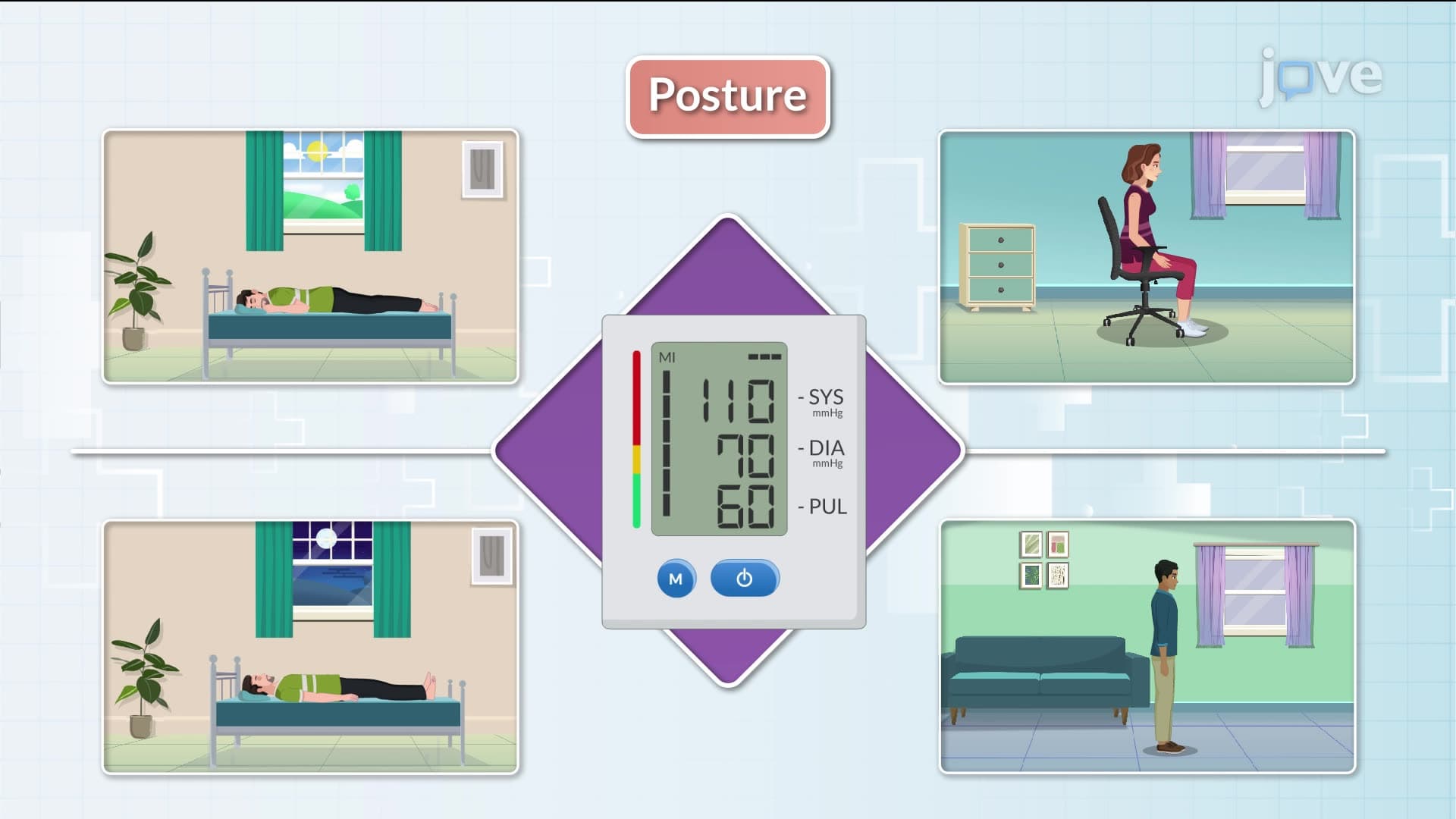
2. Factors Influencing Blood Pressure Measurements: Multiple variables affect blood pressure readings, requiring careful consideration during assessment. Age-related arterial stiffening increases BP variability, while circadian rhythms create predictable daily fluctuations with morning lows and afternoon peaks. Gender differences show lower BP in pre-menopausal women compared to men. Lifestyle factors including obesity, high sodium intake, alcohol consumption, smoking, and stress significantly impact readings. Posture affects measurements, with supine positions typically showing lower values than sitting or standing. Medications like NSAIDs and birth control pills can elevate BP, while ACE inhibitors and beta-blockers lower it.
3. Hypertension and Hypotension Classification: Hypertension diagnosis requires systolic BP exceeding 130 mmHg or diastolic BP over 80 mmHg on separate occasions, following 2017 American College of Cardiology guidelines. Primary hypertension lacks identifiable causes but involves risk factors like smoking and family history. Secondary hypertension results from underlying conditions such as kidney disease or hyperthyroidism. Symptoms include vision changes, nosebleeds, and palpitations. Hypotension occurs when systolic pressure drops below 90 mmHg or diastolic below 60 mmHg, causing dizziness, fatigue, and tachycardia. Types include orthostatic, postprandial, and neurally mediated hypotension, each requiring specific management approaches.
4. Blood Pressure Measurement Sites and Contraindications: The brachial artery serves as the primary site for BP measurement, located in the upper arm extending from the axillary artery to the cubital fossa. When brachial access is unavailable, the popliteal artery in the leg provides an alternative site, though readings typically run 10-20 mmHg higher due to arterial calcification and calf muscle resistance. Contraindications for measurement include IV cannulation, arteriovenous fistulas, limb injuries, mastectomy sites, and burns. Healthcare providers must select appropriate alternative sites and document measurement locations for accurate trending in US hospital documentation systems.
5. Sphygmomanometer Types and Equipment Selection: Healthcare facilities use various BP measurement devices, each with specific advantages and limitations. Mercury sphygmomanometers, now banned in many US states due to toxicity concerns, previously served as the gold standard. Aneroid sphygmomanometers feature manual inflation systems with glass-enclosed circular gauges, requiring regular calibration for accuracy. Digital electronic monitors automatically detect pressure changes and display readings, reducing human error but requiring battery maintenance. Doppler ultrasound devices amplify faint pulse sounds for patients with weak pulses, particularly useful in shock states or edematous conditions common in US critical care settings.
6. Korotkoff Sounds and Auscultatory Technique: Korotkoff sounds represent the acoustic phenomena occurring during cuff deflation, providing auditory cues for systolic and diastolic pressure determination. Phase I produces distinct tapping sounds indicating systolic pressure, while Phase II creates softer swishing sounds. Phase III intensifies tapping sounds, Phase IV produces muffled sounds marking the first diastolic reading, and Phase V represents complete sound disappearance indicating final diastolic pressure. Proper stethoscope placement over the brachial artery and gradual cuff deflation at 2-3 mmHg per second ensures accurate sound detection, critical for NCLEX competency and US clinical practice standards.
7. Common Measurement Errors and Quality Assurance: Blood pressure measurement accuracy depends on avoiding common errors that produce false readings. Patient-related factors causing elevated readings include recent meals, caffeine consumption, smoking, and anxiety. Healthcare provider errors stem from hearing impairments, rushed techniques, or inadequate training. Equipment issues include improper cuff sizing (wide cuffs causing false-low readings, narrow cuffs causing false-high readings), uncalibrated manometers, and damaged tubing. Procedural errors involve incorrect arm positioning, rapid valve release, or improper stethoscope placement. US healthcare quality standards require regular equipment calibration and competency validation for accurate measurements.
8. Specialized Blood Pressure Assessment Techniques: Advanced BP measurement techniques address specific clinical scenarios and patient populations. The two-step method involves initial palpation to estimate systolic pressure, followed by auscultatory confirmation, reducing measurement errors in US clinical settings. Doppler ultrasound assessment amplifies weak pulses using conducting gel and ultrasound probes, essential for patients with low cardiac output or peripheral edema. Lower extremity measurements require proper positioning and technique modifications, with thigh measurements using popliteal artery auscultation and calf measurements utilizing posterior tibial or dorsalis pedis arteries. These specialized techniques ensure accurate assessment across diverse patient populations in US healthcare facilities.