Loading…
Loading video…

51,600 views

Ever wonder how the FDA ensures medications are safe before reaching pharmacy shelves? Data validation analytical chemistry serves as the critical checkpoint that prevents faulty lab results from endangering public health. When pharmaceutical companies at Johnson & Johnson test drug purity, they must verify every measurement through systematic data validation processes. What is data validation transforms raw laboratory measurements into trustworthy scientific evidence that regulatory agencies can confidently approve. Watch the full video on JoVE Coach to master this concept with expert-led visuals and step-by-step explanations.
Data validation analytical chemistry represents the systematic verification process that transforms raw analytical measurements into scientifically reliable results. Unlike simple data collection, validation requires critical evaluation of each measurement's accuracy, precision, and relevance to the intended analysis. This process becomes particularly crucial in analytical chemistry, where minute measurement errors can lead to significant consequences in pharmaceutical development, environmental monitoring, or clinical diagnostics.
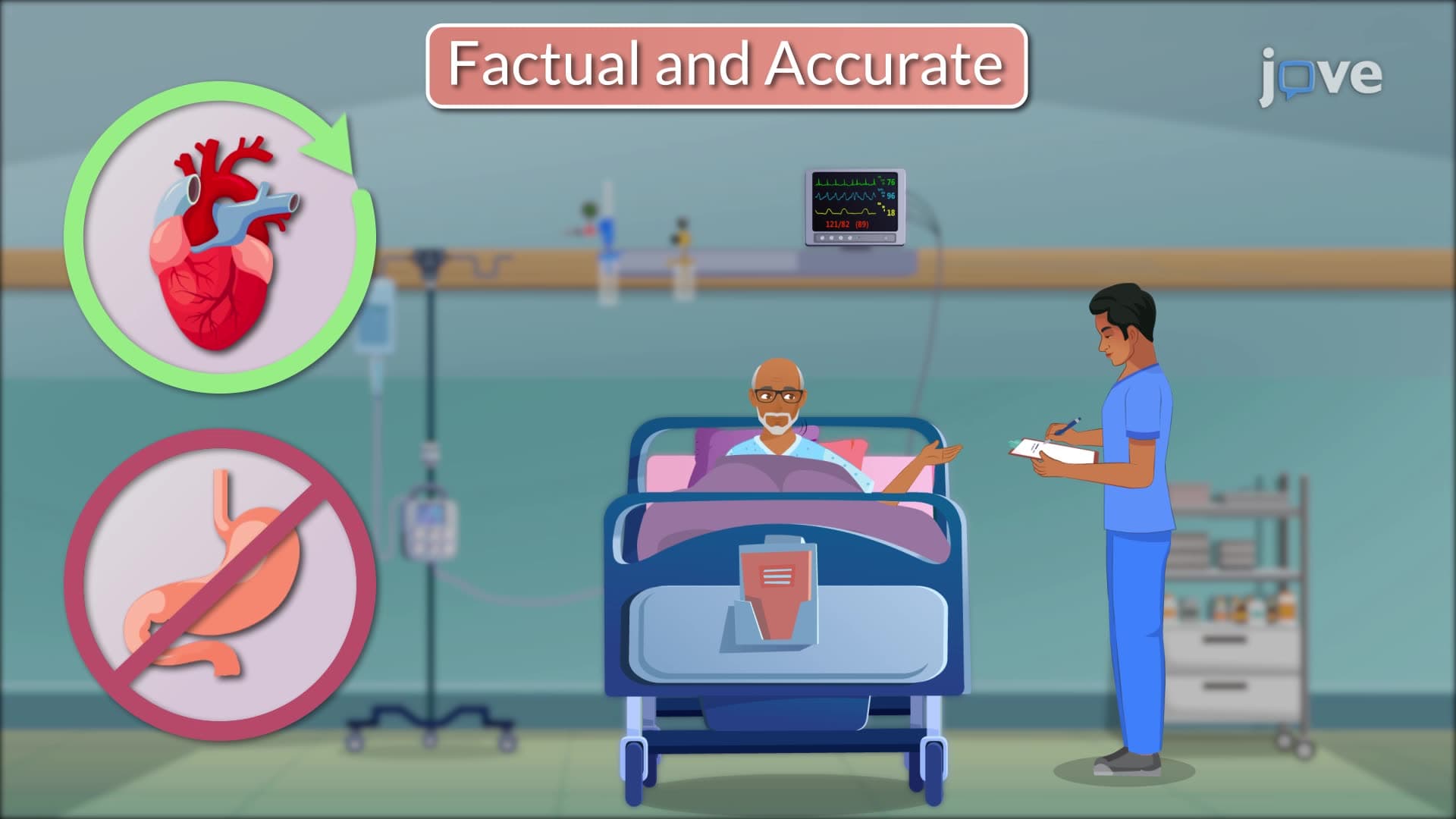
Data validation in lab analysis follows a structured three-step approach that mirrors clinical diagnostic reasoning. First, analysts identify cues—the direct observations or measurements obtained from instruments like mass spectrometers or UV-Vis spectrophotometers. For instance, when analyzing water samples from the Chesapeake Bay, a chromatogram peak at a specific retention time serves as the initial cue. Second, scientists form inferences by comparing these cues against established databases, literature values, or calibration standards. The peak might suggest the presence of a particular pesticide based on its characteristic retention time. Finally, validation occurs through confirmatory testing, such as running the sample through a different analytical technique or comparing results with certified reference materials from NIST.
Consider how analytical result validation operates at the Centers for Disease Control and Prevention. When testing blood samples for lead contamination, laboratory technicians don't simply report the first measurement. They run duplicate analyses, check against quality control samples, and verify that results fall within expected ranges based on patient demographics and exposure history. Similarly, pharmaceutical companies like Pfizer employ rigorous data quality check lab procedures when developing new medications. Each batch of drug substance undergoes multiple analytical tests, with results cross-validated using different instruments and methods before proceeding to clinical trials.
Students preparing for the MCAT encounter what is data validation in analytical chemistry through experimental design questions that assess understanding of controls, replicates, and statistical significance. AP Chemistry curricula emphasize validation through error analysis and uncertainty calculations, requiring students to evaluate whether experimental results support or refute hypotheses. College-level analytical chemistry courses at institutions like MIT and Stanford dedicate entire modules to validation protocols, teaching students to implement validation criteria data using statistical tools like t-tests and F-tests to compare analytical methods.
Frequently Asked Questions
Data validation is the systematic process of verifying that analytical measurements are accurate, precise, and fit for their intended purpose. It's essential because it prevents incorrect conclusions that could lead to faulty drug approvals, environmental disasters, or misdiagnoses. The process involves checking raw data against established criteria, running confirmatory tests, and ensuring results meet quality standards.
The MCAT frequently tests data validation through experimental analysis passages where students must identify flawed methodology or interpret statistical significance. Questions often ask whether results validate hypotheses or if additional controls are needed. HESI A2 and TEAS exams include similar concepts in their scientific reasoning sections, focusing on experimental design principles.
AP Chemistry emphasizes error analysis, significant figures, and uncertainty calculations as core validation concepts. Students learn to evaluate experimental precision through multiple trials, identify systematic versus random errors, and determine if results fall within acceptable ranges. The curriculum also covers calibration procedures and quality control measures used in analytical laboratories.
Pharmaceutical companies employ multi-tiered validation systems including analytical method validation, batch release testing, and stability studies. Every analytical result undergoes statistical evaluation against predetermined acceptance criteria. Independent laboratories often verify critical measurements, and regulatory agencies like the FDA audit validation procedures before approving new vaccines or medications.
Basic high school statistics suffices for understanding fundamental validation principles. You'll need familiarity with concepts like mean, standard deviation, and confidence intervals, but advanced statistical modeling isn't required. Most validation criteria use straightforward comparisons against established limits or reference values that don't require complex calculations.
Focus on understanding the three-step process: data collection, comparison against standards, and confirmatory testing. Practice interpreting analytical results from real instruments like GC-MS or HPLC, and work through problems involving error analysis and quality control. Create flashcards for common validation terms and practice identifying when additional validation steps are needed.
Strong validation skills are fundamental for upper-level analytical, physical, and biochemistry courses where experimental design becomes increasingly sophisticated. Graduate programs and research positions heavily emphasize validation protocols, making these concepts essential for students pursuing careers in pharmaceutical sciences, environmental chemistry, or clinical laboratory science.
Consider studying method validation parameters like linearity, robustness, and limit of detection used in pharmaceutical analysis. Explore statistical process control methods employed in industrial laboratories, or investigate validation requirements for emerging techniques like LC-MS/MS in clinical diagnostics. Regulatory validation guidelines from FDA and ICH provide excellent advanced reading material.
Related Micro-courses



Related Subjects
 Anatomy and Physiology 31 micro-courses›
 Medical-Surgical Nursing 28 micro-courses›